primary languages – Page 8 – ¡Vámonos!
 

Tag: primary languages

Dados

| 2 Comments

It’s very tempting when you can’t go shopping to get the shopping bought to you. I’m being quite restrained but I have been ordering a few things…

One of my recent purchases is pictured below.
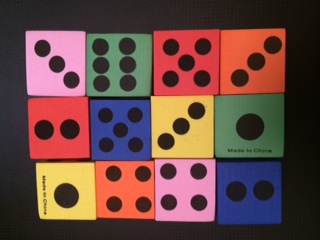
photo 1

I admit that they’re bigger than I’d envisaged (they’re advertised as and are 1.5 inches/3.8cm but my spatial awareness is not good!)  and some of them aren’t exactly cubes, but they serve the purpose for which they are intended. Which was?

Well, they’re made of foam which will hopefully mean less noise, and their size and colour means that I’ll see where they are, they won’t get mixed up with the school dice and they won’t get lost under/inside books/pencil pots/pencil cases.

And I have several ideas for their use.

Playing board games

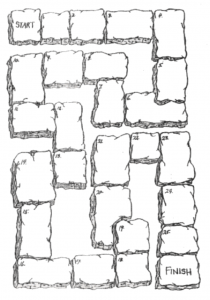
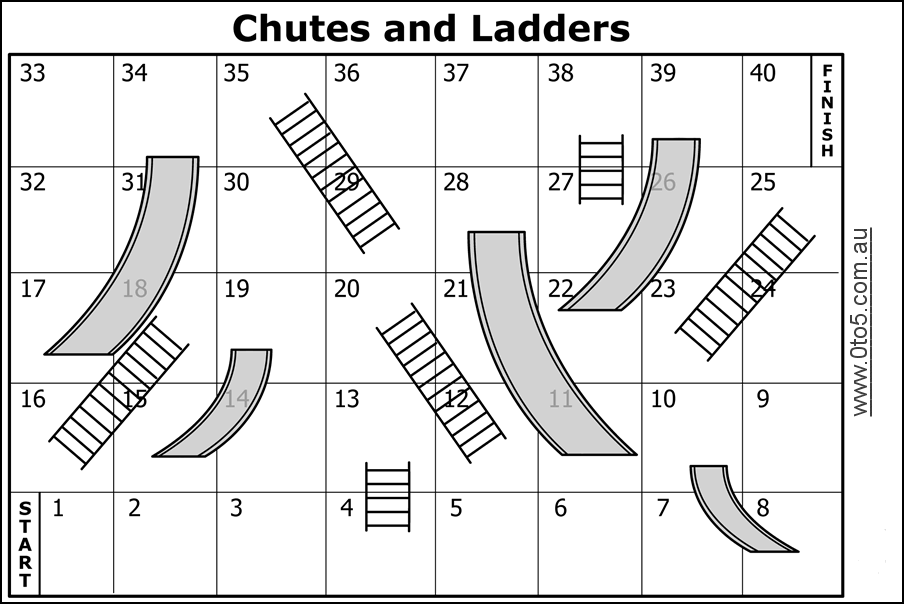
Well, obviously! You can make your own using Tools for Educators (see previous post), a template like the ones below or have a look at this site – I particularly like the daisy one!
Screen Shot 2014-05-03 at 09.54.54


Screen Shot 2014-05-03 at 11.59.47

Counting/Maths 

So many ways to use dice in this way! Here are a few – I’m sure you’ve got ideas of your own – feel free to add them in the comments!

  • throw one die and say the number
  • throw one die and double it, or multiply by 3 etc
  • throw two dice and add the numbers
  • throw two dice and multiply the numbers
  • throw a dice several times, adding up the numbers are you throw and trying to score a perfect 21.

Here’s a PDF of Maths activities using dice for Kindergarten right up to year 8. Dice-Ideas

I particularly like Make 100/Cien challenges learners to throw dice and make 100 by using any  operation, and also Double half or stay (I shall call it Doblar, dividir por dos o ¡ya! as I am struggling to find a better way of putting it!) which is simlar to 21 but can be played with any number and you can, as the name suggests, double,half or stick with your number.

Counting/Maths games

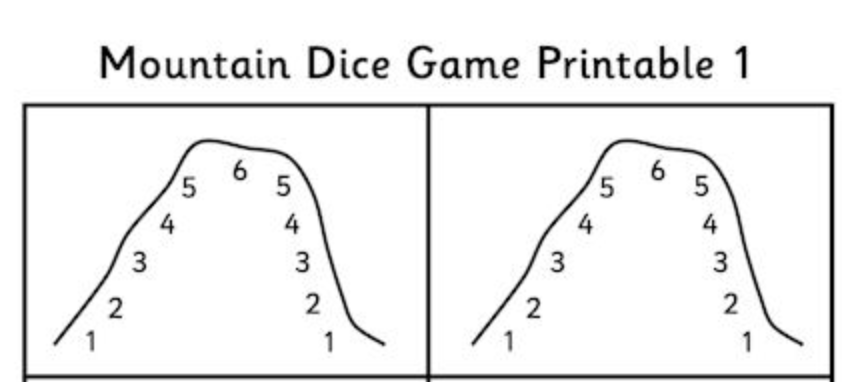
Activity Village suggests a very simple game called Mountain o Sube la montaña which has the aim of reaching the summit of the mountain first by throwing the numbers in order. So you have to throw 1 to start then 2 and so on. Players say their numbers as they throw the dice so plenty of repetition. Have a look at the site  for more detailed rules and variations.

Here are  the downloadable mats to play the game Screen Shot 2014-05-03 at 10.33.15
 

For subtraction, here’s a game I found on eHow.com called Pennies (although could be called cents or Euros instead of peniques 😉 )

This is an ideal game for younger players. Stack 20 pennies in the center of the table. The first player rolls one die and takes the number of pennies shown. Play passes to the next person and continues until the pile is gone. An exact roll is required to take the last of the pennies. The winner is the person with the most pennies.

Language used would be very simple – Tengo 2.  Hay 20 euros.  Tomo 2. Restan 18.

Screen Shot 2014-05-03 at 11.57.59

I like this idea from Activity Village too  called Beat That! (¡Superárlo! or ¡Superar eso!) that reinforces place order and practices 2 , 3 (or more!) digit numbers.

Roll the dice and put them in order to make the highest number possible. If you roll a 4 and an 6, for example, your best answer would be 64. Using 3 dice, a roll of 3, 5 and 2 should give you 532, and so on. Write down your answer, pass the dice, and challenge the next player to “Beat That!”

Play in rounds and assign a winner to each round.

You can also play to see who can get the lowest score!

Mathswire has several games that look at probability – I especially like the Cookies game where you throw two dice and add the numbers to decide which cookie can be packed away – or perhaps eaten! 😉

Download the  Great Cookie Contest Cookie Sheet Mat

A variation on this I’ve played is for outdoor fun using chalk as I shared at #ililc3

Screen Shot 2014-05-03 at 11.01.20You draw a grid in chalk on the ground with lanes of 10 squares for numbers 2-12 (when I saw it played with Kindy in Switzerland they used 1 which wasn’t fair!!) Pupils choose a lane and they are the ‘caballo’ or ‘caracol’ that will race in that lane. They take it in turns to throw two dice and add the numbers together. That decides who can move forward; so if 2 and 3 are thrown, caballo #5 can take a step forwards. The idea is to “llegar a la meta” first. Lots of number language involved, and it’s an activity
that can easily be played as one activity in a carousel. (There’s a board game called Snail Pace Race that is similar but uses colours)


Another probability activity from Maths is fun would be a great way of supporting the Maths curriculum using más probable and menos probable.  Clare Seccombe has done a whole presentation on Supporting Maths through language learning – it’s well worth a look for further ideas! (Sadly now that Slideshare has stopped slide casts the audio is no longer embedded 🙁 )

Screen Shot 2014-05-03 at 11.59.47

Grammar

Six sided dice are great for conjugating verbs as there are six “persons” 1st 2nd and 3rd singular and plural. Throw the dice to decide the person of the verb

1=yo

2=tú

3=él/ella/usted

4=nosótros

5=vosótros

6=ellos/ellas/ustedes

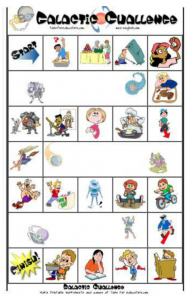
You could combine this with a board game featuring verbs like the one I made below for M and M, my Spanish English students in Switzerland to practice the past tense. Or
Screen Shot 2014-05-03 at 10.05.30


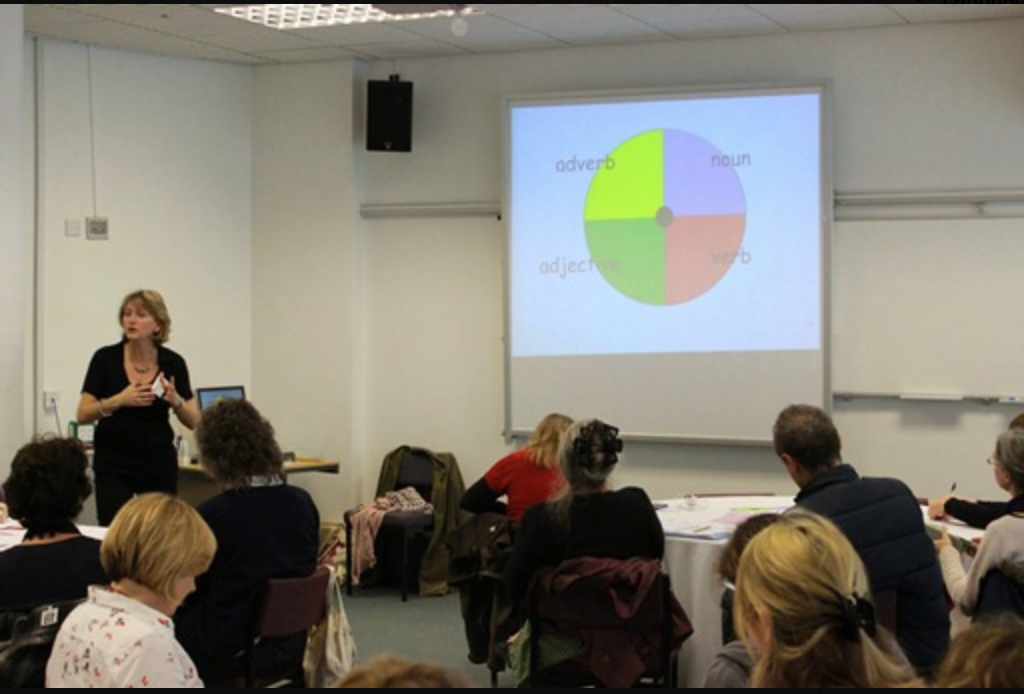
You could also assign parts of speech a number – learners throw the die a number of times and “collect” parts of speech according to their roll and then make a sentence using that combination of words. You could restrict the choice of vocabulary with cards, or allow learners to use dictionaries to make a unique sentence!

1=noun

2=verb

3=adjective

4 = adverb

5=connective

6=free choice

Screen Shot 2014-05-03 at 11.59.47

Speaking

Similar to grammar games, you could play a speaking game as suggested here

The teacher brings a large soft dice to the classroom. Students sit in a circle and take turns rolling the dice. Each time, a student throws the dice. The student who rolls the dice uses the number that shows up on the die to say some things about himself or herself. For example, if the number 2 shows up, the student will have to say two things about himself or herself.

Another variation would be for the student to ask the class the number of questions according to what number shows up on the dice. Equally, you can make the class ask the number of questions according to the number on the dice.

You could also use two dice and challenge learners to make a sentence with that many words, a phrase with that many syllables or think of a word with that many letters. circle_time_picci


Screen Shot 2014-05-03 at 11.59.47

Beetle 

Throw the die to win body parts. It doesn’t necessarily have to be a beetle you build; it could be a monster, a clown, a person or something completely different. Activity Village suggests Mouse  or Ratón

6 = el cuerpo
5 = la nariz
4 = bigotes
3 = un ojo
2 – una oreja
1 = la cola

Art

Here’s an idea to make a Joan Miró style painting using a die…

roll a miro


…and why not have a look at one of these ideas to make a Monster,  a Picasso painting  or a Miró Skyscape.

In fact, you could make anything with components using a dice… or randomise anything in sets of 6 using dice!

Screen Shot 2014-05-03 at 11.59.47

Dressing up

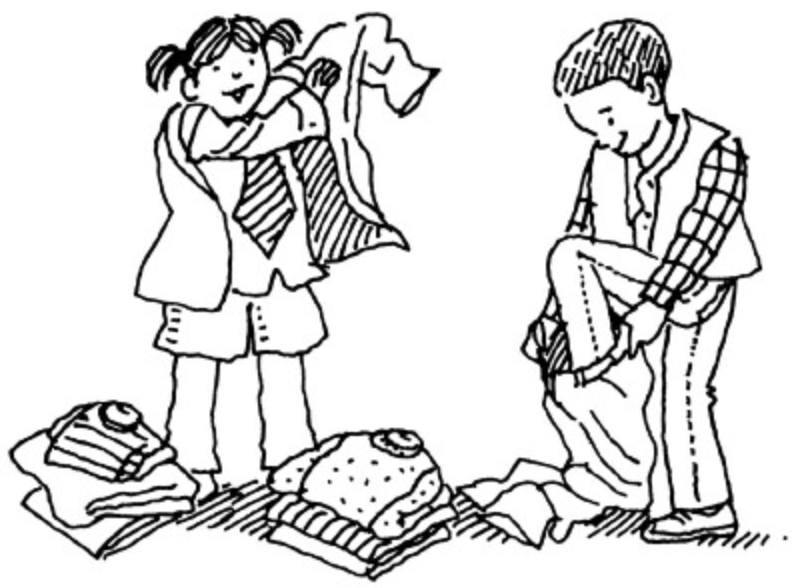
Assign a number to items of clothing with the aim of creating an outfit for a teddy bear, cut out person, or even your partner. You could end up with far too many jumpers and no trousers!
Screen Shot 2014-05-03 at 12.18.04Directions

You could use dice to decide directions that people should take. You could use the classroom, a map or an assault course!

In it’s simplest form you could just use left and right

a la izquierda – impar (1,3,5)

a la derecha – par (2,4,6)

or you could add todo recto by assigning opposite numbers to each e.g. 1 and 6 = todo recto; 2 and 5 = a la izquierda; 3 and 4 = a la derecha

or even have a different direction for each number, including ‘darse la vuelta’, volver al principio or reaching your destination if you throw a 6.

Screen Shot 2014-05-03 at 11.59.47

And there are so many more things that you  can do!

Here are some links I’ve found that might be of interest.

Juegos de dados games to play with up to 5 dice

Cómo jugar al juego de dados de los diez mil or Reglas para juego de dados 10000

Juego mueve dados online dice game – not really for using my dice, nor a language activity but I thought I’d share as it made my head ache!


And then, of course, there are dice that don’t have numbers on them but colours, images or words!  MES Dice games has some ideas that uses vocabulary dice too, and Crazy faces  looks fun too – I might come back to that and write another post on non-number dice! And then there are dice apps…

Plus I love this game!

As it’s World Book Day or El Día del Libro in Spanish, I thought I’d share some ‘books’ written by year 5 at WCPS. After a session by Clare Seccombe on Minibooks at #ililc4 and a circular “All about me” mini book I saw on Pinterest, I came up with the idea of making a planet book.

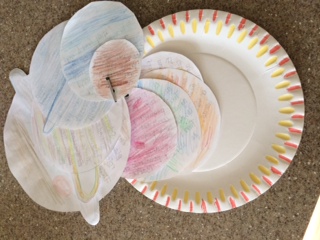
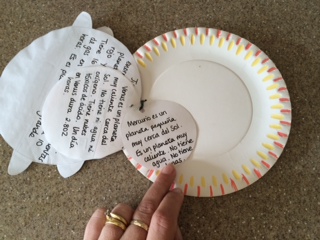
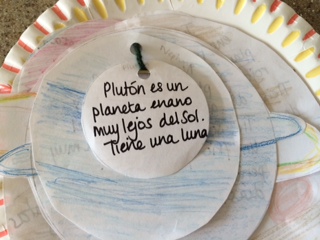
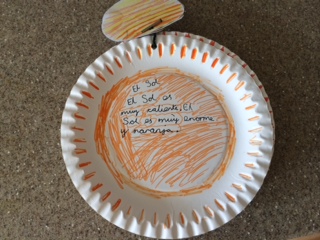
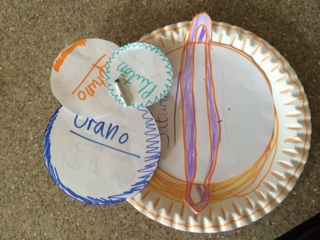
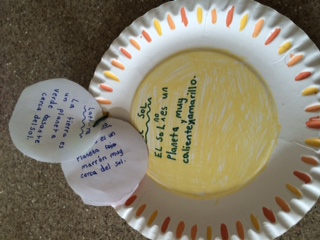
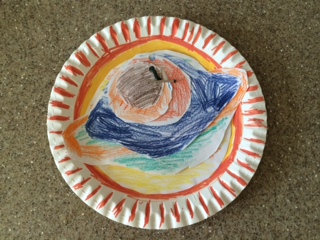
Originally I’d planned on making it with lots of circles and a split pin like the Pinterest example, but my idea developed and I decided to use a paper plate to keep the book stronger and more rigid. The lines around the edge of the plate also made me think of the rays of the Sun so it seemed a perfect idea! I made a prototype, drawing around numerous circular objects to make the different sized planets (vaguely the correct proportions!), colouring the front of the circles and writing sentences in Spanish on the back. I punched a hole in each planet and joined them to the plate using a split pin.  However, I found that whilst the split pin joined all the parts together, it was impossible to read the writing on the backs of the planets. So Mark 2 used a treasury tag as they have a longer ‘stem’. Below are images of my example.

lisa planets Lisa spread planets
Lisa planet writing lisa pluton

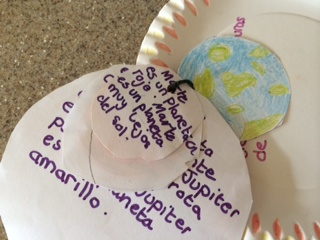
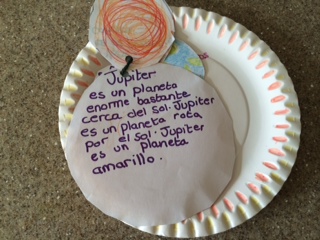
I shared the idea with Year 5 who had spent a few weeks on their planets unit. Unfortunately I was ill the penultimate week of term and they therefore had less time than I’d envisaged to complete their books but below are some pictures of their efforts – made, written (they had practiced some sentences in previous weeks but put them together in this lesson) and constructed in an hour. I’m really pleased with their efforts and how they tried to use vocabulary they knew in new contexts e.g. talking about the Sun which is not a planet, using negatives and looking up words in a dictionary.

photo 2-2 photo 4
 photo 1 photo 3
 photo 2 photo 3-2

Here’s a link to the cheesy song with which I always start the Planets unit! And below that, some links to helpful material on Los Planetas

httpv://youtu.be/qE78tXPYb-Y

My Pinterest board

Quizlet flashcards

LightBulbLanguages resources 

Planetas del Sistema Solar

El sistema solar infantil 

Poemas y adivinanzas sobre los planetas

Discovery Channel – Los Planetas

I’ve just received an email from the British Council Schools Online sharing these two resources (as well as mentioning the benefits of hosting/sharing a native language assistant) for primary language learning.

Our free Sharing lives, sharing languages activity packs are aimed at children aged 7-11 who are new to learning languages. They can be used in the classroom or with your partner school.

Encourage your pupils to greet one another in a different language with our Hello Everyone!activity pack

We heard it in the playground activity pack introduces children to numbers one to six in a different language through the context of playground games.

The activities are very simple and there plans are mostly language agnostic so you can decide on the language to be used dependent on skills or the language of a partner school. I’ll be suggesting to staff at WCPS that they use these activities as part of our whole school project through eLanguages in which each class has a different country on which to focus in the lead up to the World Cup finals in June.

I particularly like the playground games idea. Why not look at sites like  Traditional children’s games from around the world or this site that shares German games or this blog post or this one too. You might find some ideas in this PDF or on TES resources or Streetplay you’re looking for Spanish ideas. And what about these 3 programmes from BBC School Radio with dance based on playground games from around the world?

IMG_0317

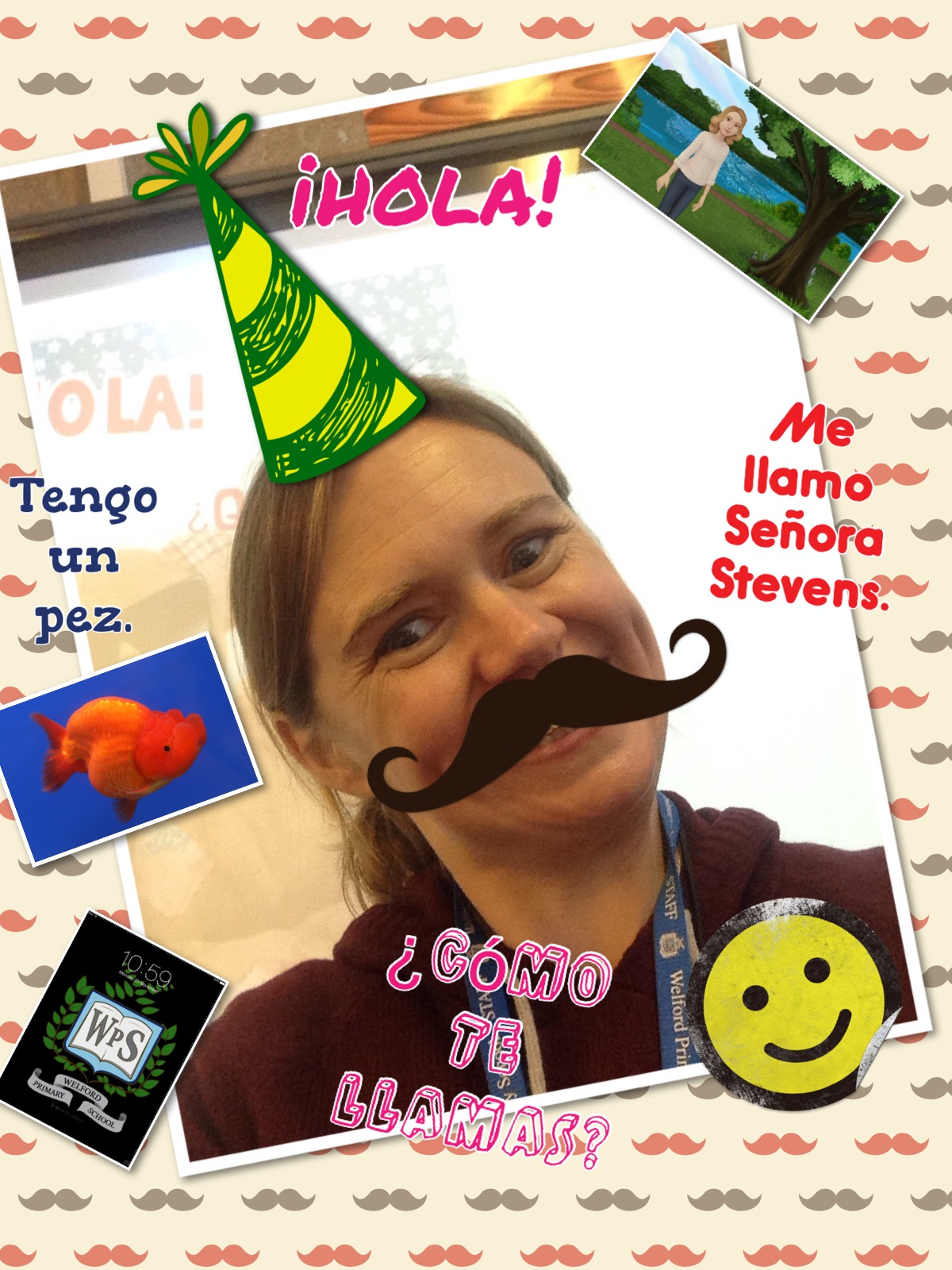
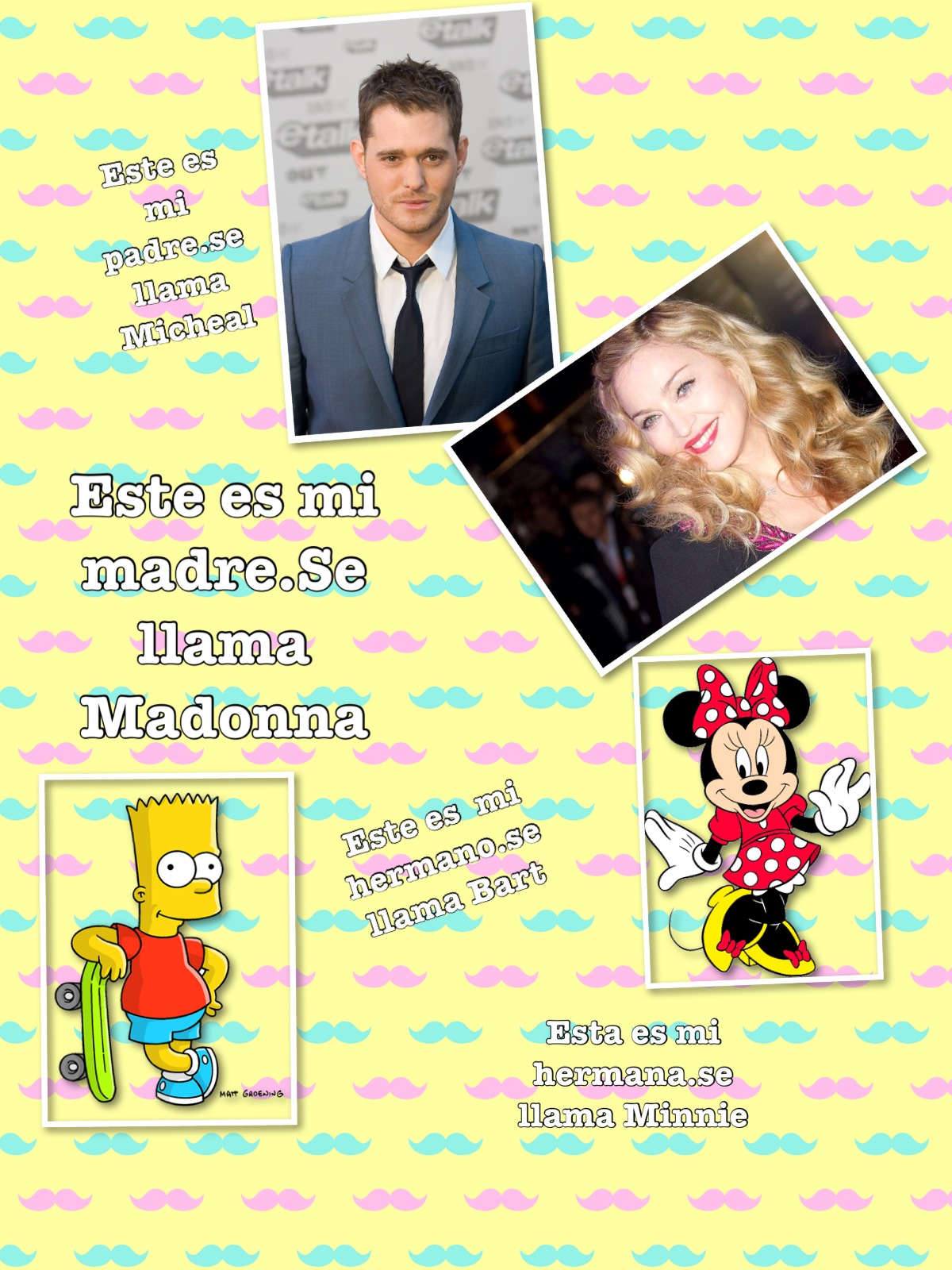
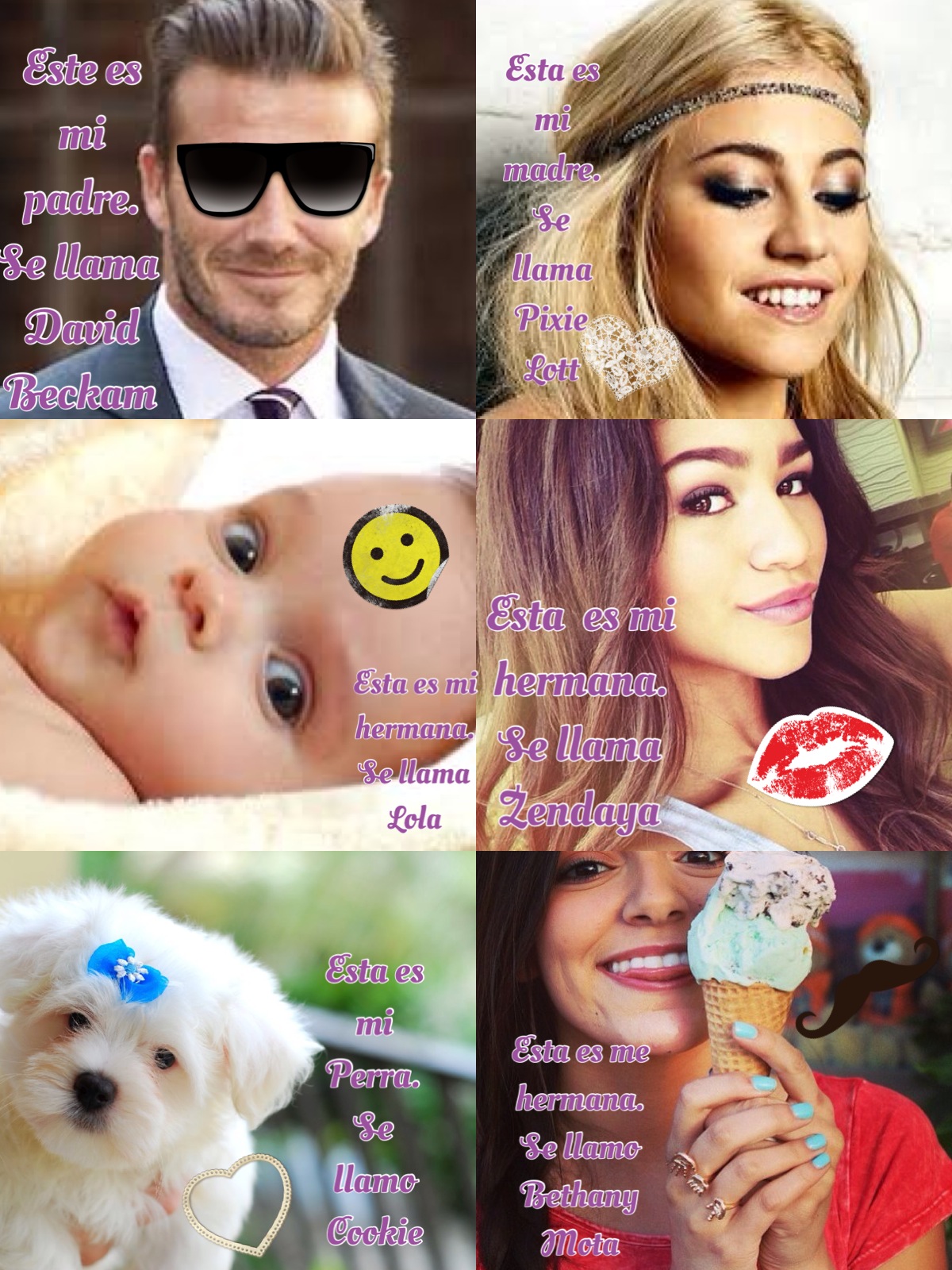
PicCollage done by one of my pupils!

I presented at Language World as part of a triple act on using iPads in language learning. Joe Dale and Helen Bates preceded me talking about QR codes, sound recording, making screencasts and flipped learning before I took over to talk my favourite app – BookCreator.

I shared how to make a book in BookCreator (free/£2.99), how to add images, sound, videos and hyperlinks; how to change the background, how to make sound buttons invisible and how to avoid copyright issues by using QR codes or hyperlinks to videos! I also showed PicCollage (free) as a way of making my front cover, and Tellagami (free) for adding a “talking head”.

I ran out of time to share how you can combine books into one, meaning that you can make a class book with all learners working separately before putting it all together on one iPad (e.g. save to Dropbox and then open and combine) but I did share the news that BookCreator is now on Android – very popular that one!

You can find out more by checking out my post on iPads here which covers things I shared and much more! You can also have a look at this post to see the process of how my Year3s made their eBooks that I shared.

photo 2-1

photo 3-1

And here’s a tutorial I did on using Explain Everything (two years ago)

Explain Everything Explained. from lisibo on Vimeo.

Presentation by Lisa Stevens aka @lisibo about the iPad app Explain Everything (recorded using the app itself) for TeachmeetBrum and TeachMeet iPad. November 8th 2012

Screen Shot 2014-04-13 at 17.18.34

(That’s my red/black shoulder at the front!)

It was touch and go whether I’d make it to Language World this year but having missed it for the last two years, I was determined to make it even if I wasn’t 100%.

And I did, albeit deaf in one ear and in need of frequent sit downs.

Below are my notes from sessions I attended.  You can also download many of the presentations from the two days on the ALL siteFriday and Saturday

Language World is always special to me and this year was no different. Thanks to everyone who ‘looked after’ me, especially Joe who was poised to do my part of the presentation should I keel over; Philip, my chauffeur(!); Julie P who also chauffeured me and with whom I had some excellent chats; Julie D for returning my cap when I left it lying around; and everyone who looked out for me, willed me to be better, and/or remembered to speak into my good ear at any point! Language teachers rock! 😉

Elaine Minnett session

Rachel Hawkes – President’s Plenary

Liz Black

CLIL (Judith Woodfield); Janet Lloyd; Kati Szeless


photo

Thanks to Joe Dale for the photo (and video later)!

I had the privilege on 28th March to speak at the South West London Primary Languages Conference #SWLPLC. My talk was entitled There’s more to PLL than ‘that donkey’ (Tip Top Tips for Primary Language Learning) and took inspiration from my son who when asked what he’d done in French usually replied “oh, we did that donkey again”. I have nothing against Mon âne but there’s more to PLL than singing as I went on to explain, sharing some of my favourite activities and ideas. Below is my presentaion and links to resources I used and sites I referenced.

A lovely day and well worth the early morning; great to see Joe, Rachel, Carmel and finally meet Ceri and Sue, and also to have so many positive comments about Primary Language learning flying around the room.

Habitats matching activity

worksheet LAT SP FR ROM NUMBERS 1-31

el nabo enorme

Oso Pardo pdf

Oso pardo

blank brown bear

Simpsons song

Que colores hay


Links from presentation

Rachel Hawkes’ phonics

httpv://youtu.be/seW6lf_9pSk

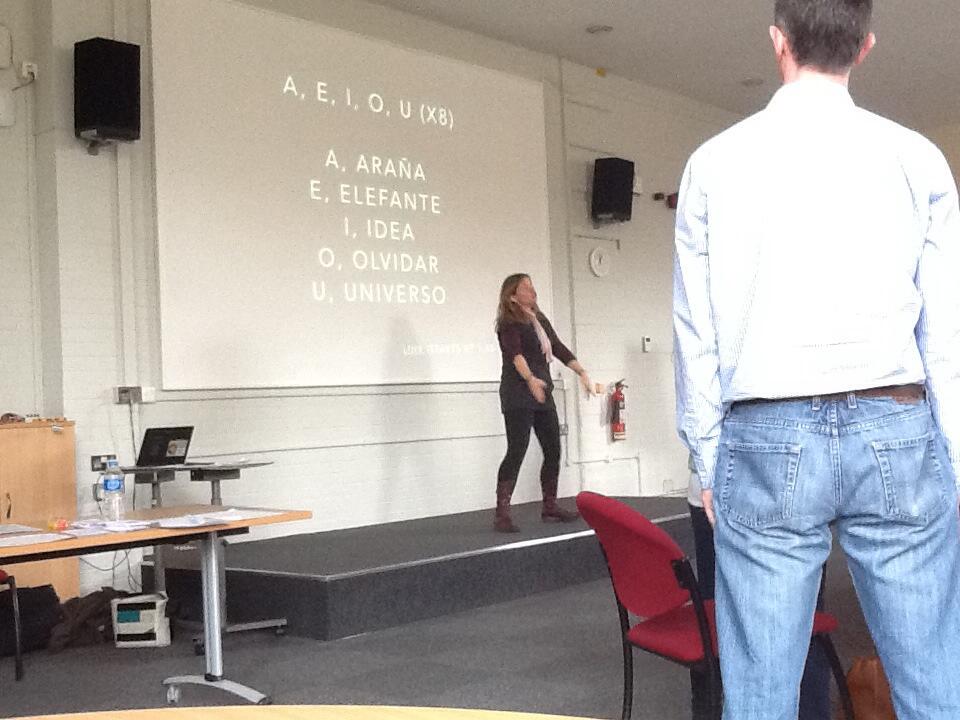
Music for Los vocales D.I.S.C.O.

 Rhabarberbarbara

Jo Rhy Jones phonic activities 

I didn’t get to share my Pinterest pages as they were blocked by the firewall, but here’s the link to my Roman resources for Spanish. And if you flick through, resources for lots of other topics/themes too.

I also recommended looking at The Iris Project and LightBulbLanguages (formerly MFL Sunderland) for other resources that I have found useful for Latin/Greek (former) and Latin, Planets and much more (latter) And check out TES Resources from Joan Miró resources fromHelen Stanistreet and Rachel Hawkes

Boowa et Kwala – Peut tu marchez comme un canard? Fingerpaint song

Padlet.com – for collecting ideas (online post it notes)

Storybird – make up your own stories using illustrators images.

MFL Storybird wikispace

I also mentioned Tellagami, Pic collage and Book Creator app. Check out this post for more details!

Again, if I’ve forgotten to upload something that I promised, please let me know!


(Sorry it’s taken me so long to post – illness, work and OFSTED held me up!)


And here’s my session on Making links across the curriculum.

I didn’t get to share my Pinterest pages as they were blocked by the firewall, but here’s the link to my Roman resources for Spanish. If you click through the presentation, you’ll find links to things like the music for The Carnival of the Animals, a slideshare of Querido Zoo, links to BuildyourWildself and Switchzoo for making hybrid animals and a cheesy song in Spanish about the planets.

Some resources that I said I’d share –

habitats matching copy worksheet

LAT SP FR ROM NUMBERS 1-31

I also recommended looking at The Iris Project and MFL Sunderland for other resources that I have found useful for Latin/Greek (former) and Latin, Planets and much more (latter) And check out TES Resources from Joan Miró resources from Helen Stanistreet and Rachel Hawkes

If I’ve missed anything out that I promised to post, please let me know!

photo 1On Friday I was fortunate to attend the Stafford Primary MFL conference. I spoke twice, the after lunch keynote and then a workshop on cross curricular links, but really enjoyed listening to others and learning from their brilliant ideas.

I like to share what I learn when I go to conferences. Sometimes I tweet madly and fail to make notes, and other times I try to take notes. On this occasion I started out trying to do both but went for the latter in the end.

So here are my notes (without much editing!) I hope that they make sense!

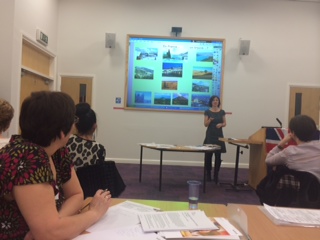
Lorna Harvey – A link with Geography

We looked at the PoS for languages and also for Geography, and looked at areas where they overlap e.g. “inspire in pupils a curiosity and fascination about the world and its people” from the Geography PoS fits well with language aims.

Ideas –

En France …. on trouve? in French

Link to other countries in French – where might you find these features? as a starter activity for Geography

En Afrique je voudrais visiter…. – looking at the rest of the world rather than just UK and USA.

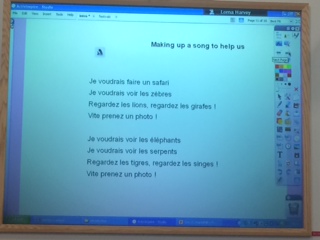
Where might you go on safari? Learn the phrase Je voudrais… and survey table about the most popular place to go

Make up a song! (tune of Pop goes the weasel)

photo 3

Have a little conversation (about where you’d like to go on safari and what you can see) and video it – basic phrases but great acting and lots of repetition

Write a mnemonic for walking around France – BLGSIS

One idea was – Big lions growl scarily in SouthAfrica

Why visit France? Create an advertisement – given rubric of requirements – cross curricular


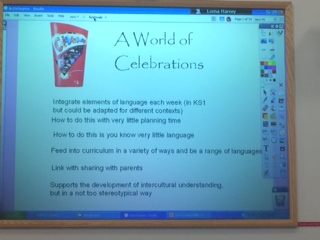
photo6Lorna Harvey – A world of celebrations

This began with the question – How can we integrate languages into KS1 each week with little time and little language?

Can we find a festival every two weeks form Christmas to Easter?

  • created a list of festivals
  • learned songs and performed plays (Christmas),
  • made une fève – figurines for La galette de rois and described it using colours,
  • Chinese names for Chinese New Year – became a panda bear and chose a name; Chinese New Year song
  • Japanese snow festival – looked at images and guessed where they were, used video clips to introduce – linked to hot/cold and played game.
  • Germany for Karneval – learn some phrases for princess eg Prinzessin, Hase, and children asked to bring in one item to become that character/person the next week
  • Spain for Fallas – text and video clip with questions – what can we work out? learned days of the week to the Macarena (lunes, martes x2; miércoles, jueves x2; viernes, sábado x2; eeeeee domingo)

To pull together, look at a map of the places and label them – where would you go if you could choose?


Karine Guillot  – Role play! Role play!

Reasons to use role play –

  • to develop pupils’ spontaneity
  • to develop pupils’ authenticity when speaking French

We looked at

  • phrases to get someone’s attention including yelling Coucou!
  • likes and dislikes – je hais – I hate (stronger than je déteste)
  • suggestions  – Et si on….? How about….. Et si on jouait au ballon? Et si on mangeait un snack?
  • agreeing and disagreeing, using lots of gestures as French are dramatic  e.g. ça ma branche (that plugs me in!) I’m up for it!   Non, pas aujourd’hui – no, not today

Traditional French games –

le jeu d’oie

le jeu de la marelle (like hopscotch) throw une pierre starting at 1 whilst standing on TERRE to arrive at CEL

le jeu des dames (draughts) with les pions (draughts/counters)

le jeu des échecs – roi, reine, fou, cavalier, tour, pion (pawn)

les cartes – pique (spades) trèfle (clubs) couer( hearts) carreau (diamonds) l’as (the ace)  le valet / la dame/ le roi

using boards games like Jeu de l’escargot – same board but new questions each time


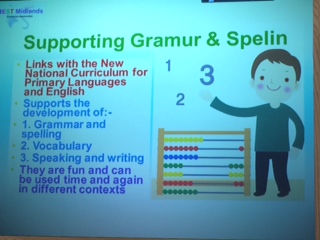
photo 4David Moss (BEST Midlands) – 10 easy to organise classroom games for Gramur and Spelin (sic)

1. Monkey school

  • Like hangman
  • one monkey whoop for each letter
  • if one correct letter, you whoop saying letter in position!
  • best to choose from a list or a theme

2. Scene of the crime – MFL

  • mixed up word – detectives have to solve the word by unscrambling it
  • can up level by  adding a blank or two to challenge
  • Ps can prepare for you by writing their own word and swapping in the room and across school
  • can be any words – cross curricular
  • as above, best to choose from a list/theme

3. Great Wall of China

  • like Chinese whispers but you trace letters on hand and pass it down the line, a letter at a time
  • be clear where the words come from – a list/ theme

4. Order Order!

  • like a human sentence, spelling a word
  • use accented letters to make more challenging
  • can also sellotape to pupils’  backs and the class reorder them by giving instructions

5a. Accents forever

  • using a Powerpoint with rotating words and two flyswats
  • swat the accent according to instruction e.g. I’m looking for a circumflex over the letter e

5b. Apostrophes forever

  • same as accents forever but for English!

6. On the march 

  • assign physical actions to parts of speech e.g. march for a verb, hands on head for a noun
  • call out a word and pupils respond with the action
  • in English, a word like ‘light’ can have three actions!

7. O and X

  • Say the word/phrase in the position you want to win the square

8. Sword drill

  • using a dictionary as a sword
  • march! attention! salute!
  • possible instructions – find the word for…. what page is it on? what gender is it? spell the word and so on
  • perhaps photocopy page, or word list, or put your finger in the page in the early stages

9. I need a better actor

  • act out the phrase – three people all act out
  • eg the girl plays football slowly
  • after first, you call “I need a better actor!”
  • can vote for best with clapping
  • react using different adverbs

 10. Blankety Blank

  • have a panel who write their word to fill a gap (from a list on the board) on a mini whiteboard.
  • teams try to match with as many of the panel as possible


photo 5Lorna Harvey  – Show off your language learning!

How to celebrate language learning with the community

e.g. her school had previously used The Gruffalo in French with y3 and 4 as learners with parents invited to watch like at an Inspire – how can we teach parents and learners at the same time?

Some ideas shared:

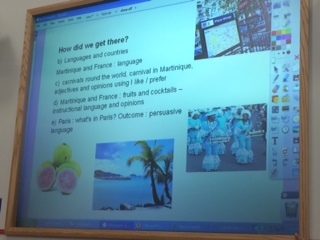
  •  Languages and countries
  • carnivals around the world
  • Martinique and France
  • instructional language – making smoothies
  • Paris

Parent workshop:

  • made and gave opinions about cocktails – like and don’t like
  • fashion show – introduced each other (linked to carnival clothes)
  • tour operators – persuade the parents to go to your venue! Very impressive but two verbs (c’est and visiter)

 Some possible activities-

  • using a phonic focus
  • using words that we want to use rather than the ones in the book!
  • used FLA to talk about Martinque and Carnival there
  • classify fruit into countries
  • like/dislike
  • order instructions
  • made own cocktail!
  • match descriptions of places to France or Martinique – which would it likely be?


A really great day! I’ll share my presentations in my next post!


I’ve spent today at University of Leicester talking to Primary PGCE students about using technology as part of a yearly event organised by Doug Dickinson aka @orunner. I took part in the original one and have missed the last two as I was in Switzerland so it was good to be invited back this year for the fourth year.

photo

(Thanks to Oliver Quinlan for the very ‘serious’ photo!)

Below is my presentation and below that, some links to sites and apps I referenced.

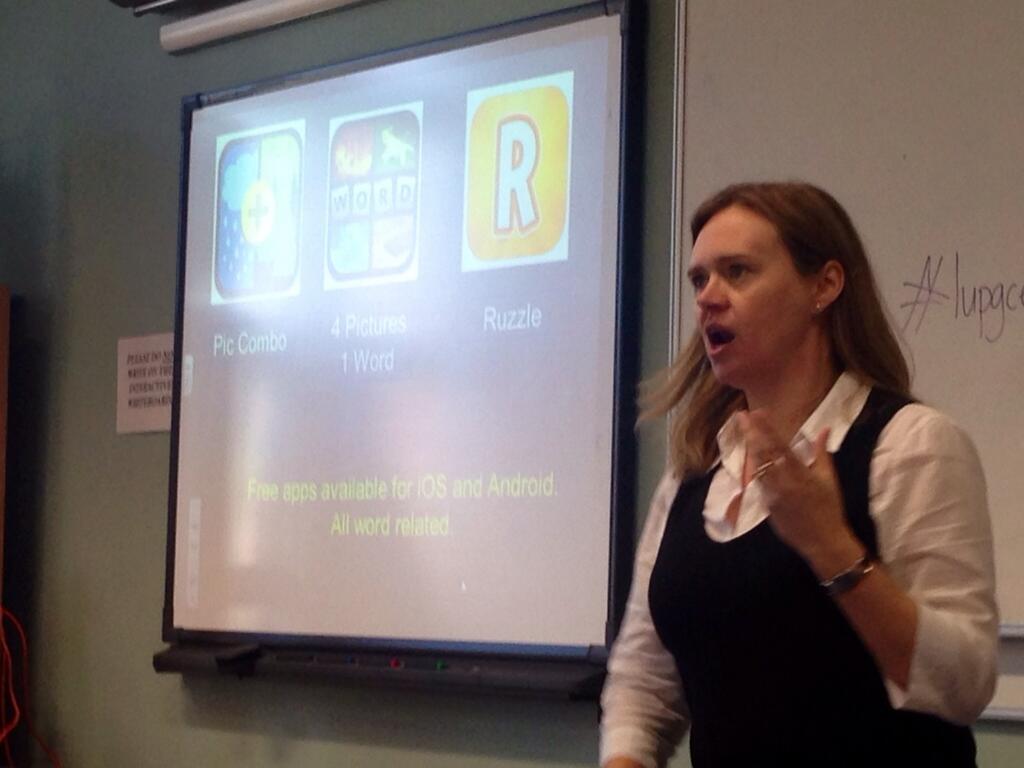
4 Pictures 1 Word free app
PicCombo free app
Ruzzle free app

Padlet
Popplet – also app lite (free)  and paid (£2.99)

Festisite
Tools for Educators

Storybird
BookCreator – app (free to try) and paid (£2.99)
PicCollage  app (free)
PicLit

Tellagami – app (free)
Morfo – app (free)
Voki

Any questions, please feel free to leave comments below or message me via Twitter @lisibo

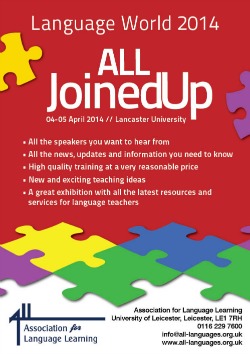
ALLJoinedUp250x354

Following on from #ililc4, I’ll be speaking at Language World.

This year it’s entitled ALL Joined UP and is taking place at Lancaster University 4th-5th April. With a very broad programme on both Friday and Saturday catering for all levels of language learning from Primary to HE, it is always a conference that makes you think. I particularly enjoy the more academic talks as I rarely get to hear such things, but if that’s not your thing, there are plenty of practical sessions to please you with ideas that can be used tomorrow.

And that should include the session I’m doing with Joe Dale and Helen Bates on Multimedia language learning with iPads 

More details are here including how to book for the conference and conference dinner on the Friday night.

Having missed the last two (I was in Switzerland!) I am especially looking forward to this year’s event.

ALLJoinedUpHere are posts of my presentations from previous years!

Language World 2011 – Entitled to enjoy primary languages

Language World 2010 – Bricklaying for beginners

Language World 2009 – Absorbing language learning

And some from sessions I’ve enjoyed (as far back as I can find that weren’t ruined when the site was hacked)

Reframing languages (2011)

Mini Olympic packs for primary languages (2011)

President’s address (2011)

Make it real (2011)

Languages reboot (2011)

Progression in reading and writing (2011)

A narrative approach to storytelling (2011)

Languages and the Olympics (2011)

Liz Black Embedding languages (2010)

Claire Dodd Embedding languages (2010)

Reflecting on Language World 2008


¡Vámonos! ©2026. All Rights Reserved.
Powered by WordPress. Theme by Phoenix Web Solutions