lisibo talks – ¡Vámonos!
 

Tag: lisibo talks

As part of presentation at Language World #LW2026 I intended to share a couple of examples or ‘case studies’ that exemplified what I was saying about the interplay between heart and mind in language learning, and the need to engage both for optimal success.

The first I was able to explain but time was against me and the second was left untold. Below, I share both.
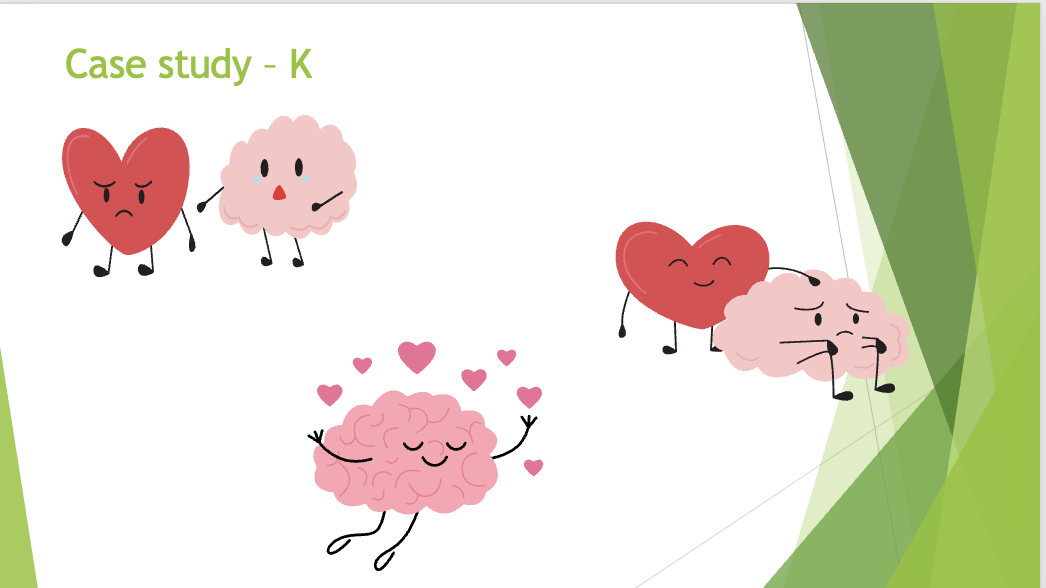
The first concerned a pupil I called K.


In Y3 he struggled to engage in Spanish lessons. His feelings of self efficacy were very low and his expectancy was low so he had little to no motivation. His response when questioned was “I can’t do this. My brain hurts. It’s too hard.” His heart and mind/brain were upset.
Having discovered this, we had a few low key chats outside lesson time, initially not even about Spanish. When he said it was hard, I acknowledged his feelings and talked about how it was my job to help him and make his brain “hurt less” as he put it; we can do it together. I offered support to build his confidence and praised any effort he made. He began to see that he could do it and experienced small successes – he started to enjoy lessons and his heart was in it.
After the summer holidays, K came into Y4 and began the year slowly but with growing confidence. This term there has been an amazing difference – he sees himself as a language learner, experiences success, and is confident to participate. His work isn’t perfect – sometimes he gets overexcited and goes a bit ‘rogue’ and he’s obsessed with Spanish being spoken outside Spain – but he bounces into lessons, wants to talk and is so excited about everything he achieves.


The second case study was more personal as it is my language learning story.
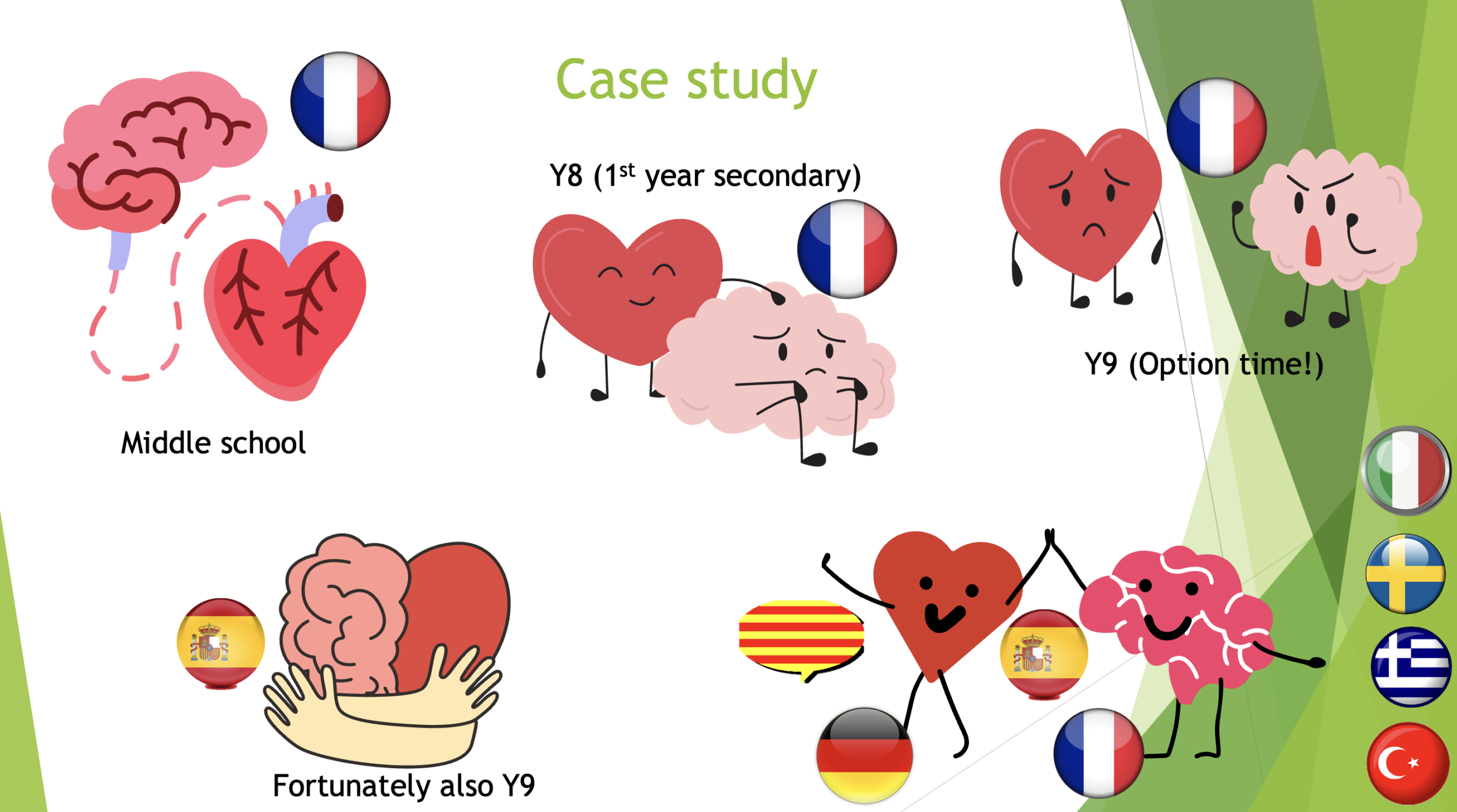
When I started middle school, I began to learn French. I had lovely teachers – Mrs Reeves and Mrs Whiteway – and really enjoyed learning. I’d happily get 100% in vocabulary tests and loved translating booklets about Nicole and Xavier – I remember Xavier falling into a river and shouting “Zut alors! Mon tricot!” My brain enjoyed the challenge of deciphering these unfamiliar words using a dictionary and my heart was set on learning more. In fact my desire to be a teacher, and specifically a primary language teacher was born at this time.
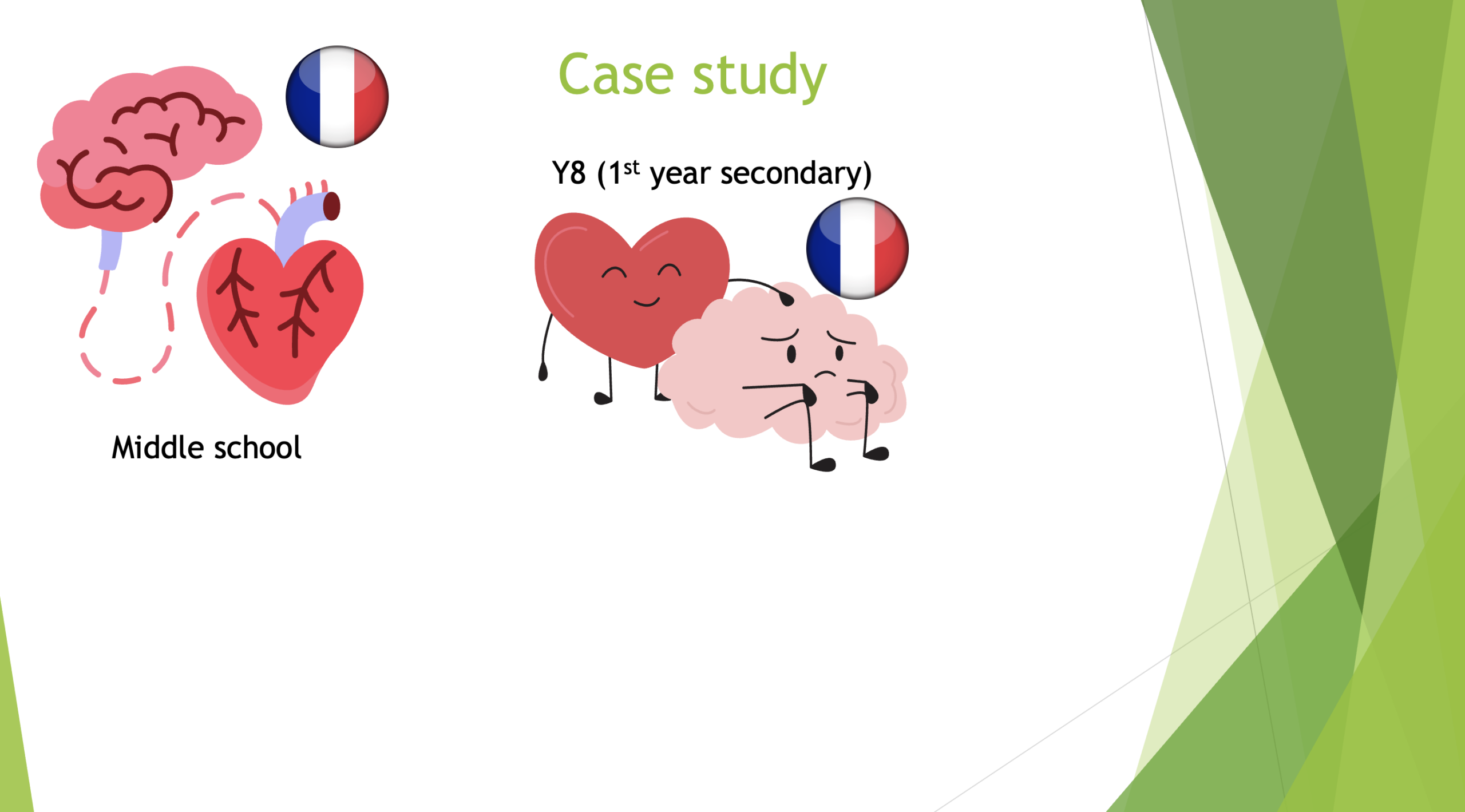
Unless you went to one of the King Edwards Grammar schools (I refused to take the exam much to the annoyance of my teachers) you moved school at the end of Y7.
Y8 dawned and off I went to secondary school and French lessons continued. You’d think I’d be really pleased. Initially I was, as was my teacher who loved my ability to consistently score high marks at Dictée and string sentences together. But my brain was unhappy as there was no challenge; I was repeating everything I’d learned at primary and I was bored. My heart was losing the battle.
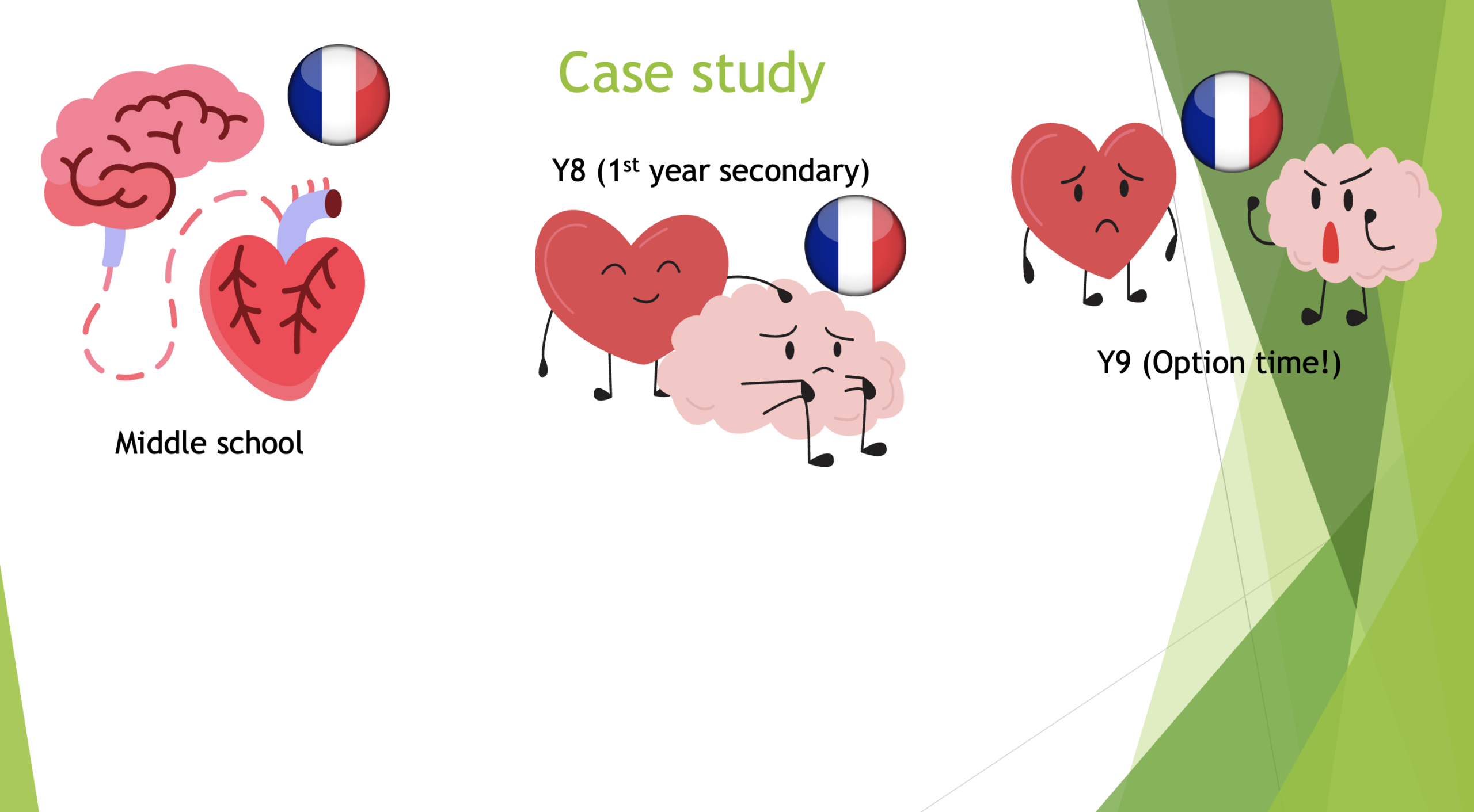
Come the time to choose my options for KS3 and although I was still successful and scored top of my class in our French exam, I was completely fed up with the lack of challenge and there was no way I was choosing French, no matter how much my teacher pleaded with me. I was out of love with French and all that joy and passion I’d had were gone.
This could have been a very sad story but, as you can probably surmise from the fact that I am a language teacher, that’s not the end of the story!
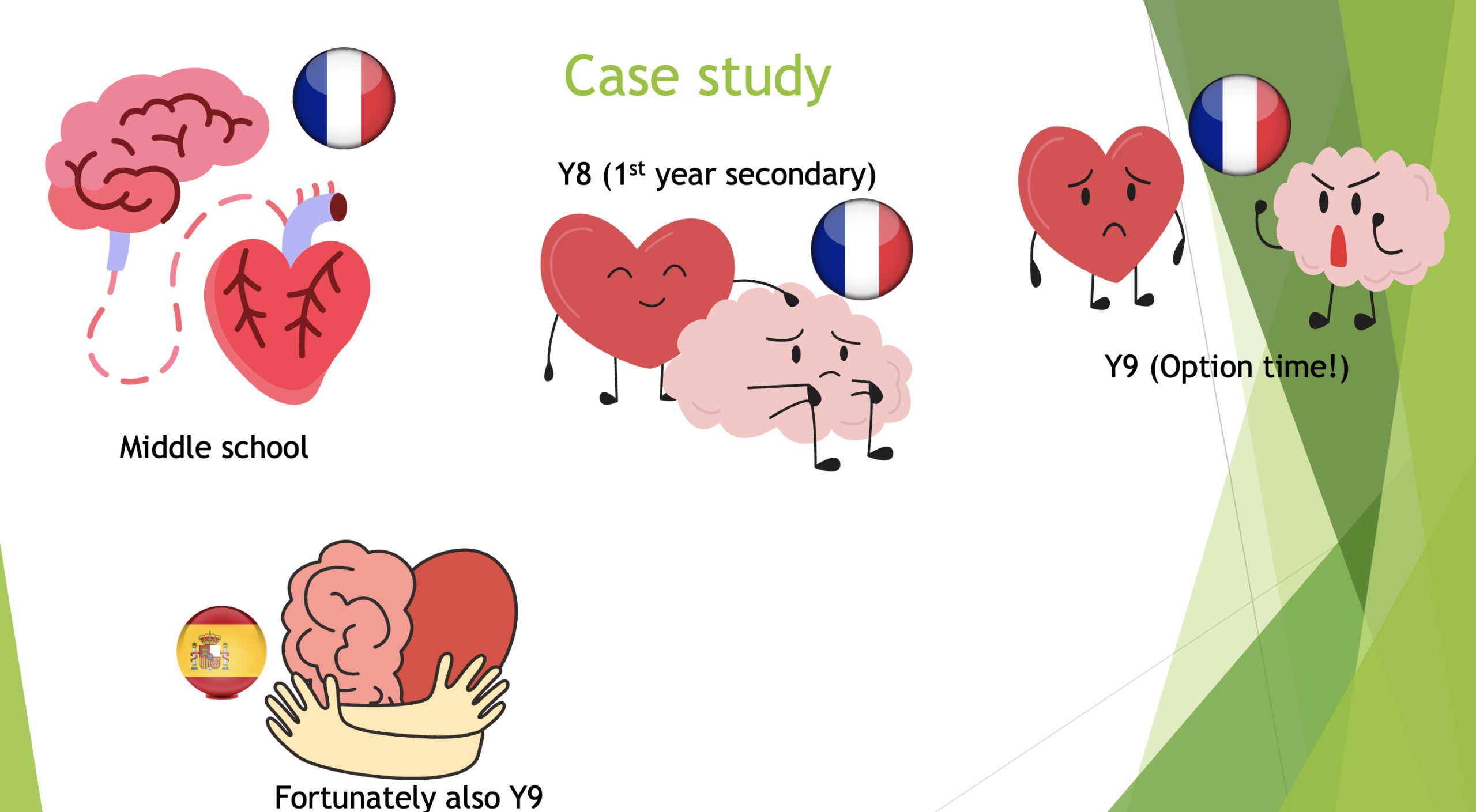
Fortunately, if you were any good at French, in Y9 you had the opportunity to start Spanish or German depending on which half of the year you were in. Having first been to Spain as a baby, travelling in my baby car seat bolted to the floor of my parents’ Morris Minor, and visited several times over my childhood years including being flooded out of our tent in Salou at the age of 5, I was pleased I was in the Spanish half. In class I met Señora Sánchez-Richardson who I can only describe as a crazy Colombian phenomenon who intrigued me and inspired me from day 1. She was strict, demanding, had the highest expectations and the driest sense of humour. Her favourite phrase was ‘Really?’ said with a raised eyebrow and look of incredulity! Every lesson I was challenged to learn not just words and grammar but also little nuggets of culture and ‘real life’ Spain. I talked about my undying love for and gratitude to Señora Sánchez-Richardson at ILLC 5 in 2015 but it’s worth repeating. Continuing the analogy – she engaged my brain with her academic rigour and captured my heart with those snippets of life, nurturing my love of languages back to life. Her name was Luz – quite literally a light in my life!
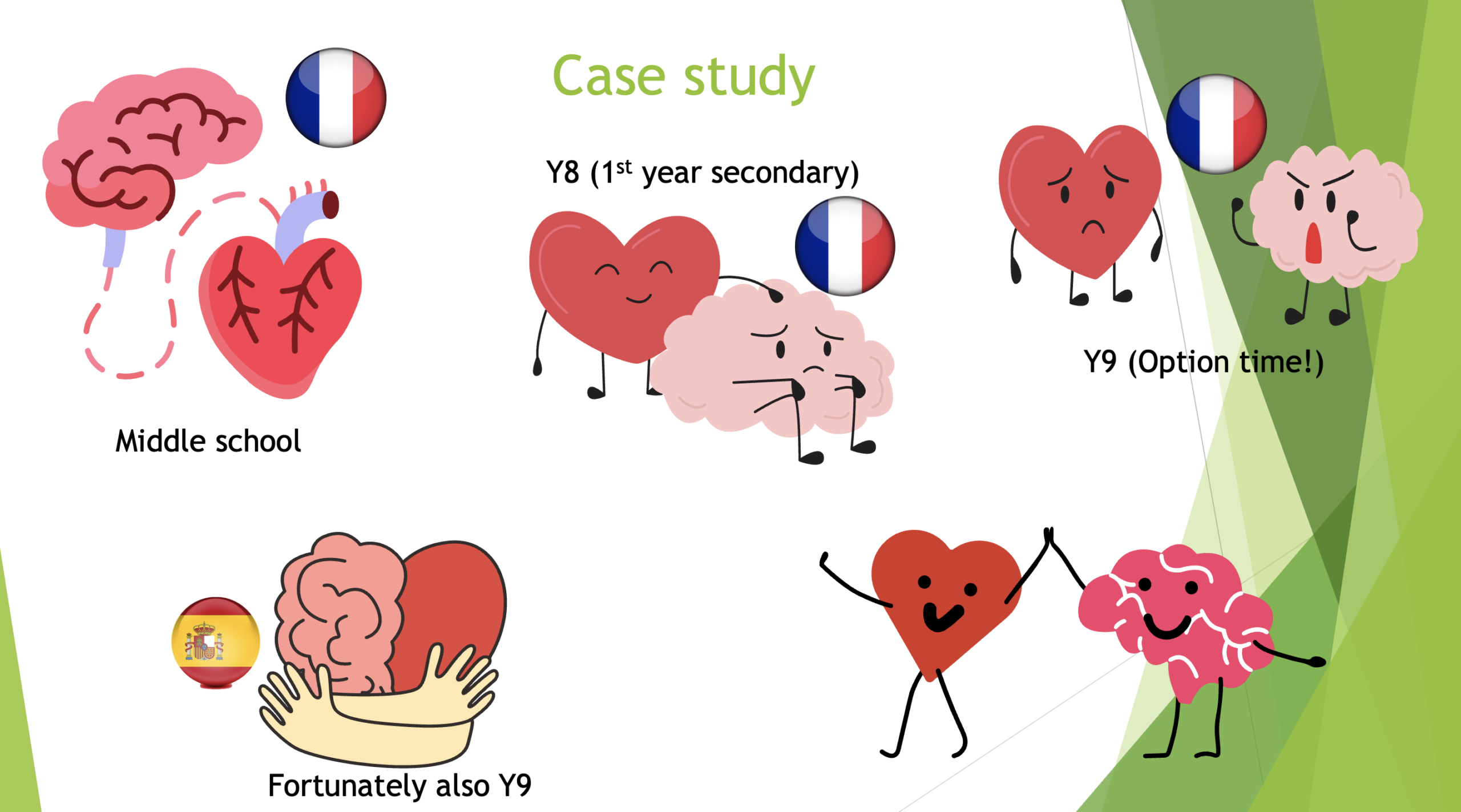
GCSE Spanish was a no brainer and then A level Spanish – Señora S-R continued to teach me joined by Mrs Gunning from the grammar school as we had half our lessons by ‘consortium’ and I discovered Spanish literature. Heart and mind together, skipping happily!
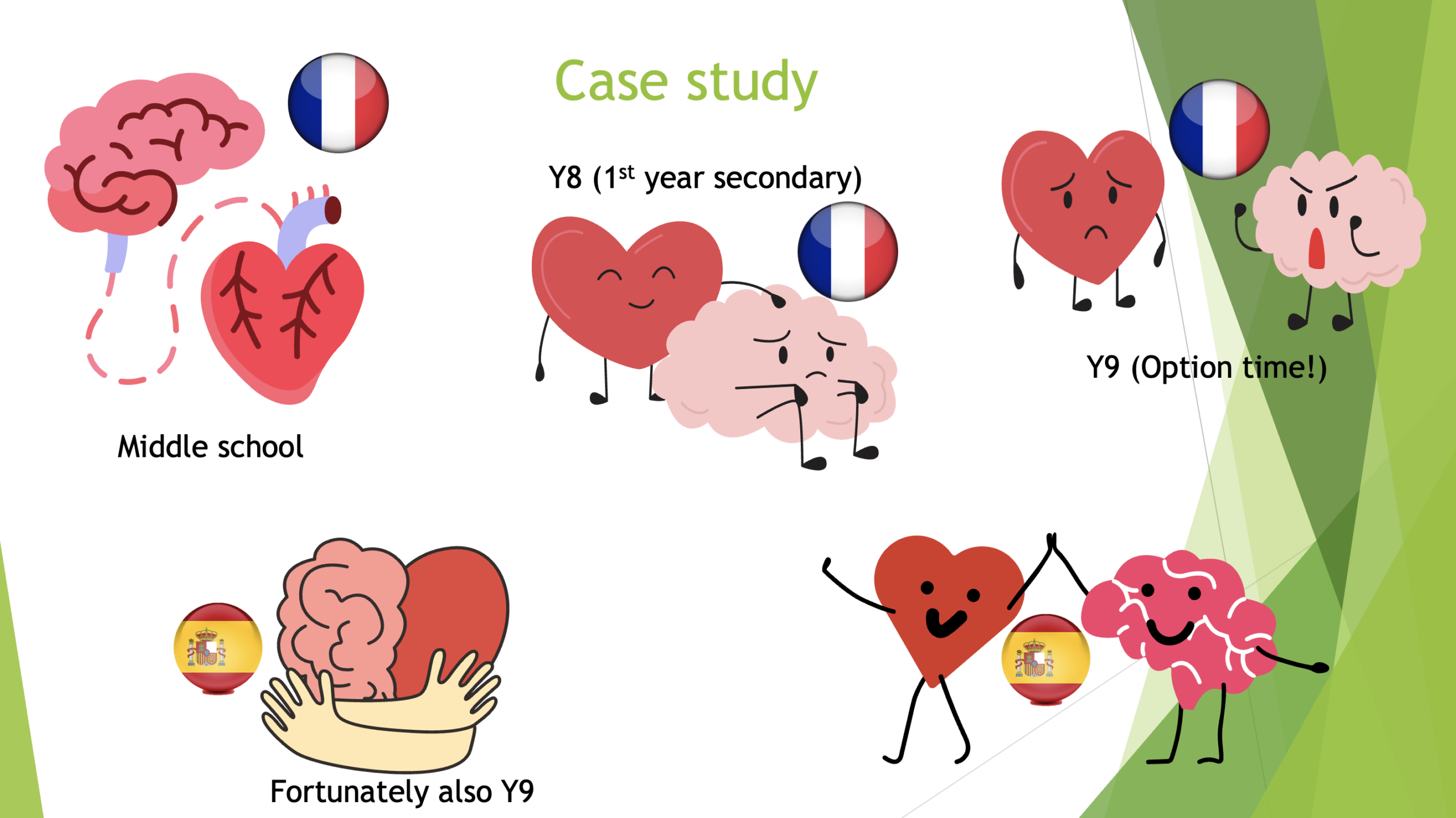
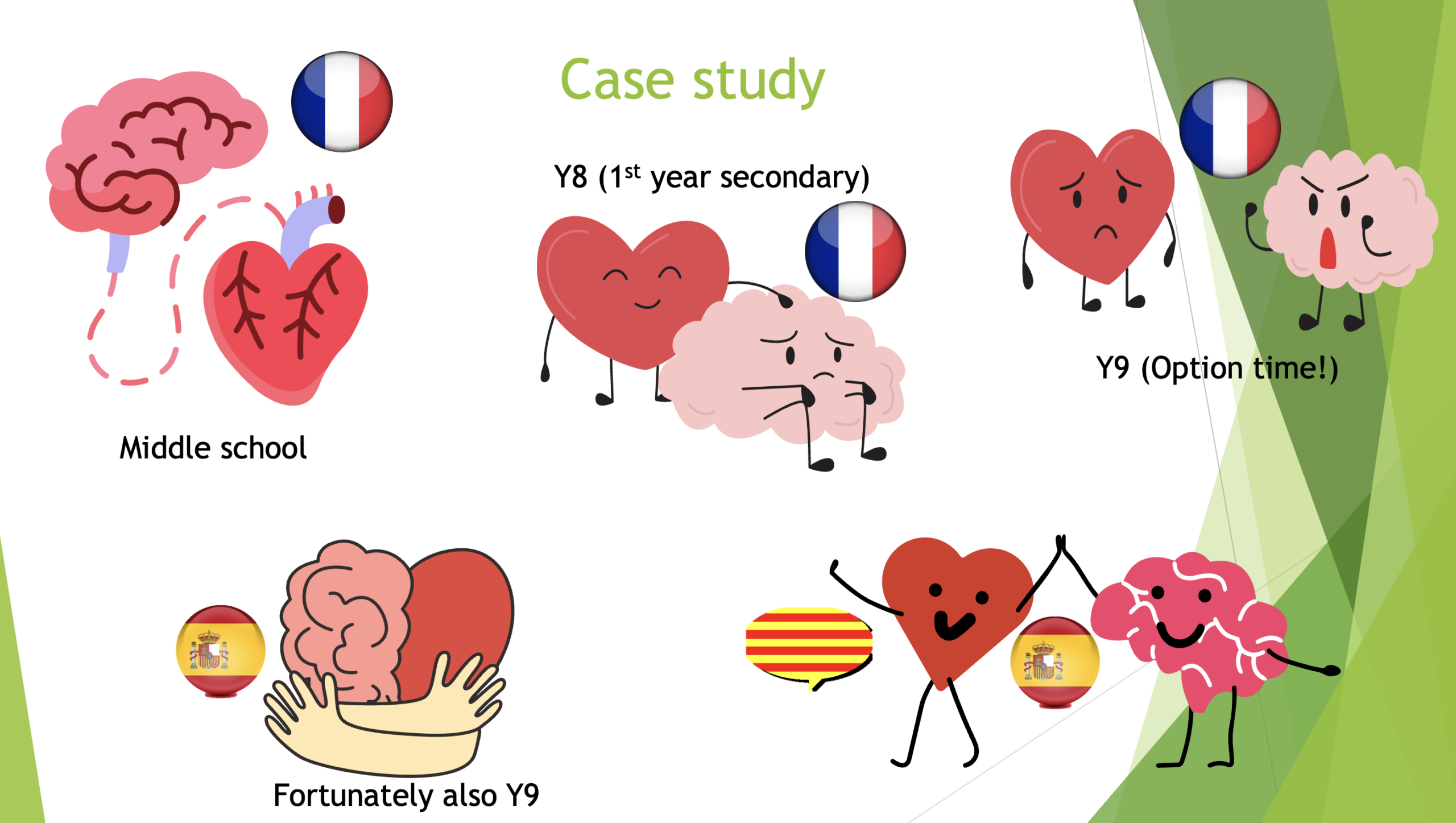
University beckoned and a degree in Spanish. I did look at doing French as one of my 1st year options (you had to do three subjects and I was doing Spanish and English Literature) but without a GCSE it wasn’t possible. Very annoying! In the second year I learned Catalan with the enigmatic Professor Yates and spent a year developing a Mallorquin accent at Universitat des Illes Balears. Years later, this would come in useful when my school was involved in a project with Barcelona, and cause great amusement and then delight to the children who weren’t expecting me to speak their language albeit with an accent that they said made me sound like a peasant!

And my love of language learning continued. Sadly by the time I was old enough to train, it wasn’t possible for me to train as a primary teacher with a language speciality but I did become a teacher – of Spanish and French. In fact, my second job was taking over from my beloved Señora Sánchez-Richardson as Head of Spanish. (She’s also responsible for me joining ALL!) After ten years in secondary I left to follow what I really wanted to do and started to teach primary first at a Prep school and then at my current school. Heart and mind were once more happy and in synch. Twenty plus years later, I still love it.
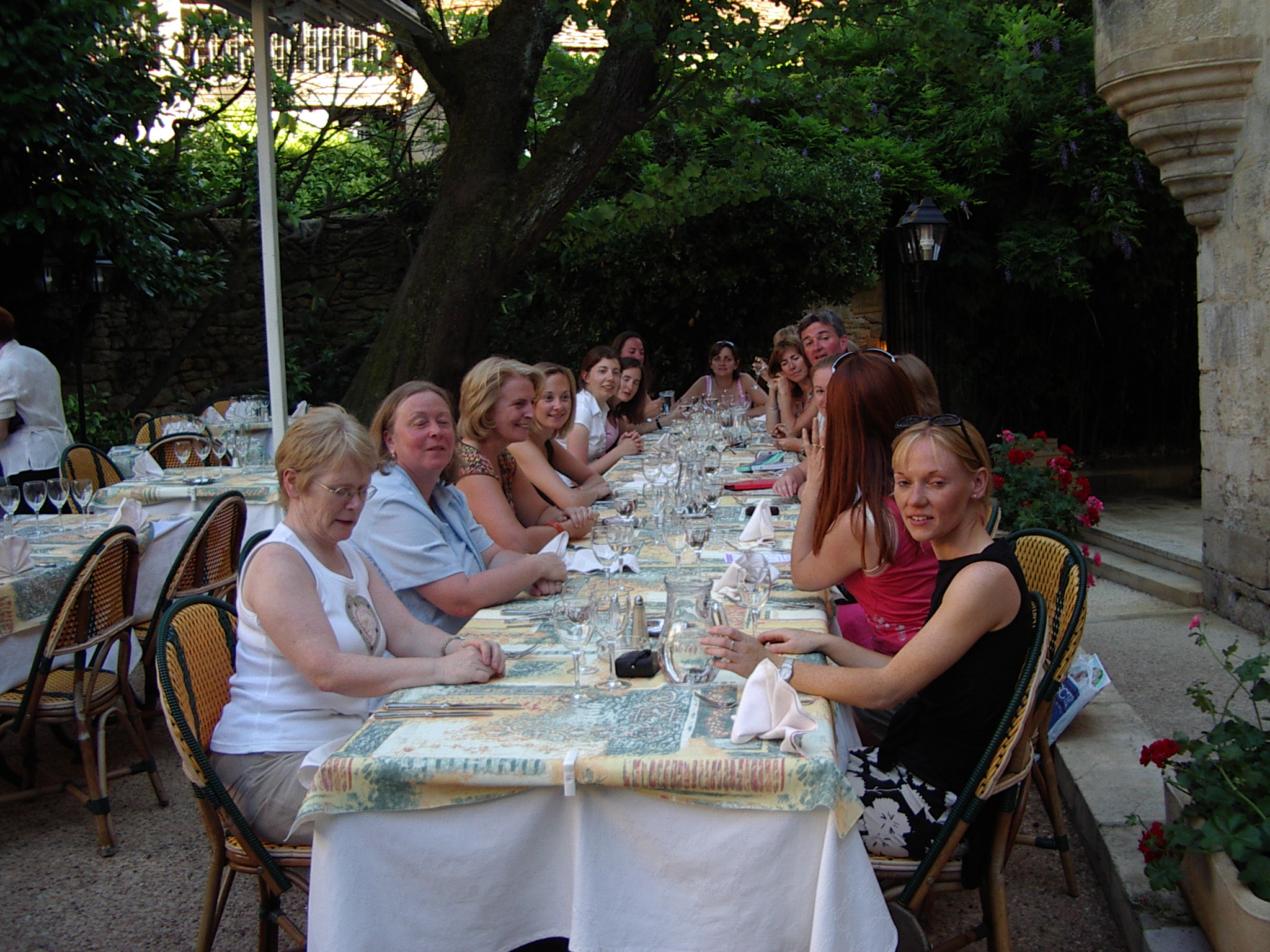
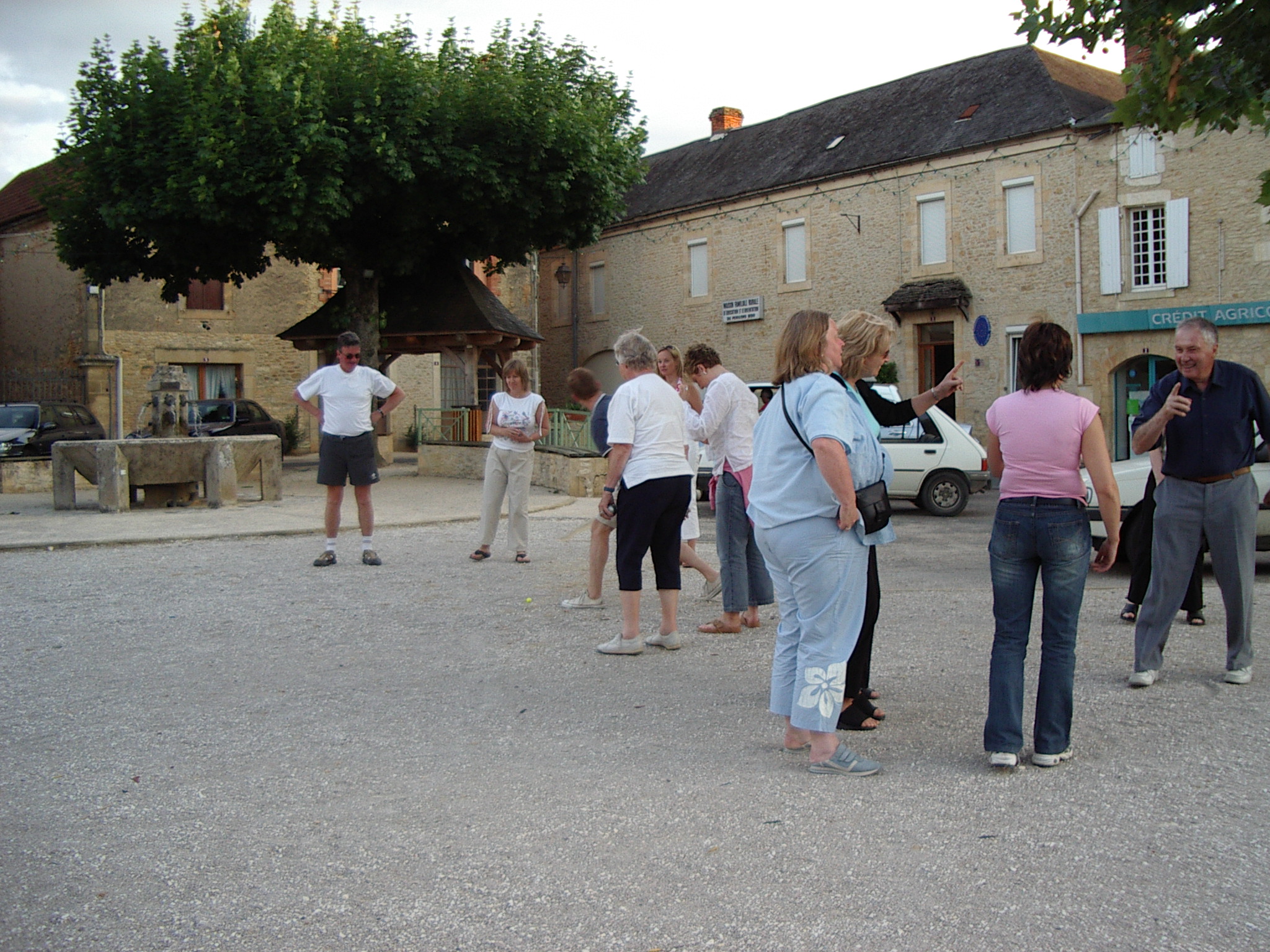
Whilst at the Prep school, I asked to go on a course all about primary pedagogy and French – and the principal said yes. So, leaving my little boys in the care of Mr S, off I went to Salignac in the Dordogne for a week with LFEE and the wonderful . It was really great course with some brilliant people. Not only did I get to connect with my Scottish roots – most of the other participants were Scottish – I also learned lots. However, the most important thing of all to me, and the thing that I will always remember is that I fell back in love with French. As my mind retrieved vocabulary and grammar hidden in the filing cabinet of my brain, my heart began to beat faster and I remembered why I had fallen in love with it in the first place. I remember bursting into tears and blurting out “I love French again!” Thank you Richard (and Elise) 🫶
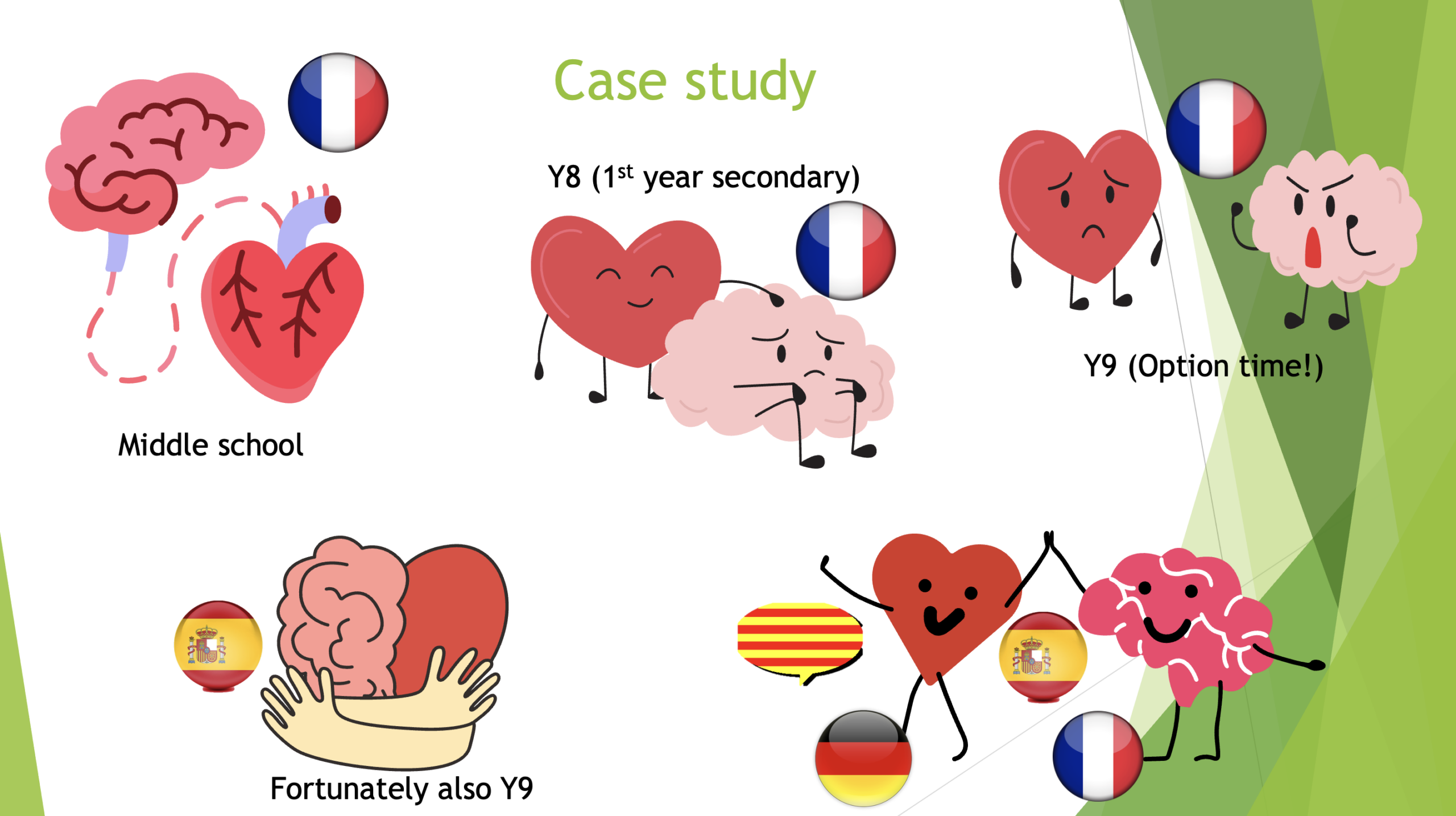
I went to evening class to carry on my French – until they were stopped! – and then started a German course that led to a certificate, also at evening class. My Dad fell seriously ill and I missed a whole block of lessons but I’d paid for the exam so I turned up and, thanks to my language learning skills and a bit of logic, I passed (and my mark wasn’t too shabby!)
Fast forward a few years and my husband’s job took us to Switzerland for a couple of years and that German was useful – although most of my neighbours preferred to speak to me in English as it wasn’t Schweizerdeutsch. Classes got me to A2 level German. Heart and brain are happy with German because it’s so different from other languages I know and I love the expressions and compound words. I admit that I’ve probably used German more since we came back to England than I did in Winti but I tried really hard! I’m now B1 (according to Duolingo whose course I have completed now!)

I find it really hard when I can’t communicate with people so prior to holidays I try to learn some phrases to help. I’ve tried Italian and Swedish (my husband worked for a Swedish company for a while) – the former was a bit helpful, the latter not so as everyone spoke to me in English but did appreciate my efforts!
And when I was involved in an Erasmus+ project between my school and schools in Spain, Austria, Greece and Türkiye, languages once more linked hearts and minds. In Spain, I was called upon to translate from English to Spanish, and also Spanish to German at times, and was really frustrated that I couldn’t help the Greek and Turkish delegates that were struggling with English. I even had to translate a speech by a local politician without any warning – and it was on the local news! In Austria, we were expecting to do a lesson on Guy Fawkes in English but quickly realised it was going over their heads so off I went, launching into as much German as I could muster- with a lot of acting and sound effects – apparently pretending to be a feuerwerk was much talked about! Come the mobilities in Türkiye and Greece, I was worried that I wouldn’t have the same experience as I had in Spain and Austria, being able to talk to the pupils in their own language, so I made an effort to learn some very basic Turkish so I could at least say my name and ask how people were plus some courtesies and essential phrases!
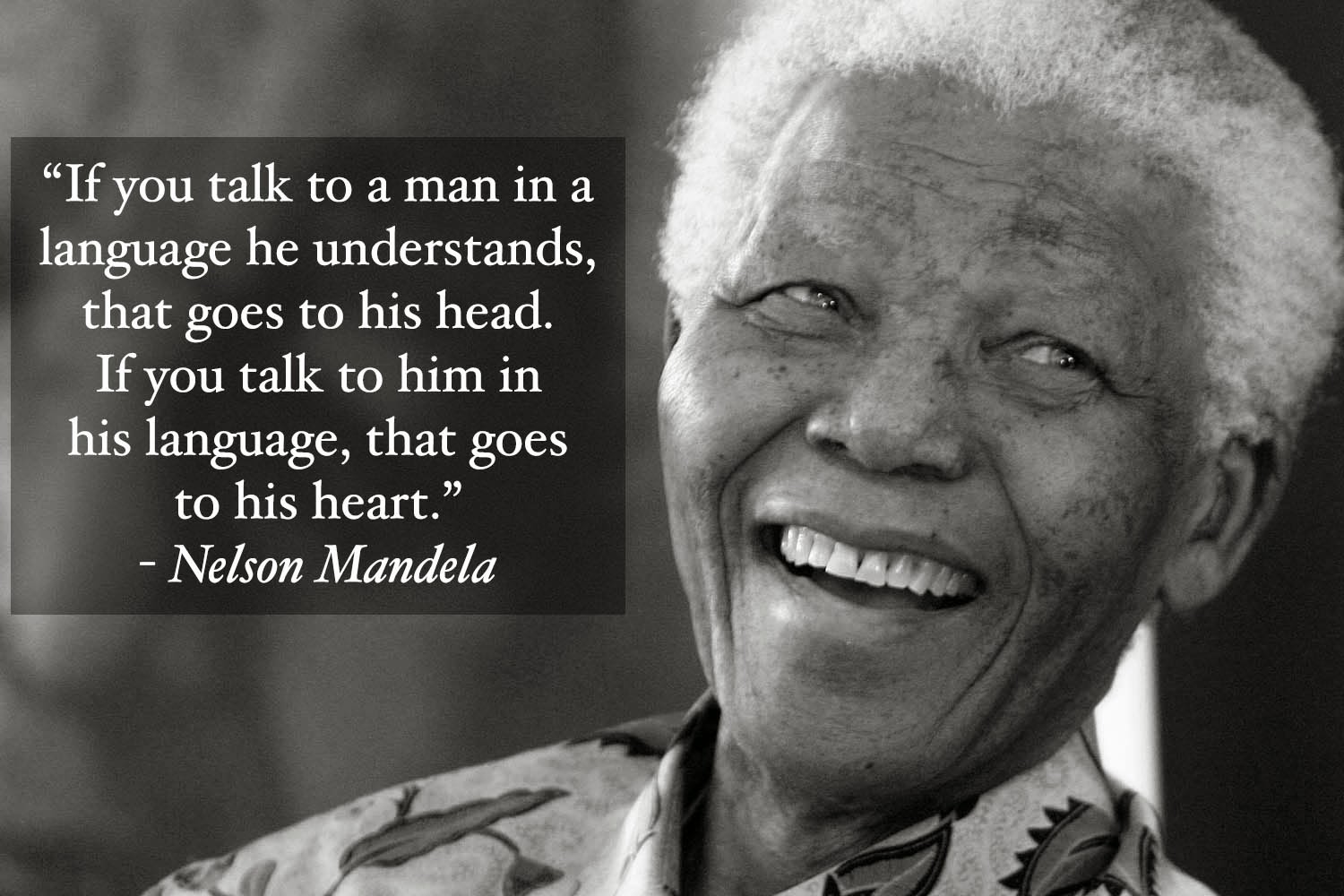
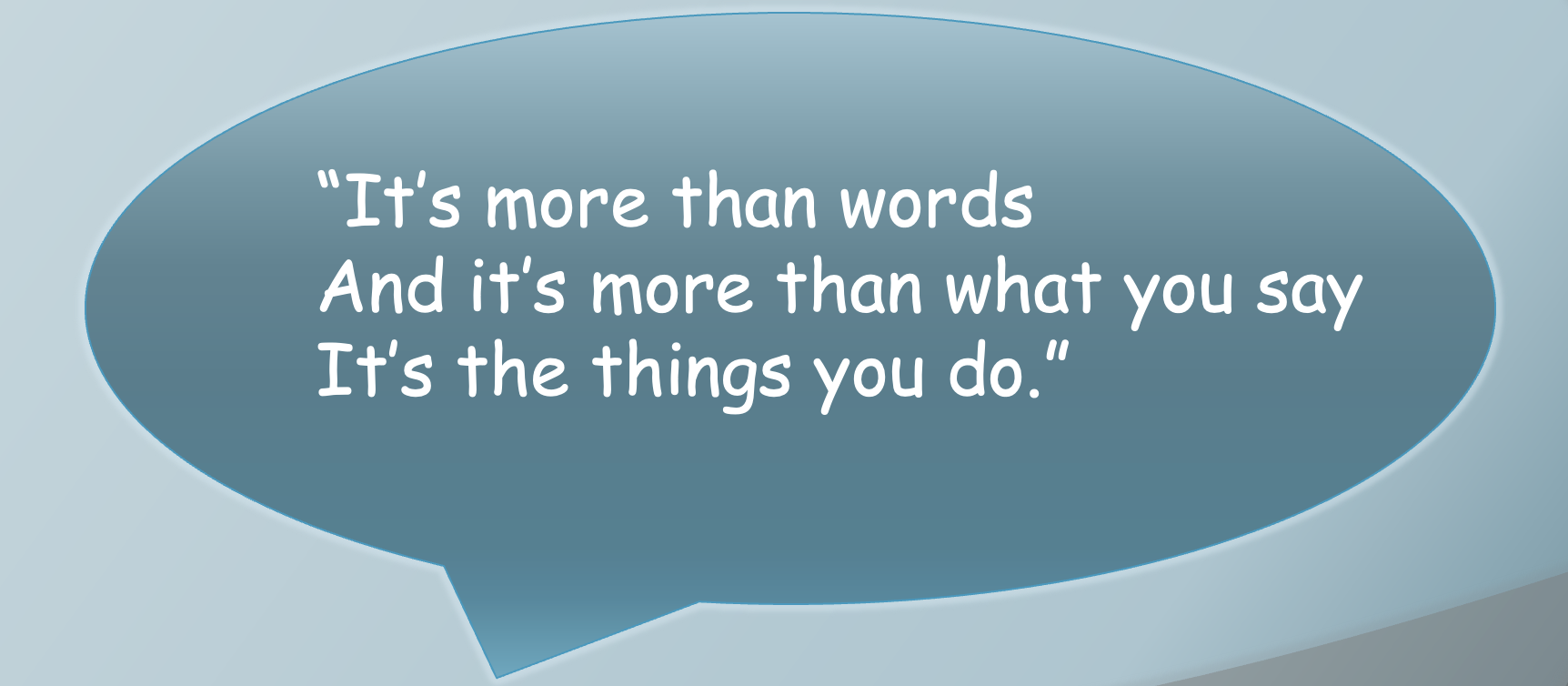
This quotation has always spoken to me and was proved true in Türkiye where as soon as I spoke two phrases of Turkish I was mobbed by children and followed around like a popstar. It didn’t matter that I really didn’t know much more but I’d spoken their language and they wanted to speak to me. I did learn a little more – especially how to say stop! and careful! as at one point I was nearly knocked off my feet by a swirling mass of children wanting a sticker – but a little went a long way, and our hosts were also really appreciative. Prior to the Greek mobilisation, two of the Austrian partners joined in the language learning and we all had a go at learning some Greek – to the point that it became a bit of a thing and we were given a Greek ‘exam’ Once more, using my mind, led by my heart desire to communicate had engaged hearts and minds.

This has ended up being longer than I’d planned but I wanted to tell the story as to me it perfectly explains my point about knowledge (what you know) not being enough to sustain learning – your heart (how you feel) has to be engaged too.

And that goes for teachers too!
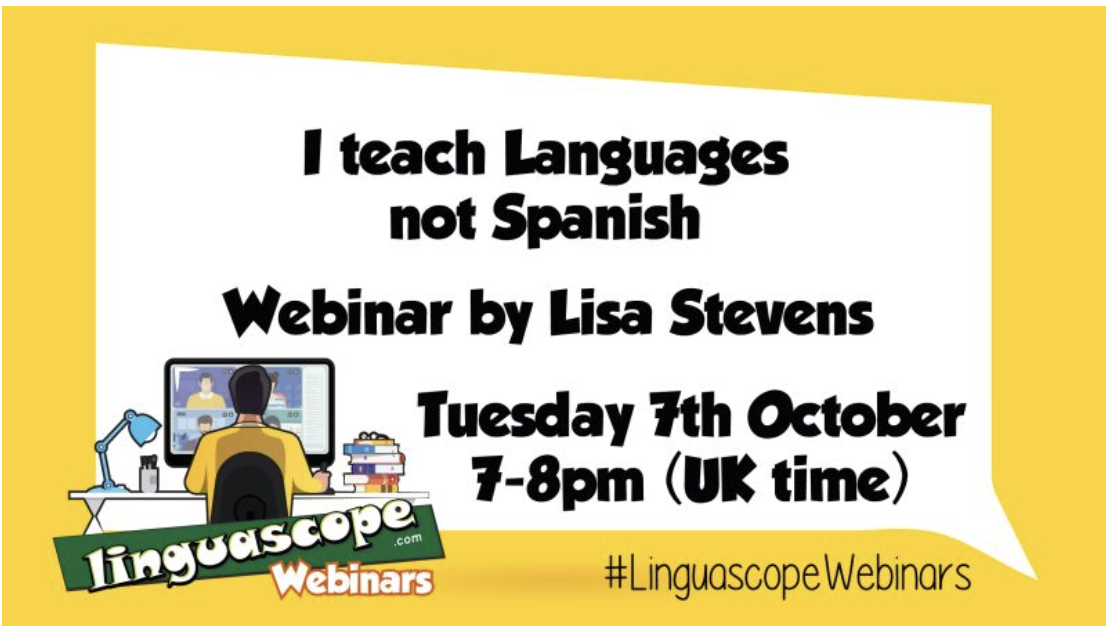
Really pleased to be delivering a Linguascope webinar next Tuesday 7th October. I’ve been asked several times but it’s never been a good time. This time, I was asked during a post conference reception last week and the date was near enough for me to be able to say yes immediately.

I’ll be talking about the importance to me of teaching languages rather than just Spanish:

Tuesday 7th October – Lisa Stevens will be talking about how her learners call her Señora Stevens, she doesn’t see herself as a Spanish teacher but as a teacher and explorer of languages. In this webinar, Lisa will explore this thinking, explaining why she feels it’s important to consider and value all languages, and giving examples of how it is possible when the Languages Programme of Study stipulates that over KS2 (aged 7-11) pupils must have made ‘substantial progress in one language.’

You can register for the webinar for free using this link

Looking forward to seeing you – at the start and end anyway as I probably won’t be able to see anything other than my slides when I’m presenting!

In the two following weeks you can also attend webinars by Hannah White and Kerry Bevan.

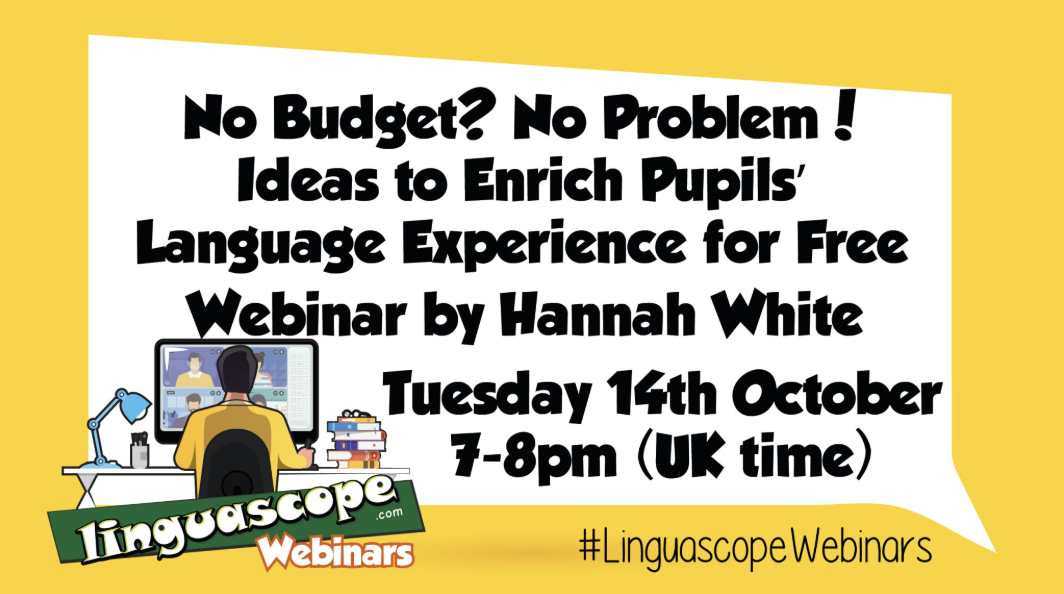
Tuesday 14th October – Hannah White will share 6 fully funded ideas for bringing additional language and culture into your classroom this year. Register here

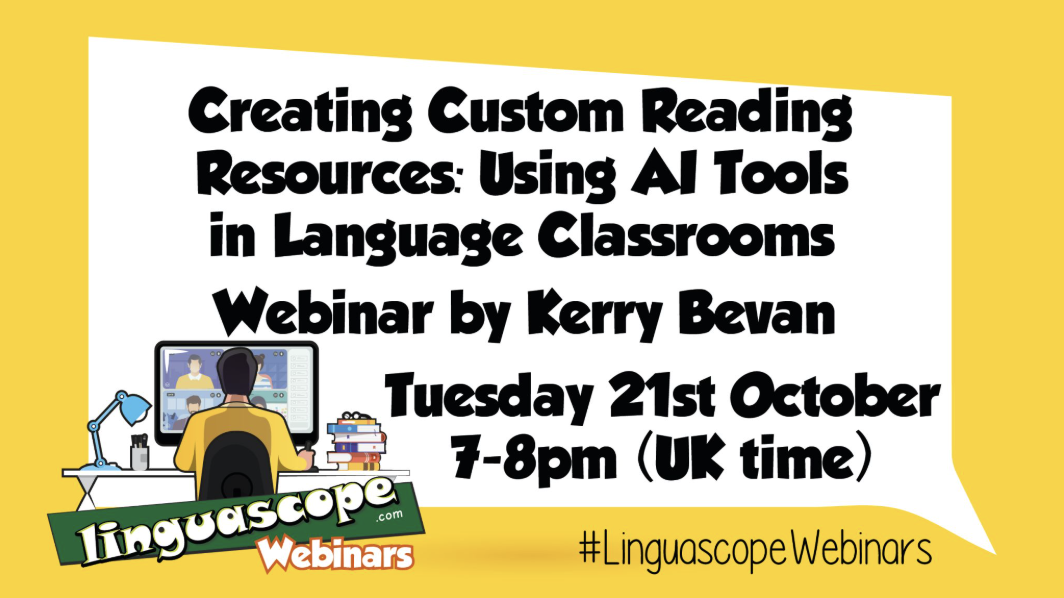
Tuesday 21st October Kerry Bevan will be joining us just before the half term break coming to share her experiences tinkering and playing with AI but to create custom reading resources which have a huge impact on learners and language learning! Register here

All Linguascope webinars are free to register and free to attend live, and are not limited to attendees from the UK – all are welcome!

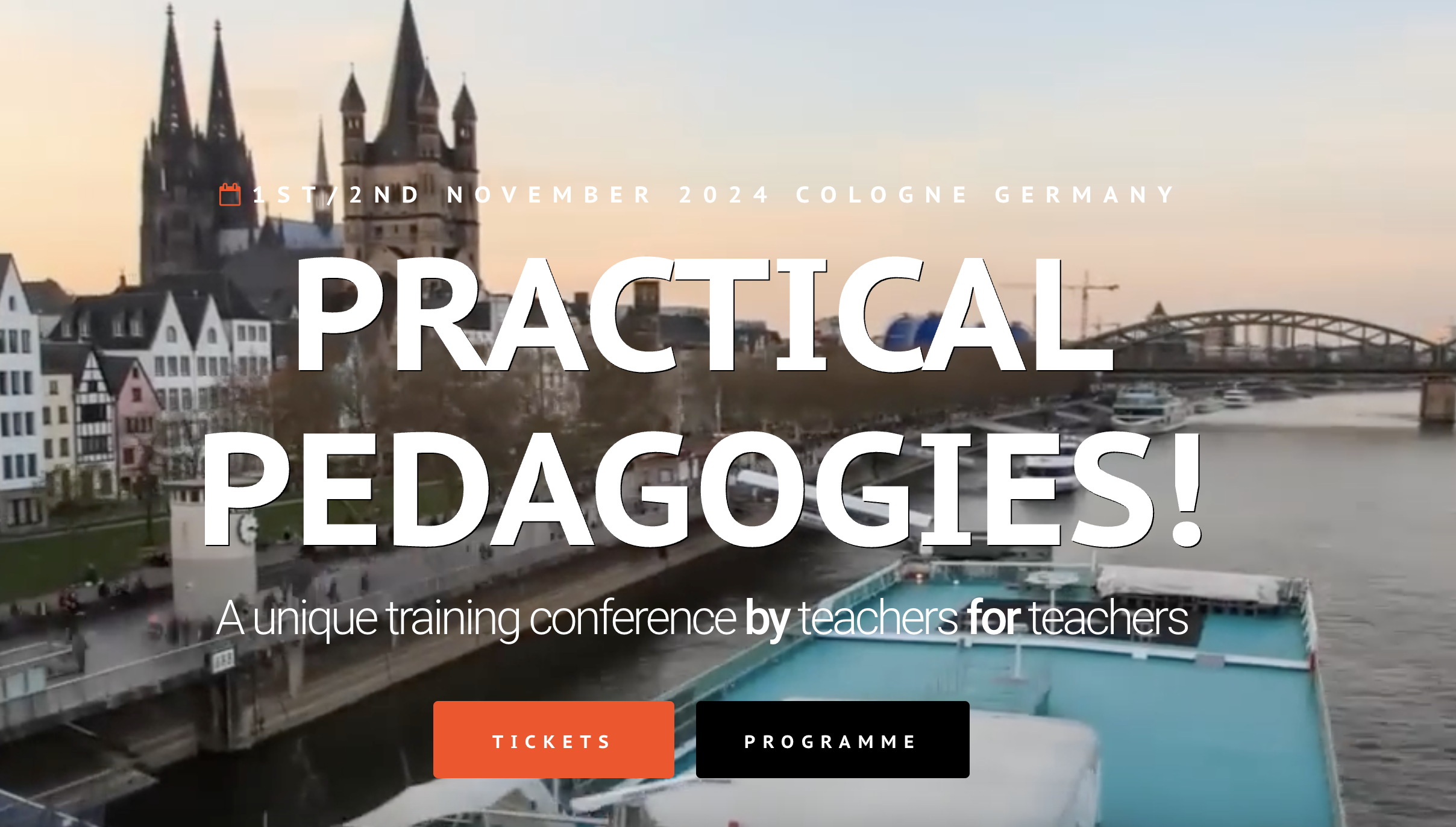
After a six year hiatus, Practical Pedagogies returns in 2024. To say I was excited when Russel first floated the idea would be an understatement!

Practical Pedagogies is a conference like no other. Over to Russel Tarr to explain:

Educational conferences can be prohibitively expensive for ordinary teachers, and often focus on abstract theory rather than real-world ways of immediately improving classroom practice. In contrast, “Practical Pedagogies” believes the best training is delivered by practising teachers, sharing effective and creative strategies and resources at an affordable price.

Three successful Practical Pedagogies conferences took place in 2015, 2016 and 2018 at the International School of Toulouse, France and at St. George’s British International School Cologne. At each event, teachers from all over the world delivered upwards of 100 sessions in a vibrant, friendly and enriching event over two days. Lunches, refreshments, and evening gatherings provided social opportunities for carrying on the conversations with old friends and new acquaintances.

After a COVID-imposed hiatus, we hope that the next conference in November 2024, once more in Cologne, will be the biggest and best so far… and delegates will be encouraged to purchase their tickets from March onwards.

Russel Tarr, lead organiser

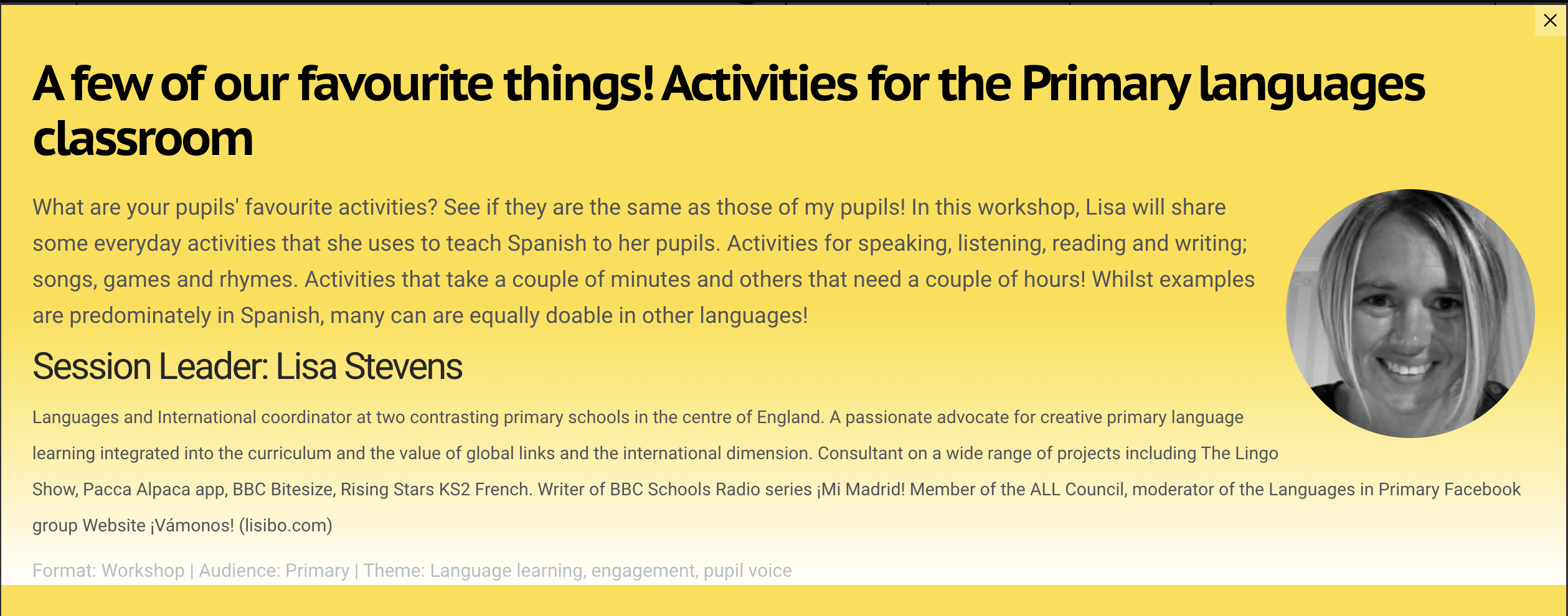
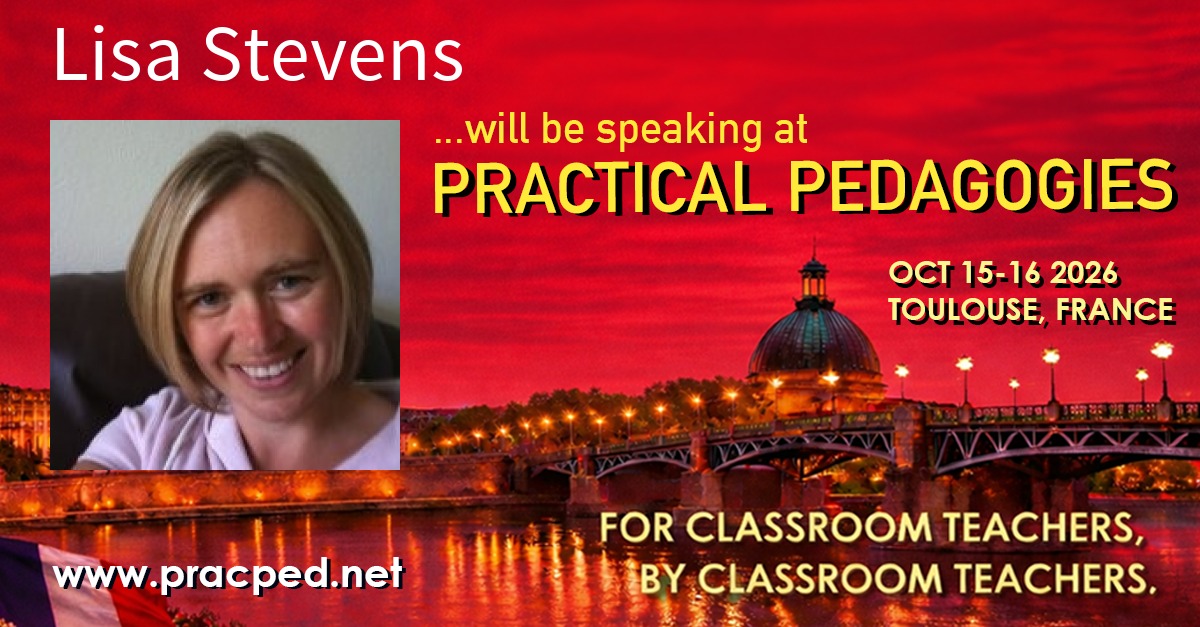
Having been at all three previous conferences I immediately signed up to present and am looking forward to talking about A few of our favourite things! Activities for the Primary Languages classroom

You can find out what I thought about and learned from the conference in 2015, 2016 and 2018 by clicking on the dates and reading my reflections accompanied by my sketchnotes (subject of my 2026 presentation!) If you want to know what others think, check out the testimonials here including mine. I stand by my assertion that you can’t leave unchallenged and unchanged! One of the things I particularly value is that, as it is an international conference, you get a wider view of education and a different perspective on familiar topics. I love picking up wisdom from other education systems and curricula as well as debating the current issues facing us all.

This year I’m looking forward to finding out about Using Thinking Maps to enhance instructional experiences for variable learners, learning more about AI (no point burying your head in the sand!) and also catching up with Laura ‘smiley’ Riley-Genton who has had a busy time since I last saw her (getting married, becoming a Mum and changing job!) and attending her session More than just a language:ideas to teach foreign languages to mixed nationalities. I’m also looking forward to catching up with Carol Allen although I unfortunately won’t be able to attend her session as I’m speaking at the same time. You can check out the programme for yourself here.

125 workshops have been confirmed, led by educators from all over the world – including me! – and delegates can pick 8 to attend over the two days. There are a limited number of Early Bird tickets available if you’re quick! It’s worth it as the price rises after that.

I’m also looking forward to visiting Cologne/Köln once more.It’s a wonderful city and this time I can even speak almost passable German! I’d love to see you there. Lisa x

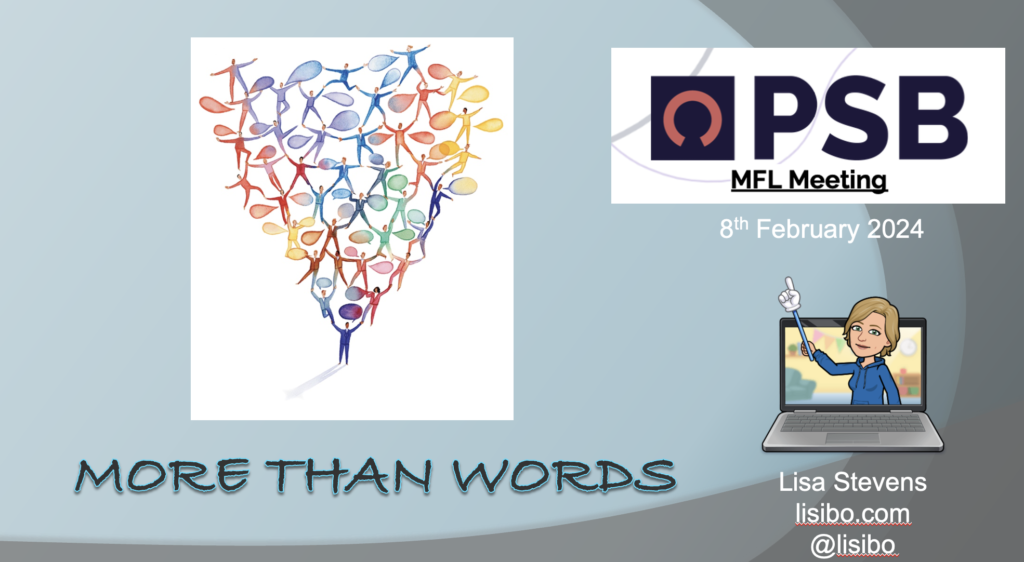
Yesterday I had the great pleasure of presenting at the PSB MFL conference via Zoom.

My presentation was entitled More than words with the subtitle Language learning is about more than learning lists of vocabulary. In it, I discussed my ‘idea of what ‘list of ingredients’ for language learning, particularly in the primary context. After discussing OFSTED’s 3 pillars and 3Is, I moved on to present my 7Cs!

And what are my 7Cs?
Context
Consolidation
Confidence
Communication
Culture
Celebration
Connection

I was thrilled with the response to my presentation and want to thank all the attendees for their kind words; I was floating on air all day despite an afternoon of stircrazy 10 year olds who’d not been out to play all day followed by parents evening!

If you’re interested in what else I shared, my slides can be viewed below.

What do you think? Have I missed a C? Let me know!

Today at The Language Show it was my pleasure to deliver a presentation entitled A few of our favourite things.

During a packed 45 minutes I highlighted as many of the things that my pupils say they enjoy as I could. I do talk very fast but as is often the case, I had far more to say than there was time to share.

As promised you can find my slides below including links to things I mentioned such as the songs and games. If you have any questions, please feel free to post them in the comments below. And if you bought a ticket, you can access my presentation (along with many many more!) on catch up. I’m looking forward to doing just that over the next week or so.

Clickable links from presentation –

Slide 2 Spanish video
Slide 7 Spanish games
Slide 8 Youtube playlist including minibook tutorial
Slide 10 Miguel y Sabo video
Slide 12 Isabella Springmuhl Tejada – Intro – https://youtu.be/ZypUTsEh1-o Sp/Eng explanation https://youtu.be/nbwc2DYofkI and intervie https://youtu.be/TH3g1qe_kko
Slide 15 Yummy Yucky PPT
Slide 17 Songs (clockwise from top left)- Hola a todos Los días Uno dos tres choc ¿Te gusta el helado? No se habla de Bruno Vuela vuela Hola ¿Cómo estás? Los partes del cuerpo
Slide 18 Hello to all the children of the world Hands of the World -How far The Hello Song
Slide 22 Strange animals post
Slide 24 Señor Cabeza Naranja slideshare Storymaking slideshare
Slide 39 Tweets https://twitter.com/whcps/status/1446082787786756096?s=20 https://twitter.com/whcps/status/1446082787786756096?s=20 https://twitter.com/whcps/status/1446100113462546442?s=20
Slide 47 Lost Worlds Language Portraits ISA Padlet https://padlet.com/nocilla13/ISA WBD Padlet https://padlet.com/MrsWoodDHT/zfwygb46bn62jf6u Portfolio https://padlet.com/nocilla13/spport21
Slide 49 – Around the World in 80 Books Padlet
Slide 52 Hungry Caterpillar in five languages
Slide 54 Erasmus + blog
Slide 56 Christmas research

Things to add –

I ran out of time to share about our amazing Erasmus+ project that has certainly been one of the children at WCPS’s favourite things over the last three years. Hopefully one day I’ll get to present a whole session on it (or record one of my own!) but until then, please have a look at the project blog from the point of view of our school here and the whole project blog (which was written by the Greek partners) here.

TECLA 4/2021

| Leave a comment

Download here

Early in October I took part in the Talleres de español at Instituto Español Vicente Cañada Blanch in Portobello, London. It was quite a treat to attend and participate in a face to face conference, and I thoroughly enjoyed the day in spite of the pouring rain and general exhaustion!

My presentation was entitled Take One Book, considering how one book can be used as the inspiration and impetus for a wide variety of activities in the primary language classroom. You can read a little about it and view my slides in a previous post.

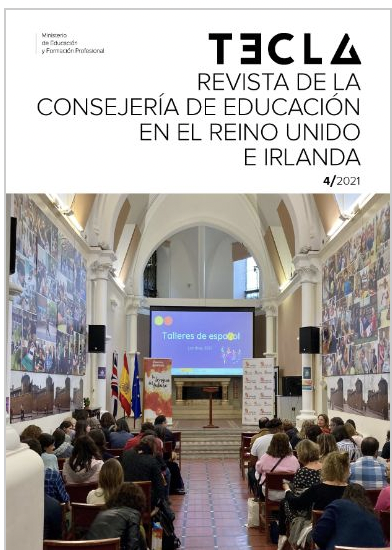
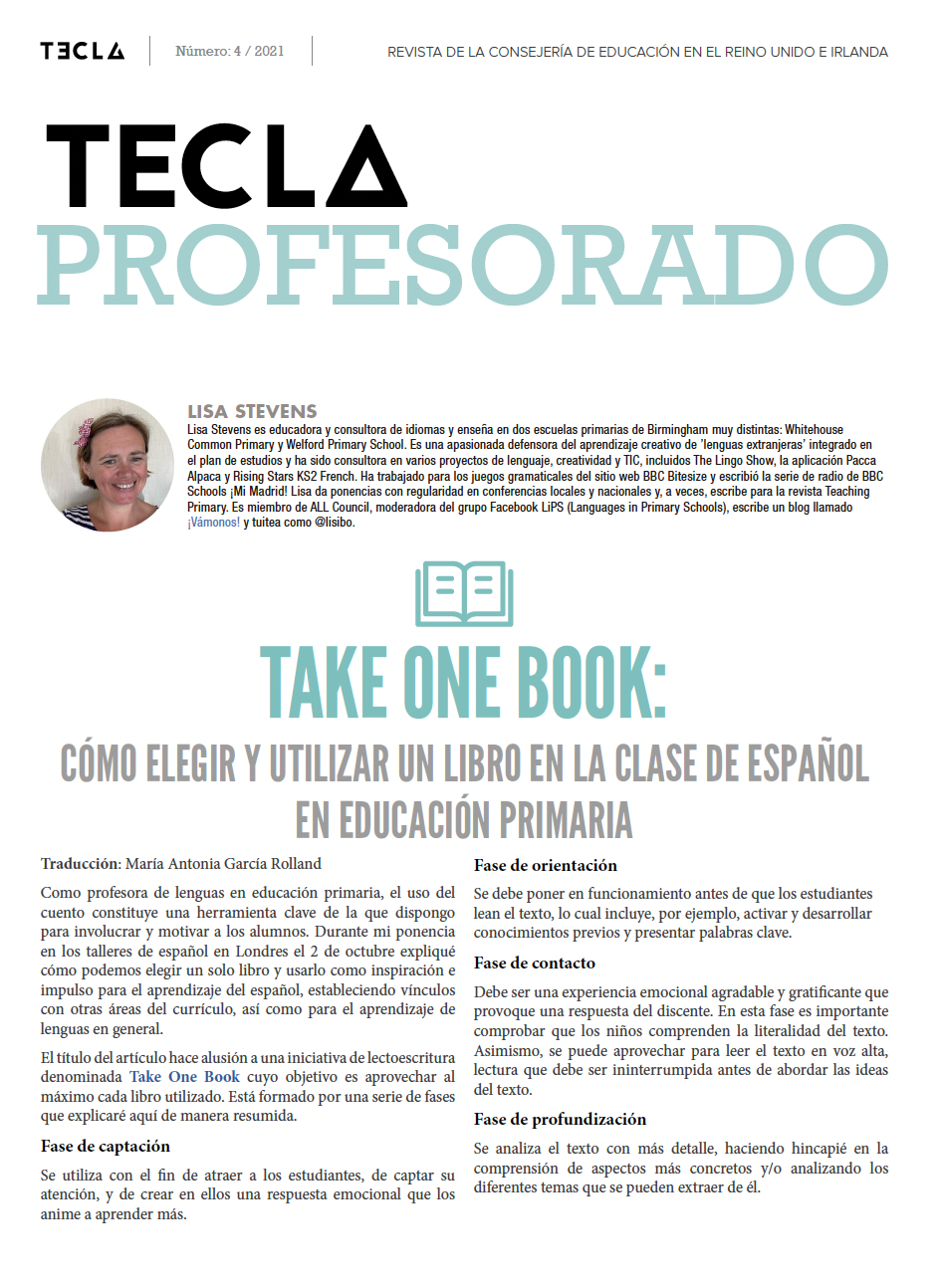
When I was asked to speak, the organisers asked if I would be willing to write up my talk for publication in a special edition of TECLA, the Consejería magazine. I agreed and the magazine has just been published. I am really proud to be part of such a prestigious publication, and hope that it is well received and useful to readers.

Below is the first page and you can download the whole article below that.

Download TECLA 4/2021 here

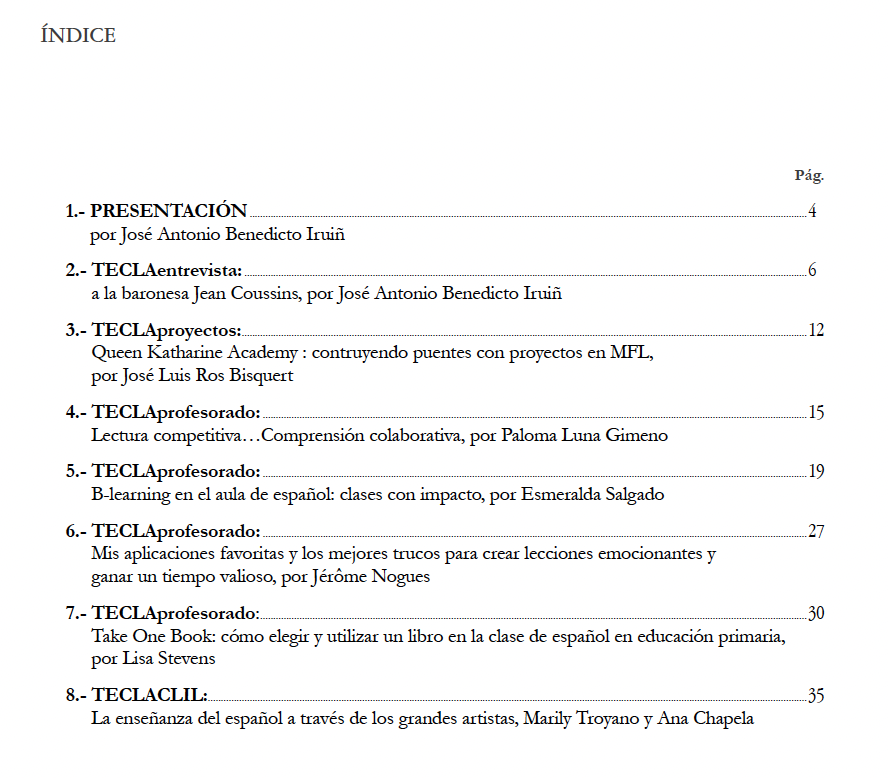
Other contributions include an interview with Baroness Coussins, an article on using important artists as the vehicle for Spanish learning, and a report on using MFL projects to build bridges at QKA in Peterborough where 52 languages are spoken by the school community. The full list of articles is below. I’m looking forward to reading through the articles over the holidays when I have time to digest.

The Bitmojis were a clue…

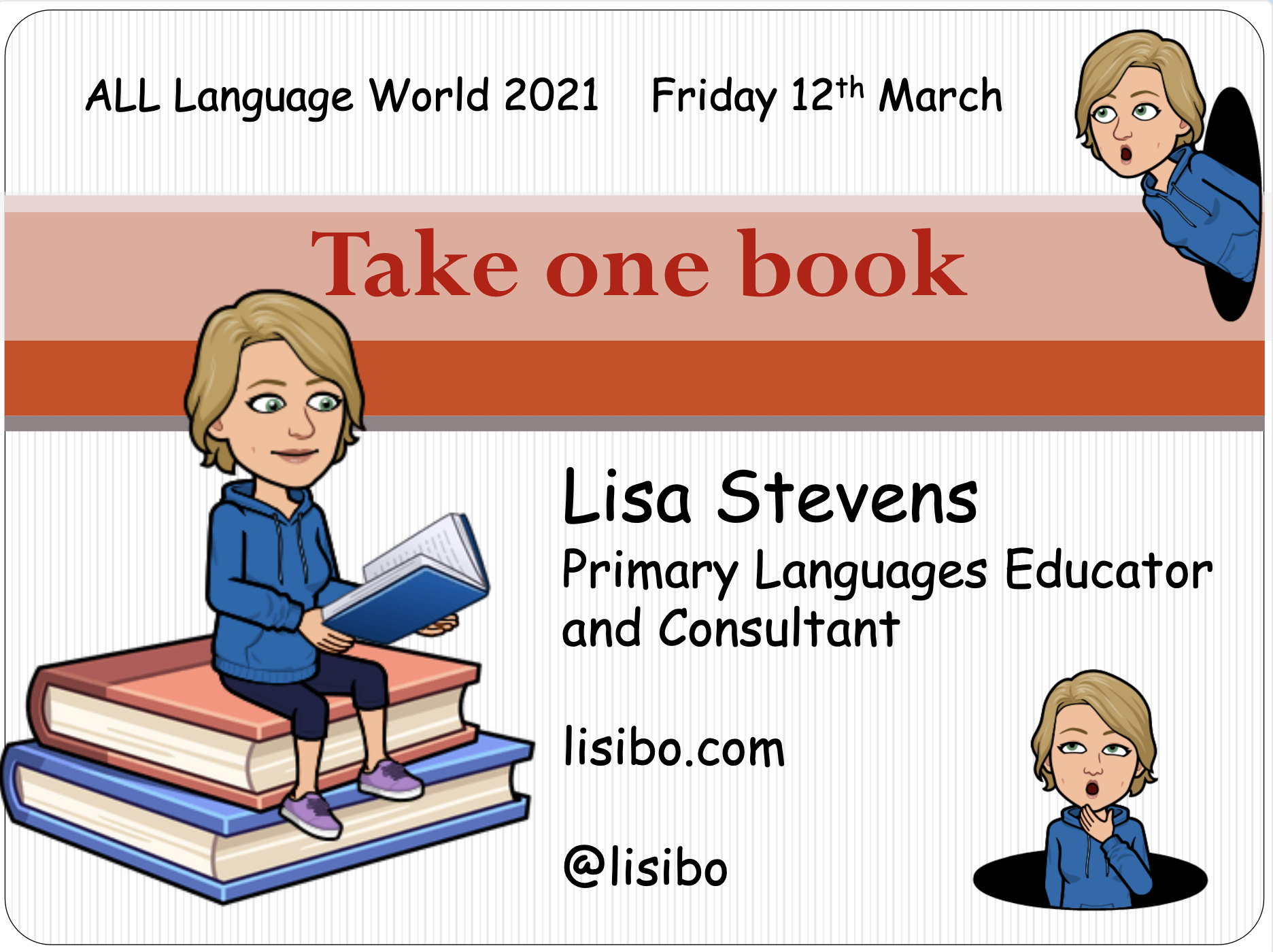
I once more had the pleasure of presenting at Language World, the annual conference of Association for Language Learning (ALL).
My presentation was entitled Take One Book and was the sequel to the presentation I did at PHOrum in November (you can read about it here) this time choosing a book that was originally written in Italian and has no English translation.

I really enjoyed sharing my ideas of how to use ¡Ojo Oso! and was pleasantly surprised that I managed to finish in time and have time for questions. I experimented with using subtitles/captions during my presentation after comments by Helen Simpson on LiPS made me think about accessibility. I need to watch back the recording of my session (which has just been made available for those who registered for the conference but missed the session) to see exactly how accurate they were but I know that when I spoke Spanish they definitely had trouble as they were set to English! For example un agujero became ‘all alcohol’ and una madriguera became ‘mother together.’

Below you can find a PDF of my presentation. I’ve removed the story slides due to copyright but you can find links to versions of the story read online, as well as to where you can purchase a copy.

At the end there is a link to my Pinterest where I collected together materials for the talk, some of which I didn’t use! You can also access it via this QR code.

http://bit.ly/OjoOso

Perhaps you have ideas that spring to mind? Or you have a book that you could use in a similar way? If you have any comments or questions, do leave a comment below.

Postscript – you can watch the ‘standby/rehearsal’ recording of the session here.

As mentioned in an earlier post, I was asked to speak at The Language Show which this year went online and was delivered via Zoom. Below is my presentation and brief notes on what I talked about.


Thank you to all those who saw it ‘live’ for being there – even if I couldn’t see your faces which I found quite disconcerting – and for your questions and comments. I saved the chat and enjoyed reading back your comments. Any questions that were in the chat and not put into the Q&A tab so therefore went unanswered, I’ll answer below.

My presentation.

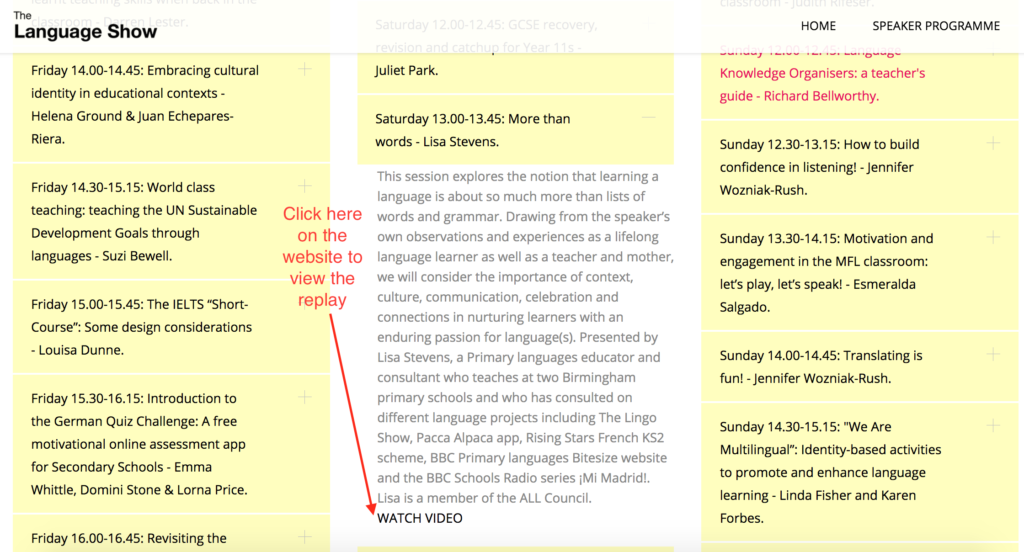
If you want to see me delivering it live, you can view the recording of the session for the next month (so until mid December 2020 I would think) via the Language Show website and clicking on my name (see below)

Below are links to resources, reading and things on which I commented/shared as there are lost of hyperlinked images!

The pitfalls of Google Translate https://www.redlinels.com/pros-and-cons-of-google-translate/
Physical Spanish Phonics https://brilliantpublications.co.uk/physical-spanish-phonics.html
Hands of the World at WCPS http://www.whitehousecommon.bham.sch.uk/index.php?option=com_content&view=article&id=3020:this-is-me-signed-in-makaton-hands-of-the-world-project&catid=81&Itemid=278

One of the songs in which we collaborated – Makaton used to communicate across countries and languages.

Old World Language Families Tree https://www.mentalfloss.com/article/59665/feast-your-eyes-beautiful-linguistic-family-tree See also http://www.sssscomic.com/comic.php?page=195
Oxford University Press dictionary sheets https://global.oup.com/education/content/dictionaries/free-resources/oxford-school-dictionary-word-origins-free-resources/?region=uk
Something Rhymes with Purple podcast https://play.acast.com/s/somethingrhymeswithpurple

Language Links posters https://www.lightbulblanguages.co.uk/resources-language-links.htm
Slide 37 worksheet https://www.lightbulblanguages.co.uk/resources/PrimarySpanish/days.pdf
Slide 36 The great Eskimo vocabulary hoax and other irreverent essays on the study of language. http://www.lel.ed.ac.uk/~gpullum/EskimoHoax.pdf
Futurelearn course on Intercultural Studies – Language and Culture https://www.futurelearn.com/courses/intercultural-studies-language-culture
eTwinning https://www.britishcouncil.org/etwinning
Let’s Go Cultural! Erasmus+ project https://erasmusplusletsgocultural.blogspot.com/

Hello! song from the above project.

Find out more here too. WCPS Let’s Go Cultural blog

In the chat Lisa Ng asked about the exercise on slide 21. It’s from a unit on your town and the task the children were doing was using the structure En mi pueblo hay (place) Aquí se puede (infinitive) We’ve been talking about what there is/isn’t in our town, and what our town is like, and moved on to looking at infinitives. The task was supported by a ‘trapdoor’ grid that we’d used to rehearse the structure. The child whose work I shared had extended his sentences using adjectives which weren’t on the grid and applied his previous learning of adjectival position and agreement. I’d suggested it as a way to enhance their writing but not pushed the point which was why I was so pleased.
Paula asked if I remembered The Language Show a few years ago at Olympia with my trolley of resources. Of course I do! I still have it although in Covid19 times it has been rested for a bit as I’m not allowed to use as many resources.
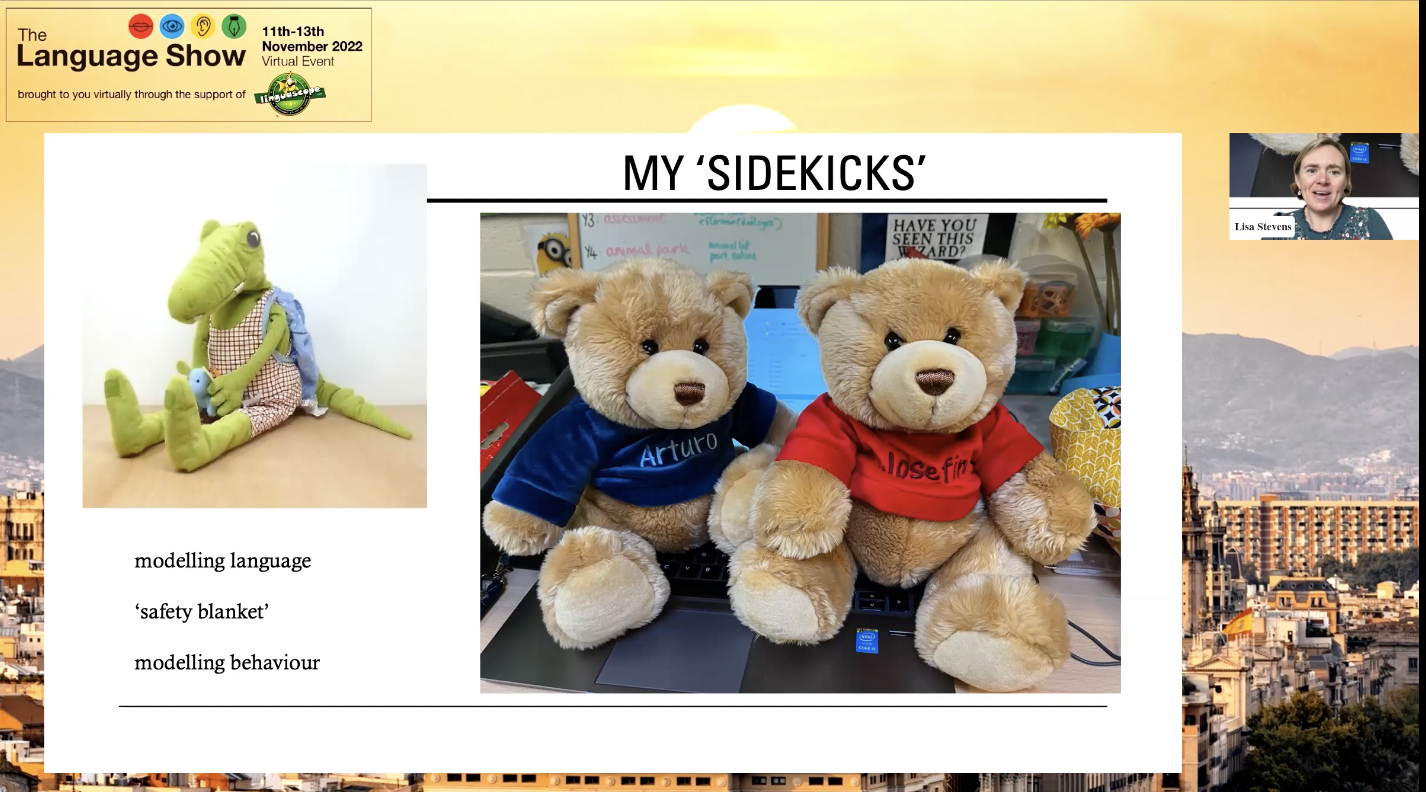
And I’d just like to reiterate what people were saying in the chat about making mistakes and being an example to your learners. I completely agree – modelling how we deal with mistakes, and showing that we are lifelong learners is SO important. One of my Y4 classes answer the register by greeting me in variety of languages and I’m trying to learn (and remember!) the response to each. They’re being very patient and keep repeating it until I get it correct. Problem is, by the time the next week comes, I’ve forgotten most of it. I keep trying though – which is all I ask of them!

Finally, if you teach primary languages in the UK, I recommended joining Languages in Primary School group (LiPS) on Facebook. Here’s the link. Please make sure you answer all 3 questions when you ask to join! https://www.facebook.com/groups/primarylanguages


If you have any questions, please leave a comment below and I’ll answer.

I’ll leave you with Westlife – More than words

Register for free and join online!

Due to current circumstances The Language Show, which is normally held in November at Olympia in London, is going online this year.

Held the weekend 13th-15th November, the show has three streams of talks:
For those who love languages – talks, entertainment and insights.
For language teachers – CPD for teachers in primary, secondary, HE, FE, adult, EFL/ESOL
For language professionals – interpreters, translators and those who want to put their languages to work

Each stream offers a programme of seminars starting mid morning on Friday Saturday and Sunday and are all free to attend via Zoom. Some that have caught my eye include

Friday 13.30-14.15: Unlocking the hidden meanings of everyday words which is all hidden meanings and ancient connections, and the etymology of words.

Saturday 13.30-14.15: Foods and Words: Can our appetite motivate language learning? which looks at the history of some staple British food of foreign origin and introduces basic linguistic principles to understanding their names.

Sunday 11.00-11.45: 5 Weeks of Low-Prep Fun in the Language Classroom – Janina Klimas which offers 25 easy-to-prepare, engaging activities and resources that get students excited about learning languages and through some of the rough parts, all while having fun. 

Friday 15.30-16.15: Introduction to subtitling – Lindsay Bywood which will cover the various types of subtitling, how they are created, how the industry is set up and how to train and get work as a subtitler.


I’m definitely signing up for “We Are Multilingual”: Identity-based activities to promote and enhance language learning which is being delivered on Sunday 14.30-15.15 by Linda Fisher and Karen Forbes on behalf of the Multilingual Identity in Education group at the Faculty of Education, University of Cambridge.

On Saturday from 1300-1345 you can join me as I talk about how language learning is about More than words. Here’s the blurb!

“This session explores the notion that learning a language is about so much more than lists of words and grammar. Drawing from the speaker’s own observations and experiences as a lifelong language learner as well as a teacher and mother, we will consider the importance of context, culture, communication, celebration and connections in nurturing learners with an enduring passion for language(s).”

You can register for free now on the website Follow all the latest news by following The Language Show on Twitter or Facebook.

Hopefully ‘see’ some of you there!

Continuing on the theme of colours, the next story I decided to share with the children is all about Elmer the elephant.
In the book, we meet Elmer and his multiple colours, and then discover things that are that colour like snow, an ice lolly and fruit.

Here it is:

Since recording it, I’ve discovered the video below which takes the book towards the story of Elmer in which he wants to be the same as everyone else to fit in. [You can find that story here.] They each colour in a picture of Elmer and explore the idea of being the same but different

Then I found this song that is really lovely and worth sharing with children as it speaks about the value of diversity.

The lyrics are:

De mil colores es su piel
se llama Elmer y es genial
un elefante quiere ser
de igual color que los demás. (2 veces)

Para ser feliz no hay que ser igual
para sonreír no hay que ser igual
para divertir no hay que ser igual
porque el color no importará. (2 veces)

(Elmer, el elefante de colores – Canción del cuento de David McKee
Autor: Juan Rafael Muñoz Muñoz
Arreglo: Luis Miguel González)

I also like this version of the songs with pictograms to aid understanding.
If you’d like another version of the story I shared, here’s a little child reading it. Very different style to me – far cuter! And I also found a couple of activities here that you could do related to the story.

¡Vámonos! ©2026. All Rights Reserved.
Powered by WordPress. Theme by Phoenix Web Solutions