ideas – Page 8 – ¡Vámonos!
 

Tag: ideas

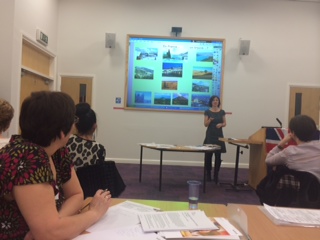
photo 1On Friday I was fortunate to attend the Stafford Primary MFL conference. I spoke twice, the after lunch keynote and then a workshop on cross curricular links, but really enjoyed listening to others and learning from their brilliant ideas.

I like to share what I learn when I go to conferences. Sometimes I tweet madly and fail to make notes, and other times I try to take notes. On this occasion I started out trying to do both but went for the latter in the end.

So here are my notes (without much editing!) I hope that they make sense!

Lorna Harvey – A link with Geography

We looked at the PoS for languages and also for Geography, and looked at areas where they overlap e.g. “inspire in pupils a curiosity and fascination about the world and its people” from the Geography PoS fits well with language aims.

Ideas –

En France …. on trouve? in French

Link to other countries in French – where might you find these features? as a starter activity for Geography

En Afrique je voudrais visiter…. – looking at the rest of the world rather than just UK and USA.

Where might you go on safari? Learn the phrase Je voudrais… and survey table about the most popular place to go

Make up a song! (tune of Pop goes the weasel)
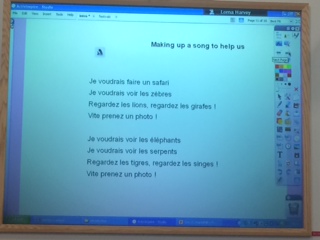
photo 3

Have a little conversation (about where you’d like to go on safari and what you can see) and video it – basic phrases but great acting and lots of repetition

Write a mnemonic for walking around France – BLGSIS

One idea was – Big lions growl scarily in SouthAfrica

Why visit France? Create an advertisement – given rubric of requirements – cross curricular
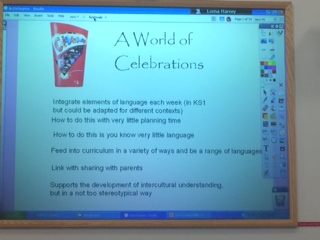
 

photo6Lorna Harvey – A world of celebrations

This began with the question – How can we integrate languages into KS1 each week with little time and little language?

Can we find a festival every two weeks form Christmas to Easter?

  • created a list of festivals
  • learned songs and performed plays (Christmas),
  • made une fève – figurines for La galette de rois and described it using colours,
  • Chinese names for Chinese New Year – became a panda bear and chose a name; Chinese New Year song
  • Japanese snow festival – looked at images and guessed where they were, used video clips to introduce – linked to hot/cold and played game.
  • Germany for Karneval – learn some phrases for princess eg Prinzessin, Hase, and children asked to bring in one item to become that character/person the next week
  • Spain for Fallas – text and video clip with questions – what can we work out? learned days of the week to the Macarena (lunes, martes x2; miércoles, jueves x2; viernes, sábado x2; eeeeee domingo)

To pull together, look at a map of the places and label them – where would you go if you could choose?


Karine Guillot  – Role play! Role play!

Reasons to use role play –

  • to develop pupils’ spontaneity
  • to develop pupils’ authenticity when speaking French

We looked at

  • phrases to get someone’s attention including yelling Coucou!
  • likes and dislikes – je hais – I hate (stronger than je déteste)
  • suggestions  – Et si on….? How about….. Et si on jouait au ballon? Et si on mangeait un snack?
  • agreeing and disagreeing, using lots of gestures as French are dramatic  e.g. ça ma branche (that plugs me in!) I’m up for it!   Non, pas aujourd’hui – no, not today

Traditional French games –

le jeu d’oie

le jeu de la marelle (like hopscotch) throw une pierre starting at 1 whilst standing on TERRE to arrive at CEL

le jeu des dames (draughts) with les pions (draughts/counters)

le jeu des échecs – roi, reine, fou, cavalier, tour, pion (pawn)

les cartes – pique (spades) trèfle (clubs) couer( hearts) carreau (diamonds) l’as (the ace)  le valet / la dame/ le roi

using boards games like Jeu de l’escargot – same board but new questions each time
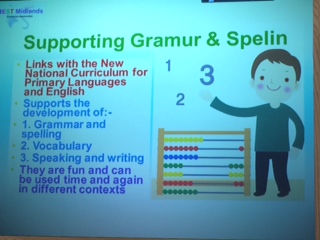
 

photo 4David Moss (BEST Midlands) – 10 easy to organise classroom games for Gramur and Spelin (sic)

1. Monkey school

  • Like hangman
  • one monkey whoop for each letter
  • if one correct letter, you whoop saying letter in position!
  • best to choose from a list or a theme

2. Scene of the crime – MFL

  • mixed up word – detectives have to solve the word by unscrambling it
  • can up level by  adding a blank or two to challenge
  • Ps can prepare for you by writing their own word and swapping in the room and across school
  • can be any words – cross curricular
  • as above, best to choose from a list/theme

3. Great Wall of China

  • like Chinese whispers but you trace letters on hand and pass it down the line, a letter at a time
  • be clear where the words come from – a list/ theme

4. Order Order!

  • like a human sentence, spelling a word
  • use accented letters to make more challenging
  • can also sellotape to pupils’  backs and the class reorder them by giving instructions

5a. Accents forever

  • using a Powerpoint with rotating words and two flyswats
  • swat the accent according to instruction e.g. I’m looking for a circumflex over the letter e

5b. Apostrophes forever

  • same as accents forever but for English!

6. On the march 

  • assign physical actions to parts of speech e.g. march for a verb, hands on head for a noun
  • call out a word and pupils respond with the action
  • in English, a word like ‘light’ can have three actions!

7. O and X

  • Say the word/phrase in the position you want to win the square

8. Sword drill

  • using a dictionary as a sword
  • march! attention! salute!
  • possible instructions – find the word for…. what page is it on? what gender is it? spell the word and so on
  • perhaps photocopy page, or word list, or put your finger in the page in the early stages

9. I need a better actor

  • act out the phrase – three people all act out
  • eg the girl plays football slowly
  • after first, you call “I need a better actor!”
  • can vote for best with clapping
  • react using different adverbs

 10. Blankety Blank

  • have a panel who write their word to fill a gap (from a list on the board) on a mini whiteboard.
  • teams try to match with as many of the panel as possible
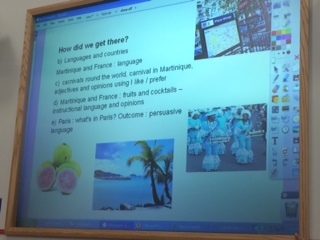
 

photo 5Lorna Harvey  – Show off your language learning!

How to celebrate language learning with the community

e.g. her school had previously used The Gruffalo in French with y3 and 4 as learners with parents invited to watch like at an Inspire – how can we teach parents and learners at the same time?

Some ideas shared:

  •  Languages and countries
  • carnivals around the world
  • Martinique and France
  • instructional language – making smoothies
  • Paris

Parent workshop:

  • made and gave opinions about cocktails – like and don’t like
  • fashion show – introduced each other (linked to carnival clothes)
  • tour operators – persuade the parents to go to your venue! Very impressive but two verbs (c’est and visiter)

 Some possible activities-

  • using a phonic focus
  • using words that we want to use rather than the ones in the book!
  • used FLA to talk about Martinque and Carnival there
  • classify fruit into countries
  • like/dislike
  • order instructions
  • made own cocktail!
  • match descriptions of places to France or Martinique – which would it likely be?


A really great day! I’ll share my presentations in my next post!
ALLJoinedUp250x354

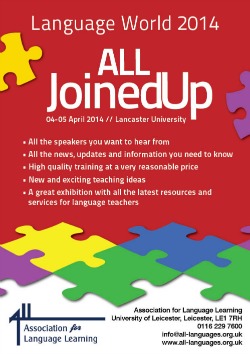
Following on from #ililc4, I’ll be speaking at Language World.

This year it’s entitled ALL Joined UP and is taking place at Lancaster University 4th-5th April. With a very broad programme on both Friday and Saturday catering for all levels of language learning from Primary to HE, it is always a conference that makes you think. I particularly enjoy the more academic talks as I rarely get to hear such things, but if that’s not your thing, there are plenty of practical sessions to please you with ideas that can be used tomorrow.

And that should include the session I’m doing with Joe Dale and Helen Bates on Multimedia language learning with iPads 

More details are here including how to book for the conference and conference dinner on the Friday night.

Having missed the last two (I was in Switzerland!) I am especially looking forward to this year’s event.

ALLJoinedUpHere are posts of my presentations from previous years!

Language World 2011 – Entitled to enjoy primary languages

Language World 2010 – Bricklaying for beginners

Language World 2009 – Absorbing language learning

And some from sessions I’ve enjoyed (as far back as I can find that weren’t ruined when the site was hacked)

Reframing languages (2011)

Mini Olympic packs for primary languages (2011)

President’s address (2011)

Make it real (2011)

Languages reboot (2011)

Progression in reading and writing (2011)

A narrative approach to storytelling (2011)

Languages and the Olympics (2011)

Liz Black Embedding languages (2010)

Claire Dodd Embedding languages (2010)

Reflecting on Language World 2008


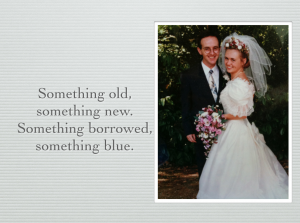
My second session at #ililc4 was entitled Something old, something new and concerned the new 2014 curriculum.

My presentation is below, and I’ll explain briefly what I said as I couldn’t attach the notes without making the Slideshare look ugly!

And there are lots of links ideas and resources at bit.ly/oldlisibo (should have thought out that URL more carefully!)

As I explained on the day, when you have to submit your idea so far in advance and aren’t entirely sure how your idea will pan out, it is quite tricky to come up with a witty/apposite title. My choice of Something old Something new was mainly because I envisaged sharing some old ideas and some new ones plus some borrowed from others. However, as I came to think in more detail I began to think more about weddings!

Primary languages have had a bit of a torrid love life, being loved and then rejected by the primary curriculum, nearly getting up the aisle in 2010 but being jilted at the last moment when all was going so well. So I set out to explore the ‘prenuptial agreement’ (or Languages Programmes of Study at KS2), how we can make this ‘marriage’ work, how to convince those that are nervous about married life and how we’ll keep the spark alive.

Screen Shot 2014-02-16 at 14.09.01

So I began by looking at the Programmes of Study, highlighting parts of the  document that I found interesting.

Purpose of study – Intercultural Understanding is still really important – it’s a vital part of language learning. Providing learners with building blocks AND mortar is key if they are to be able to express what they want in the foreign language. And ‘great works of literature’ doesn’t mean Don Quijote de la Mancha, A la recherché du temps perdu or Mein Kampf at Year 3; poetry is great literature and we regularly use an extract tom Machado in Year 5 as stimulus for writing.

Aims – It’s about a balance and variety of things; a breadth of experience that leads to progression. No arguments there!

The lack of detail in the Attainment target section could be seen as a bit disconcerting but doesn’t give much guidance. However, I’m hanging on to my Key Stage 2 Framework which is still a great document; follow that and you can’t go far wrong. Measuring progress in terms of I can statements is also helpful, and there’s been a great discussion on Primary languages forum this week on what we should be looking for in terms of skills progression. (Want to join in? Join the forum or ask to join the Sharing Primary Languages wikispace)

Subject content – I highlighted that whilst it says ‘substantial progress in one language’, this does not mean that looking at other languages is precluded; in fact, I’d positively encourage it as making links between languages  is a vital language learning skill. We discussed how a balance of skills can be achieved when some are more comfortable with speaking activities than the written word which seems more ‘serious’ and permanent. And we mentioned ‘the grammar question’ – it’s not such a bad thing! Nor is looking at languages such as Greek and Latin; very useful for understanding the formation of languages as I discovered on my year abroad at Universitat de les Illes Balears. Finally in this section we thought about laying those foundations for KS3. I referred back to a presentation I’d made at Language World called Bricklaying for Beginners and how bricks need mortar, and how it’s not a wall that needs demolishing at KS3; reinforcing but not knocking down!

I then took each  ‘pupils should be taught to..’ statement and split them into listening, speaking, reading, writing and grammar, suggesting ideas and activities that might meet them.

There are lots of links on the wiki to many of the ideas but here are some comments:

  • ‘joining in’  is very important and builds confidence as does repetition e.g storytelling, reciting rhymes and poems
  • making links between graphemes and phonemes is important to enable increased fluency e.g. listening out for phonemes in songs/rhymes, sorting words, reading with your Spanish/French/German glasses so you view graphemes not as you would in your own language
  • confidence with phonics is vital to teacher and learner; syllables and stress patterns too – hence my pupils’ love of stress punching!  (a post about this and ‘animal symphony’ will follow shortly)
  • books are brilliant – not just fiction though! Non fiction is very popular with boys and also is great for linking to other curricular areas: going back to my analogy, this ‘marriage’ is about give and take! If you can’t find suitable books, make your own as with my Storybird ¿De dónde viene el yak?
  • learners can decode more complex texts without knowing every word if you provide them with the confidence to do so, embed language learning skills and discuss how languages work  from the very start.
  • writing doesn’t have to be in a book; whiteboards, post-it notes, mini books, Padlet, labels, paper chains, posters, your partner’s hand; they all count!
  • structuring and scaffolding is fine – trapdoors are great as starters as is making human sentences and physically rearranging words. The Human Fruit machine with 3+ learners holding a large dice with 6 images of nouns/adjectives/verbs etc on them and spin is a great way of making make random sentences and exploring how you can substitute words in existing sentences to make new ones!
  • I loved grammar at school; I liked the logic of it all and the patterns. So why not exploit that and make verb flowers, grammar songs and raps, dice games and so on. Use highlighters/colour to clarify grammar ( I lived by my red=accusative, green=nominative and blue=dative when learning German) be it nouns, adjectival placement, verb endings/groupings or spelling.
  • Use activities that are used in other areas of the primary curriculum; learners up level sentences in Literacy all the time so why not in the foreign language? Word pyramids starting with a word and extending to a complex sentence at the base? And card sorting activities too.

So that’s the session in a (pretty big) nutshell!

(Written whilst lying flat on my back in pain so please excuse typos!)

Reflections on #ililc4

| 1 Comment

Screen Shot 2014-02-10 at 21.07.15After a week in which my exhaustion was overcome by the enthusiasm of my learners, I’m finally getting around to posting about #ililc4, the cause of said exhaustion.

I love #ililc. Every year, I look forward to it, and it’s especially special as I’ve flown back from Switzerland the last two years to speak there. #ililc1 there was the possibility of us moving to Switzerland; #ililc2 it was the first time I’d been ‘home’ since I moved to Switzerland and last year at #ililc3 I was about to announce my return to the UK when I was offered a job that threw a spanner in the works – therefore, I’ve ended up rather emotional each time. And that’s why I love this conference so much. It’s about far more than the things we learn about language teaching and learning; it’s about looking after each other, supporting one another and encouraging people to keep going when they feel like giving up. It’s for hugs, pats on the back and hand squeezing; listening and sharing, laughing and crying; for pep talks and words of wisdom. And in the past it’s even been for providing ‘exiles’ with essential supplies of paracetamol and Horlicks (I can never thank you enough for that!)

No big dramas this year (thankfully!) so a much more even keel was held and I enjoyed ‘spreading the love’ with much squealing and hugging (apologies if I squished you too hard or squawked just a little too loud)

And so to the reason we were there. I admit to taking very few notes as I was too engrossed in listening and tweeting. So here’s a Storify of my tweets, and i’ll try to summarise other bits!

Joe Dale’s keynote was packed as usual with facts and figures, great thoughts, funny pictures and plenty to give pause for thought. I need to watch the re-run and pause it to catch it all I fear!

Then I did my session on A beginner’s guide to iPads in the Primary language classroom (see my next blog post!) – seemed to go down well!

After a swift cup of tea, it was off to Clare Seccombe’s session on mini books.  WOW! You wouldn’t think that there were so many types of mini book. Like Clare, I love books and appreciate her sharing “It’s a book!”, a story that I bought in German. I tweeted madly, taking pictures of the different types of book, and was left wanting to make books for the rest of my life. Find out more here

A lunchtime presentation on This is Language was interesting. Not necessarily useful in a primary context but fun to have a look at the videos and activities designed for GCSE learners of French Spanish and German. I discovered that my ability to type fast in French is very suspect! 

Next was MFL PE Rap and ICT with Dominic Traynor aka Spanish Bootcamp. Dominic shared how he has a dual role as PE and Spanish teacher, and how he combines the two. I loved playing some of the games he uses like La batalla de cojos that involves hopping whilst trying remove your opponents’ ‘tails’ (bands tucked into their waistbands) and Cabezazos (heading a beanbag); I even used Palmadas (throw a beanbag in the air and count to a specific number in Spanish before you catch it) in assembly this week! He also recommended Memrise which is something I spoke about a couple of years ago at various Teachmeets but had stopped using, It seems to have developed more now and it’s possible for teachers to write their own courses. 

Final session of the day – Don’t worry be ‘appy with Rachel Smith aka @lancslassrach. Subtitled – The Power of One; 1 iPad, 1 classroom; 1 teacher, Rachel talked about her experiences of using one iPad in there language classroom. She recommended several apps that interested me including Pass the parcel and Shake and Boom for games playing, and  StopGo for timed activities. Have a look at her presentation or my tweets for more ideas.

The evening Show and Tell was good as ever with really interesting and practical ideas from many people including ClareRachel, Nina Elliot and Sam. Simone shared about her Chinese New Year celebrations at school – including a real live horse (at school, not the SAT!), Helen sang beautifully and advertised ALL (join if you haven’t already!) Dom shared a game called Mot de passe when you have to communicate a person, place or thing to someone using single words, Eleanor talked about using physical actions for punctuation and accents, Glennis talked about my beloved Tellagami, Chris talked Teachmeet, Garry talked about Sporcle.com and Simone and John sang (anyone got a video? Mine didn’t record!)

Day two started at 8.50am – and I was speaking! Find out more in my blog post on Something old, something new – coming soon!

After coffee, off I popped to see Isabelle Jones talking about Pinterest, a very addictive site. As I tweeted, it’s not all about cake pops, shoes and wedding dresses, and as Isabelle shared, it’s very useful for collaborating with others in collecting ideas and resources for language teaching and learning. Much oohing and aching followed her presentation as we were given time to play and pin whether online or using the app, following one another and discovering that those in other sessions were pinning too – multitasking they called it 😉

Jo Rhys Jones was my next session (wish i got to see her more – must try harder!) talking about Big ideas for tiny schools, or extreme differentiation for little people. I was glad that someone else gets an idea/motif and runs with it as her use of gnomes rivalled the wedding photos in my presentation. Although most of us aren’t teaching mixed age classes, everything that Jo said was good practice for differentiating in a same age class. Her ideas of progression in terms of skills was particularly helpful, e.g. word to word+adjective to short phrase to sentence to extended sentence. And Pigloo and Tchic et Tchac too 🙂

My final session (well, ¾ of the session) was Flipping the classroom with Sadie McLachlan. Loved the videos that have been made by the department to facilitate learning and interesting to see how Flipping is working for them as we continue (slowly) to flip lessons at Welford. A bit trickier for me as I don’t set homework and can’t make participation compulsory, but ideas can be adapted! Find out more at fliplearningmfl.blogspot.com

Then home, happy and exhausted.

However, that wasn’t the end really as I read Clare’s keynote on the train and promptly welled up, tears streaming down my face much to the bemusement of those around me. I could identify well with all that Clare said and although I wasn’t there, I felt that I was. Heavens only knows what state I’d have been in if I were – perhaps it’s better I’d left as I had another weep when I watched it back on the recording. Well said Clare.

I am looking forward to more fun, more sharing and more inspiration next year at #ililc5 – but in the meantime, I’m looking forward to interacting with the #mfltwitterati on Twitter and hopefully in person.

GlobaNova_ILoveYouMap_Pink-1800Presentations and handouts

List of blog posts (as of 14th Feb) about ILILC4


Last night I braved the cross city traffic and went to King Edwards Five Ways (nowhere near the Five Ways I know!) for TeachmeetBrum. Organised by @frogphilp aka Steve Philp of Paganel Primary, it was an intimate affair (but that’s not a bad thing!) but that’s a good thing as we all talked to one another!

I admit to spending longer on cupcake production than on my presentations, but I often do my best work when hoofing it and speaking from my heart.

I talked about using apps like PicCombo, 4Pictures 1Word and Icomania (iOS and Android) to inspire learners at the start of lessons as well as increasing vocabulary. I used them when teaching English last year; M+M loved the puzzle of working out how the picture were linked and then discussing what a duster and a red and white flag had to do with one another (answer – polish/Polish) There is a French, German and Spanish version of 4pictures 1word available in the Swiss (Fr/Ger) and Spanish (Sp) iTunes stores – you can download them if you have an account with that store. Alternatively, you can do as Dannielle Morgan did and create your own! She has made some for Year 7 French ,  Year 8 French and Year 9 French that she kindly shared on TES Resources
I didn’t make a new presentation but recycled part of an old one – see below!


My second presentation was also recycled from MFL Show and Tell in Coventry – and I make no apologies for it as I think it was a really successful unit of work that both the kids and I enjoyed. Inspired by Go away Big Green Monster in Spanish, and the learning journey topic of Mythical Monsters, Year 3 and I embarked on a mission to write books in Spanish. See how we did it below, using non-technological means as well as iPads!

The PPT of Señor Cabeza Naranja is all over the place for downloading (some with my name removed which bugs me no end!) – just Google it. However, the updated version is below!

Hopefully I managed to inspire someone, and failing that, hope someone enjoyed my cupcakes 😉

Last night was #DevonMFL Teachmeet. Despite being given warning, life took over and my contribution didn’t arrive in time for the night. However, rather than waste it, I decided to share it here!

So, here is my hastily – but not hastily enough – prepared short presentation on using games to learn Spanish in and out of the Primary classroom.

Teachmeet Devon 3.10.13 from lisibo on Vimeo.

I refer to various things in my presentation that may need further explanation – I’ve linked to some below but feel free to ask questions in the Comments if you need clarification.

Toenail game

La vaca Lola

More games etc can be found in this post/presentation called Games to learn and I also spoke at #ililc3 on using games and activities in the language classroom in a presentation entitled Let out for good behaviour!

What I didn’t say (I was trying to keep under 7 minutes!) was that Take Ten en español is brilliant for embedding language into the curriculum, and for supporting the non-specialist teacher! Check it out here! 

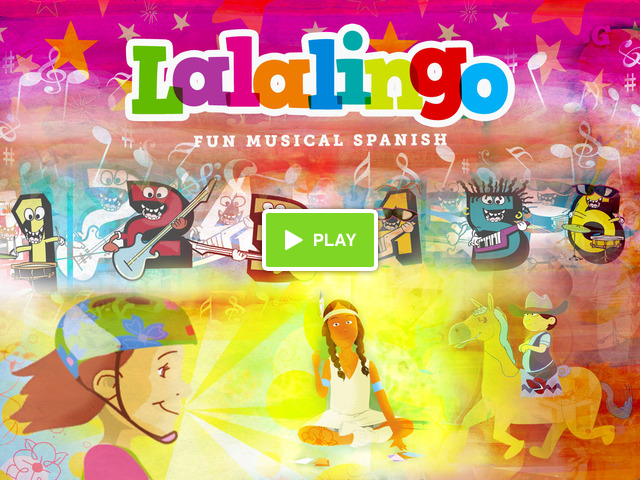
I’ve blogged about César previously and linked to his Soundcloud – previously Cesar a Chinchila and now renamed Lalalingo.

César emailed me recently to say that he was trying to ‘kickstart’ a new project with his songs that involves animating the songs and making a DVD, and I’m doing my bit to spread the word. If you click on the image below it takes you a video in which he explains the plans for the project. (Afraid I can’t get the iframe to embed here!)

Screen Shot 2013-05-21 at 16.46.37

You can also check out the blog for videos songs and worksheets, or Like their Facebook page. They also a Youtube channel singalingua Spanish and on Vimeo they are Lalalingo.

If you want to support financially, that’s great. However, you can support in other ways by sending a message, sharing the idea or using the resources. I’ve embedded one or two of the songs here to give you an idea of what Lalalingo looks like.

httpv://youtu.be/-t03JNus1vI

httpv://youtu.be/lEnuVL7shBY

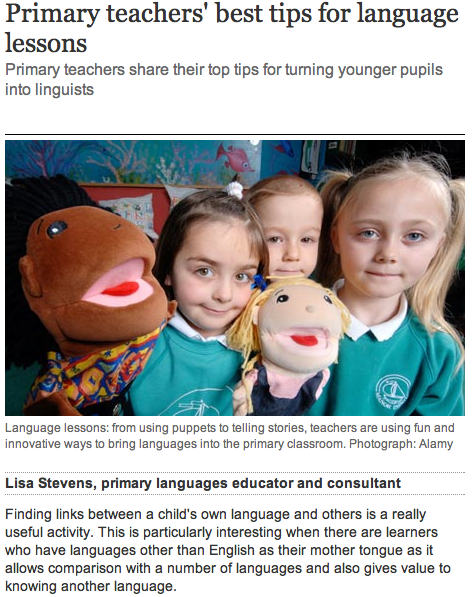
Screen Shot 2013-05-15 at 11.26.58The Guardian is having a ‘Language learning in focus’  week  and the Teacher Network has been publishing articles related to news ideas and resources for language learning.

There have been articles about why people started teaching languages, an interesting article on where we are and where we need to be in relation to language learning, ideas about how best to teach languages, references to resources in the Guardian Teacher Network and ‘my best language lesson’ too.

Screen Shot 2013-05-15 at 11.29.24Today the article is about Primary teachers’ best tips for language lessons. I was asked to contribute and along with others including Clare Seccombe, have shared some ideas that have worked in my experience.

And there’s also an article on how primary schools are getting ready for 2014 from which I’d pick out two paragraphs that highlights a couple of concerns I have – and I know others share them!

“A lot of teachers would appreciate a bit more guidance and practical help, whether it’s schemes of work or things they might be able to read,” adds Board. (Kathryn Board of CfBT)”That’s obviously not what the government wants to do – they want to provide big headlines and how you get there is up to you. But it’s quite tricky because we must not forget this is a new subject, it’s never been compulsory at key stage two before.”


Driscoll (Patricia Driscoll, reader in education at Canterbury Christchurch University) fears the draft curriculum does not place enough emphasis on developing children’s cultural understanding. “In ‘purpose of study’ the draft curriculum says: ‘Learning a foreign language is liberation from insularity and provides an opening to other cultures.’ But then when you come to the ‘curriculum aims’ and ‘subject content’ there’s nothing about culture.”

“Languages are taught through interactive methods but also through cultural identity and understanding,” she says.

I wonder what’ll be up tomorrow? There’s certainly a web chat planned so if you’re free between 6 and 8pm tomorrow evening (Thursday 16th) join in with your ideas about creative lessons and teaching tips!

Mapas

| 1 Comment

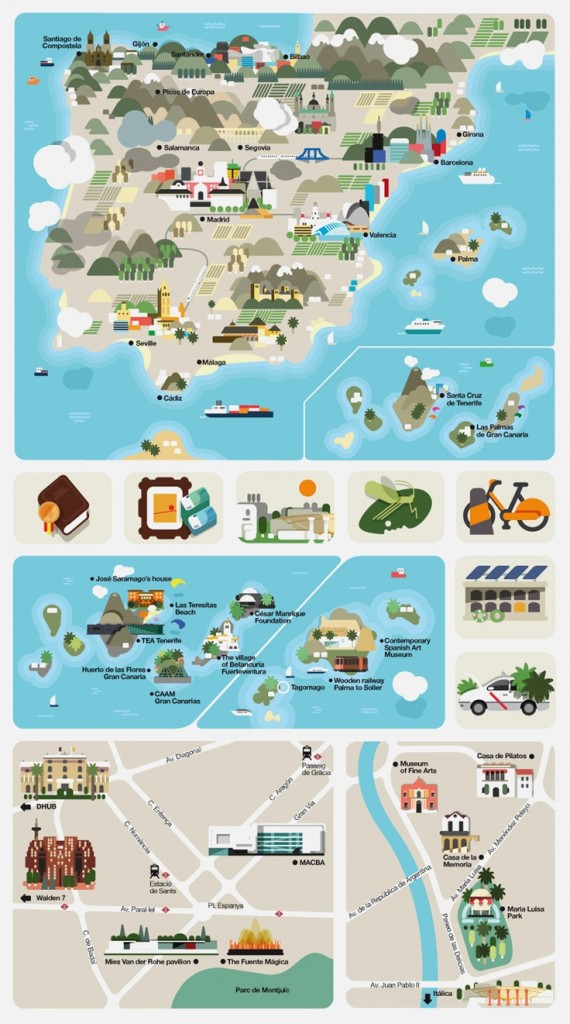
I’ve recently started a Pinterest of Spanish resources and came across some lovely maps as I was pinning. None of them would actually serve to guide your way so no good for directions really, but they sparked a few ideas!

map of spainThis map is a composite of a number of graphics used in an article on Spain. I like the stylised topography and selection of places of interest in various towns.

Possible activities

Name the monuments on the map of Spain.

Assign each group a monument to research.

Identify the mountain ranges. Which is tallest? What activities can be done in the mountains?

Give learners their own blank map of Spain and ask them to select places of interest, features such as rivers or lakes etc to mark on their own infographic map.


Screen Shot 2013-04-10 at 10.05.09

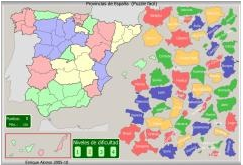
This isn’t an infographic, rather a site that is packed with interactive maps looking at the geography of Spain. You can try to name the rivers, mountains, autonomous regions, provinces and so on. I particularly like the provincias one above as the shapes give you a clue – they’re quite tricky puzzles!

Screen Shot 2013-04-07 at 20.54.09

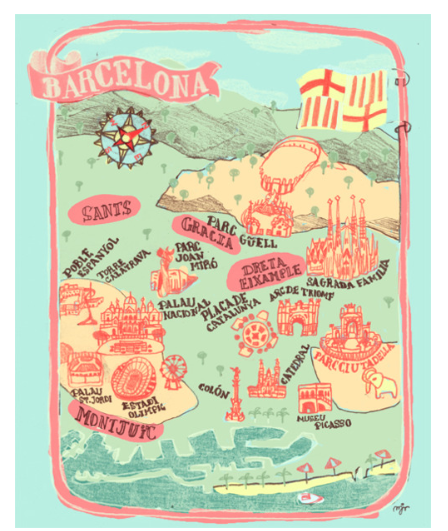
This map of Barcelona gives the vague geographical layout of several monuments and places of interest.

Possible activities 

Find the date that each of the monuments was built (practice of large numbers!)

Challenge learners to plan a visit that includes all or a selection of the places on the map using public transport. 

Draw a map of their town or a large city in the same style.

Screen Shot 2013-04-10 at 10.21.23

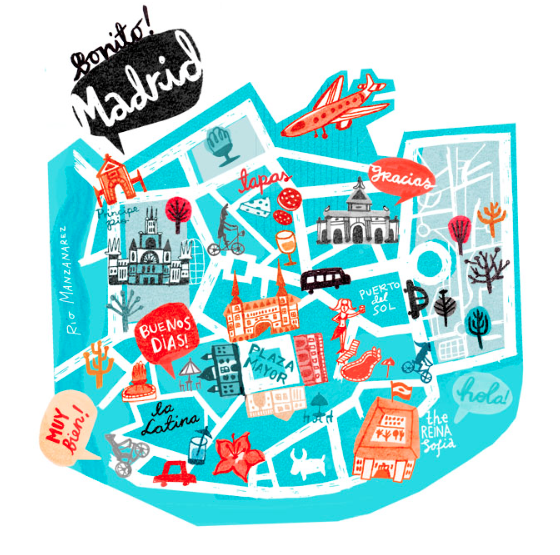
And this map of Madrid has even less geographical information but also includes some phrases that you might hear / use, and some ideas of things to do as well. There’s a similar map of Paris.

Possible activities

Design a similar map for your local area; which places would you recommend? what would you do? which phrases might sum up your area?

Compare the above with a plan of Madrid. Is it accurate? Discuss the differences using Group Talk phrases of opinions and agreement/disagreement.

Screen Shot 2013-04-07 at 20.57.39

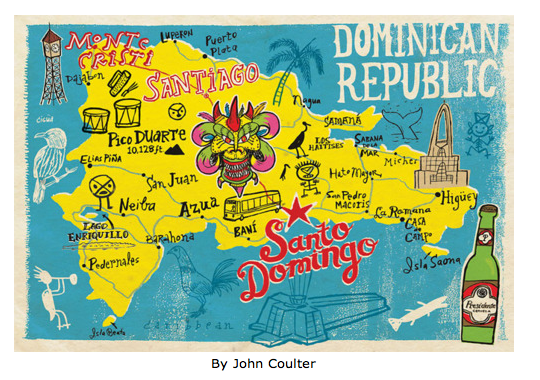
And then there are maps of Spanish speaking countries. This one of the Dominican Republic is possibly the nearest to an accurate map here.

Possible activities

Where is the Dominican Republic? How did it get its name?

There are ‘doodles’ all over the map. What are they?

Screen Shot 2013-04-10 at 10.26.44

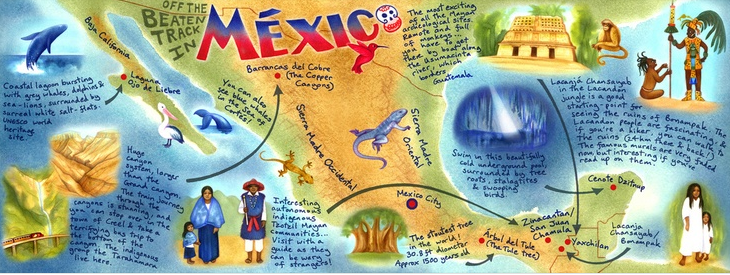
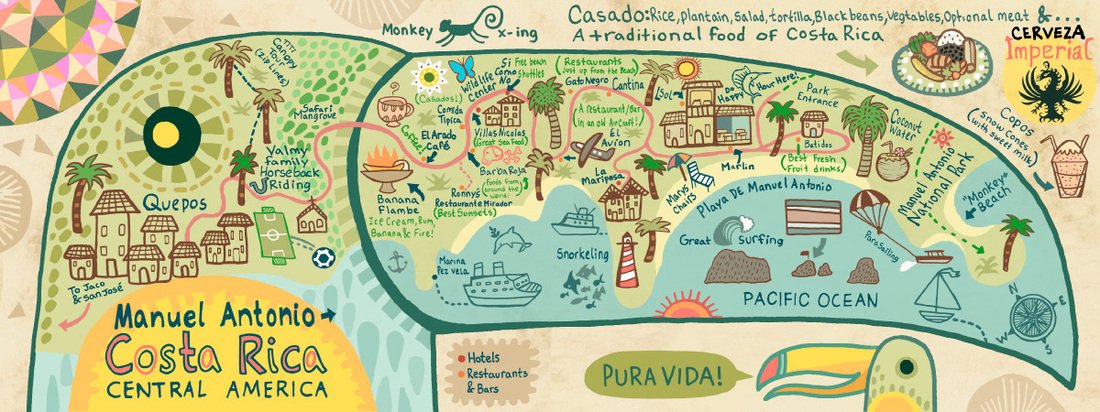
The maps above and below come from a site with lots of map /infographic images of Spanish speaking countries.

I like the use of colour in these maps.

Possible activities

Use the Mexico map to recommend activities to -a wildlife lover -a history buff -a thrill seeker

Make your own tourist map in the style of either map – off the beaten track activities, food you mustn’t miss, insider knowledge of the best coffee and so on.

Devise a slogan for your area like ‘Pura Vida’

costa rica

And if you don’t want to do activities with the maps, they makes lovely displays!

I have a feeling that I’ll be coming back to other infographics soon with more ideas …


Cómo hacer  un Árbol de Pascuas

httpv://youtu.be/YOcd1M6oXl4


Cómo hacer un Pollito dulcero

httpv://youtu.be/s80TiWuckyU

Aquí está la plantilla para hacer los pollitos.

También se puede hacer una Gallina de Pascua


Cómo hacer un Huevo de Pascua de Chocolate – paso a paso

httpv://youtu.be/xJexlxFw0Fk


Algo un poco diferente – cómo hacer Angry Birds para Pascaus

httpv://youtu.be/0cY2Wb7B7w8

Cómo hacer Huevos de Pascuas

httpv://youtu.be/4f9fzlTZYgc

y después, una canasta para los huevos de Pascua!

httpv://youtu.be/sJtp2JvDmQM


Cómo hacer Conejitos con huevos de Pascua

httpv://youtu.be/tSdaomBU9NE


Y por los ‘más avanzados’, dos maneras de hacer una Corona de Pascua – con la técnica de Patchwork sin agujas o con agujas y costura.

Screen Shot 2013-03-26 at 14.16.32 Screen Shot 2013-03-26 at 14.19.16

¡Vámonos! ©2026. All Rights Reserved.
Powered by WordPress. Theme by Phoenix Web Solutions