¡Vámonos! – Page 26 – "The decision to learn a language is an act of friendship. It is an outstretched hand." John le Carré
 

*This is one of a series of posts about some of my favourite story books for Primary Language Learning*

When I was in Barcelona a couple of years ago, I found a couple of books by Imapla that I loved, both very simple but also quirky.
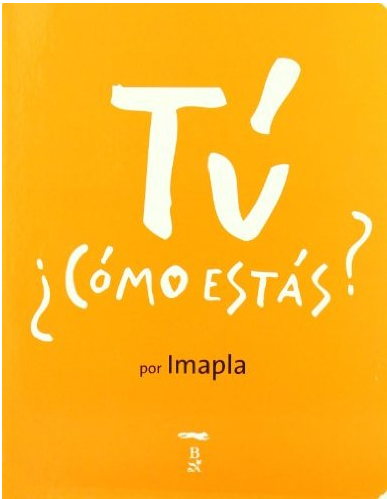
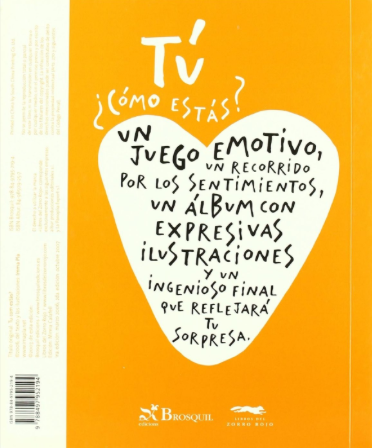
Screen Shot 2013-08-19 at 21.17.38 Screen Shot 2013-08-19 at 21.17.50Tu ¿cómo estás? is one of them, a large board book about how people are feeling, using ESTAR. Each double page has just three words – name + está + ’emotion’ adjective and a  drawing of the child in question. The quirky drawings  show the emotion but so does the font in which the emotion is written. And the final page asks the question of the reader with a mirror.

I love reading it as a bit of over acting is ‘required’, and learners love joining in. After the first reading, I reread it substituting the names in the book with those of members of the class; as a child is named they get to act the emotion or feeling. On the final page, I ask individuals to respond by choosing an emotion from the story. I model the first person ‘Estoy…’ with my response but don’t necessarily expect it to be used in responses. We might then add more emotion words to give more choice, then make our own versions. We might make a storyboard with 6 boxes, the final being the question. Or a mini book from a single sheet of paper. We might take photographs of learners demonstrating emotions and make a big book with the photographs. Or we might use BookCreator app on the iPad to make an ebook with photographs or drawings, text and embed audio as well.imaphoto
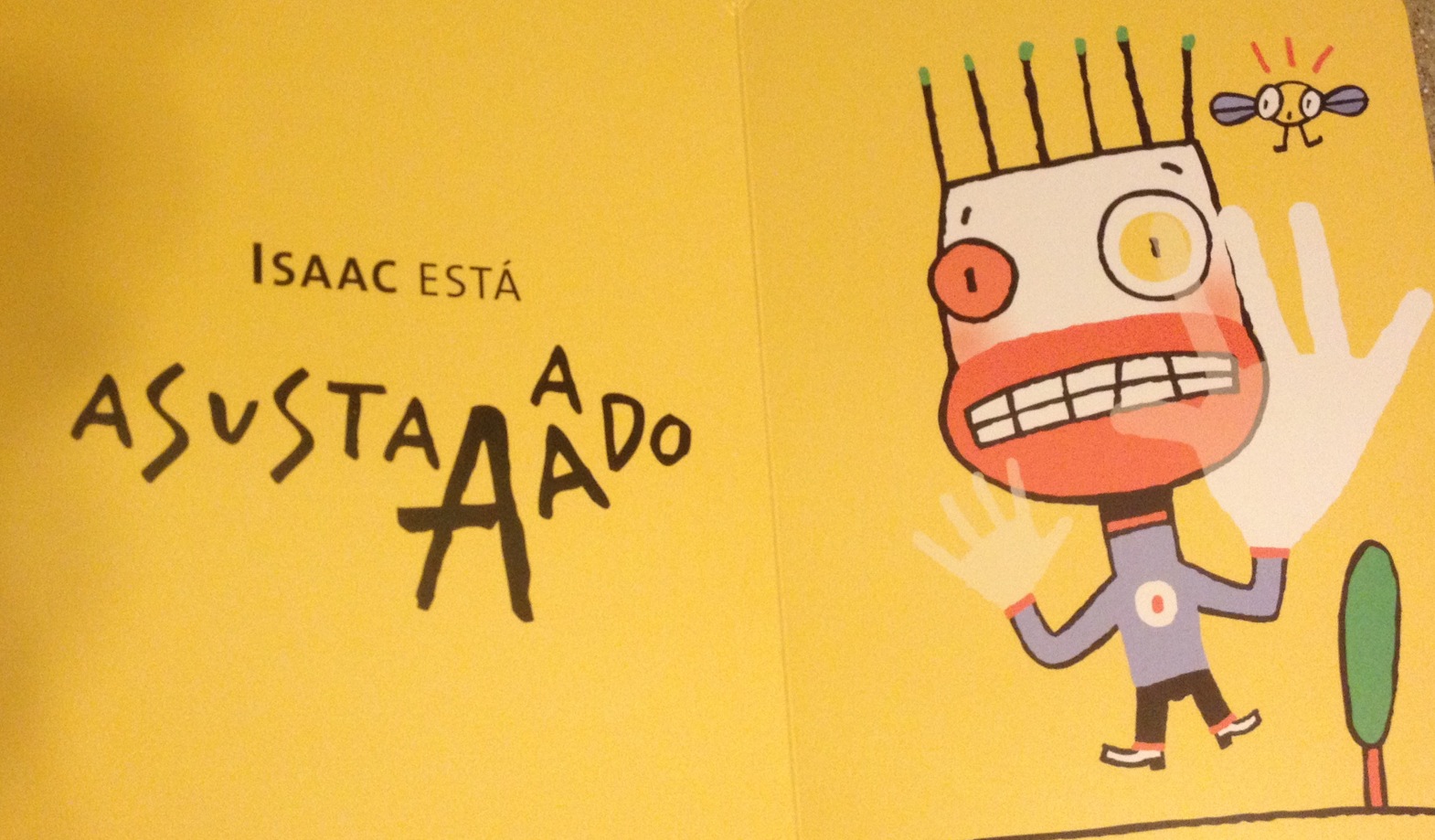
 

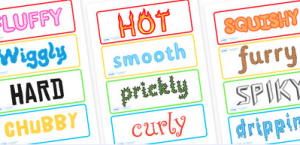
This book is a great one for linking with PSHE about feelings – many classes have a board on which pupils indicate how they’re feeling at certain times of the day by moving their name to an emoticon, and having read this book, this activity could be done in Spanish too. And another aspect of the book, the use of calligrams (writing the word to show meaning), links well to word processing and ICT, or alternatively art if you do it by hand!  Nervioso might be quite straightforward, but how might you show enfermo or celoso? Would you use colour, shape, texture?
Screen Shot 2013-08-19 at 21.09.17

(examples in English from Twinkl)

So, lots of ideas from a very short, simple book!

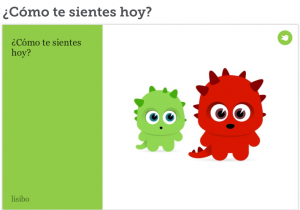
20/08/13 – I’ve just recalled this Storybird that I wrote that. although not all the feelings go with ESTAR, fits well with this story.
Screen Shot 2013-08-20 at 16.24.18

In this Youtube video Imapla shares another of her books – I haven’t found that one in print. Yet! But I’d like to use it as it challenges the colours we normally associate with objects like the sun and the sky and gives colours to things like the wind and holes.

I’ll share the other book tomorrow in my next post.
*This is one of a series of posts about some of my favourite story books for Primary Language Learning*

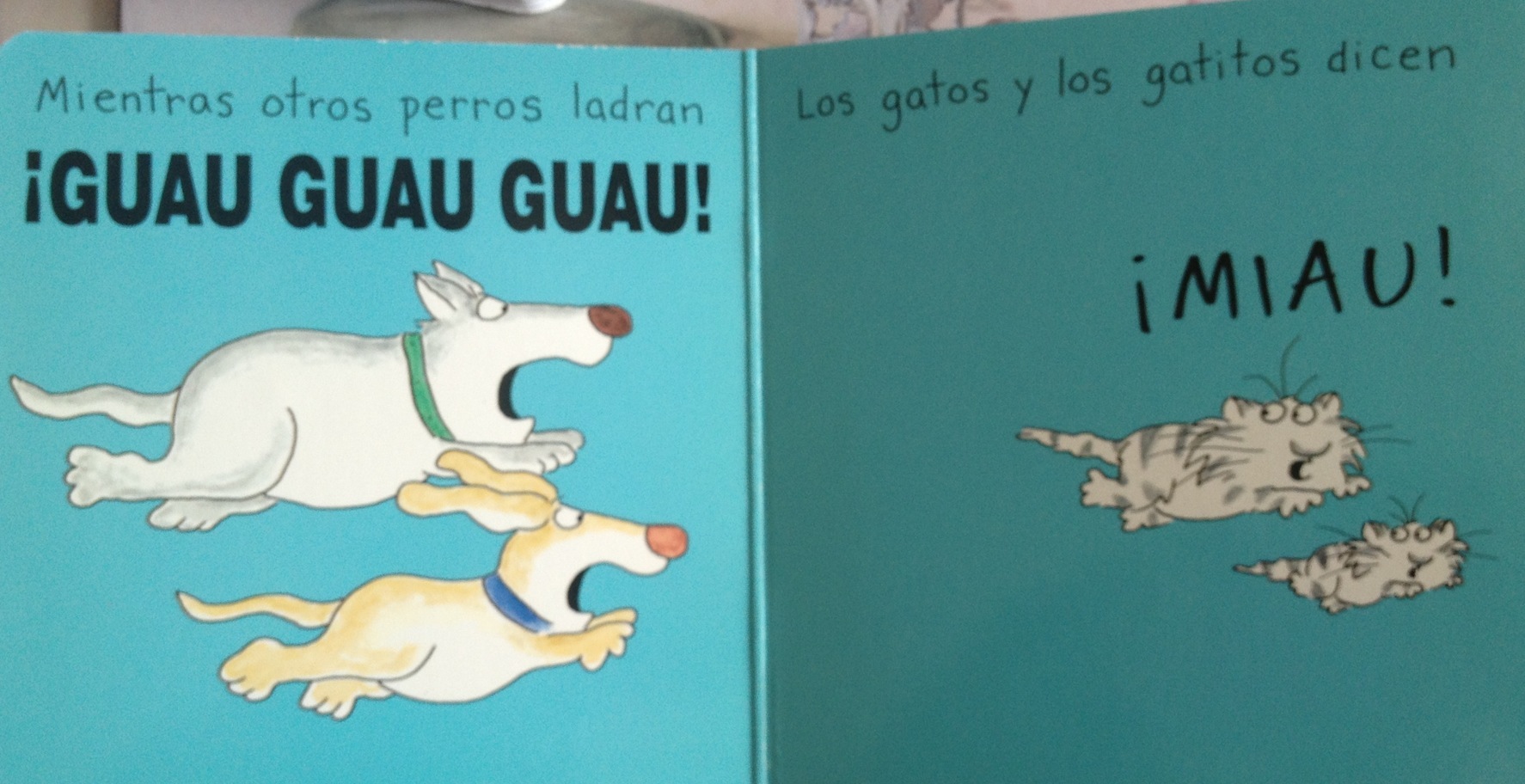
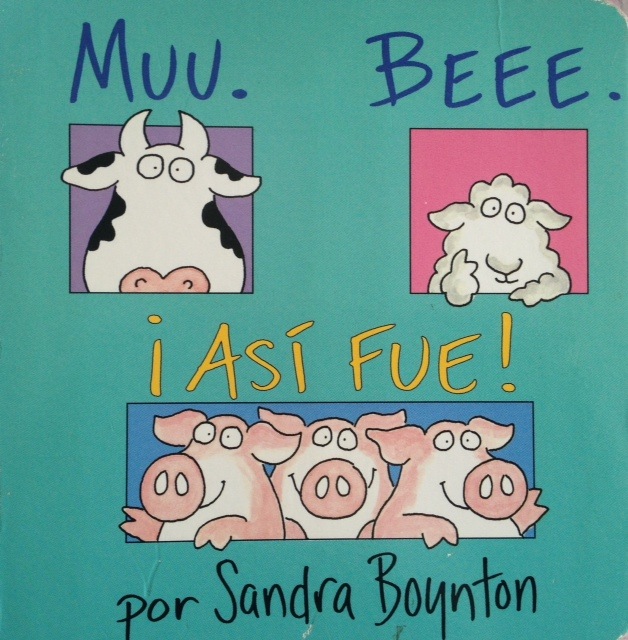
When my boys were little, one of their favourite books was Moo Baa La la la; in fact, I can still quote it verbatim as I read it so many times! So I was pleased to see that there was Spanish version Muu. Bee. ¡Así fue!

Image 3

This simple rhyming book introduces the noises that animals make as well as animal names. I was pleased when I read it that it still (mostly!) rhymes in Spanish and that it features lots of animals that make different noises in Spanish. Or, as it’s come to be put in my classroom

“Animals speak other languages too!”

Image 4

When we use this in class, after the initial reading learners want to join in with the animal noises – it is fun after all pretending to be a snorting rhino! – so I pause at the appropriate moment to allow for this before continuing. The final page  also invites the reader/learner to share what they say so can lead into a game of ‘Adivina que animal soy‘; learners take it in turns to pretend to be an animal by making the noise and the rest of the class have to work out which animal they are. This could be done with more ‘control’ by assigning learners animals in advance or giving them a mask. And a (noisy!) follow on activity could be for everyone to be assigned an animal from the story e.g un cerdo, una oveja, una vaca, un pato, un caballo, un perro; and their task is to find the rest of their family by making the animal noise  and listening out for others doing the same.

tranquilo

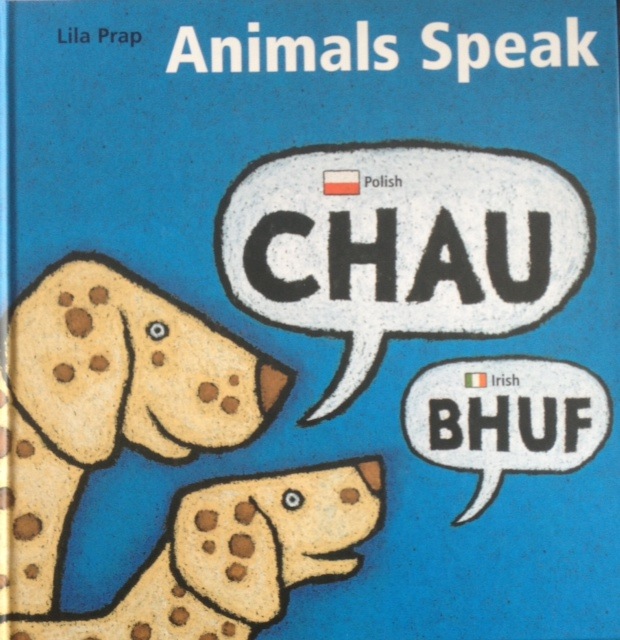
As I mentioned above,  “animals speak other languages’ was the conclusion that was reached when we read this book, and when I presented at the ALL North East Spanish Day at Gosforth High School I was given this book which reinforces just that!

Image 6

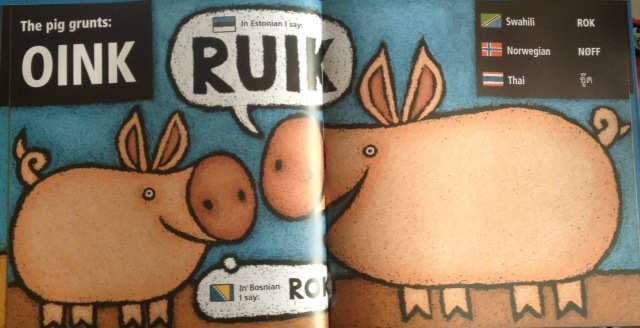
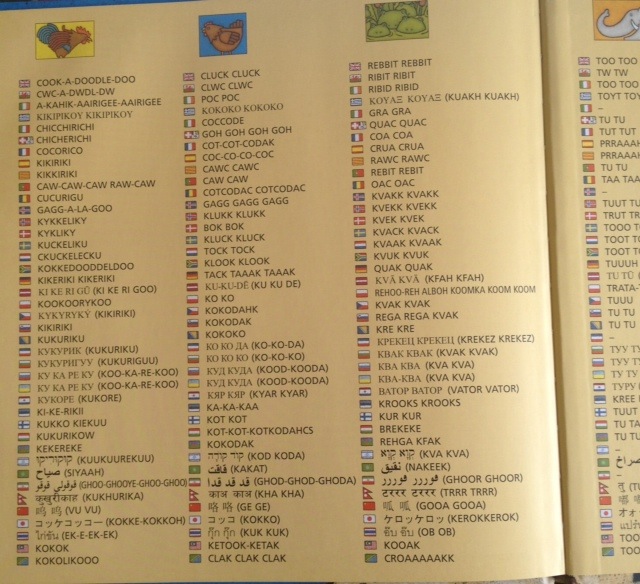
Whilst this isn’t a book in the language that I teach (mostly Spanish) I love sharing this as, to me, language learning is about more than one language. It’s about exploring and making connections, and sparking interest as well as celebrating diversity. This book has the English in the corner, and then one or two ‘featured’ languages on each page  i.e. the ones that animals say in their speech bubbles as well as a section in the opposite corner which shows another three languages.

Image 7

And in case you have trouble pronouncing the animal sounds, there is a glossary on the inside covers written “phonetically” to give you some help! My aim in using this book would not be to teach animal noises in 30+ languages but to look at similarities between the different languages, to consider whether we’d know which animal made that noise if we hadn’t got the picture to help us, and why, and to perhaps look at the home languages of learners in the group.

Image 8

The idea that animals speak different languages just like humans seems to appeal to children; I wouldn’t be surprised if there were pupils of mine across the world these holidays addressing animals in their ‘native language’ 🙂

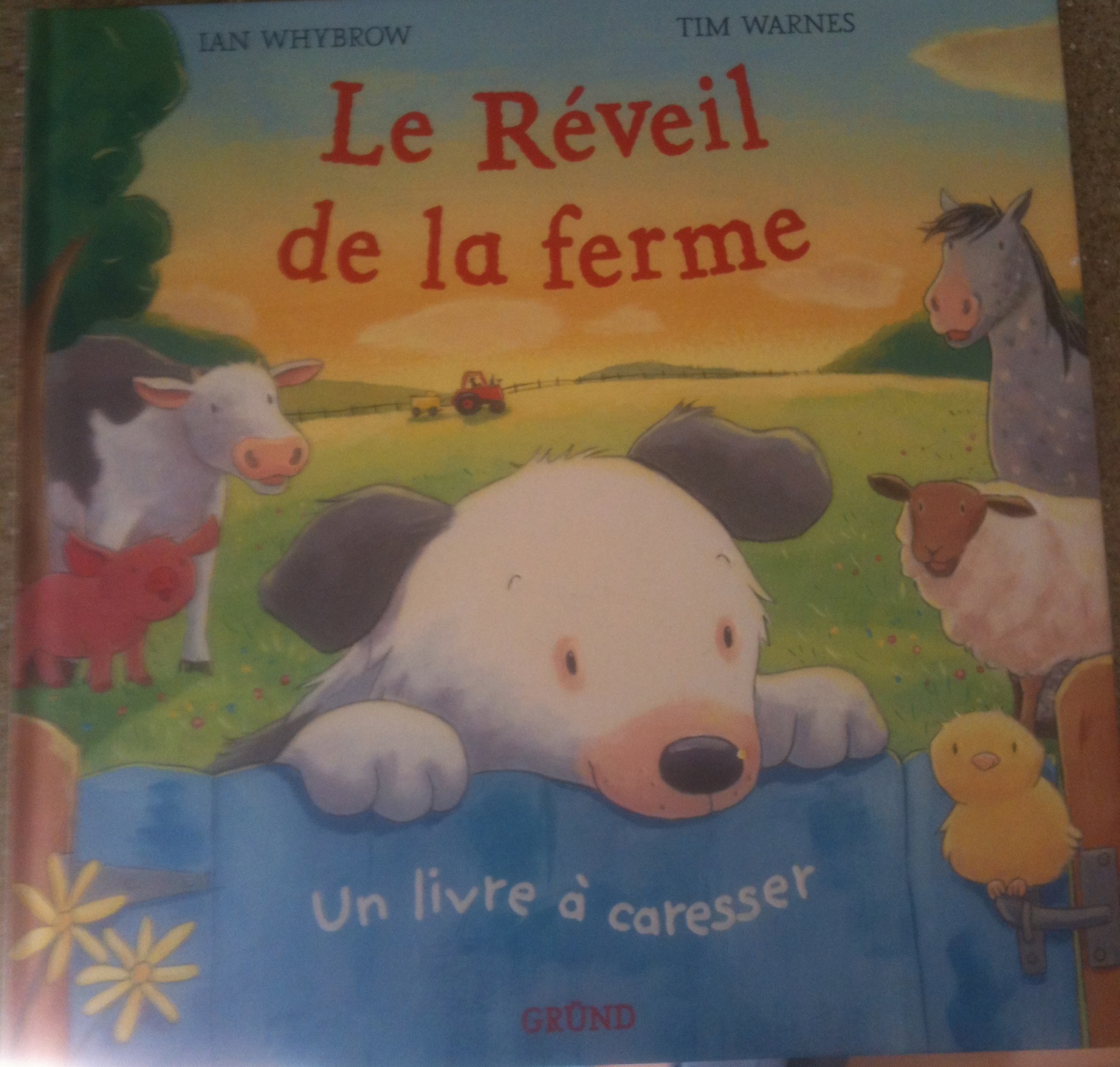
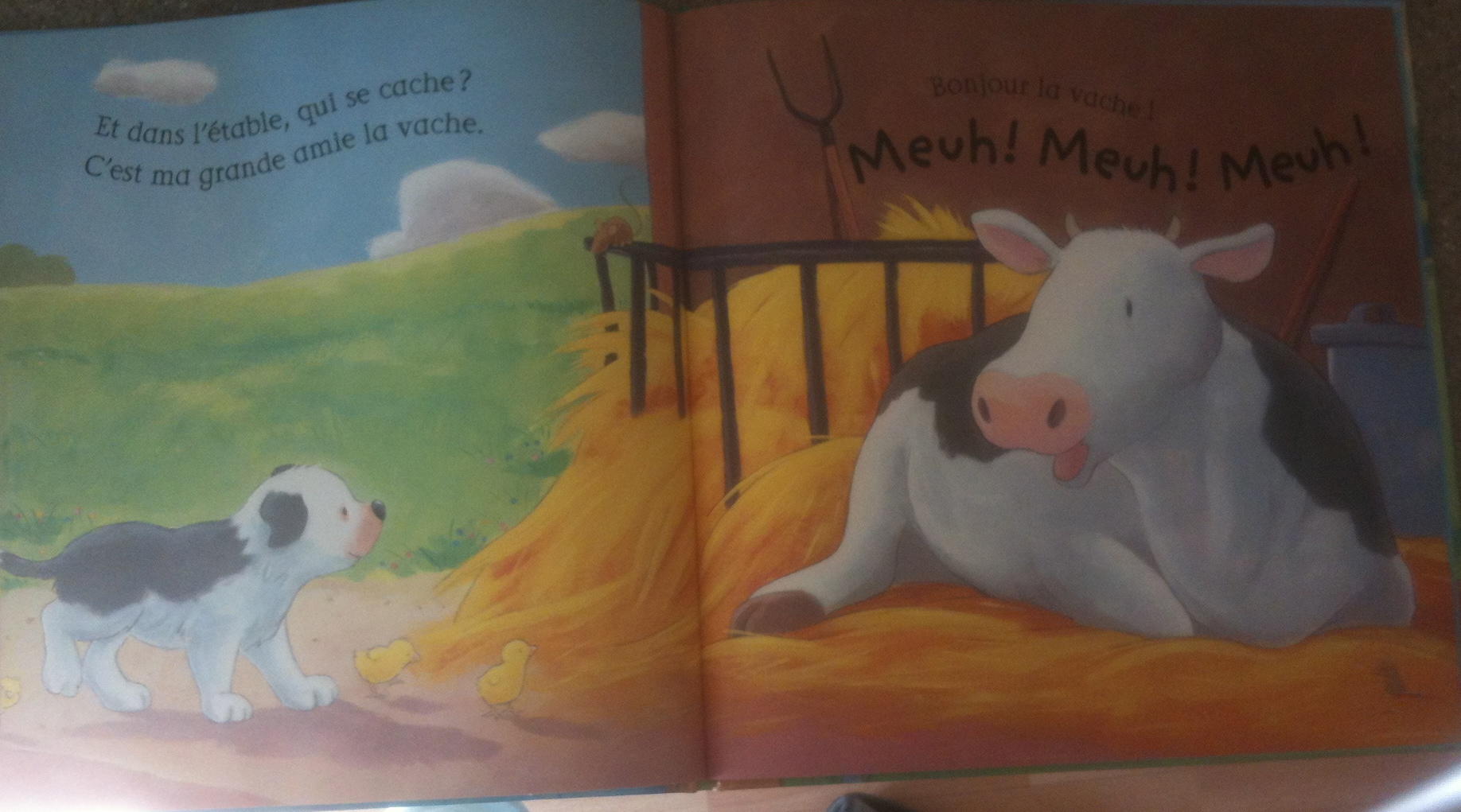
And if you want a French book with animal noises – and nice touchy feely patches for stroking ‘if you sit nicely!’ – there’s  Le Réveil de la ferme in which a little sheep dog goes around the farm greeting all his farmyard friends. He introduces them in a pair of rhyming sentences and then says Bonjour ………. before the animal responds with their call in French. At the end, he says goodbye to them all in a double page spread with all the animal calls in French (great as a reference point!)

IMG_0033 IMG_0035

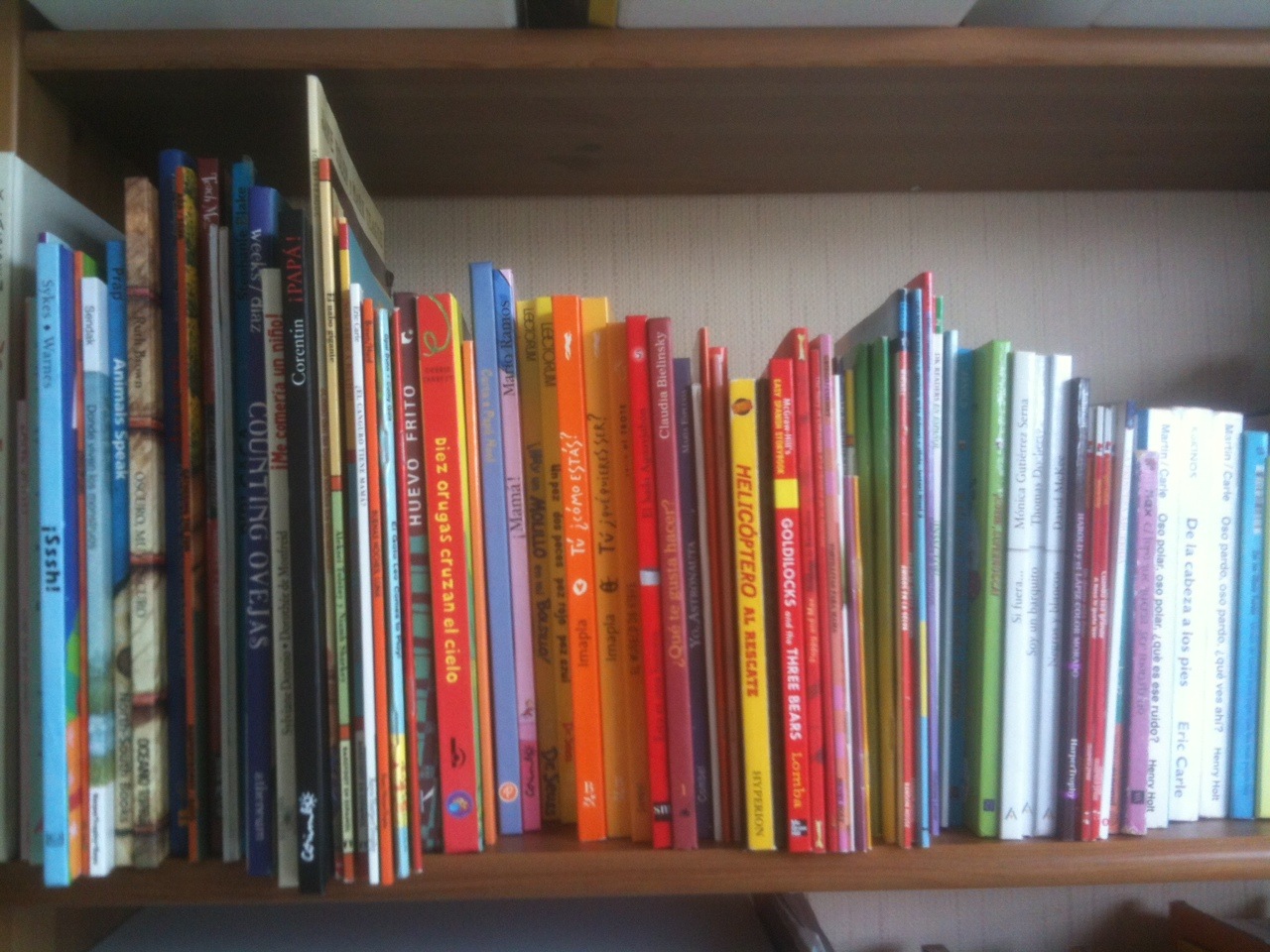
Image 2As I am virtually housebound (that’s ‘nearly completely’ not  ‘housebound in a virtual world’!) I’m looking for things to occupy my time so decided embark on a blog series. I then concluded that I could kill two birds with one stone by cataloguing my books (especially as I’m being reunited with many of them out of storage!) and blogging about them. And I woke this morning to see that Clare has blogged about her favourite French and Spanish books so it seems that now is a good time to share!

So. over the next few weeks, I’ll share some of my favourite story books and try to share how I use them or might use them in the classroom. It’ll take that long as a)I have lots of books b)some are still in storage.

First post is coming right up after this one!

Noticias Locas

| Leave a comment

Screen Shot 2013-08-11 at 12.19.26Have you discovered the Noticias Locas site? As the name suggests, it’s a collection of mad news items that makes a change from politics, crime and sport. Not just good news stories like Martyn Lewis‘ ‘And finally…’ but some absolutely bonkers ideas. Whilst some are of a slightly risqué nature (I’m amused by the kama sutra illustrated by sock monkeys but not sure I’d be thanked for bringing it to the attention of a class!) I think that many could be used in the KS3+ classroom for reading – they’re certainly  “short texts” – and would certainly raise a smile or an eyebrow!

Some examples –

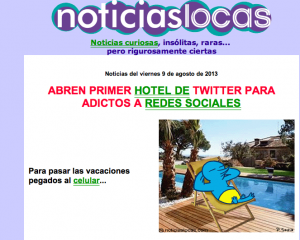
Screen Shot 2013-08-11 at 11.57.49

Si son de esas personas que no pueden parar de tuitear, aún estando de vacaciones, este nuevo hotel, ambientado alrededor de Twitter, en Magaluf, España, es perfecto para ustedes.

La cadena española de hoteles Meliá, tuvo la brillante idea de abrir un hotel en donde, quienes allí se hospedan, interactúen entre ellos y con el personal del establecimiento a través de Twitter.

Gonzalo Echeverría, gerente general del hotel, explica que ¨es un nuevo paso que da nuestro hotel para satisfacer las expectativas de la gente¨, considerando que las nuevas tecnologías ya son parte de la vida cotidiana de muchísimas personas.

Dentro de la comunidad virtual creada dentro del hotel, también se ofrecen juegos y distintos modos de entretenimiento, siempre dentro de las redes sociales.

Así que si quieren conocer mucha gente nueva, pero a través de una pantalla, este hotel es para ustedes.


*********************

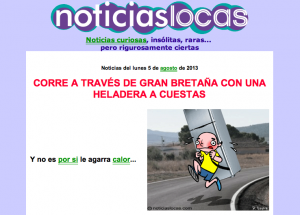
Screen Shot 2013-08-11 at 11.59.41

Tony ¨Heladera¨ Phoenix-Morrison recorrerá 1.053 millas con una heladera de 42 kilos y medio en la espalda,, desde John O’ Groats hasta Land’s End, en Gran Bretaña.

Esto quiere decir que este hombre de 49 años, con cuatro hijos y dos nietos, correrá el equivalente a 40 maratones, durante 40 días seguidos, acarreando un peso similar al de 40 ladrillos.

Pueden pensar que está loco, pero ésta no es la primera vez que Tony corre distancias enormes con una heladera atada en la espalda. Ya varios lo conocen por las maratones que corrió juntando dinero para misiones solidarias.

Aunque ya lo ha hecho antes, Tony admite que ésta será probablemente ¨la última maratón que corra con la heladera en este país¨, razón por la cual quiere que sea especial. También aclaró que ¨no está asustado en lo absoluto, pero hay algunas montañas y subidas en el recorrido que serán brutales¨.

Ésta última carrera será en beneficio de la fundación Bobby Robson, así que le deseamos a la ¨Heladera¨Phoenix la mejor de las suertes.

*******************

And one for cat fans…

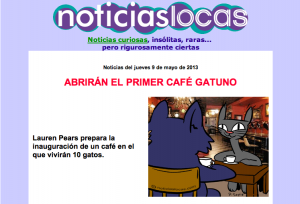
Screen Shot 2013-08-11 at 12.09.58

Luego de recaudar más de 100 mil libras en el sitio de financiamiento colectivo Indiegogo, Lauren Pears anunció que el 1 de julio abrirá su esperado ‘Cat café”. Aunque estos bares felinos son muy comunes en Japón, será el primero en Londres, por lo que Pears aprovechará la ansiedad de los miles de colaboradores y cobrará cinco libras por entrar al café, aunque no especificó si habrá tarifas para acariciar a las mascotas.

La ‘loca de los gatos’, que tiene 30 años, dijo que “el plan es tener entre 10 y 15 gatos en el lugar, con un máximo de 40 o 50 personas al mismo tiempo y que la gente disfrute de un café en la compañía de un felino”, y agregó que tiene “más de 300 aplicaciones de interesados en trabajar en el local”. Por otro lado, la emprendedora no realizó comentarios sobre la caja de piedras que necesitará el nuevo café.


I’ll leave you to discover other marvellous news stories such as the unusual chocolates produced by one UK company, the alarm clock that shocks you out of bed and the thieves that stole a goat just to give it a pedicure.

Screen Shot 2013-06-06 at 18.14.58Just before Christmas I wrote about Night Zookeeper’s Drawing Torch app , a brilliant app that encourages users to use their imagination and creativity to undertake missions, drawing with their magic torch.

I was therefore very excited this week to hear that Night Zookeeper has launched a new app – Teleporting Torch.

photo 1

The premise is similar – here’s the blurb!

Night Zookeeper Teleporting Torch inspires you to draw pictures and write stories about magical animals!
Do you think you could become a Night Zookeeper? Enter a world of Spying Giraffes, Time Travelling Elephants and scary Fear Monsters.
On your journey you will take on creative drawing missions to protect the zoo from monsters and care for thousands of magical animals. Can you turn one of your friends or family into a strange animal? Could you paint the ocean, if a monster has stolen the colour blue? It’s time find out!

Some of the features are similar to the Drawing Torch e.g. you still ROAR! to unlock the Night Zookeeper story, and the drawing panel is still as cool! Where it differs from the Drawing Torch is that missions are delivered on a daily basis “like a never ending activity book” rather en bloc and you can now create your own missions.

Here’s a video explaining it.

httpv://youtu.be/lRqPwoirBck

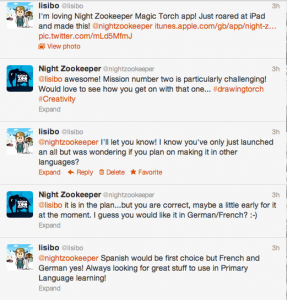
The ability to create your own missions is particularly exciting from my point of view. In the original post, I documented my conversation with @nightzookeeper about the possibility of having the missions in other languages. 

Now you can write your own missions on www.nightzookeeper.com, there’s nothing to stop you writing them in other languages. Accents work (always a worry!) and it’s really easy. You can use existing templates or write your own.

Screen Shot 2013-06-06 at 17.47.20

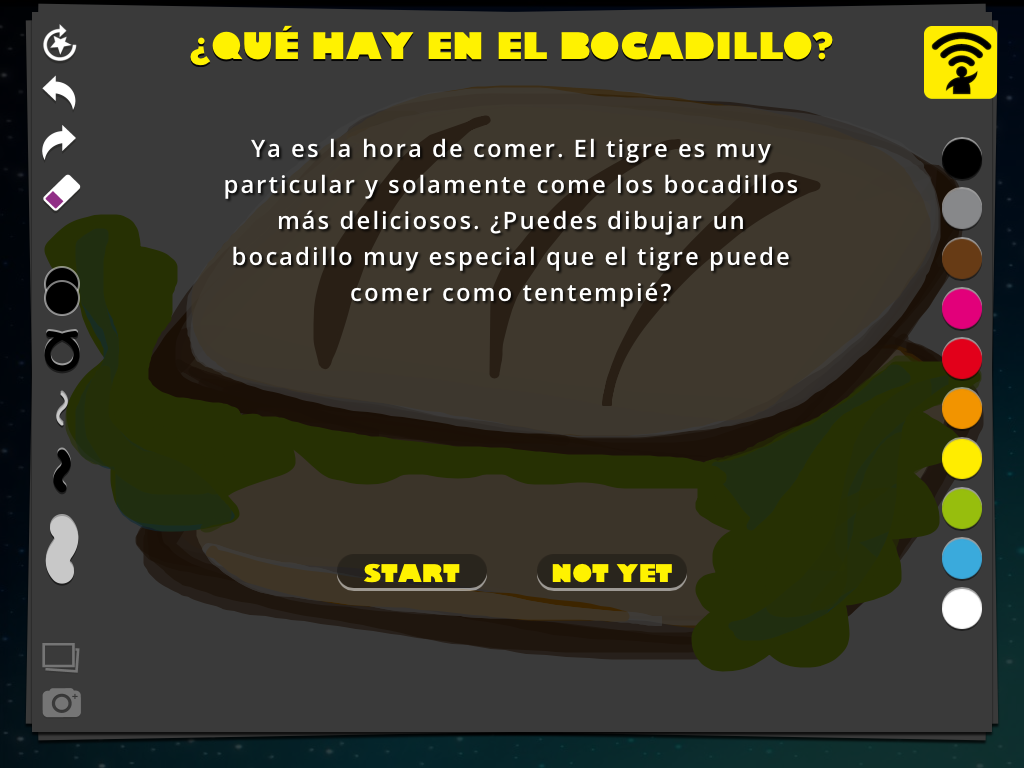
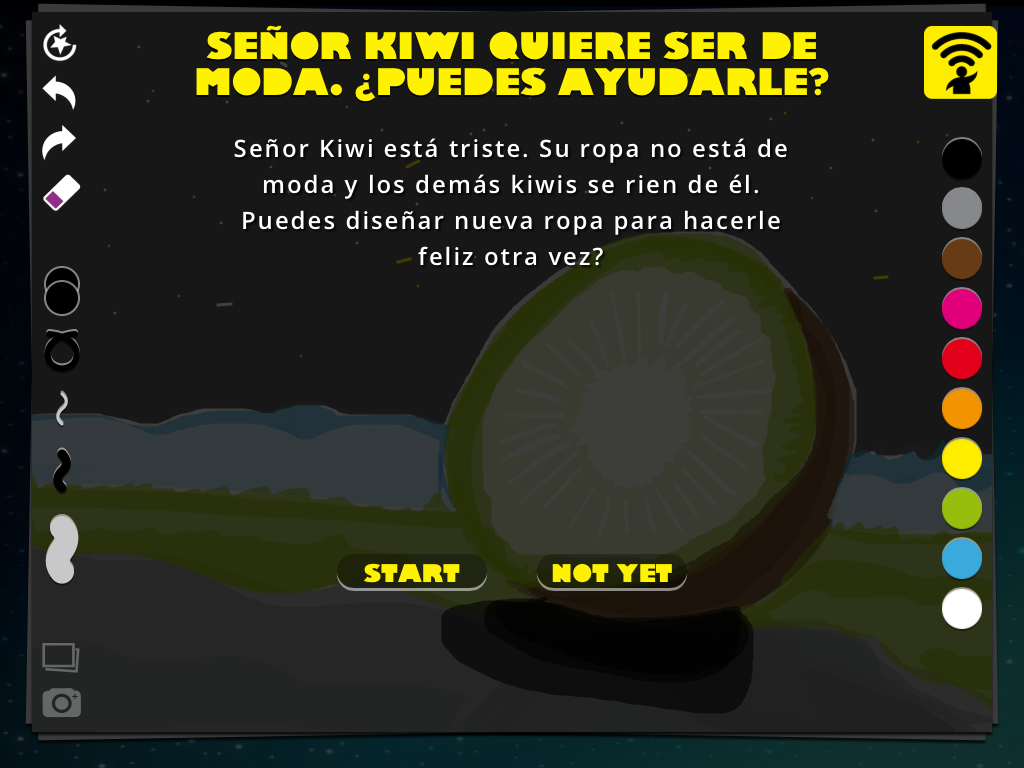
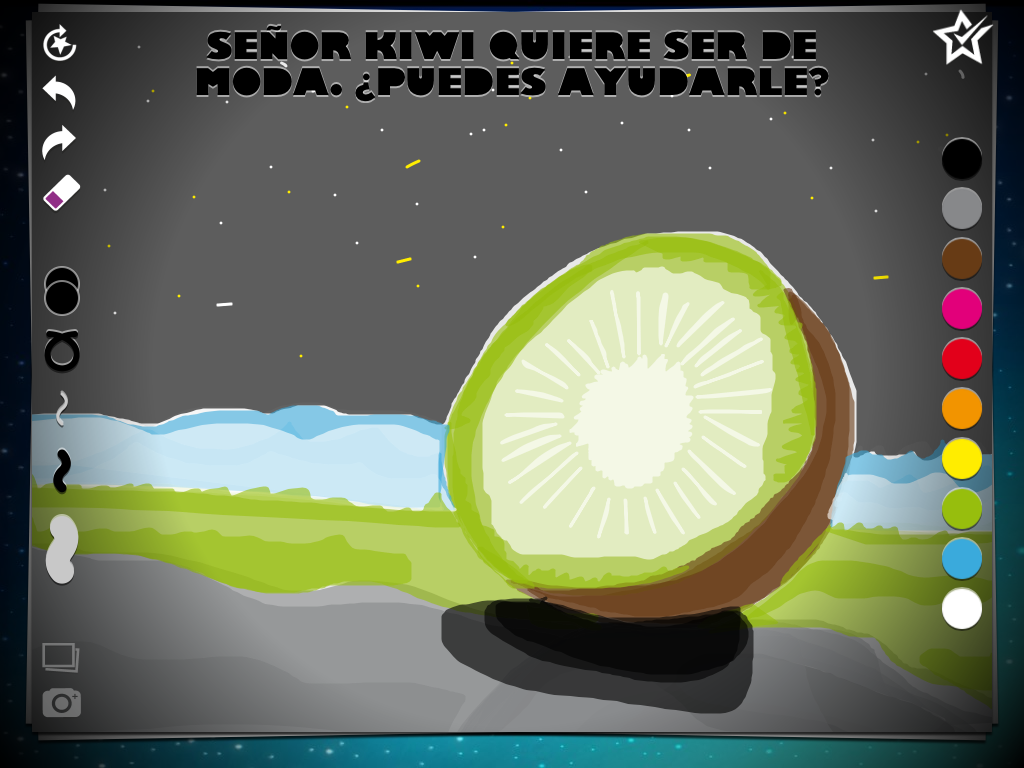
I’ve written two in Spanish so far. I used the existing ideas and templates, simplifying the language a little and translating them. And i’ve only scrolled down a little bit – there are many more ideas that I have yet to read, and I’m sure I’ll be inventing my own ideas soon! So, there’s a food based mission, and a clothing based mission. Once learners have completed the mission, we could share them as a class with learners presenting their creations and then discussing them as a class.

photo 2

photo 3 photo 4

Another thing I love is that you can add as many zookeepers as you wish to each iPad meaning that I can do the challenges and so can my children; that’s great in the context of a class where learners are sharing iPads and can simply change the zookeeper to their identity and complete the challenge before passing on to another learner who can complete the same challenge or another!  You can also decide who will receive each challenge. So it’s easy to send different challenges to individuals, tailored to their interest, age or ability.

All pictures are saved in the Night gallery as well as on the iPad – here’s my gallery!

Screen Shot 2013-06-06 at 17.46.47

The app costs £1.99 but I think that this is worth it as it is now so much more versatile and customisable. And it can be used across the curriculum, not just in literacy! Once I’ve played some more, I’ll no doubt be back with more ideas!


I’ve blogged about César previously and linked to his Soundcloud – previously Cesar a Chinchila and now renamed Lalalingo.

César emailed me recently to say that he was trying to ‘kickstart’ a new project with his songs that involves animating the songs and making a DVD, and I’m doing my bit to spread the word. If you click on the image below it takes you a video in which he explains the plans for the project. (Afraid I can’t get the iframe to embed here!)

Screen Shot 2013-05-21 at 16.46.37

You can also check out the blog for videos songs and worksheets, or Like their Facebook page. They also a Youtube channel singalingua Spanish and on Vimeo they are Lalalingo.

If you want to support financially, that’s great. However, you can support in other ways by sending a message, sharing the idea or using the resources. I’ve embedded one or two of the songs here to give you an idea of what Lalalingo looks like.

httpv://youtu.be/-t03JNus1vI

httpv://youtu.be/lEnuVL7shBY

Screen Shot 2013-05-21 at 13.23.16


Via (soon to be defunct) Google Reader, I’ve found details of this conference in June 2013 that may be of interest to those preparing to implement the DfE’s proposals for Primary language learning in 2014.

I’ve inserted the PDF flyer below. It looks like a great event, and I know that anyone attending will learn lots. Intrigued by the Alien family on tour resources! So if you can get to Warrington on 20th June, I recommend you go – and if you do, please report back!

Screen Shot 2013-05-21 at 13.35.37

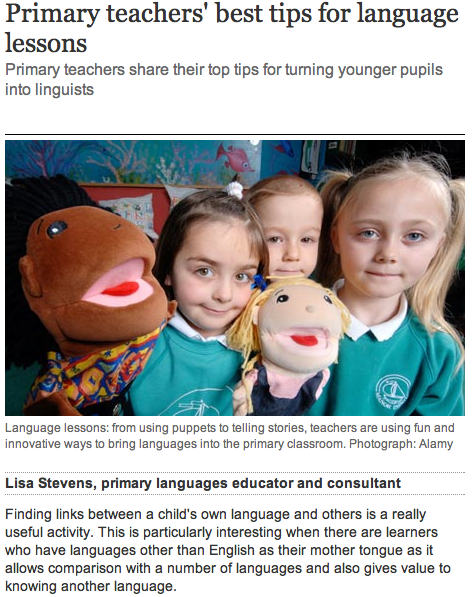
Screen Shot 2013-05-15 at 11.26.58The Guardian is having a ‘Language learning in focus’  week  and the Teacher Network has been publishing articles related to news ideas and resources for language learning.

There have been articles about why people started teaching languages, an interesting article on where we are and where we need to be in relation to language learning, ideas about how best to teach languages, references to resources in the Guardian Teacher Network and ‘my best language lesson’ too.

Screen Shot 2013-05-15 at 11.29.24Today the article is about Primary teachers’ best tips for language lessons. I was asked to contribute and along with others including Clare Seccombe, have shared some ideas that have worked in my experience.

And there’s also an article on how primary schools are getting ready for 2014 from which I’d pick out two paragraphs that highlights a couple of concerns I have – and I know others share them!

“A lot of teachers would appreciate a bit more guidance and practical help, whether it’s schemes of work or things they might be able to read,” adds Board. (Kathryn Board of CfBT)”That’s obviously not what the government wants to do – they want to provide big headlines and how you get there is up to you. But it’s quite tricky because we must not forget this is a new subject, it’s never been compulsory at key stage two before.”


Driscoll (Patricia Driscoll, reader in education at Canterbury Christchurch University) fears the draft curriculum does not place enough emphasis on developing children’s cultural understanding. “In ‘purpose of study’ the draft curriculum says: ‘Learning a foreign language is liberation from insularity and provides an opening to other cultures.’ But then when you come to the ‘curriculum aims’ and ‘subject content’ there’s nothing about culture.”

“Languages are taught through interactive methods but also through cultural identity and understanding,” she says.

I wonder what’ll be up tomorrow? There’s certainly a web chat planned so if you’re free between 6 and 8pm tomorrow evening (Thursday 16th) join in with your ideas about creative lessons and teaching tips!

Mapas

| 1 Comment

I’ve recently started a Pinterest of Spanish resources and came across some lovely maps as I was pinning. None of them would actually serve to guide your way so no good for directions really, but they sparked a few ideas!

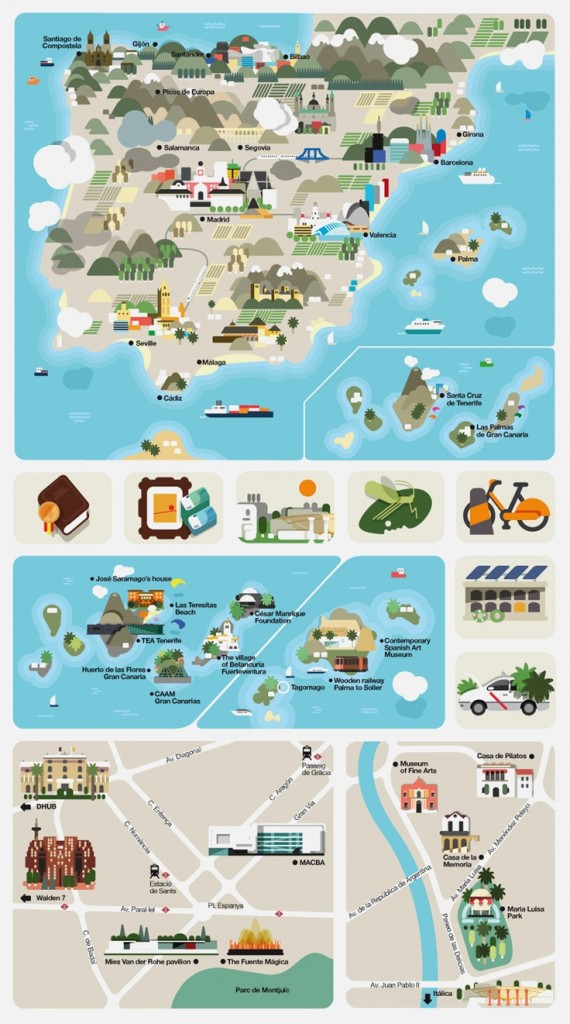
map of spainThis map is a composite of a number of graphics used in an article on Spain. I like the stylised topography and selection of places of interest in various towns.

Possible activities

Name the monuments on the map of Spain.

Assign each group a monument to research.

Identify the mountain ranges. Which is tallest? What activities can be done in the mountains?

Give learners their own blank map of Spain and ask them to select places of interest, features such as rivers or lakes etc to mark on their own infographic map.


Screen Shot 2013-04-10 at 10.05.09

This isn’t an infographic, rather a site that is packed with interactive maps looking at the geography of Spain. You can try to name the rivers, mountains, autonomous regions, provinces and so on. I particularly like the provincias one above as the shapes give you a clue – they’re quite tricky puzzles!

Screen Shot 2013-04-07 at 20.54.09

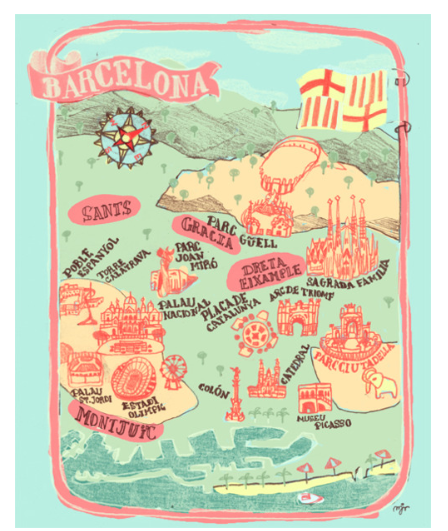
This map of Barcelona gives the vague geographical layout of several monuments and places of interest.

Possible activities 

Find the date that each of the monuments was built (practice of large numbers!)

Challenge learners to plan a visit that includes all or a selection of the places on the map using public transport. 
Draw a map of their town or a large city in the same style.
Screen Shot 2013-04-10 at 10.21.23

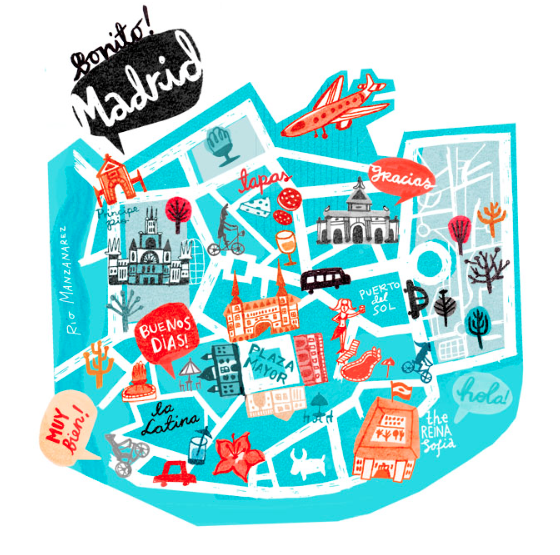
And this map of Madrid has even less geographical information but also includes some phrases that you might hear / use, and some ideas of things to do as well. There’s a similar map of Paris.

Possible activities

Design a similar map for your local area; which places would you recommend? what would you do? which phrases might sum up your area?

Compare the above with a plan of Madrid. Is it accurate? Discuss the differences using Group Talk phrases of opinions and agreement/disagreement.

Screen Shot 2013-04-07 at 20.57.39

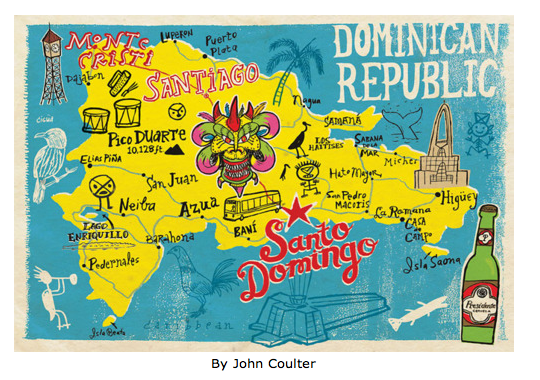
And then there are maps of Spanish speaking countries. This one of the Dominican Republic is possibly the nearest to an accurate map here.

Possible activities

Where is the Dominican Republic? How did it get its name?

There are ‘doodles’ all over the map. What are they?

Screen Shot 2013-04-10 at 10.26.44

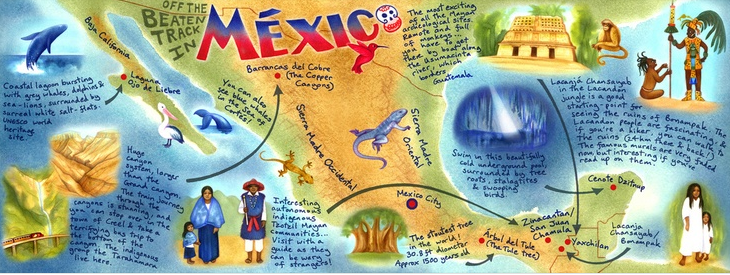
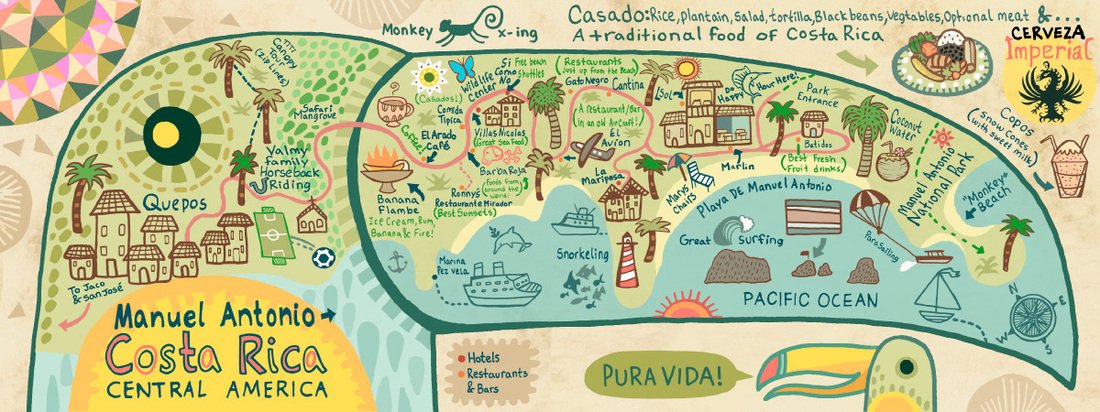
The maps above and below come from a site with lots of map /infographic images of Spanish speaking countries.

I like the use of colour in these maps.

Possible activities

Use the Mexico map to recommend activities to -a wildlife lover -a history buff -a thrill seeker

Make your own tourist map in the style of either map – off the beaten track activities, food you mustn’t miss, insider knowledge of the best coffee and so on.

Devise a slogan for your area like ‘Pura Vida’

costa rica

And if you don’t want to do activities with the maps, they makes lovely displays!

I have a feeling that I’ll be coming back to other infographics soon with more ideas …


Spanish Playground is a great site packed with ideas, and their latest post is full of ideas for celebrating National Poetry Month – April. (It may not be where you are but I like poetry and any excuse!) I liked their suggestions and was inspired to share a couple of their ideas, and a couple of mine!

I particularly like Idea 6 which suggests using ETTC’s Instant Poetry forms. Once you get the idea of the structure, there’s no need to use the site although I like it for the reminder about structure. I had a go at a few…

A Lune (using the 3 word, 5 word, 3 word structure)

tulips La primavera viene 
Corderos nacen y flores crecen 
Hay vida nueva

A 5W, or in Spanish 5Q poem (each lines answer a question who, what, where, when, why)

Pocoyo 
Juega con Pato,
En el campo,
Después del cole,
Porque sí.
Screen Shot 2013-04-09 at 17.12.04

A Quinzaine (7 syllables, 5 syllables, 3 syallables = 15 syllables)

icecream Me gusta el helado 
¿Chocolate o 
vainilla?

And a Verb Verse (think of something you do and six verbs that go with that activity.)

Respirar, esforzarse, disfrutar 
Subir , seguir, bajar 
Corriendo en el bosque
Pictgram_running_man

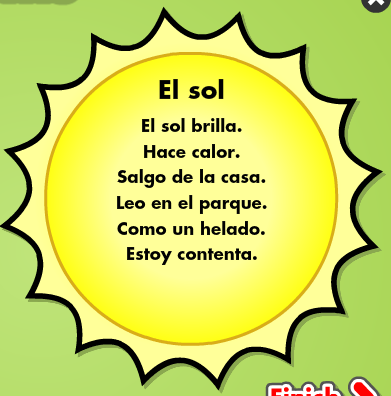
I also liked Idea 10, using ReadWriteThink’s Theme poem tool. I used the sun as my inspiration (hopeful, aren’t I?)

I took a screenshot but you can save the poem as a PDF and also share it via email.

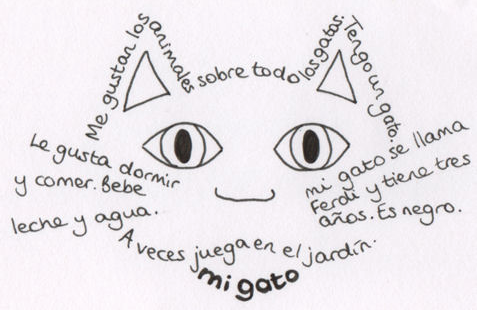
Screen Shot 2013-04-09 at 15.52.31An alternative to this would be to write the words in the shape of the subject as a calligram like the cat one below (from here)

Screen Shot 2013-04-09 at 16.19.09

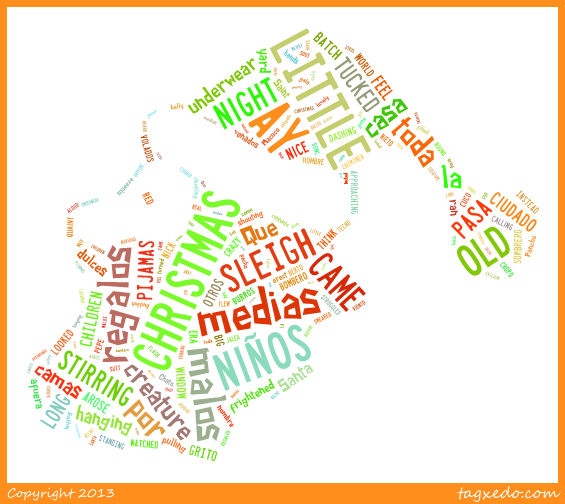
I also like the idea of using Wordle or Tagxedo with poetry, either to create word clouds of existing poems or to give shape to new ones. Here’s an example below that I made using Tagxedo and ‘A Mexican Night before Christmas’

night before

About 18 months ago, I posted about a lovely poem by Gloria Fuentes called Doña Pito Piturra and she has many others that could be used for reciting, learning and also making presentation/slideshows with narration. There’s a link on the Spanish playground post to a PDF of activities too!

I also wrote about the QCA unit La Primavera and taking part of the Antonio Machado poem La Primavera and rewriting it. This would be a simple activity to do as a celebration of National Poetry Month too. We posted our on a Padlet (was called Wallwisher) wall so we could share it with a wider audience.

I’ve found this post about Spanish poetry by Federico García Lorca, Jorge Guillén and Rafael Alberti (for older learners I’d say!) and these are more suitable for younger learners. And this post about using poetry to look at rhyming is also very interesting, using one of my favourite little poems –

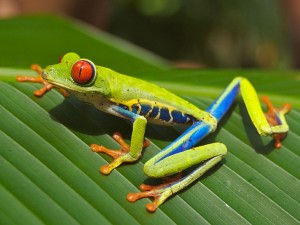
Red_eyed_tree_frog_edit2

Sana, sana,

Colita de rana.

Si no sanas hoy,

sanarás mañana.

And to finish off, as a 15 year old I was captivated by Joan Manuel Serrat singing poems by Antonio Machado so Dedicado a Antonio Machado (Cantares)

¡Vámonos! ©2025. All Rights Reserved.
Powered by WordPress. Theme by Phoenix Web Solutions