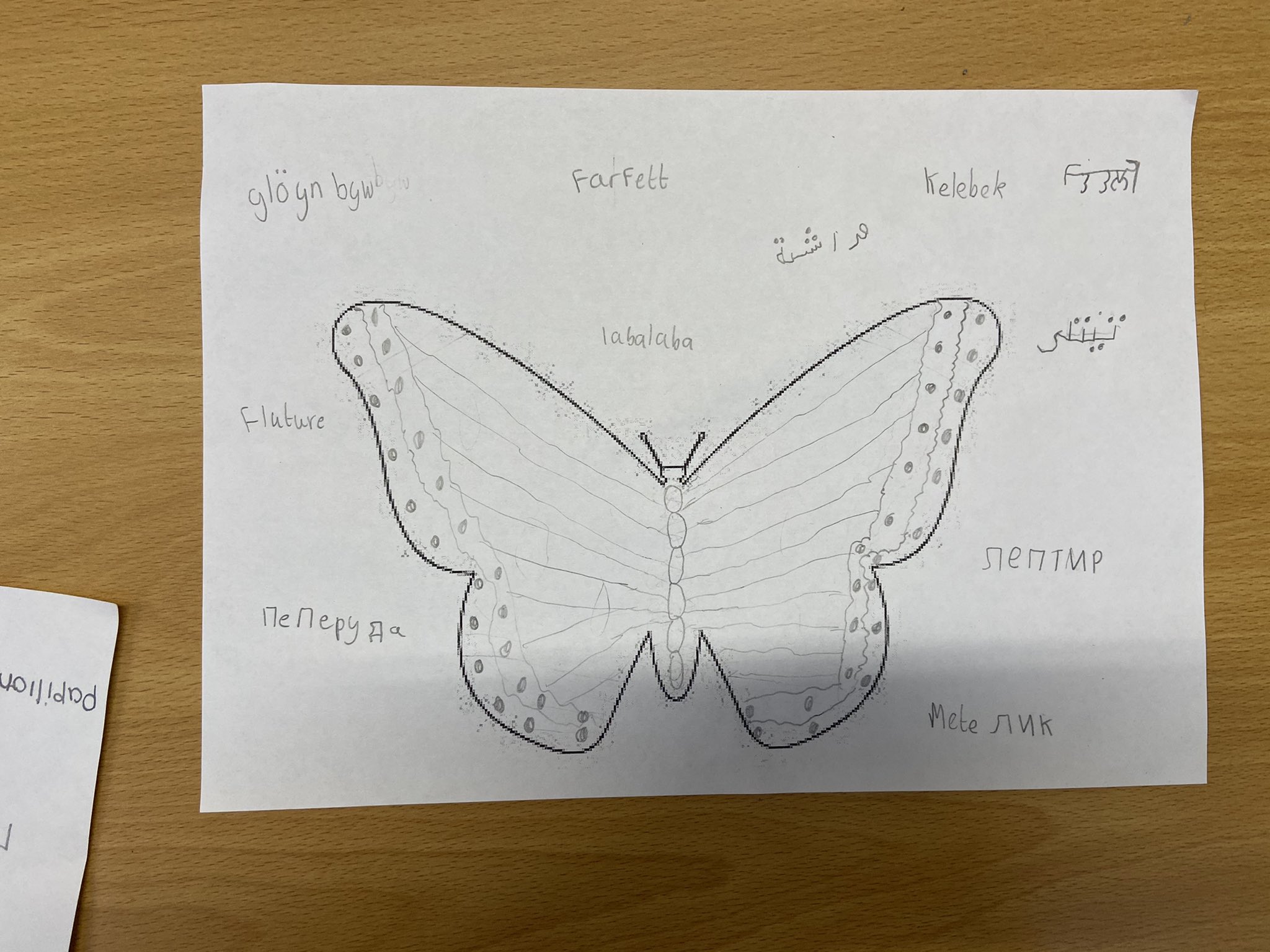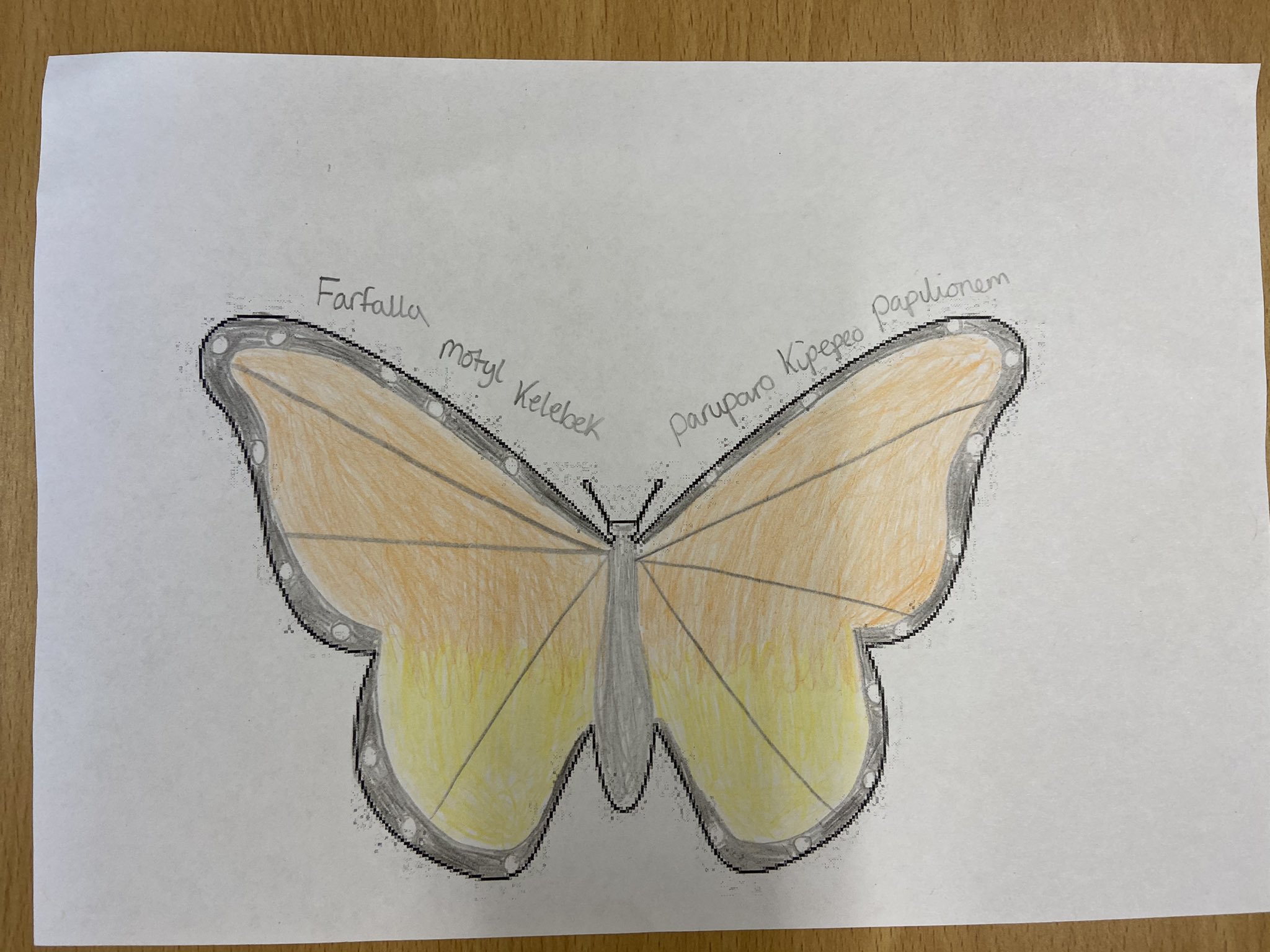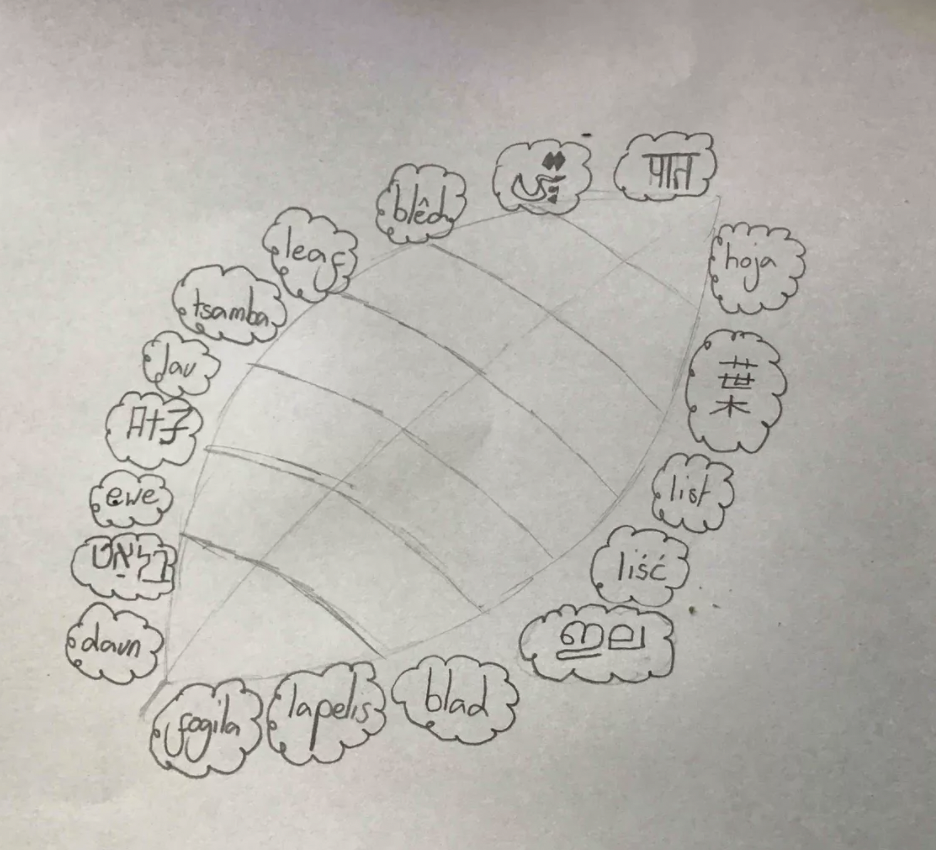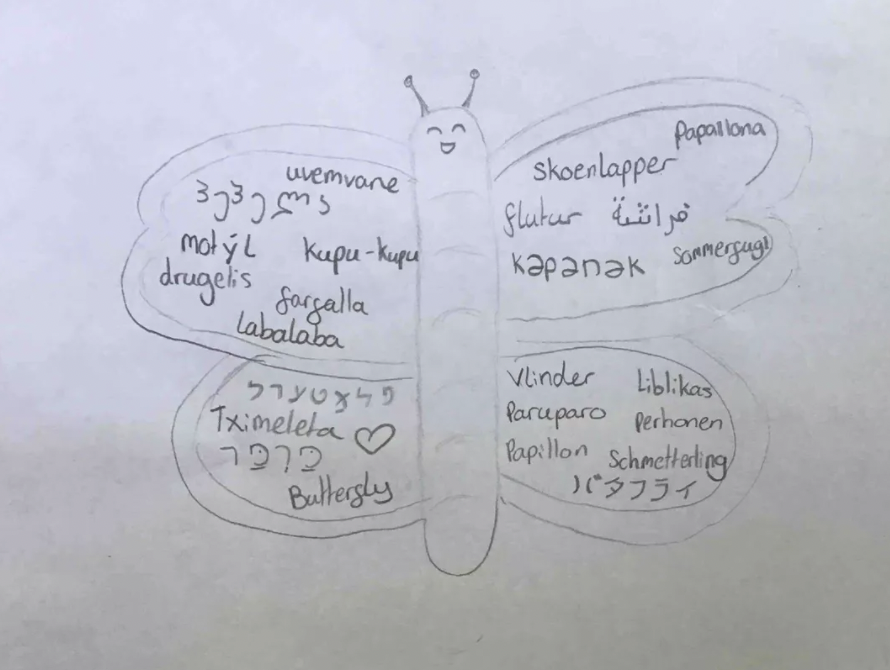
Need to persuade people about the value of learning languages?
This infographic will help…
Archive for the ‘Uncategorized’ Category
The benefits of learning languages
Monday, May 20th, 2013TeachMeet International – Games to learn
Saturday, April 20th, 2013
I’ve just finished presenting at TeachMeet International, an online Teachmeet bringing together educators from across the world. Unfortunately the meeting was blighted by technical issues but we managed to get around them in various ways in order to share our ideas and experiences.
My presentation was on using games in language learning. I talked about games that are easy to organise, games that take you out of the classroom and then moved on to talk about two apps – 4 Pictures 1 Words and PicCombo that I think are really useful for vocabulary at an intermediate/advanced level.
Below is the Slideshare and you will be able to see it and other presentations (hopefully with sound!) soon via the link that will be posted on the TeachMeetInternational website.
See Castellers de Vilafranca in London 19-21st April 2013
Tuesday, April 16th, 2013I will never ever forget my visit to Cal Figarot, HQ of Els Castellers de Vilafranca. An overwhelming evening of fun, fear and awe that left me quite emotional as we watched – and participated in a small way – in a rehearsal of this very special group of ‘human tower builders’. (Sadly the photographs disappeared when my website was hacked, and the links to my school website are out of date too – I’ll upload them again when I have a moment!) Therefore I am a little sad that I’m not in the UK at the moment as they’re ‘on tour!’
The Human Towers are a three hundred year old tradition of building multi-story human towers called “castells”. The great Human Towers perform at many Mediterranean town festivals and are one of the oldest and most spectacular traditions in Barcelona and Catalonia.
The 170 member Castellers de Vilafranca, the world’s best Human Towers team, will debut in London on Friday, 19th April, at Potters Field Park near London Bridge. Each tower will be an exercise in intense concentration, strength and balance as the barefooted participants form successively smaller tiers – resembling a human wedding cake – by climbing up the bodies of each layer to mount the shoulders of the previous tier until the tower is complete.
Once UNESCO had declared the Human Towers as Intangible Cultural Heritage [2010], a huge festival was hosted in the Old Estrella Damm Factory in celebration, in the heart of Barcelona during which a variety of concerts took place and human towers were built to commemorate the much anticipated recognition. It is estimated that over 2,500 people attended the large-scale event.
(from Estrella Damm press release)
The Castellers will in London from Friday 19th April – Sunday 21st April, performing in various places. The schedule is below and I’ve attached a PDF as well. If you are in or around London, or fancy a day trip, I know that you will not be disappointed. ‘Human towers’ are gobsmacking – and this lot are record breaking world champions!
CASTELLERS DE VILAFRANCA
THE HUMAN TOWERS OF BARCELONA
IN LONDON
19th – 21st April 2013
Friday 19th April
12.00 h Performance at Potters Fields Park, Tooley Street, Southwark. London Bridge Station. Sponsored by Estrella Damm
17.00 h Performance at Broadgate Circle, City of London. Moorgate Station. Sponsored by Estrella Damm
18.00 h Performance at Broadgate Circle, City of London. Moorgate Station. Sponsored by Estrella Damm
Saturday 20th April
12.00 h Performance at Clapham Common, near the Windmill, South Side, Lambeth. Clapham Common Station. Sponsored by Estrella Damm
13.00 h Performance at Clapham Common, near the Windmill, South Side, Lambeth. Clapham Common Station. Sponsored by Estrella Damm
14.00 h Performance at Clapham Common, near the Windmill, South Side, Lambeth. Clapham Common Station. Sponsored by Estrella Damm
Sunday 21st April
11.00 h Performance at Millennium Bridge, near the museum, Bankside, Southwark. Mansion House Station
13.00 h Performance at Borough Market, 8 Southwark Street, Southwark. London Bridge Station. St. George’s Day Celebration
Supported by:
Estrella Damm, Barcelona 1876
Equity Point London
Delegation of Catalonia to the United Kingdom
Institut Ramon Llull London
Catalans UK
Vilafranca del Penedès City Council
And if you can’t make it, they’ll be in Salisbury in June. And you can catch the passion in the below video.
PS There’s a movie about them too! The Human Towers
#EDUtalk 3-4-13 – Lisa Stevens
Tuesday, April 9th, 2013Last Wednesday I was invited to be the guest on Radio Edutalk.
EDUtalk is organised by David Noble (@parslad) and John Johnston (@johnjohnston) and encourages people to talk about education, using mobile and web technologies.
I was really honoured to be asked and enjoyed the talking about my experiences and thoughts on education. We talked about my background, how I came to be in Switzerland and what I’ve been doing here before going on to talk about creativity and technology in education.
My summary of “the important bits”!
- Be patient – things don’t happen overnight.
- Lead by example. And if learners enjoy it, they’ll be your greatest help!
- Technology is just another tool that can be used to enhance and transform learning – it’s not THE answer.
- Before using technology ask “why?” – it should suit the task rather than the task being made to match the technology.
- When starting out using new tools, don’t try to do everything at once. You’ll end up with too many plates spinning. Start with one or two ideas and “practise” for a bit before adding something else.
- Learning should be celebrated. Loudly. And I love doing it.
- Twitter is wonderful for keeping in touch and feeling connected.
- We need to support one another, especially as other support, such as advisory teams, is being decimated.
Thanks to David and John for the opportunity. Great to talk to you again! You can listen to the programme here.
¡Hola otra vez!
Friday, April 5th, 2013
¡Vámonos! is back up and running, thanks to the hard work of Sinclair MacKenzie who is a complete star. ¡Muchísimas gracias!
All is not quite as it was at the moment but things are mostly back to normal. If you want to find out more about me, find out what Lisibo Ltd. is all about or send me a message, click on the appropriate tag in the side bar under Pages for now until I remember how to get them back on the menu bar!
Thank you for your patience and thank you to my knight in shining armour once more!
eTwinning impact study
Wednesday, November 9th, 2011
As regular readers will know, I am an eTwinning Ambassador (that is a very old picture!). I say ‘I am’ as, whilst I’m no longer in the UK, I am hoping to continue to help promote and encourage involvement in eTwinning now I’m in Switzerland. Why? Because I’ve seen the difference it’s made to my school in terms of teaching and learning, the experiences that it’s brought and the new openess to ‘otherness’ that’s it’s brought. I see a school that looks outwards, celebrates the heritage of its pupils and understands more about UK traditions through looking at others. I see a school that is proud of differences and actively looks to make contact with people with different life experiences. And I see pupils who have grown in confidence through seeing that speaking a language other than English, or having a different religion to most others is actually a brilliant thing, not something to hide as well as experiencing the joy of talking to their peers across the world.
There is currently an Impact Study being carried out by Education for Change into eTwinning – see below. Evidence is being collected in a numbeer of ways but one is via a survey. I’d encourage you to fill it in as I suspect that the future of eTwinning with depend on this study!
If you want to find out more, please feel free to contact me and ask questions!
EfC has been has been commissioned for a 21 month study of the impact of eTwinning on pupils, teachers and schools. The study will also be an analysis of the factors which contribute to, or hinder, successful participation in eTwinning.
eTwinning Partnerships is an activity under the Comenius sub-programme of the EU Lifelong Learning Programme. It was launched in 2005 with the objective of enabling school twinning as an opportunity for all young people to learn and practice information and communication technology (ICT) skills, as well as promoting awareness of the multicultural European model of society. The European Commission foresaw that eTwinning could be a major catalyst in intensifying the sorts of cooperation already underway among schools. Since the launch of the new platform in 2008-09 visits to the eTwinning portal have increased by over 300%, indicating a steep rise in interest among teachers. Registration continues to rise, and there are currently almost 100,000 registered eTwinners in 73500 schools.
The impact study will look at participation in eTwinning and what hinders or helps it success, specifically:
• the networking of schools and teachers across Europe and their capacity to build social capital, and the way in which eTwinning is managed and promoted
• the perspective of participating teachers
• the impact of eTwinning on pupils, teachers and others at school level
• the overall impact of eTwinning within the context of the Comenius Programme
The main activities will include:• Desk research and consultation with Central and National Support Services and others
• A general survey of all eTwinning teachers, in 23 languages
• Case studies research on impact in at least 20 schools in 10 countries, using country-based researchers
• In the light of findings, will make recommendations on possible improvements to the eTwinning action, its design and management.
Spanish toe nail game!
Saturday, November 5th, 2011One of the problems with submitting an article to a journal / paper is that you have no control over how they publish it. In my article in The TES I hyperlinked to the toe nail game to which I referred. Obviously this didn’t come out in print but I’d hoped (naively) that it might in the electronic form.
In my blog post yesterday it was hyperlinked, but to respond to queries, here it is!
Go to the SpanishSpanish site and click START.

Follow the instructions.
Listen and watch – a toenail will flash and the colour (word) will pop up in Spanish. You will also hear it.
When it says GO click that toenail.
Listen and watch again. The same toenail will flash and another will be added. When it says GO click them in sequence.And so on.
The idea is to get the longest chain. I wasn’t very good today!
The exercise is good because you see and hear the word each time it is presented and each time you click the nail, and also because it’s good for your memory! Alex in Reception managed 25!!! Not bad for a 4 year old on his second Spanish lesson who remembered the words in Spanish, not just the sequence of colours. He’s now Y3 and is on my G&T Linguist list!
An enduring favourite game!
El Día de los Muertos
Monday, October 31st, 2011A few of videos to help you celebrate EL Día de los Muertos (which I much prefer to Halloween!)The first explains the festival, the second is a piece of music and the third is a song from Babelzone that my pupils all love!
Sorpresas y sonrisas -1 de octubre – Instituto Cañada Blanch
Sunday, October 2nd, 2011Here is my presentation from the Spanish workshops yesterday.
Entitled Sorpresas y sonrisas, it was a reflection on how to keep everyone in the primary language classroom happy and engaged. For the second time in a row I failed to record myself so I’m afraid no slidecast this time
However, if you want me to clarify anything, please contact me via the form on the right.
Spanish workshops with Consejeria de educación
Sunday, October 2nd, 2011
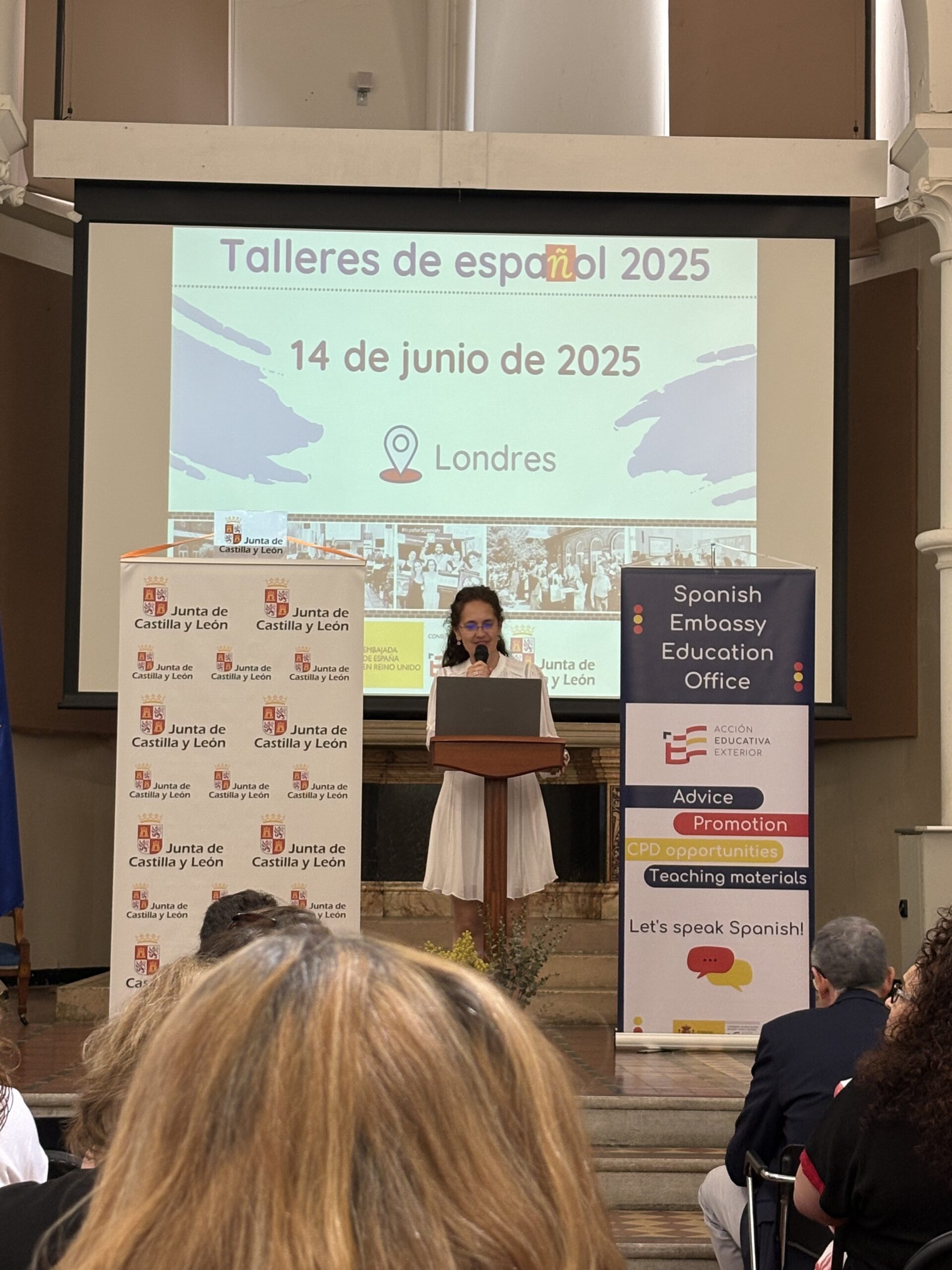
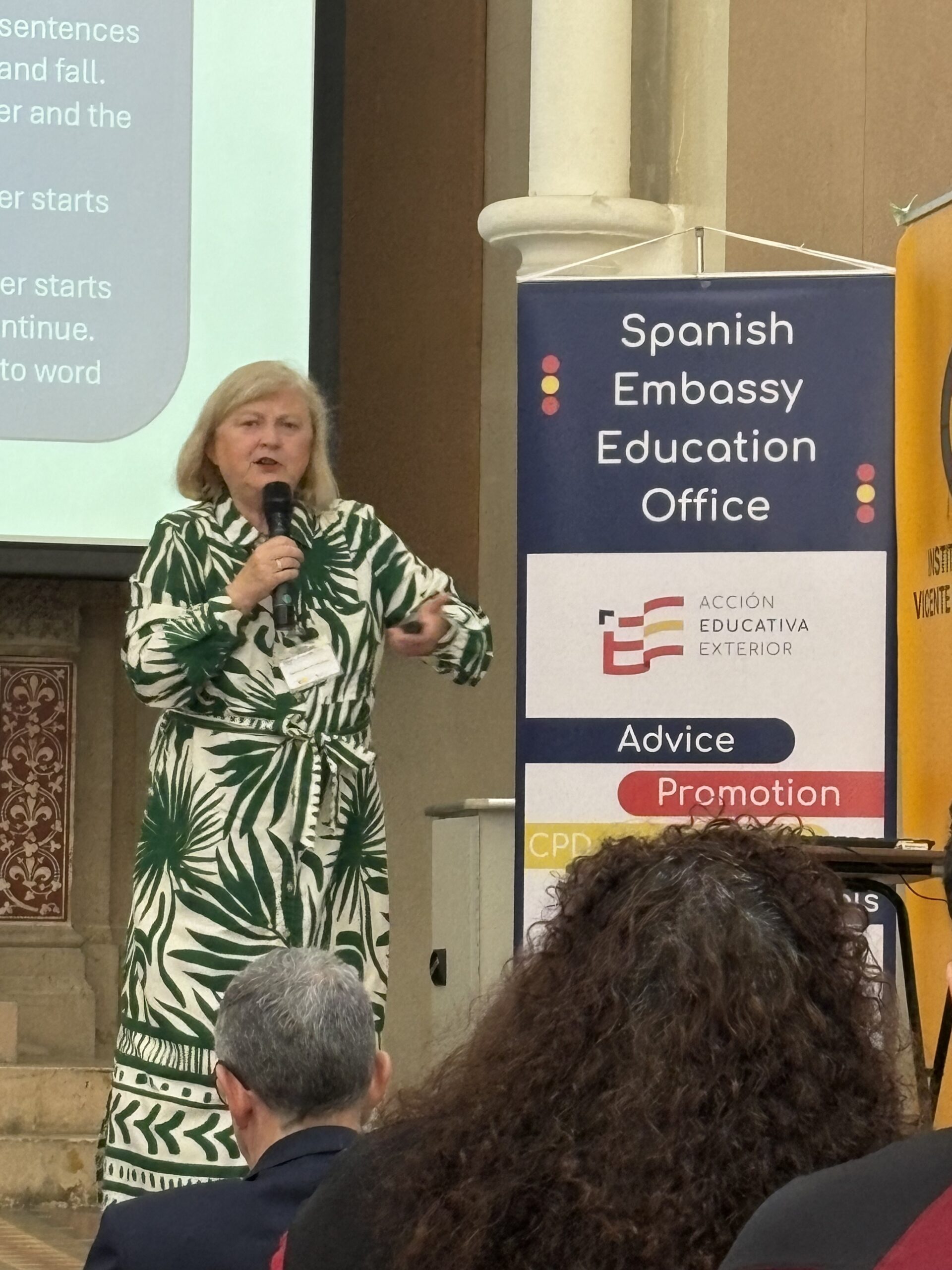
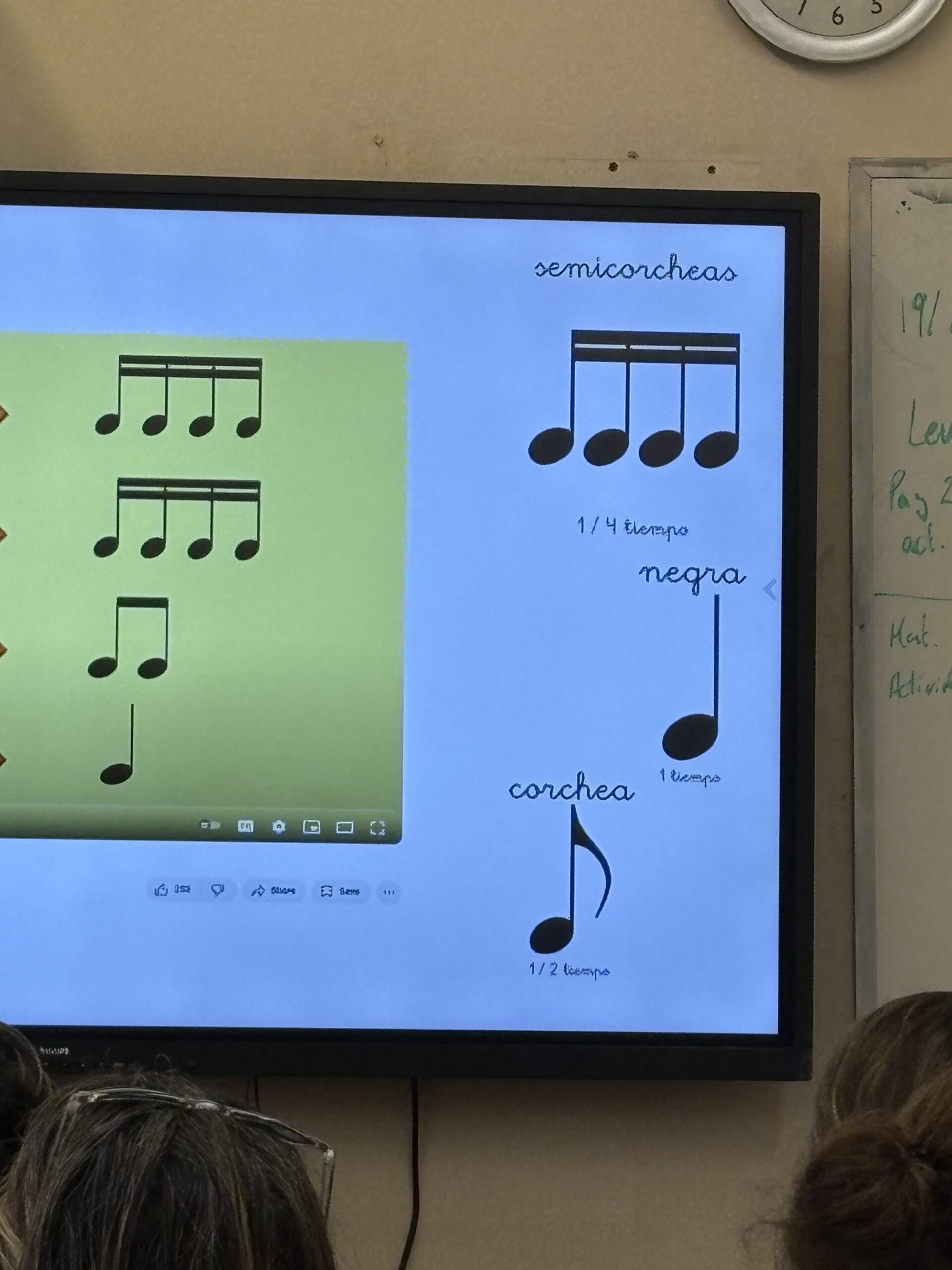
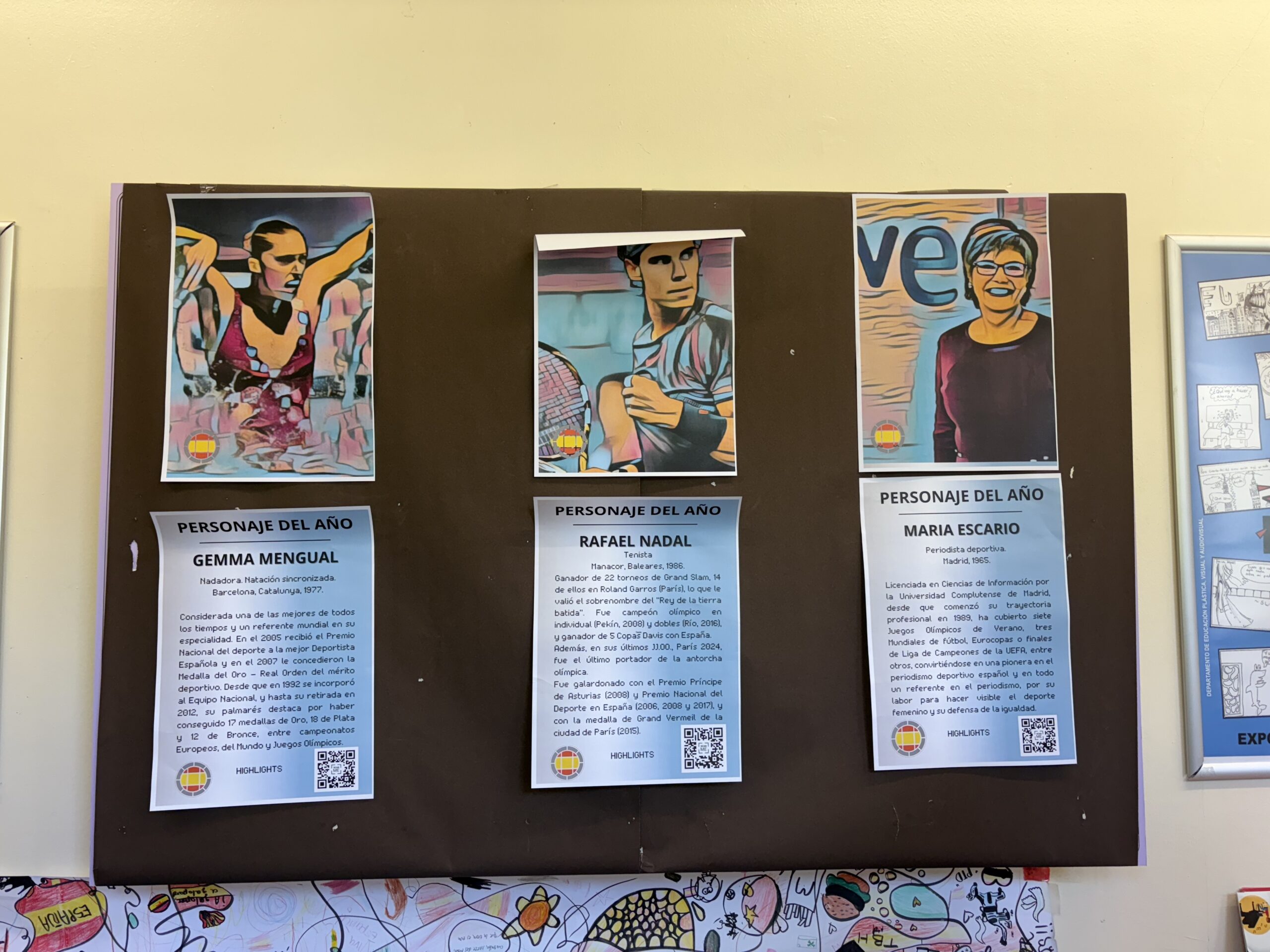
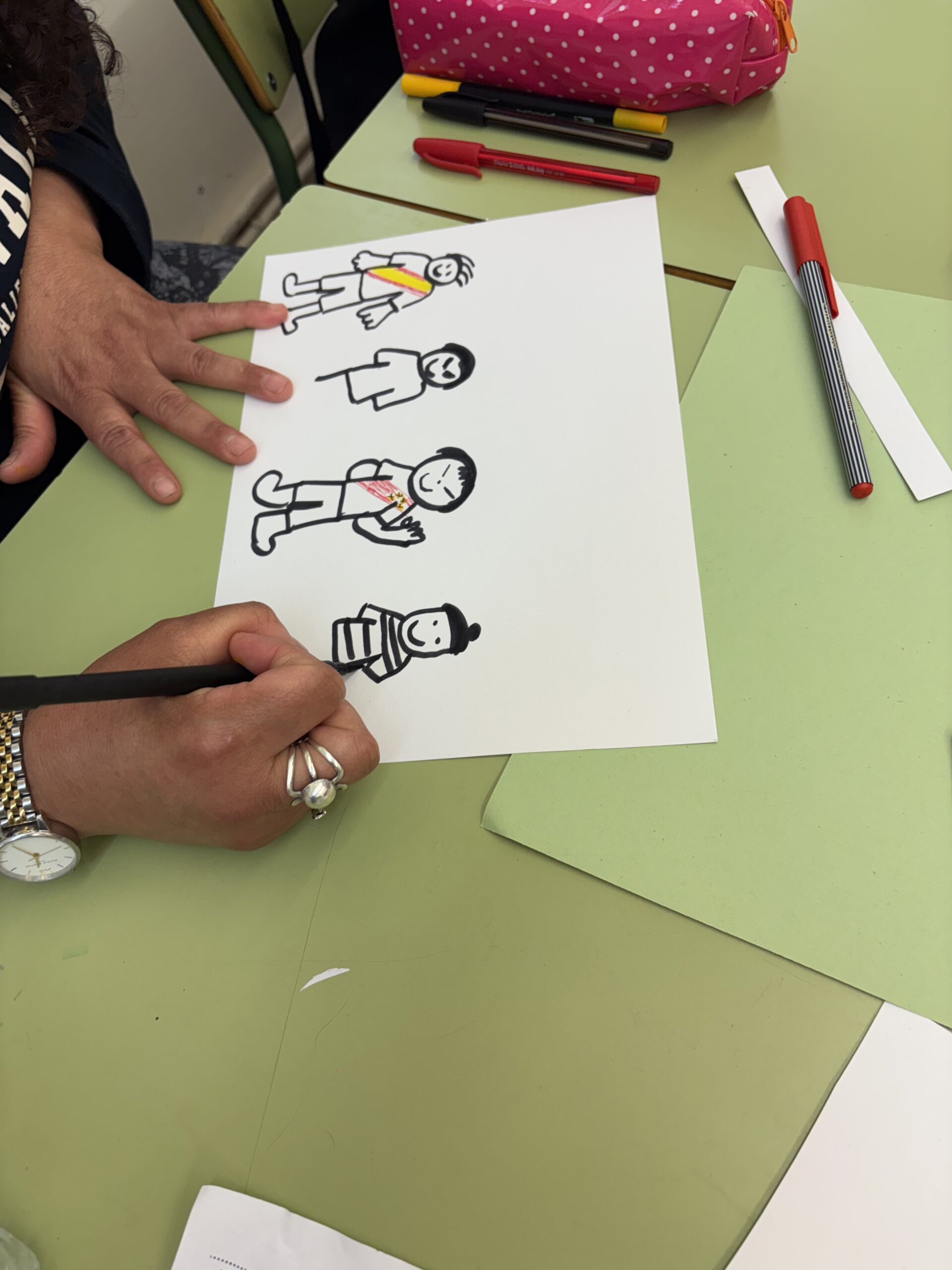
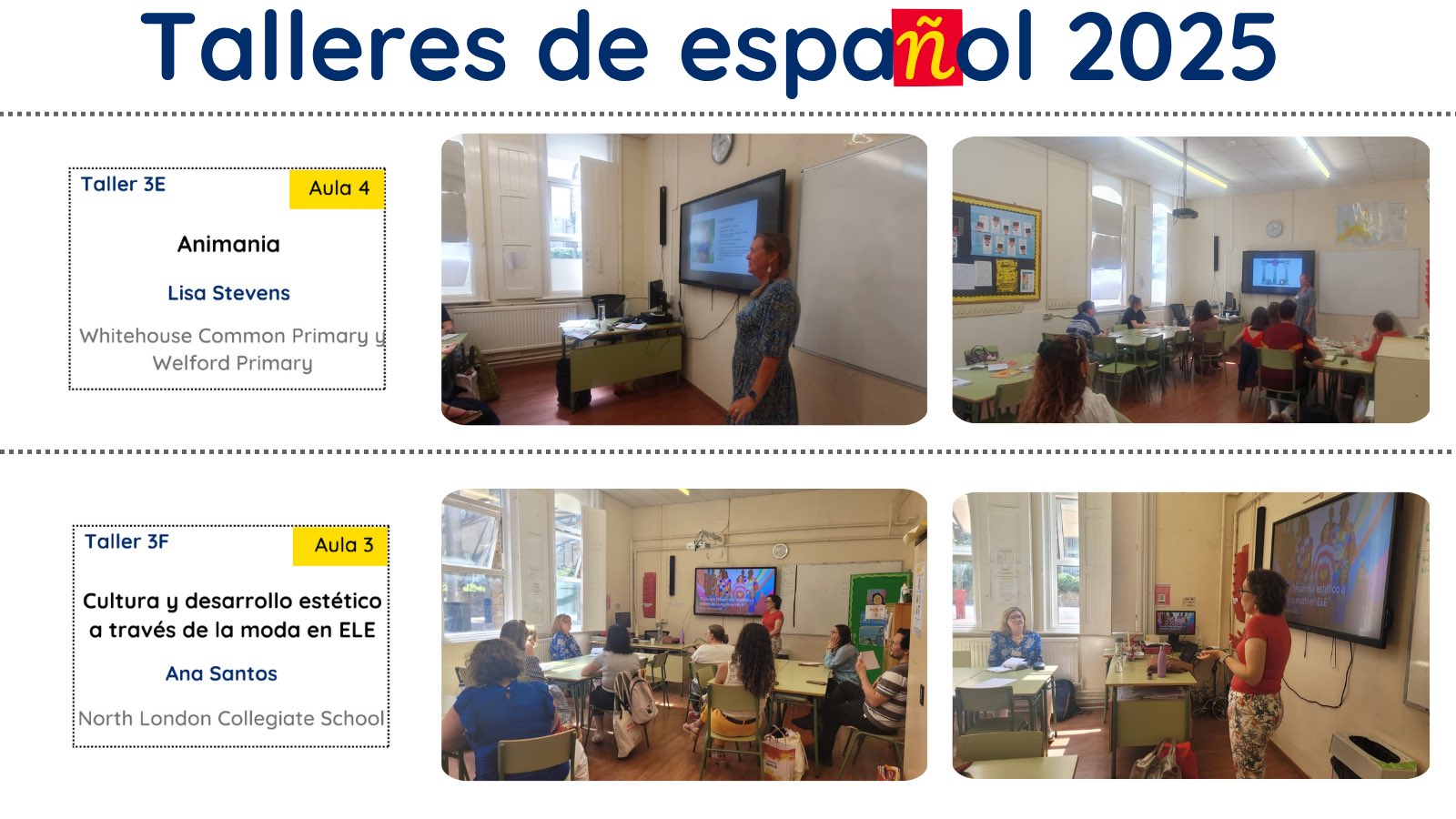
Today I was privileged to take part in the Talleres españoles para primaria run by the Consejería de Educación at Instituto Cañada Blanch in London. I was sharing ideas for the primary classroom from my experiences with a presentation called Sorpresas y sonrisas. More of that later but I thought I’d try to summarise the day as I went along. (No wifi so publication will have to wait until I get home!)
The day started with a presentation on the situation of Spanish in the context of world languages – did you know that all the time we’re losing languages? In 2008 Eyak was lost in Alaska when the last speaker died. With the arrival of the Romans in Spain, Latin was imposed on much of Europe so the languages of the Iberian peninsula as well as other places started disappearing. Over time, Castillian took over from regional languages although some still exist, becoming the common language of Spain. Much the same happened in the South America although until there was little imposition of Castillian by the missionaries or conquistadores, but rather by the independentistas who decided to use Castillian as lingua franca. The Hispanic population in USA continues to grow and will continue to do so. Very interesting to see how Spanish compares with other world languages – it has a greater spread of speakers compared to more localised Russian, less dialectalisation than Arabic, more standardised in terms of written form than Mandarin Chinese and so on. And also to see how the statistics can be skewed depending on who you count as a ‘speaker’ of languages. There are more native Spanish speakers than English but if you add those who have it a a second or peripheral language, English soars ahead. Spanish occupies 5th place in books published, 3rd in books and 3rd in Internet. But it’s not doing so well in Wikipedia entries! And let’s not talk about economic power…. As Munoz Molina said ‘el enemigo del español no es el ingles es la pobreza’
Next I went to a session entitled Learning Spanish and other school curriculum contents (CLIL) with Maria Teresa. She talked about using stories as a starting point for exploring languages. Phase 1 to capture their attention, phase 2 to tell the story and phase 3 and 4 more activities to reuse what we’ve used and then producing something based on what they’ve learned. The story is about un oso pardo who lives in the north of Spain (would our kids know that there are bears in Spain?) ‘Una historia para imaginar’ tells about Mummy bear and her daughter Perica and son Ramirín who are cold as winter is about to come. ramirín doesnt want to go to sleep but Mummy says lets go to sleep and dream. They sleep all winter and wake as spring arrives. What did they dream about? Pupils can use imagination! Having read the story, we can take parts with sections being Mummy, Perica and Ramirín- and a confident child could be the narrator. Then in phase 3 we do activities that exploit the text and take it further eg
1. hopping and counting the paw prints!
2. presenting your family using family tree handout.
3. Reordering the story
4. months and seasons

After recharging my batteries with coffee and choccie biccies, off I went to Irene Wilkie who was talking about integrating Spanish in the curriculum. Irene started by apologising as her presentation was aimed at teachers with little Spanish and the room was more or less full of Spaniards (I’m going to have the same problem) then talked of how we might look at the Tudors in Spanish. Firstly we looked at flags and talked about nationalities -(era) española, alemana, inglesa- and then talked about children – tuvo un hijo / una hija, no tuvo hijos – then how they died – fue ejecutada, fue divorciada, murió, sobrevivió.
With these few words, you can discuss the wives in Spanish, use texts that include more complex structures and ask questions on history in Spanish.


Then we looked at El cuerpo humano – recycling what pupils know in Spanish! Using cognates/ palabras parecidas it’s easy for learners to follow. Short paragraphs lead to a table to match phrases. Then definitions for parts of the body – give the name of the organ. And her third example was healthy eating – lots of pictures with which you can ask simple questions ¿Bueno o malo? Or sí y no. You can do some grammar if you want but you can avoid! Irene talked lots of sense and I’ll certainly be passing on her ideas to my colleagues!
Lunch consisted of delicious tapas – won’t go on but ¡riquísimo! SEGL presented Superdrago their ELE (español lengua extranjera) textbook for 7-11 year olds. Very colourful and imaginative. Need to have a good look before further comment!
Final session I could attend was Learning by doing in a global team – Emocionaros 1.0 para que emocionéis 2.0. Mercedes Ruiz had a suitcase full of bits and bobs like a black skirt that could be a nightmare, a monster; a blue piece of material that is the sky, the sea; gloves to show hot and cold. Then we looked at the book Perdido y encontrado and Mercedes recounted how she’d told a story about an escaped penguin at London Zoo and been believed. So the class made posters to find it again, in Spanish and English. And so started a whole exchange of lost and found penguins across the world – in Zaragoza, Argentina, Thailand. Then the penguin was in lost property and they sent him messages via paper airplanes – they didn’t want him to go back to the zoo. The imagination, creativity and ingenuity involved was remarkable leading to bilingual conversations and cooperation. Mercedes went on to talk about using web2.0 as that’s the language of our learners. They don’t just talk in words but in gesture, video, sound, image. She shared the Osos y leones blog belonging to the younger pupils of Instituto Cañada Blanch on which they share all sorts of things they do.
I couldn’t stay for the last session which is a shame as I might have learned how to carve jamón serrano. However, a really great day, only slightly marred by the inefficiencies and dire lack of information of London Transport making my journeys a nightmare.
And I am VERY proud of my certificate – official stamp and everything!