lisibo talks – Page 7 – ¡Vámonos!
 

Category: lisibo talks

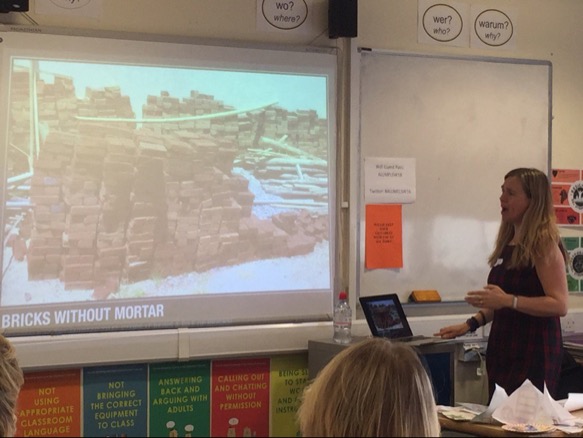
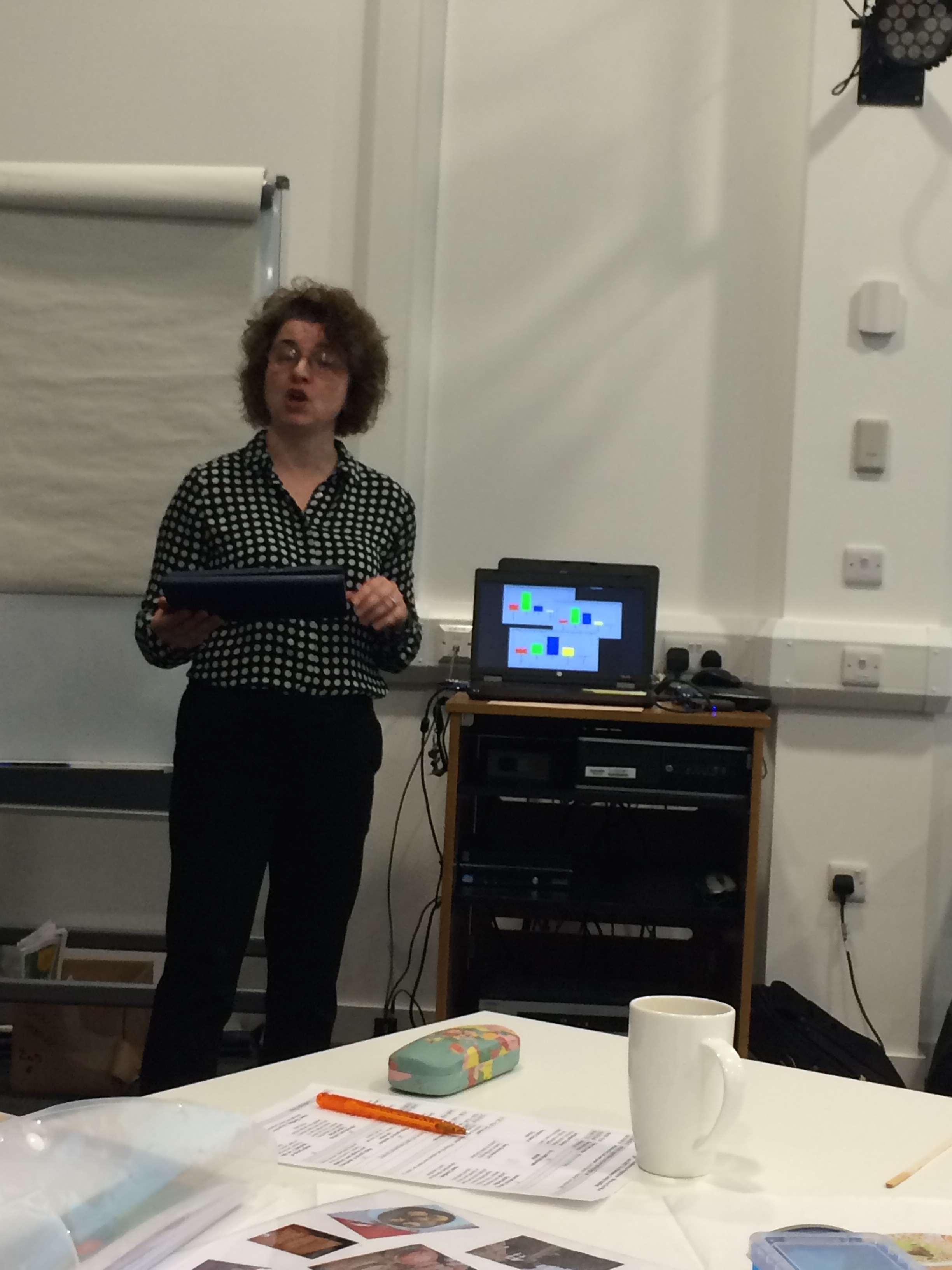
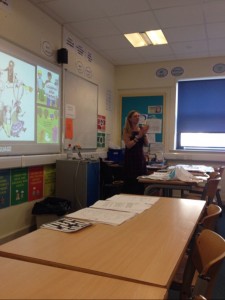
IMG_8436On Saturday 27th February, I delivered a workshop at the #ALLMFLSW16 conference in Bristol. I’d been asked by Marie-France Perkins if I could talk about primary languages in the context of the new curriculum which is planned as a continuum from KS2 through KS3 and onto Ks4 and hopefully KS5. I called my session Building Firm Foundations for Strong Buildings, harking back to a talk I did a number of years ago called Bricklaying for Beginners!

Below is my presentation, and under that I’ve written a brief summary of what I said.

I hope you find it useful. If you have any questions, please feel free to comment or send a message via the contact form. 

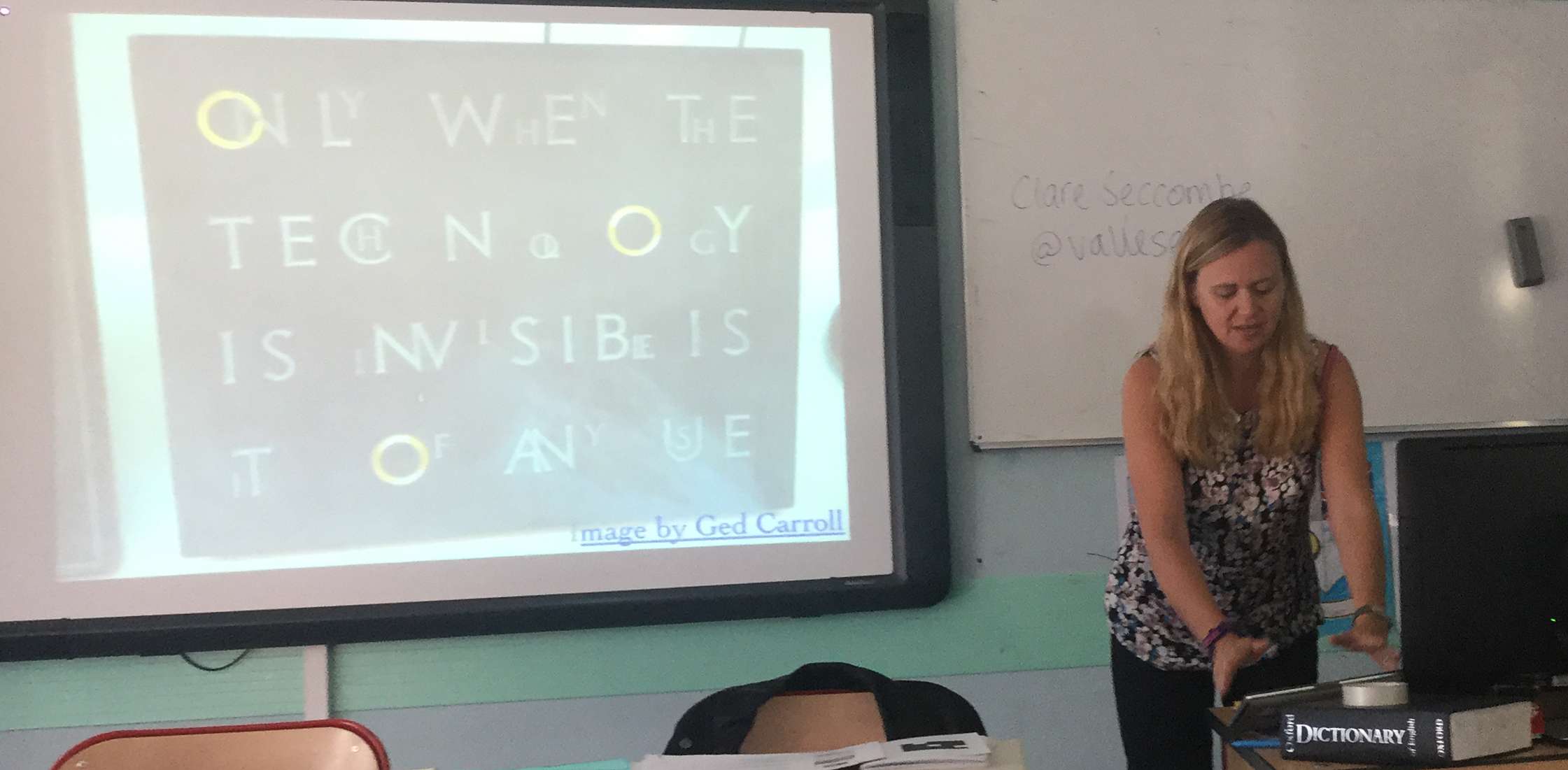
I began by talking about the importance of foundations, and the role they place in keeping buildings upright and stable. Although they are often unseen, they are the last things that are destroyed by time and erosion; I shared my own experience of primary language learning and how my 4 years of middle school French have stayed with me. We moved on to considering why starting language learning at primary is so important before considering what should be taught/covered at KS2, referencing a survey by Clare Seccombe and also a document compiled by the ESAGMFL group.
Looking directly at the Programmes of Study, we used Rachel Hawkes’ helpful “KS2 and KS3 side by side” document to look at the progression of skills and I shared the document below with participants, acknowledging the source as Rachel’s website.
For me, my most important task as a primary language teacher is to nurture a passion for languages and an excitement about learning and communicating in other languages. That, however, does not mean that it’s all  ‘fun and funky singing, dancing, cutting and sticking ‘ with no substance. There is a clear rationale to what I teach and I shared some ideas linked to each of the four skills as well as grammar.
Listening
  • animal symphonies – clapping the syllables of words to encourage listening and awareness of word patterns
  • using rhymes to listen out for phonics and respond physically
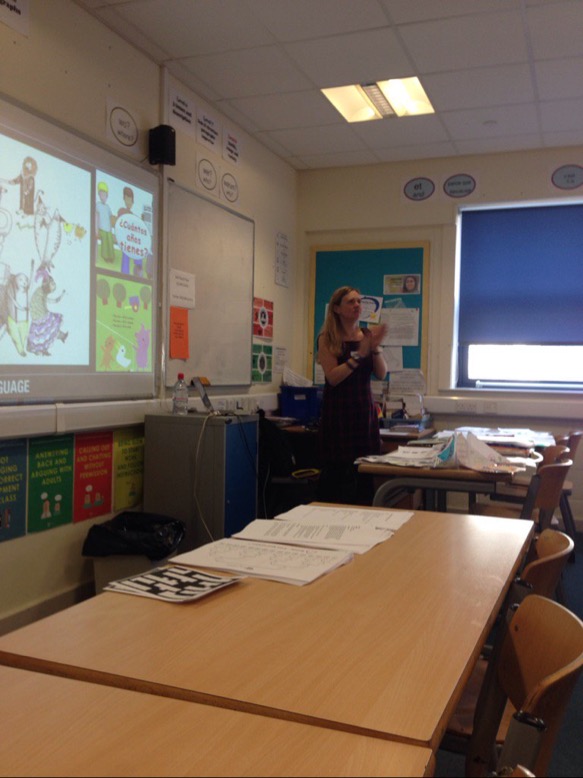
  • using songs as a way of introducing topics e.g. ¿Cuántos años tienes?
  • stories as a way of encouraging listening carefully and responding – ‘safe’ due the familiarity and repetition
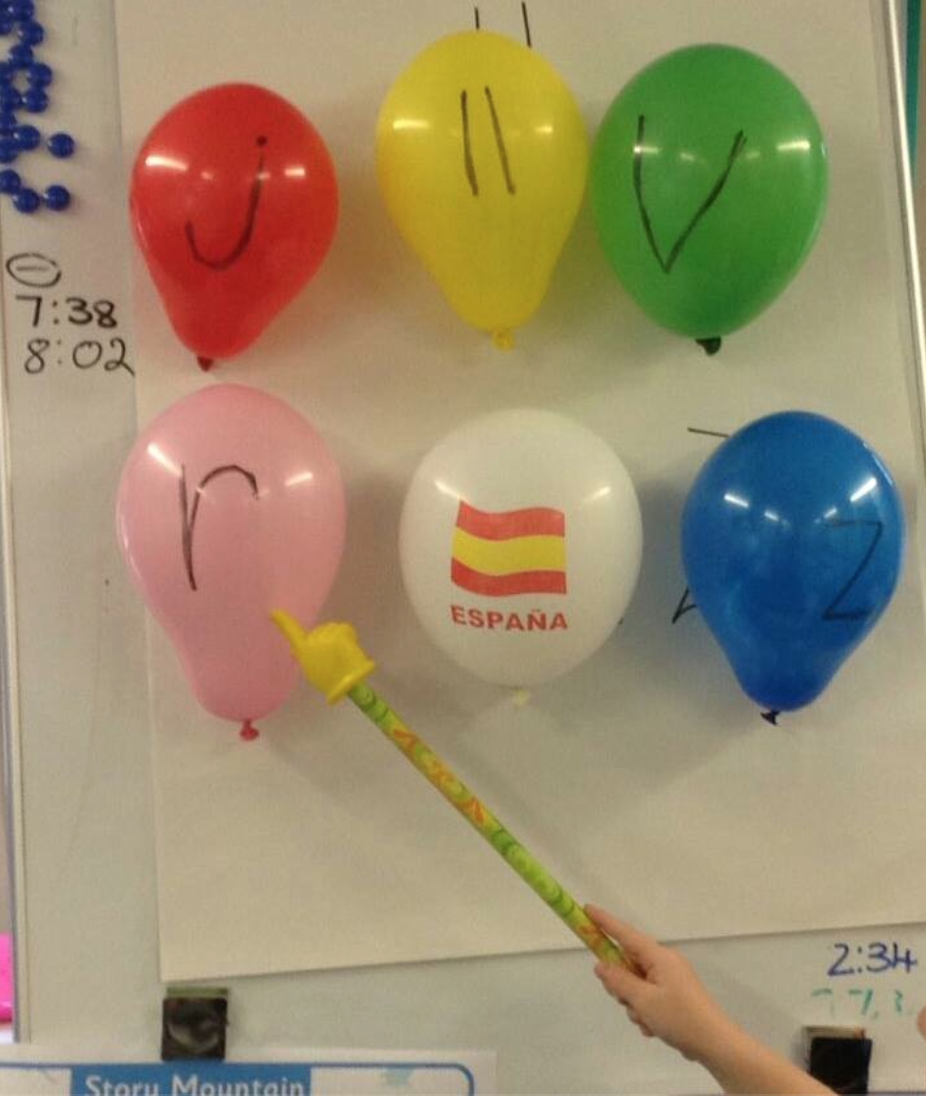
  • branching listenings or minimal pairs (slide24)- I first encountered these last year at ILILC in a session by Julie Prince, and I shared two examples from LightBulbLanguages – colours (Spanish)  and jobs (French) Learners listen to a series of words – or phrases – and at each step choose between two alternatives until they arrive at the bottom line and give the number they reached.
Speaking
  • PHONICS! So important! The keystones of the foundations as they enable understanding of the spoken word, pronunciation, enable learners to read effectively and also spell. Rachel Hawkes once more had burning ears!
  • vowels and setting them to DISCO by Ottawan
  • phonic islands and mats, referencing Sounds and Words by Lynne Erler and Julie Prince
  • “stress punching” to demonstrate intonation and stress patterns
  • “Spanish glasses” to read Spanish – chocolate is spelt the same in English and Spanish but pronounced differently (slide 30 ) also false friends like gift and Gift in German.
  • tongue twisters to practice ‘getting your mouth around’ certain sounds
  • using Trapdoors to practice sentences – learners will play long after you’d think they’d be fed up!
  • using board games to practice the question form (I shared a Snakes and ladders board game worksheet from Eurostars with learners asking a question when they land on a square rather than giving an opinion)

Reading

  • using poems like Doña Pitu Piturra that have a rhythm and a rhyme, and a pattern that can be followed – and the example also shows handwriting which fascinates and is worth discussion
  • using Tarsia and dominoes
  • using storybooks isn’t a bad thing – even Y6 like a story, especially if you link it to reading to younger pupils or making something to be shared.
  • books don’t have to be fiction – non fiction is important too. Books on e.g. planets can be accessed as learners have learned the facts in Science and can therefore make deductions about vocabulary etc. Plus there are diagrams and images to support.
  • the importance of making mistakes and discussing WHY you thought something
  • instilling the idea that you don’t need to understand every word, and linking in to literacy skills of comprehension: where will I find the answer? what are my clues? what’s the context? is there a word in the question that helps me?
  • making your own texts using storybird.com – I shared ¿De dónde viene el yak? There are other MFL Storybirds shared on the wikispace both fiction and nonfiction. Well worth a look.
  • dictionaries can be glossaries, picture dictionaries and encyclopaedia/thematic type ones as well as the ‘tradition’ bilingual ones. I shared an activity linked to a colour poem which Y3 had rewritten using a combination of picture dictionaries and bilingual dictionaries.

Writing

  • writing texts from other texts e.g. rewriting stories by substituting nouns and or adjectives (El bicho hambriento), or writing a story in the style of another (rewriting El Nabo Gigante to feature a teacher stuck in the PE cupboard who calls for help to pull him out!)
  • the value of whiteboards and technology to allow for quick correction without committing it to their book – rehearsing and making mistakes
  • giving structures using card, human sentences to physically demonstrate word order e.g. making sentences negative, or the noun-adjective order in Spanish compared to adjective-noun in English
  • scaffolding
  • memorisation – I shared another activity from LightBulbLanguages to demonstrate a way of supporting learners in memorising spellings by giving them the shape of the word

Grammar

  • Grammar is the cement that holds all the bricks together!
  • link it to English – and/or other languages e.g. making plurals
  • using songs is quite effective e.g. ¿Por qué es mi mochila tan pesada? introduces Es+ singular noun and Son+plural noun – learners picked it up without me saying a word!
  • I also shared songs for verbs in Spanish, German and French
  • using parallel texts to compare language
  • making verb spiders or flowers – if you teach South American Spanish you can use a hand!
  • verb drilling isn’t wrong – Y6 quite enjoyed it last year and treated it like a code or game that they conquered as they did it more!IMG_8437

I then talked about the importance of promoting language learning in general and that no one language is an island – let’s celebrate the multilingual nature of our schools and draw out the experiences of our EAL learners. Comparing and contrasting languages is one of the things my learners enjoy more than anything else, and it’s language learning skills that are going to be key for their future success, especially as most of my learners will start a new language at KS3. I briefly highlighted the importance of including culture in whatever you do as languages need a context and it’s jot just about words!

Finally we considered that not all foundations are the same – some are more basic than others i.e. some pupils will arrive at KS3 with less language learning, or perhaps with gaps in the expected knowledge (whatever that may be!) Some may have experienced lots of vocabulary and not much structure, some may have had a very sporadic language input, some may have encountered several languages and some only one. Whatever the experience, and however many ‘cracks’ there may be, my plea was to not destroy what has gone before but repair it, and shore it up.


The final part of my presentation (which I admit we don’t reach due to overrunning previous sessions) considered the need for Ks2 and KS3 to communicate. KS2 can’t moan about what happens at KS3 if they don’t tell their secondary colleagues what has been done, and KS3 can’t throw their hands up and say it’s impossible to deal with all these children if they don’t talk to KS2 and give an idea of what would be helpful to them. On p69 of Language Trends survey  it says:

“The need to promote effective transition in languages between Key Stages 2 and 3 is not yet high on the agendas of either primary or secondary schools….the introduction of compulsory language learning has not yet stimulated increased contact between language teachers in state primary and secondary schools.”

That has to change!

My final thought was from an article about building foundations:

“The three most important purposes of foundations are to bear the load of the building, anchor it against natural forces such as earthquakes, and to isolate it from ground moisture.”

I’d categorise those three things as future learning at KS3 and beyond, wavering confidence as ‘it gets a bit serious’ and the ‘rising damp’ of adolescence! Ultimately, we want learners to ride those storms and sit proudly atop their magnificent linguistic skyscrapers, not falling like Humpty Dumpty never to be put together again!


Evernote Snapshot 20151016 104158My session at the wonderful Practical Pedagogies conference centred around the use of technology to enhance Primary Language Learning.

Key points I made included:

  • technology is not  just for the pupils but also for the teacher;
  • it is just one tool we have to use;
  • it is not always the best tool for the job.

I went on to suggest online tools as well as apps that might be useful in a range of contexts and situations.

My presentation is below and there is wiki with links to tutorials, examples and ideas that accompanies it. Feel free to ask questions via the contact form or @lisibo on Twitter.

And thanks to Marisa for sharing her notes (and photographs!) here.

IMG_5969Screen Shot 2015-09-05 at 15.40.04I had the joy and pleasure of going to France last week for the Practical Pedagogies conference at International School of Toulouse. It’s not every day you get to go on a course that involves a ‘plane journey, and I was wondering about the wisdom of my exploits as I sprinted from one side of Brussels Airport to the other with 20 minutes to make my connecting flight thanks to high winds delaying my incoming flight… I made it, and it was well worth the travel and the late night.

What a conference! Why? Well, there were many reasons!

    1. The welcome received at IST was wonderful. The staff went out of their way to help us. For example, I tweeted that I was having plug adaptor woes (mine didn’t have a ‘top hole’ so wouldn’t go in the socket, the one loaned by the hotel wouldn’t work either as my plug wouldn’t go into it…) and within minutes I was presented with a working adaptor and was able to charge my ‘phone (thanks also to Chris Mayoh who seemed to have a case full of adaptors that he was lending out!)
    2. The organisation. Never have I been to such a well organised conference. Things ran to schedule, the gaps between sessions meant that you always had time for coffee even if you stayed behind to ask a question at the end of the previous one, and I never felt the vertigo I often feel as I rush from one place to another without breathing.
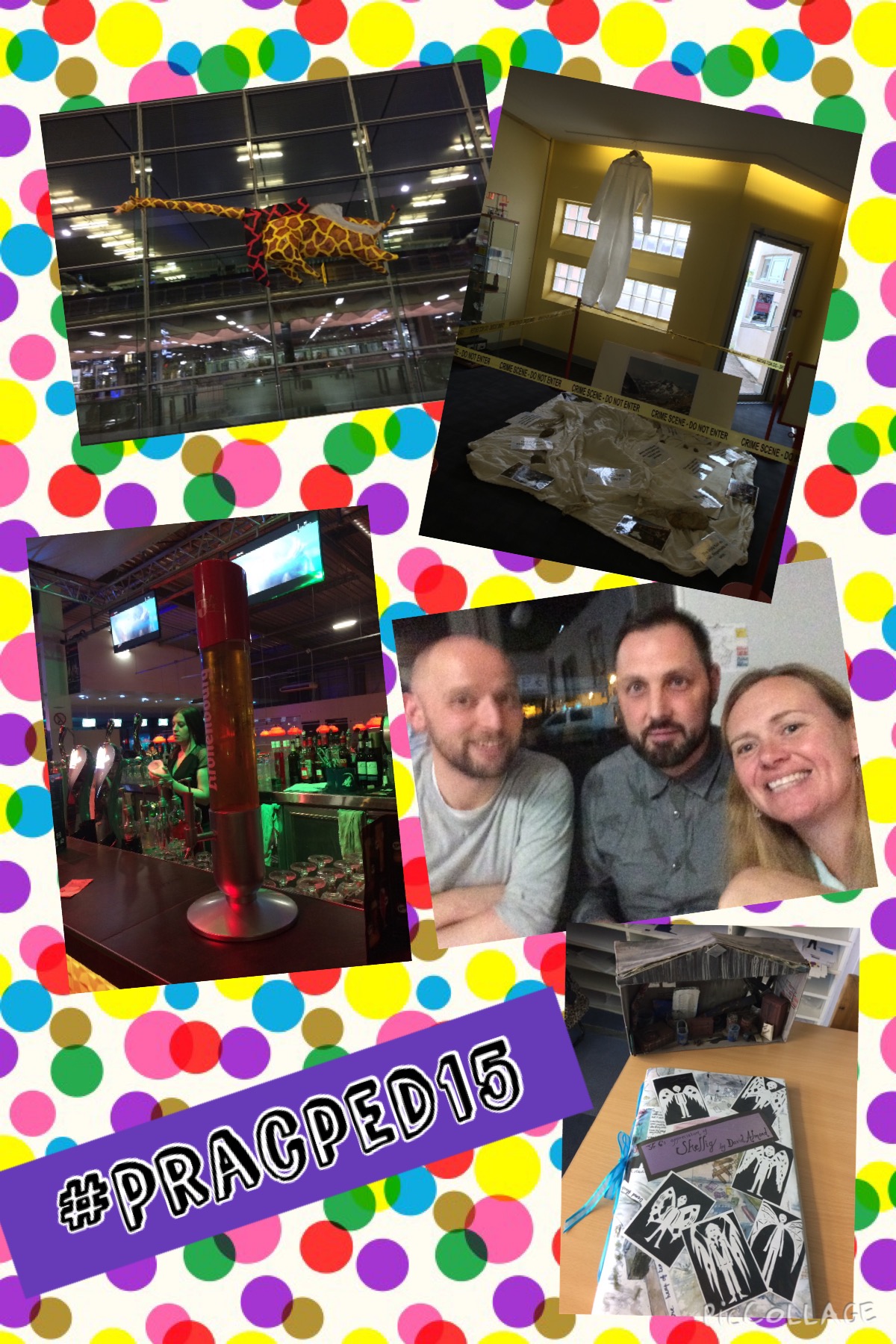
    3. The company. What a great bunch of people! I laughed until I cried at points and enjoyed the friendship offered by those I already knew, those who I’d only previously known online, and those who were completely new acquaintances. Fun and games involving hats, Lycra, yards of beer and bowling alleys spring to mind.
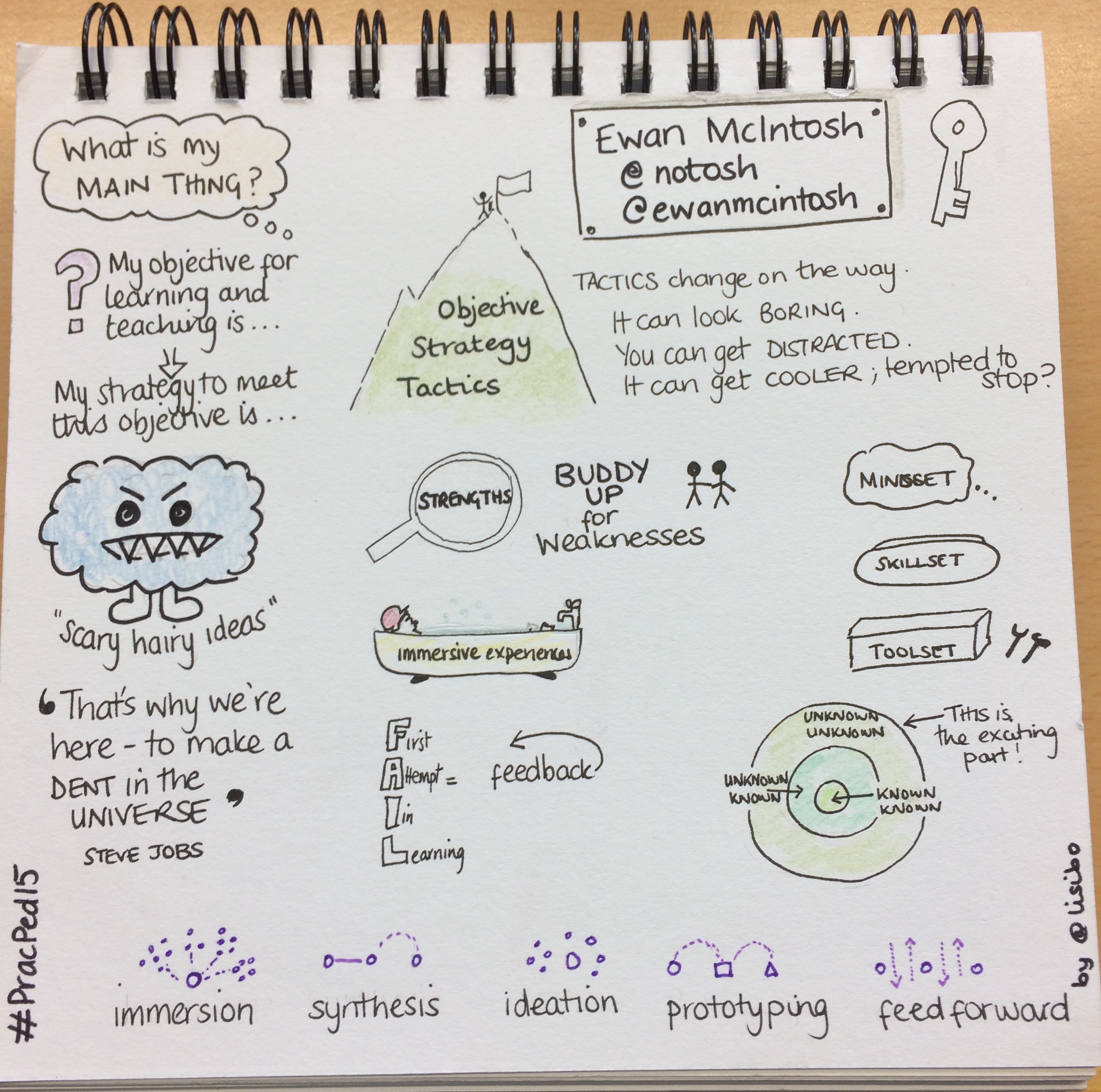
    4. Ewan McIntosh. That man has been so pivotal in my thinking and development as a teacher and learner, right from when he was still a language teacher and spoke at Language World at Oxford Uni. He will forever be known in my house as ‘the man who made Mum buy a Nintendo DS’ for which my sons are very grateful. Every time I hear him speak or read his blog he challenges me to think and consider what I do, how I teach and how I can best facilitate learning. And he is also very human and it’s great to talk to him. Loved this description of him:

And  5. The variety of sessions was amazing! Covering any subject you could name plus cross curricular ones as well as technology and even ukelele playing. It was very hard to select just 7 (I was told I had to choose my own session) but I did.
To sum it up in a tweet:

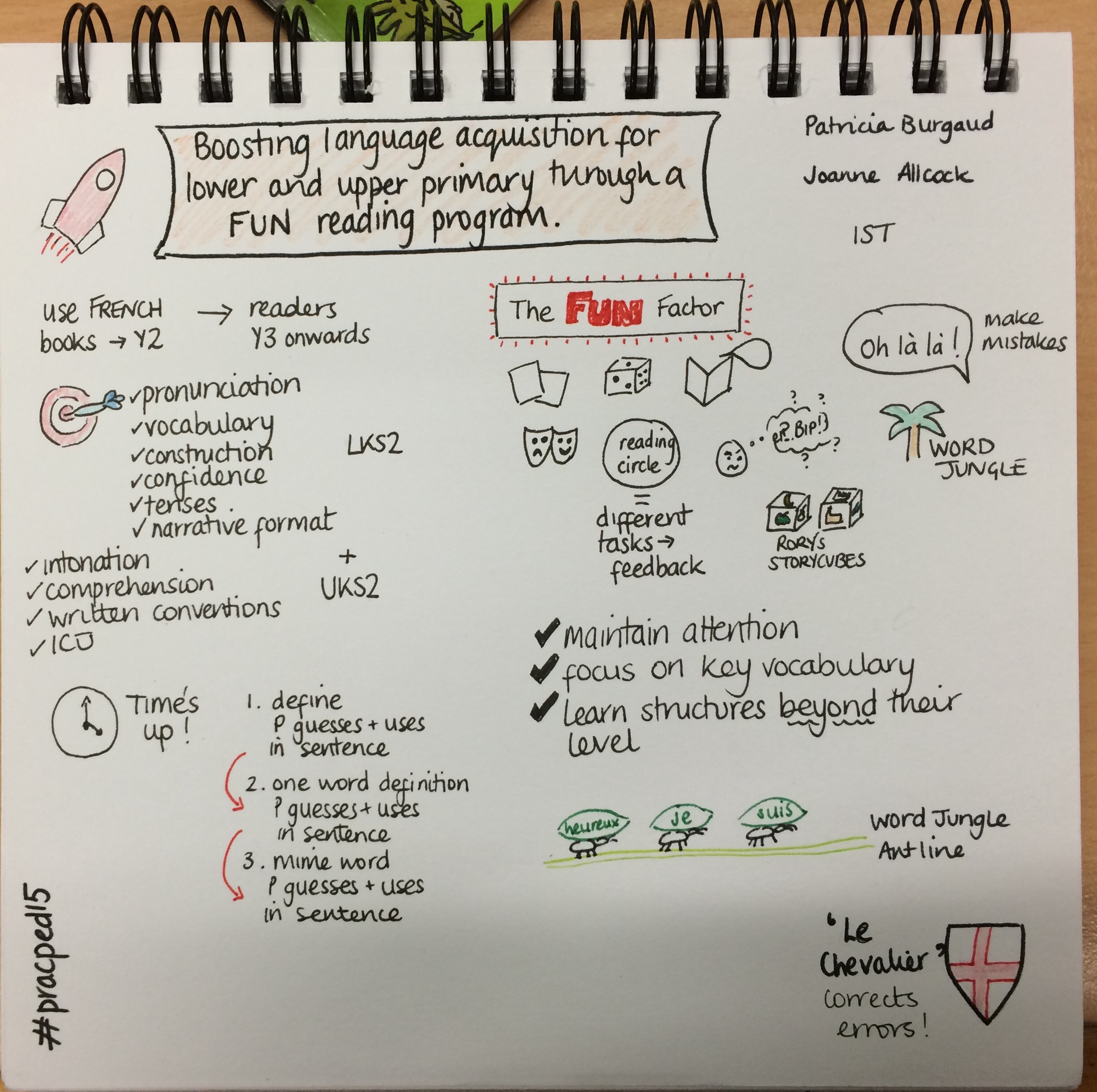
  I tried to sketch note all the sessions I attended, only failing twice as I couldn’t draw during the Drama workshop and it was hard during the AIM one as I needed to use my hands to gesture (and I’m also rubbish at drawing hands!) Anyway, I’ve uploaded my notes below.

Ewan McIntosh - opening keynote @ewanmcintosh @notosh

Ewan McIntosh – opening keynote @ewanmcintosh @notosh


Novel departures - Estelle Ash and Isobel Patrick (IST) @estelleash @isobel_patrick

Novel departures – Estelle Ash and Isobel Patrick (IST) @estelleash @isobel_patrick


Boosting language acquisition through a FUN reading program - Patricia Burgaud and Joanne Allcock

Boosting language acquisition through a FUN reading program – Patricia Burgaud and Joanne Allcock


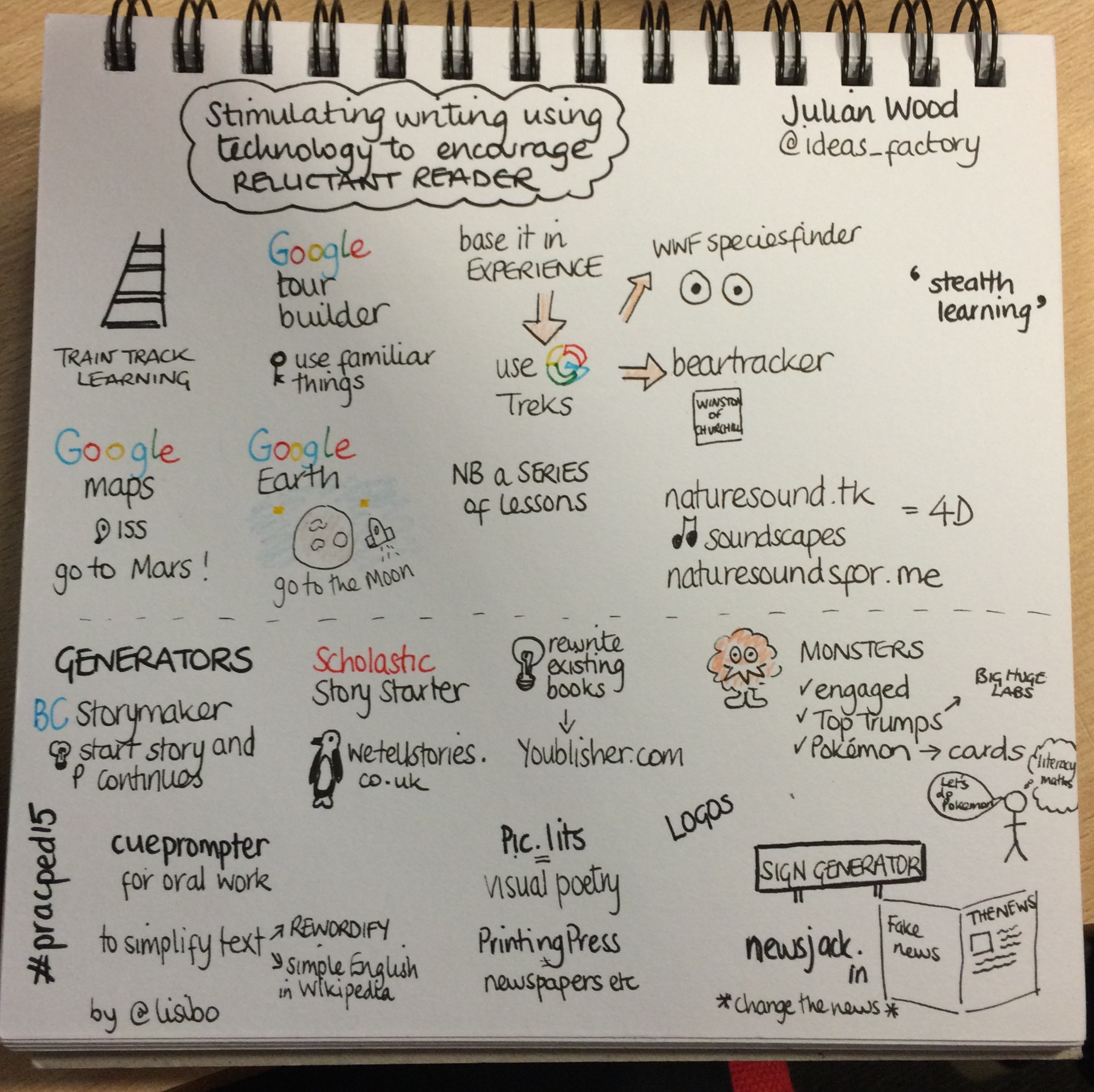
Stimulating writing using technology to encourage reluctant readers - Julian Wood @Ideas_Factory

Stimulating writing using technology to encourage reluctant readers – Julian Wood @Ideas_Factory


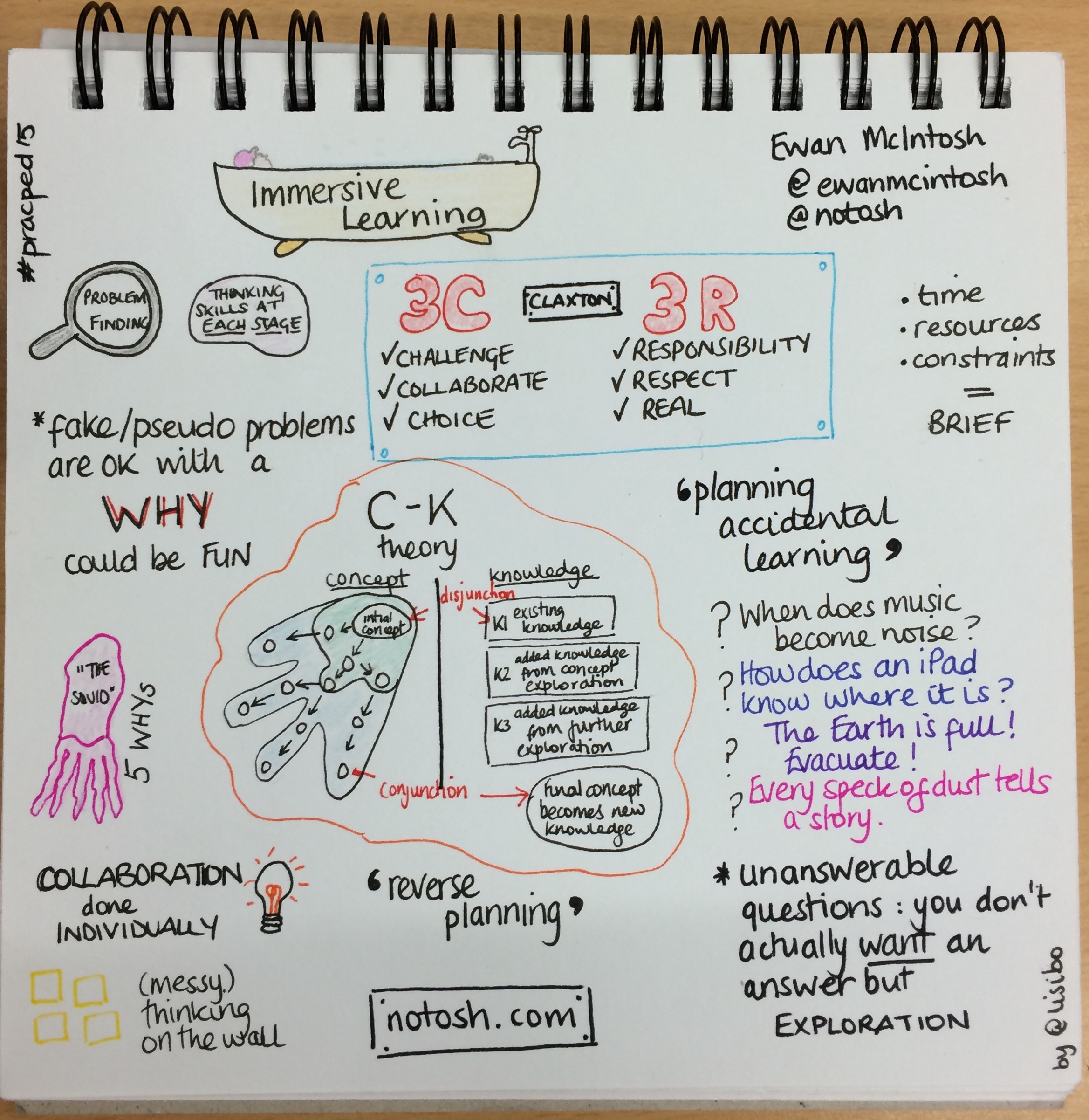
Immersive Learning - Ewan McIntosh @ewanmcintosh @notosh

Immersive Learning – Ewan McIntosh @ewanmcintosh @notosh


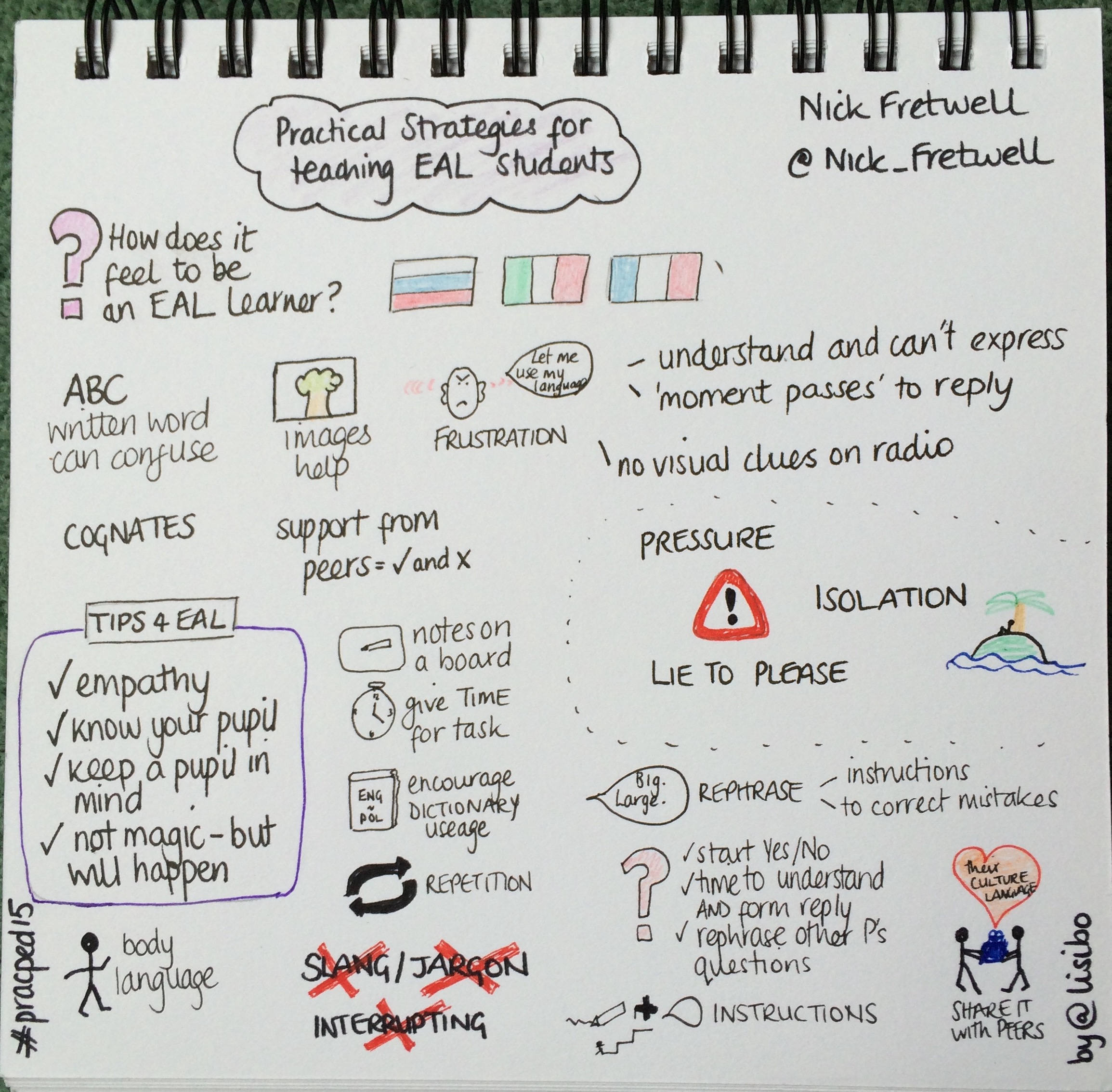
Practical Straegies for teaching EAL students - Nick Fretwell (IST) @Nick_Fretwell

Practical Straegies for teaching EAL students – Nick Fretwell (IST) @Nick_Fretwell

All in all, an amazing time during which I’ve learned a lot and laughed a lot too. I hope there’s a #PracPed16 – or 17 if Russel needs longer to recover 😉 – already planning what I might offer to present! (This year’s offering is in the next post!)

If you want to find out more, check out Russel Tarr’s reflections on the event, and notes etc are here

PS I think that every good school needs a ‘crime scene’ in the foyer complete with police tape, forensics suit and evidence. Talk about capturing the imagination!

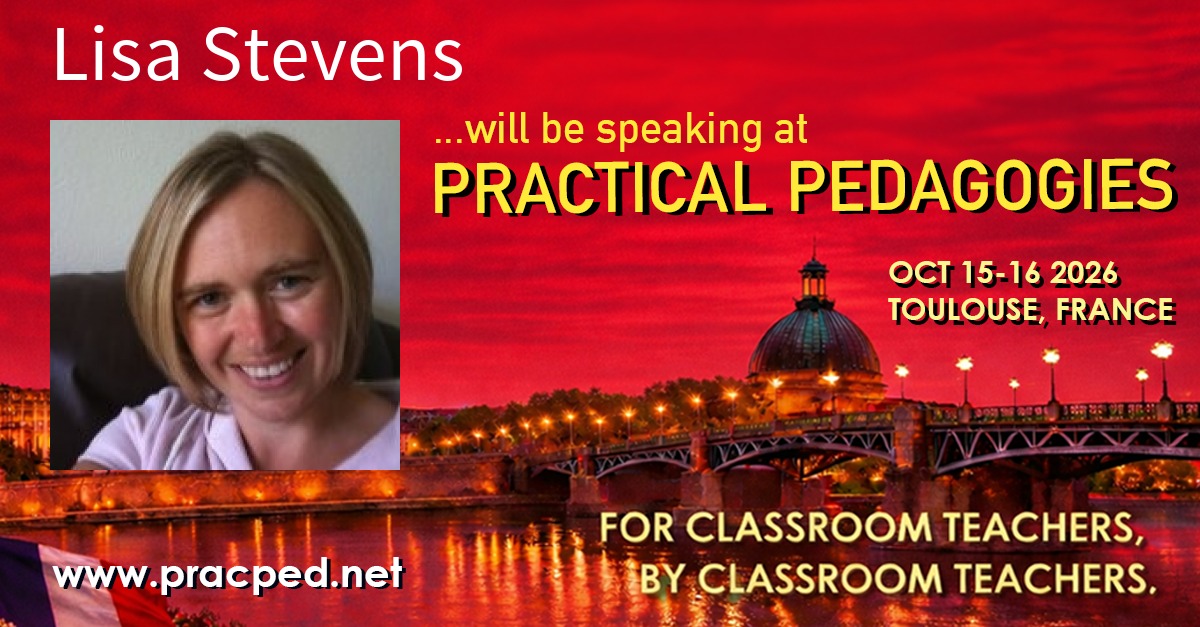
Screen Shot 2015-09-05 at 15.38.53I always get excited when people invite me to speak at conferences but I was very excited when Russel Tarr (created Classtools.net and was famously attacked by Gove for using Mr Men to help teach History resulting in a mass Mr Men Twitter avatar protest in solidarity!) asked me if I’d like to speak at a conference he was planning in Toulouse. A trip to France? Don’t mind if I do! And when he told me who else was speaking, I was even more excited and also perhaps a little daunted when I saw who else was speaking!

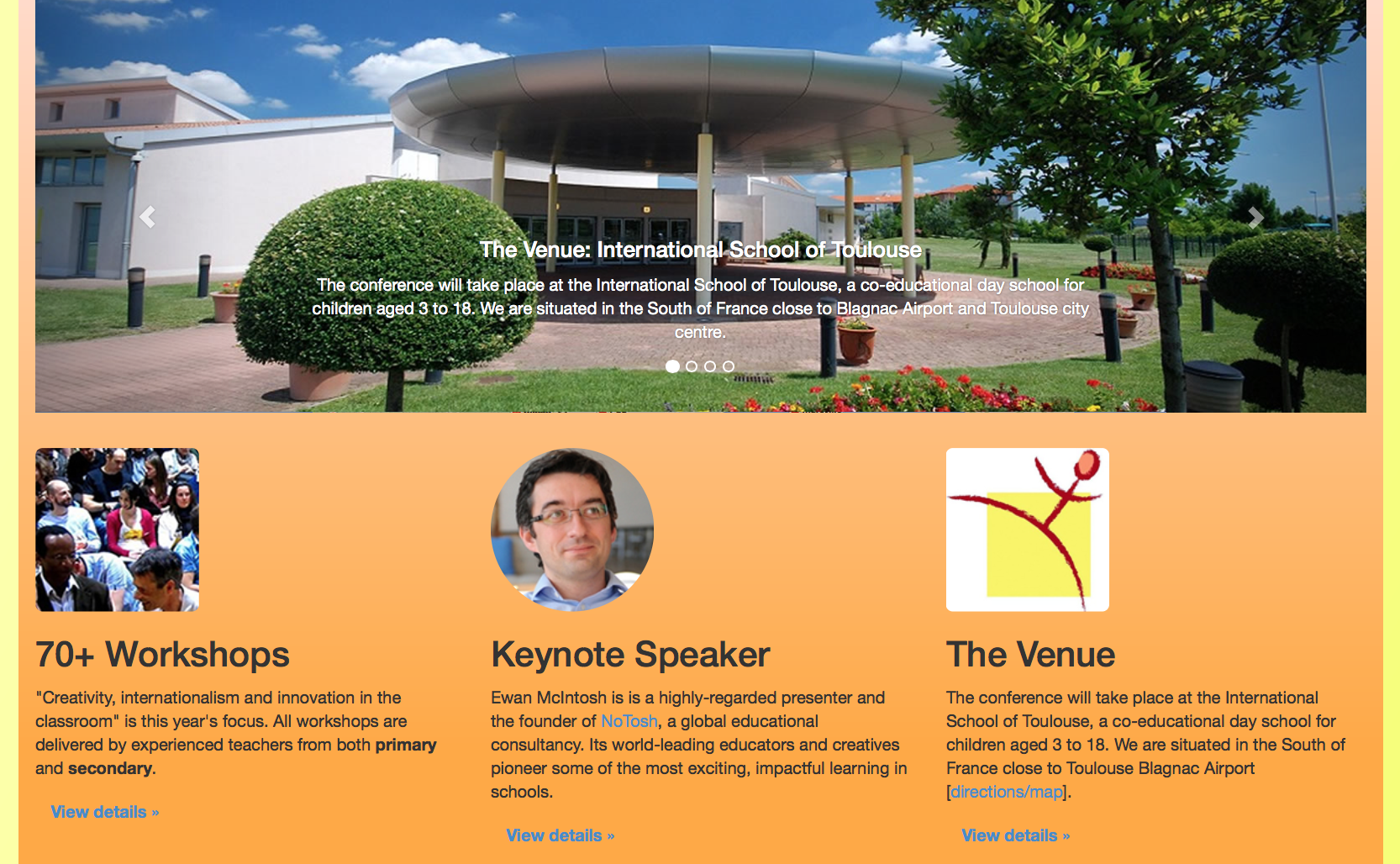
Practical Pedagogies takes place at the International School of Toulouse on October 15th and 16th and is

A high-impact training conference for classroom teachers by classroom teachers.
Two days of inspiring keynotes70+ workshops and networking activities: only 150 Euros!


I’m very much looking forward to the conference as there are so many different sessions under the umbrella theme of “Creativity, internationalism and innovation in the classroom” that it was very hard to choose which I’d like to attend. The programme is packed with goodies as you can see! And Ewan McIntosh @ewanmcintosh @notosh  who is keynoting and also delivering workshops always inspires and challenges!

Screen Shot 2015-09-05 at 15.40.04

My session will be about using ICT in the Primary Language Classroom:

Screen Shot 2015-09-05 at 15.08.09

There are threads for

  • Pedagogy, Personal and Professional development including sessions by Miles Berry (@mberry), David Rogers (@daviderogers), Bill Lord (@Joga5) and Marisa Constantinides (@marisa_c);             
  • Computing including sessions by Miles Berry (@mberry) and Chris Mayoh (@chrismayoh);
  • Drama, Music and Design and technology including a session that I want to attend on Using drama games and activities across the curriculum led by G. Fearnehough (@gfearnehough), Curriculum Leader for Drama at IST, and E. Renou (@emmanuelrenou31), Modern Foreign Languages teacher at IST;
  • History including a session about collaboration between History and Geography (and beyond!) led by Russel Tarr, author of ActiveHistory, and Matthew Podbury, author of GeographyPods.
  • Science which offers diverse sessions on data logging, helping EAL learners and using SOLO taxonomy;
  • English and Literacy with sessions led by Julian Wood (@ideas_factory), and staff from IST about using picture and story books to work creatively and cross curricularly (hopefully I’ll get to attend one or both);
  • Mathematics with sessions on using Lego and Geogebra;
  • Assessment and reporting with a session entitles Marking:Is it really worth it?;
  • Tech tools including sessions by Dave Stacey @davestacey and John Sutton @HGJohn;
  • CAS (Creativity, action, service) and TOK (theory of knowledge);

and of course

  • Languages that features people I know like Isabelle Jones (@icpjonesand those who I have yet to meet like Dico Krommenhoek (@dico_kr). Oh, and me! I’m very much looking forward to finding out more about AIM and how IST use a FUN reading programme to boost comprehension and expression with their upper primary language learners.

There’s still time to register if you’d like to attend. It costs 150 euros (very reasonable) and if you can get a cheap flight it’s not much more expensive than two days of INSET!

And if you can’t attend in person, you can follow on Twitter! You can follow the Twitter account @pedagogies and the conference hashtag is


#pracped15


It’d be great to see some of you there and if not, converse via Twitter. And of course I’ll share my thoughts (and sketch notes!) on my return!


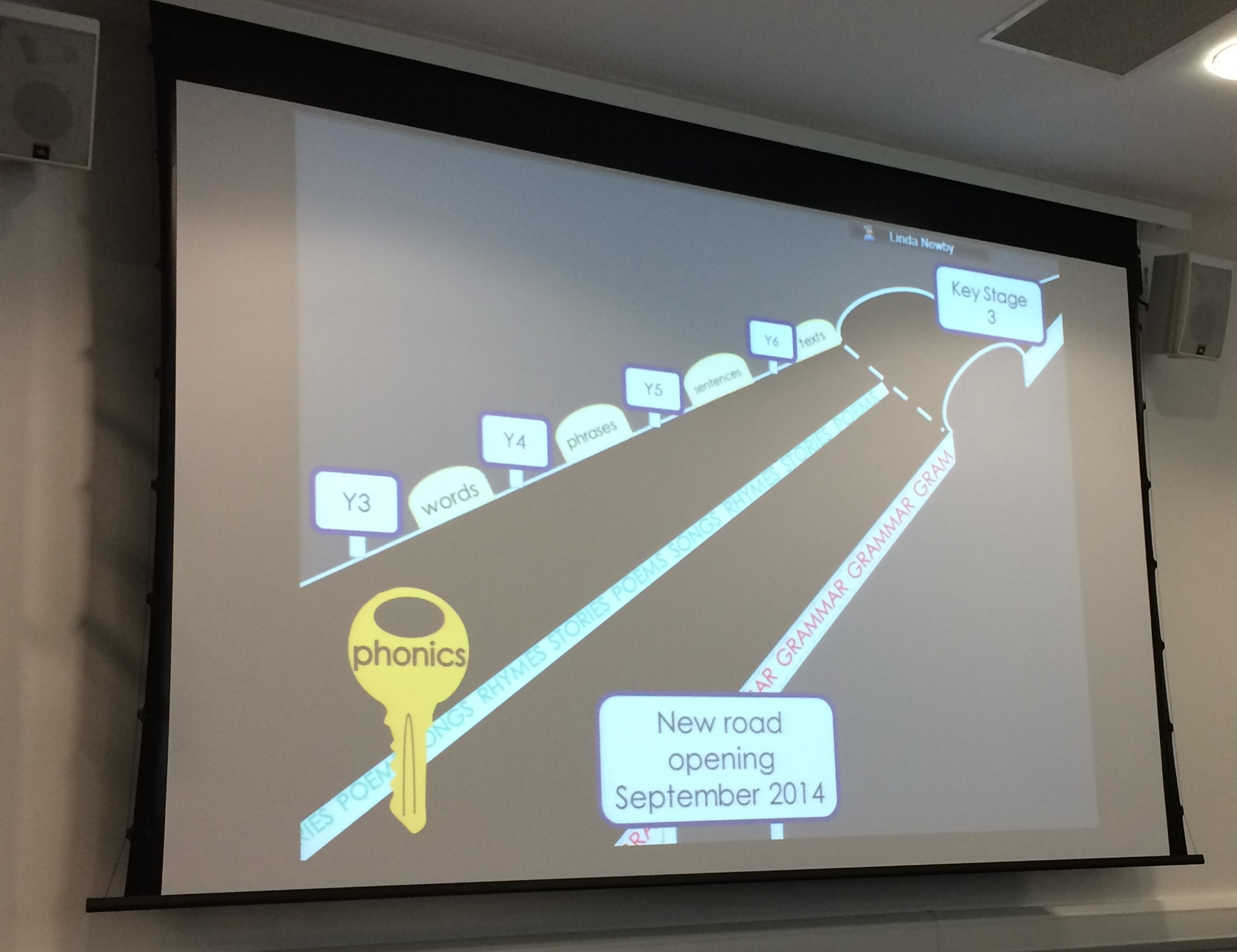
keep-calm-we-re-on-our-way-10On Friday 26th June I attended the Entrust Primary Languages Conference in Stafford, organised and led by Lorna Harvey. Entitled ‘We’re on our way’, the day began with an excellent keynote from Clare Seccombe aka @valleseco and genius behind LightBulbLanguages.

IMG_4685 IMG_4684

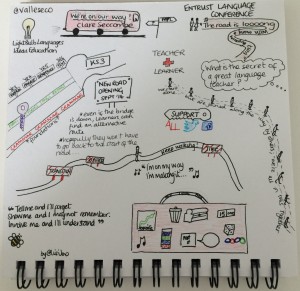
Sharing a title with the conference, Clare shared her ideas on the journeys involved in primary language learning – for the child, the teacher and as a nation. I love how Clare can express her ideas so well in images. I’ve tried to capture some of them in my sketch note below.

FullSizeRender

You can read Clare’s presentation for yourself here – We’re on our way!

IMG_4686

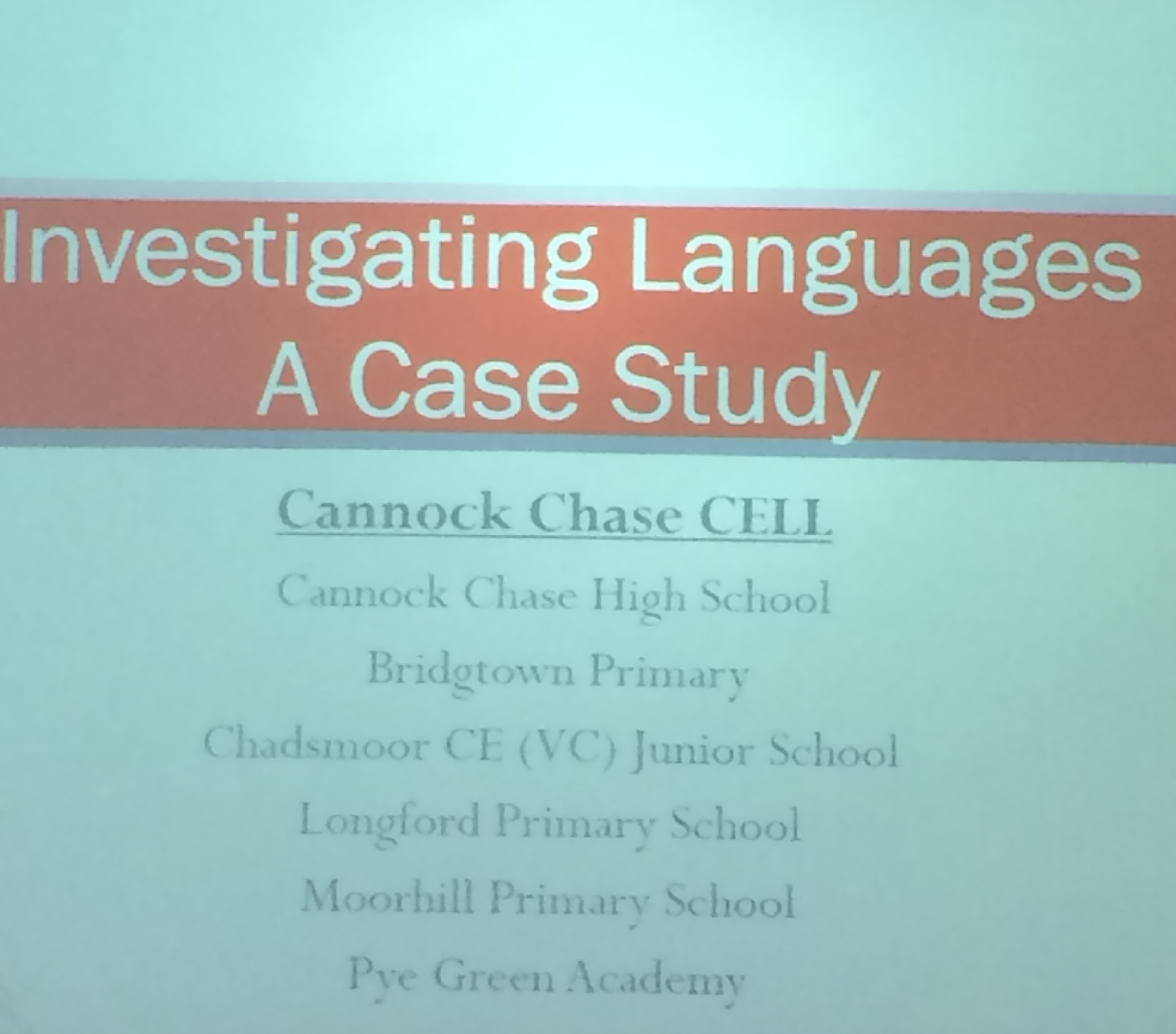
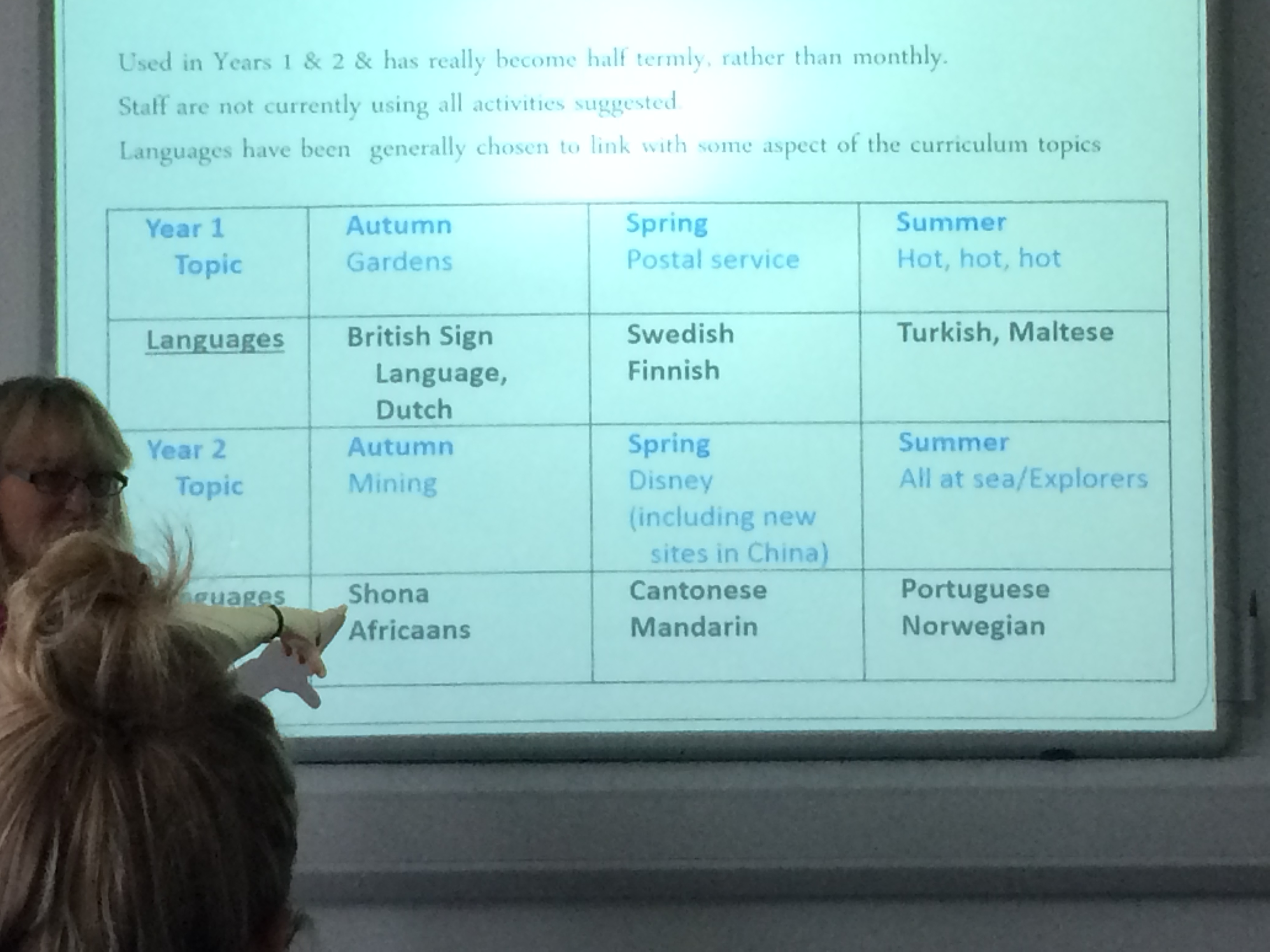
There were a number of workshops during the day – I attended one on a cluster of schools who use a ‘language investigators’ approach to language learning in Y1-2 and 3-4 before focussing on one language in Y6. My sketch note is below along with a few images.

FullSizeRender

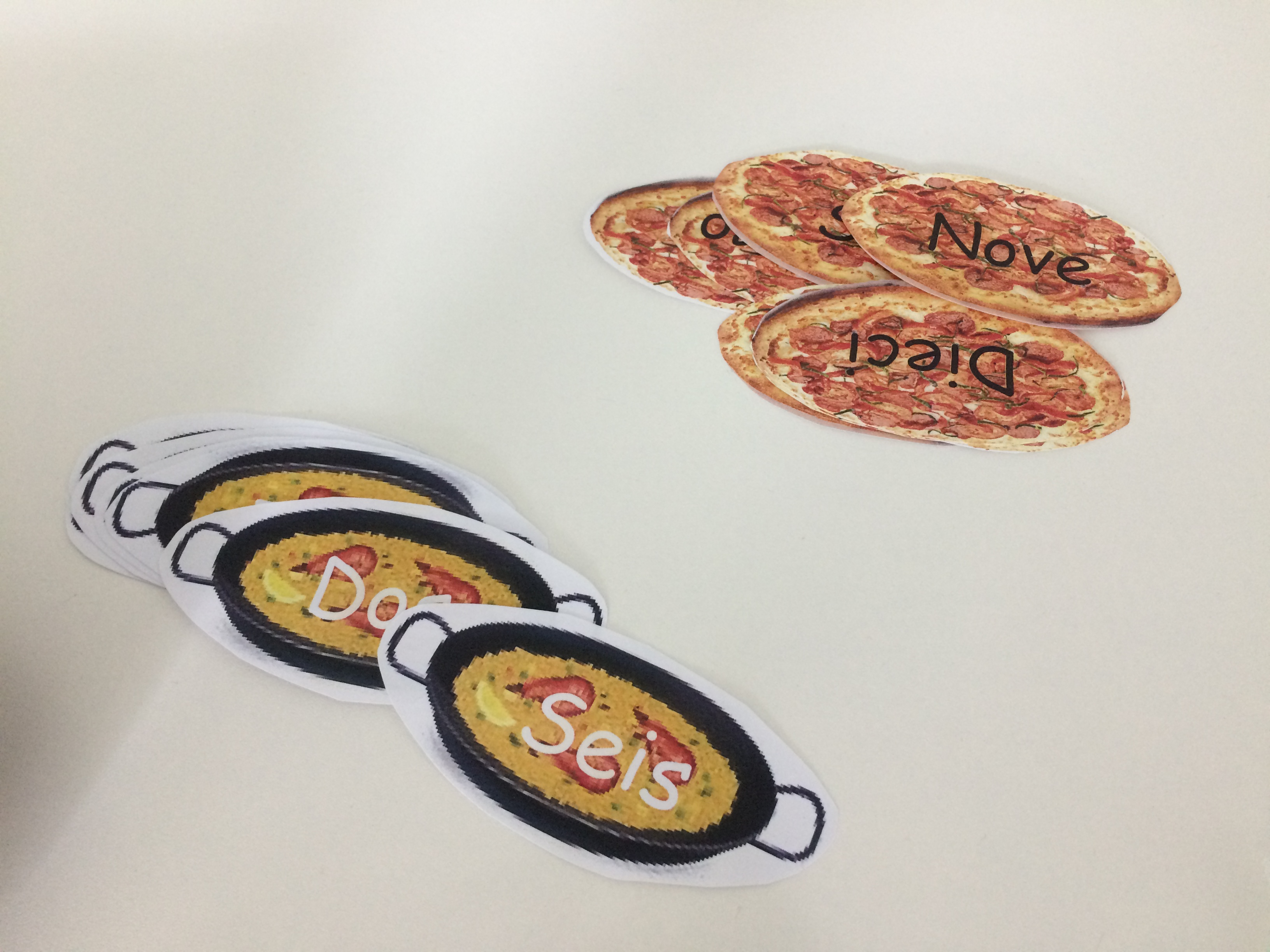
IMG_4687Plan for Y1-2 IMG_4688I loved the pizza/paella Italian/Spanish numbers!
IMG_4689 IMG_4690


The day was very much a celebration of a project between Stafford and Burgundy, and I’d been asked to speak after lunch about a similar partnership in which I’d been involved, between Birmingham and Barcelona. It was wonderful to prepare my presentation as it sparked so many amazing memories and caused me to reflect on where we’ve gone since the (official) end of the partnership. Below you can see my presentation (although without the video clips I’m afraid) and Clare kindly sketch noted it for me.

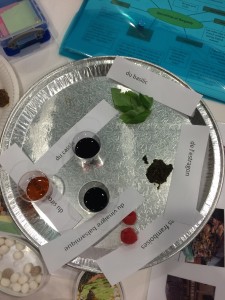
We had a brilliant presentation from pupils about their experiences as well as a culinary lesson based on tasting and making mustard. Great fun and with clear language goals too!

IMG_4693 IMG_4694


I finished the day by presenting about using technology to enhance language learning. You can see my presentation below and access the notes, tutorials etc here.

A great day – not much tweeting as I was too busy sketching or making mustard as was Clare, but here’s the Storify of the tweets anyway.

A great day – thanks Lorna!

PS Clare’s workshop – Be a crafty language teacher is explained here too!

¡Más vale tarde que nunca!

CG1N4BwW0AE2Jg9 IMG_4558 CG1N38ZWoAAjerf

The first weekend of June saw the annual National eTwinning Conference take place at NCTL in Nottingham. Once more it was a weekend of learning, laughter and (can’t think of another L) celebrating the wonders of collaboration across boundaries.
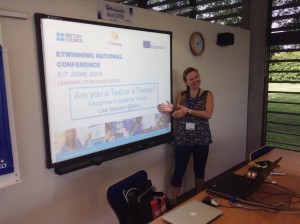
IMG_4570I spoke once more about Twitter – Are you a Twit or a Tweep? You can see my presentation here –  twitter nottingham – if you’re interested! And there’s an eTwinning guidance document as well: TwitterGuidelines (thanks to Erszi for the photograph!)
During the weekend, I continued to sketch note the sessions.

Below are my sketch notes interspersed with pictures and comments on the sessions!

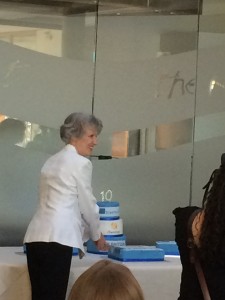
IMG_4529 Happy 10th birthday eTwinning! The cake was delicious too!
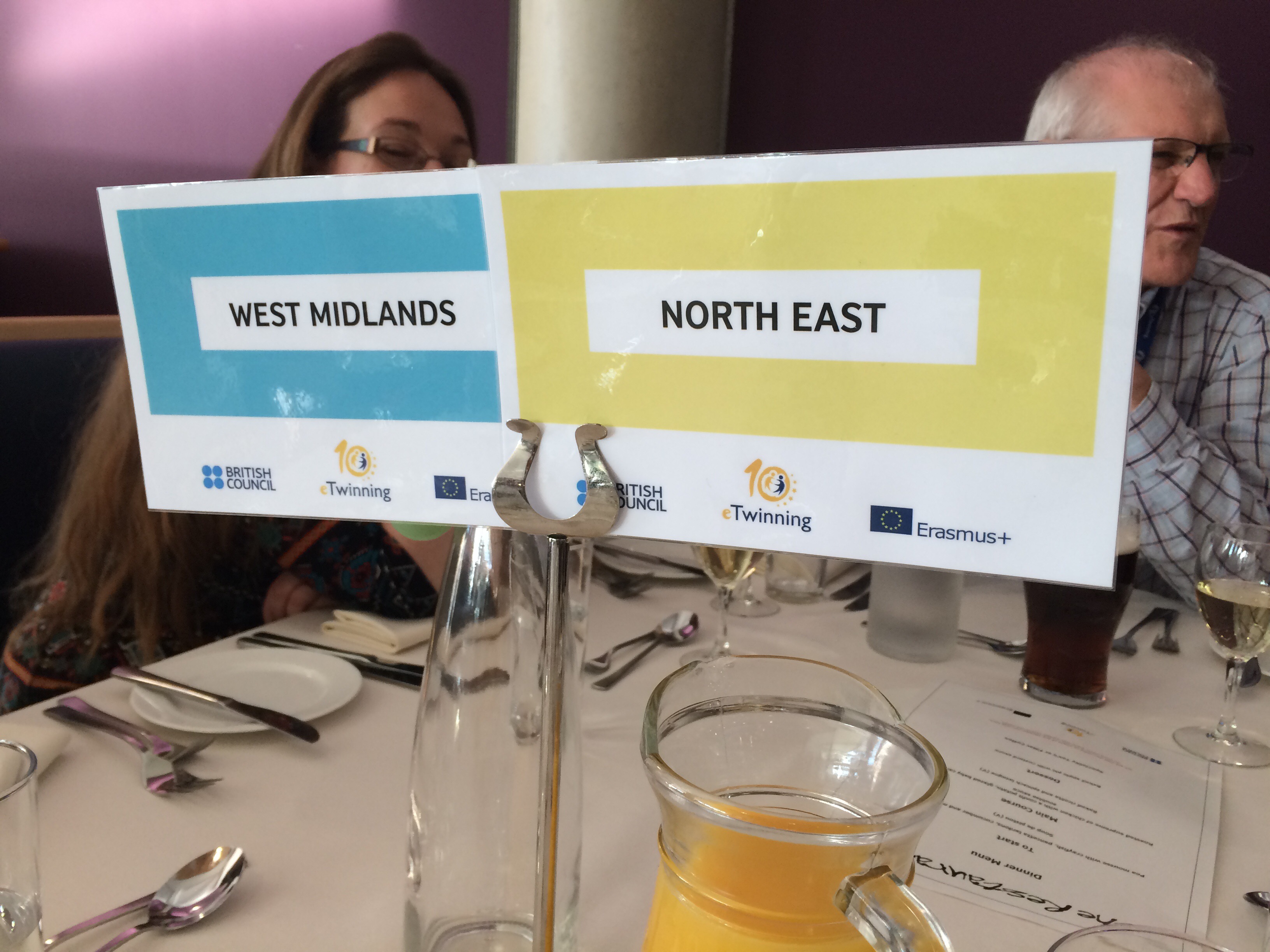
Dinner the first night in our regions – odd grouping but it meant that I got to chat with Helena. And special thanks to Kevin for being such an amazing sunshade when the setting sun got in our eyes 😉 IMG_4527
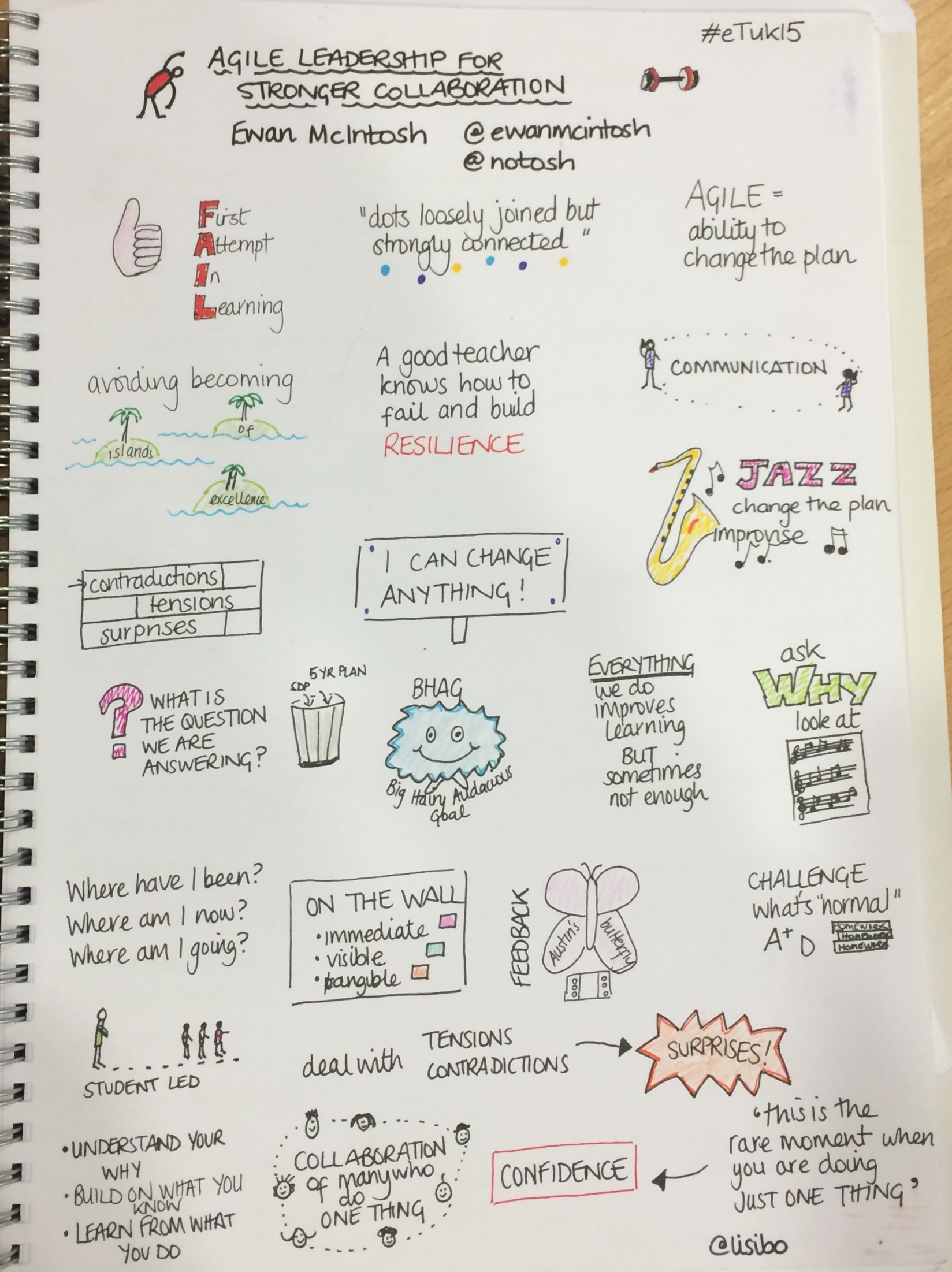
IMG_4555 Really brilliant to see – and hear – Ewan McIntosh once more. A very important person in my ‘learning journey’, both as a language teacher and an eTwinner. A very thought provoking presentation – I think I’m captured the main points in the sketch note but you can check out the NoTosh website for more details!
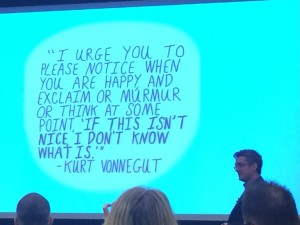
An important thought that I wanted to capture! IMG_4534
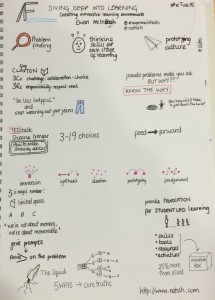
IMG_4556 Ewan’s workshop ‘Diving Deep into Learning’ introduced us to Guy Claxton’s 3Rs and 3Cs, and also to ‘The Squid.’ Too much to take in at once, especially as the very first session had overrun so the session was truncated, but the materials are accessible from the NoTosh site!
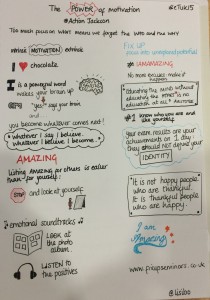
And then on to Action Jackson – The Power of Motivation.  Lots of the session was really common sense that isn’t often considered or applied, but it was an empowering and sometimes emotional session! Certainly believed I. Am. Amazing. IMG_4553

IMG_4540

IMG_4544 Coming back after lunch, Action Jackson did a short reprise – this slide sums up what he was saying.
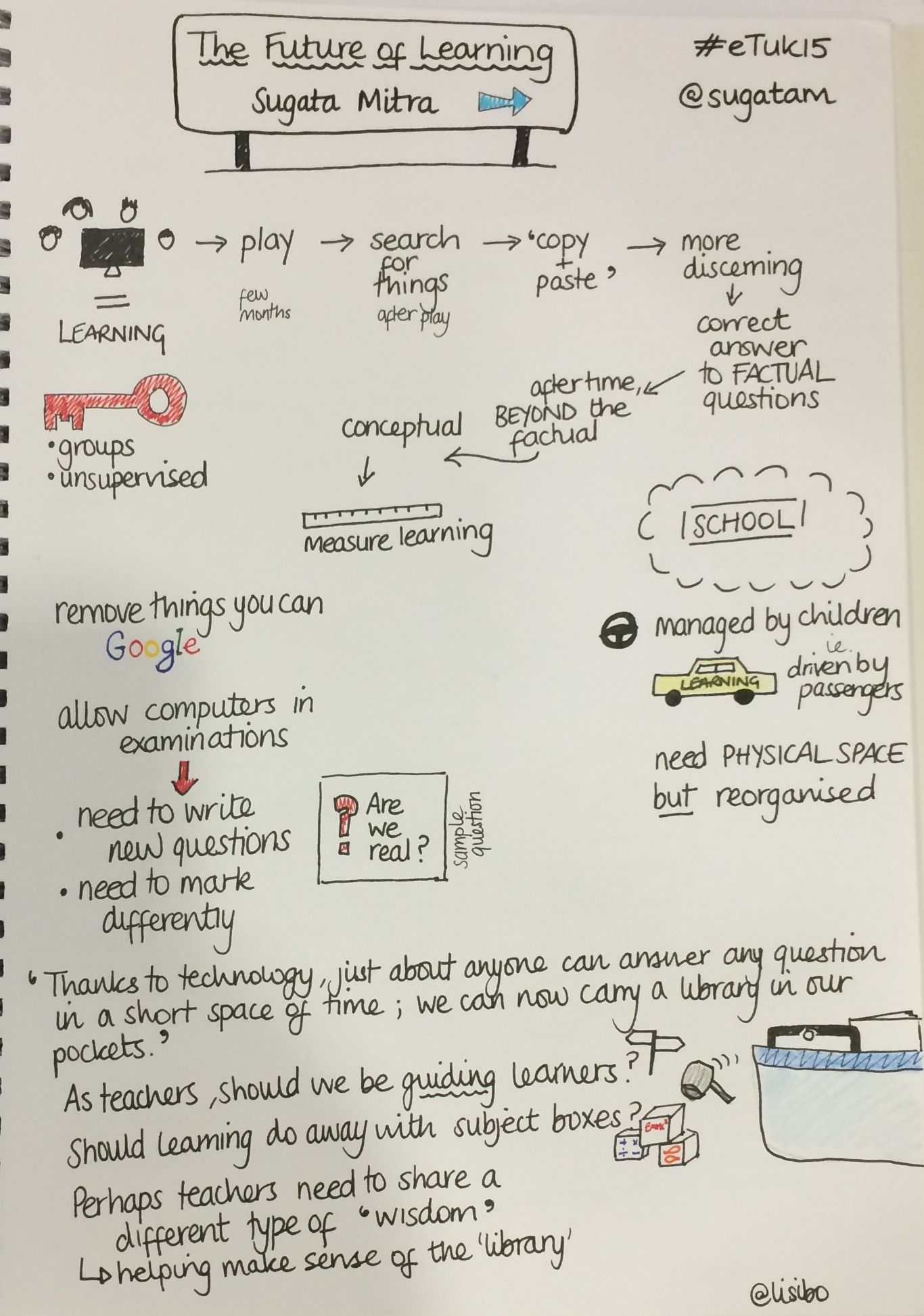
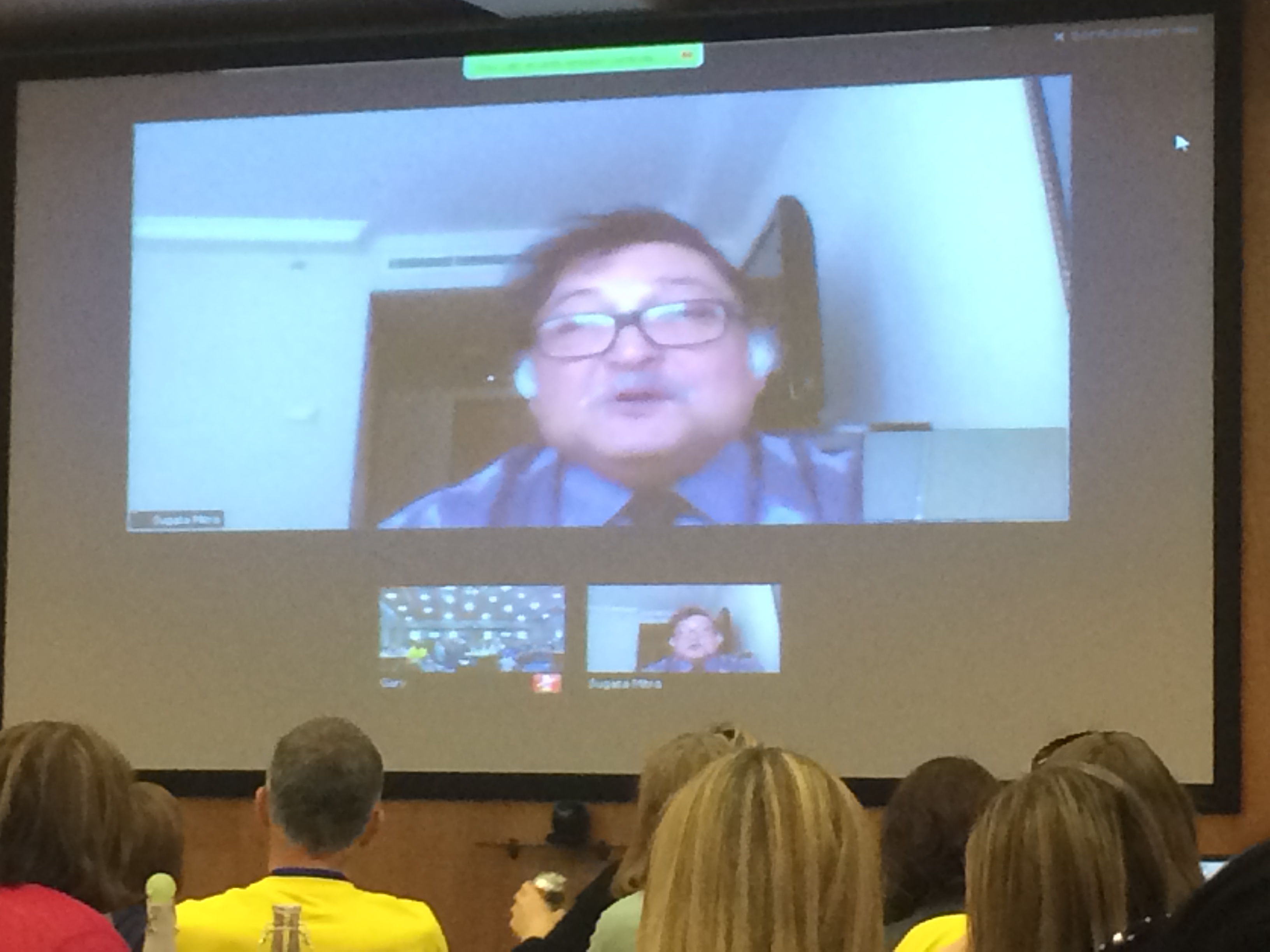
And then onto the wonderful Sugata Mitra who presented via video link about the future of learning. Interesting ideas about the future of teaching and learning, particularly about the role of the teacher, and moving away from subject boxes. IMG_4552

IMG_4545

IMG_4551 Final session of the day was John Rolfe (standing in for Vicky Gough) and Joanna Speak talking about British Values and International Work. The conclusion they reached – and many of us concurred- was that British Values aren’t anything new, and actually are values that are held by many, not just the British! Great ideas and good to hear how Joanna’s link with Tabasco has developed.
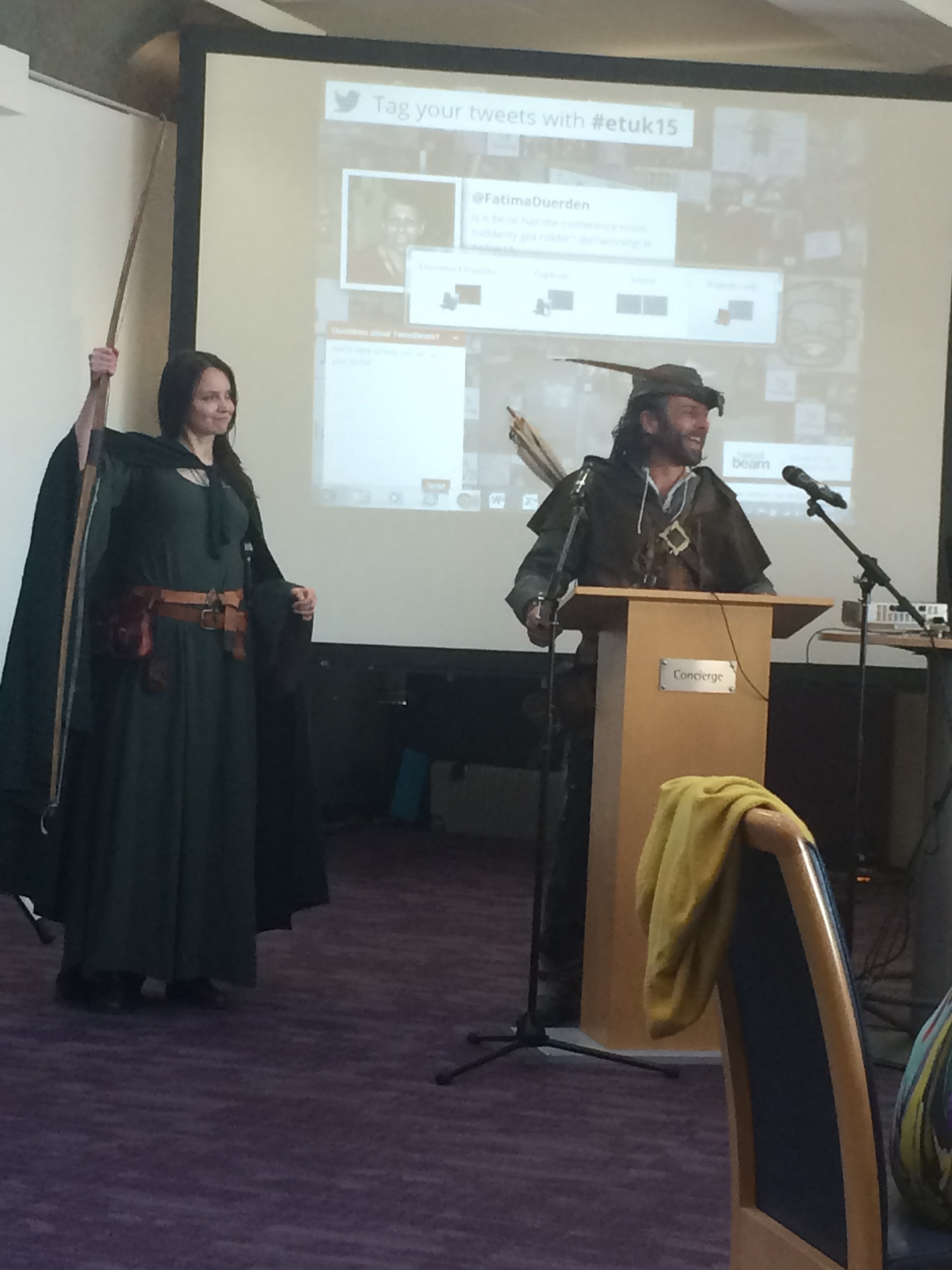
Robin Hood and Maid Marion joined us for dinner!And Vikki Bruff was highly commended for her eTwinning project using Skype. IMG_4561
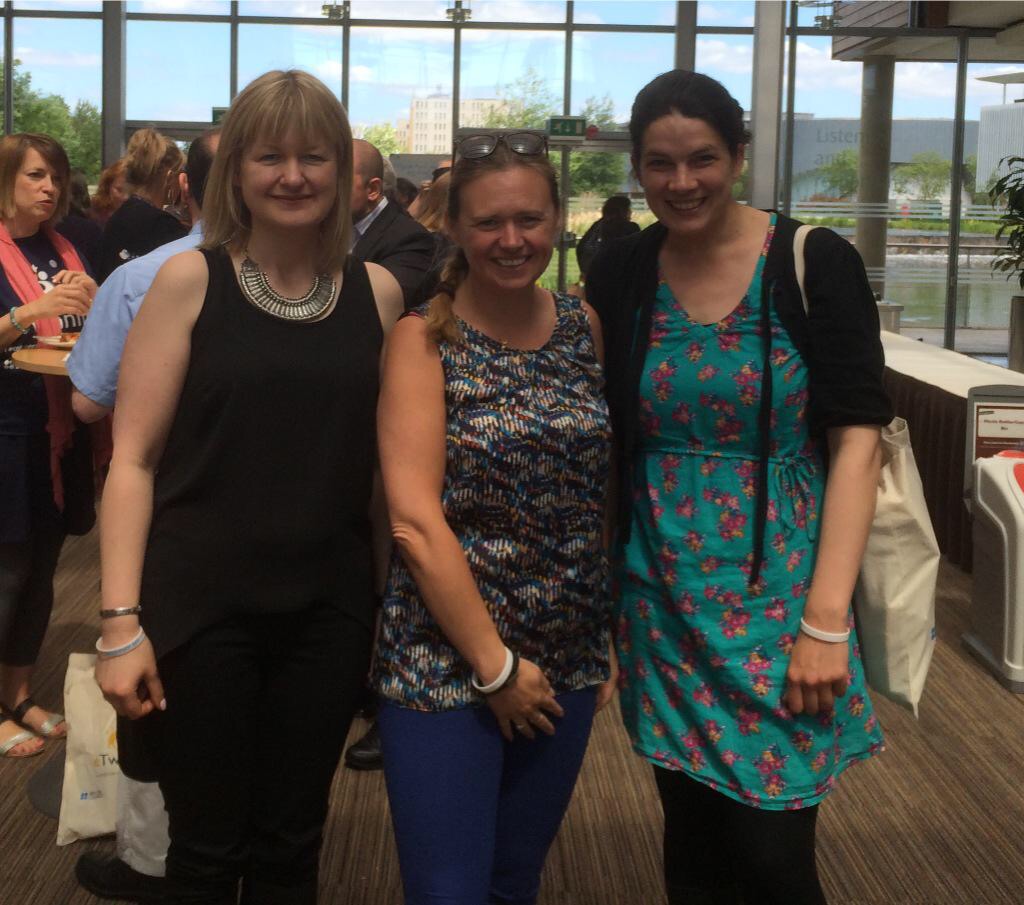
IMG_4568Lovely to see the LiPS girls, Erszi and Vikki – and Fatima too!
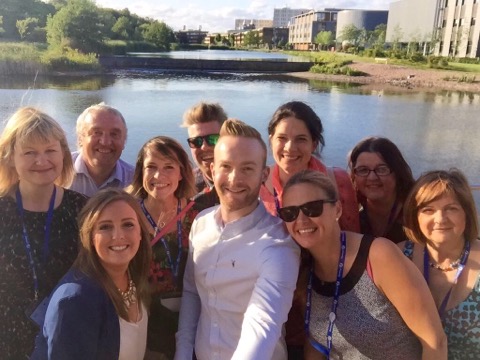
And good to see that selfies live on 😉IMG_4567

You can find out more about the weekend here and via the Storify, photos here and more presentations from the weekend here .

News this week that the NCTL is being sold off so not sure where next year’s conference will be. I’ll miss my pre-dinner early evening break by the lake!

IMG_4560

IMG_4621A little bit delayed by end of term madness…

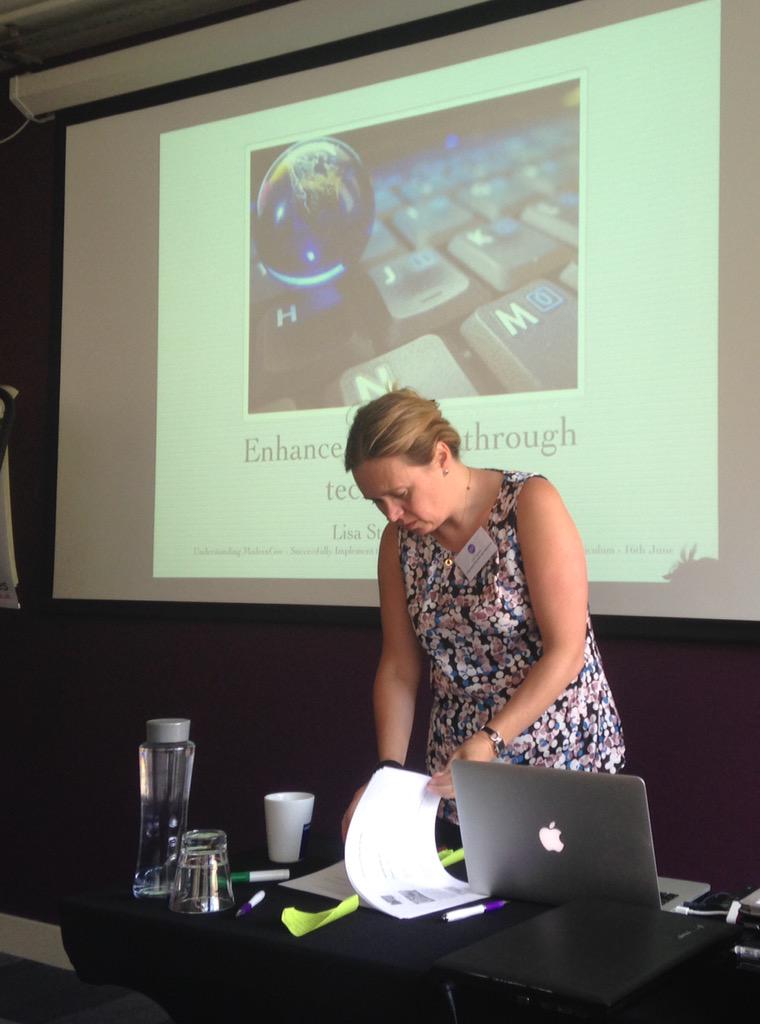
On June 16th I travelled to London for a day long conference organised by UnderstandingModernGov on the subject of Primary Languages – “Successfully implement the new Primary Modern Foreign Languages curriculum”. It was great to see Janet, Sylvie, Nadine and Julie, and to meet all the delegates to spend a day exploring how we can effectively plan, manage and deliver languages to primary aged pupils.

My part of the day was all about using technology; you can see the presentation below, and you can also access links to tutorials etc here.

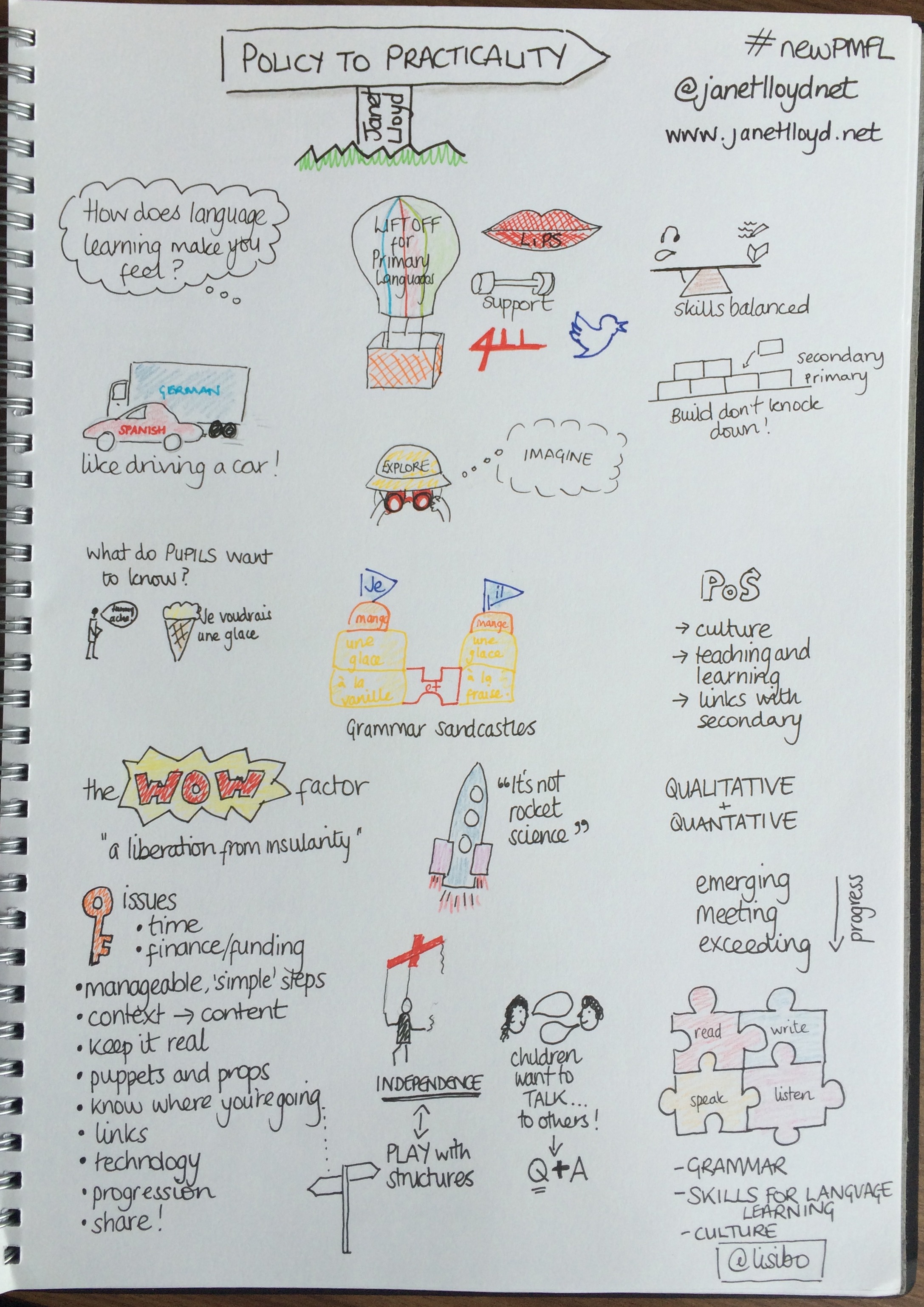
I sketch noted all the sessions as you can see below.

FullSizeRender-1

Policy to practicality – Janet Lloyd

FullSizeRender-2

Phonics and Literacy – Julie Prince

FullSizeRender

Develop an innovative approach to Primary Language Teaching – Sylvie Barlett-Rawlings with Nadine Chadier


Additionally, you can see what Janet said on her blog.

And here’s the Storify of tweets from the day!

@simonehaughey

@simonehaughey

On May 6th I made the trip across Birmingham in rush hour traffic to attend TeachMeetWM organised by the irrepressible and absolutely bonkers Simone Haughey at her school Robin Hood Primary. I sadly missed the choir singing and the start of proceedings thanks to a staff meeting and the traffic, but I arrived in the end to be greeted by delicious Chinese food saved for me by Sim and lots of friendly faces including John Rolfe and AnaPaula Booth from the British Council, and the staff of Robin Hood who are obviously well used to Simone as they didn’t bat an eyelid when I asked if they had a couple of hula hoops I could borrow!

There were many great presentations on the night including a couple via video, and you can see what you missed by looking at the Storify of the tweets at the end of the post. However, my presentation is below as promised for those who were there. How I managed to explain it all in 7 minutes I do not know but I avoided being attacked with a cuddly toy! Do leave a comment if you have questions!

IMG_3849

Thanks for the drawing, @catairf 🙂

I was rather gobsmacked when Zena asked me to do the closing keynote at #ililc5. An offer I couldn’t refuse but daunting nonetheless. Especially as there was no ‘theme’ this year so I could talk about ‘anything’ according to my instructions!

As Christmas came and passed and I still hadn’t really been inspired, I grew more concerned. It wasn’t until mid January that a seed of an idea formed in my head. I’d been prepared to talk about Cupcakes and Smiles at TeachMeet BETT, a short presentation on education being about ‘feeding’ minds but also celebrating and rewarding learning, and that we did it for those ‘smiles’ that happen when the lightbulb goes on, when the unexpected happens, when you’re speechless at something a child has said and so on. There was no time for my presentation then – although I still shared my cakes. I was a bit annoyed as lugging a few dozen cupcakes from Birmingham and around London on the train and Tube is no fun and nor is being told off for daring to ice them in the presence of Sir Ken Robinson but that’s the way it works. Still, I liked the idea of cupcakes and when there were queries as to why I made cupcakes for TeachMeetBETT but not ILILC, the idea began to germinate.
Over the next few weeks I still wasn’t entirely sure what I’d say but a thought here and there occurred to me. Stupidly I didn’t write them down and I’m sure some ‘got away’. However, with help from my husband John (who must be fed up of my food/language analogies!) who told me to get a grip (and a notepad), Cooking on gas (other fuels are available) grew.

Ready to start?

On the day, armed with new shoes and an assortment of cupcakes, I shared my thoughts about language teaching and learning with the remnant that had managed to survive to the (not so bitter) end. And it was recorded! (I’d forgotten about that part until I was standing there.) You can watch it here.
As my presentation was in Keynote and delivered from my own MBP, the slides don’t show up in the recording but are all synced and appear alongside (thank you to the lovely Matt for doing that!) I’ve added the videos that you can’t see but can hear at the bottom of this post; I know that the Intermarché one about Les fruits et légumes moches has already proved helpful to more than one person!
I summarised some of the main messages right at the end (go to 45 minutes) if you don’t have time for the whole thing, and I’ve also added a Storify of the tweeting that was going on during the presentation; I certainly found it interesting to see what people had taken from my words and thoughts. And I was gobsmacked by the sketch notes too. Thank you Clare, Simone, Jane, Rachel and Catrin, and Alex, Jonathan and Ceri who had a cupcake in their ILILC5 summary sketch notes too. (If I’ve missed any, apologies and please tell me; I’ve been in a bit of stupor all week!)
It’s very different when you’re sharing your personal thoughts, reflections and passions; it made me feel very vulnerable so I’m really glad that people picked up on and identified with the key messages I wanted to share.

Start at 1.10 until 1.30 for the key bit:

PS At 23 minutes, I start talking about my language hero, and whilst I think I communicated that she was special, I didn’t share all that I might have done as time was pressing and I was getting choked up. So in my next post, I’ll tell you all about Luz Sánchez-Richardson, my language hero!

twitter-312464_1280Here is the presentation and notes for my introduction to Twitter session at #ililc5.

I’d delivered a similar presentation before at the National eTwinning Conference in July but since then, new possibilities have arisen and these have been added. For example, you can now send video directly from the Twitter app (record it and send) rather than going via another app, and there is also the possibility of group DMs. Additionally, I’ve added a page of links to other useful material as well as making the ideas more language centred.

I hope those that attended found it useful – I know at least one started tweeting so that’s success in my book!


¡Vámonos! ©2025. All Rights Reserved.
Powered by WordPress. Theme by Phoenix Web Solutions