primary languages – Page 5 – ¡Vámonos!
 

Category: primary languages

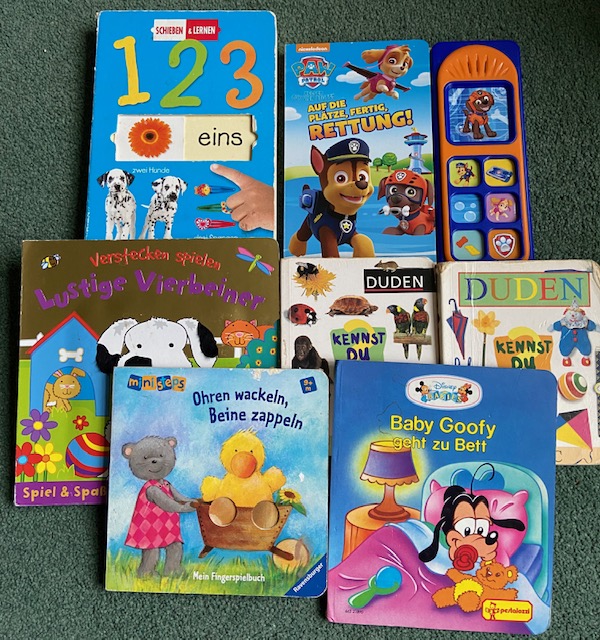
I love a bargain, and am also a great fan of recycling so I am particularly pleased with a new pile of German children’s books!

Some were purchased via LiPS, one was found in an Oxfam shop in Bath, and the other three were a Christmas gift from my son who is currently studying in Germany and found them in an Oxfam shop there.

So here they are!
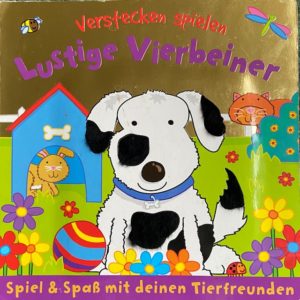
Verstecken spielen
Lustige Vierbeiner

ISBN 978-1-78557-464-1
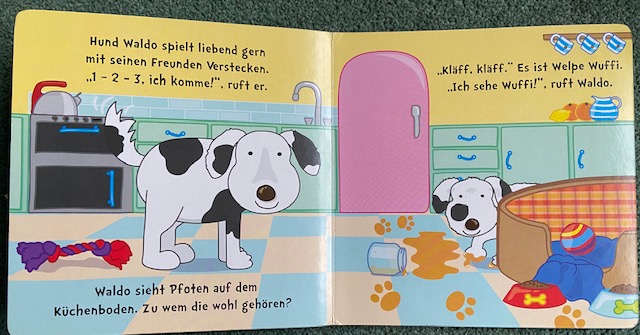
This lovely book is all about four legged friends playing Hide and Seek (Verstecken spielen) It has a touchy feely cover and features cute dogs a cat and a rabbit. I like the simplicity and repetition of the text as well as the animal noises. A fun book that would be great to read to FKS/KS1.
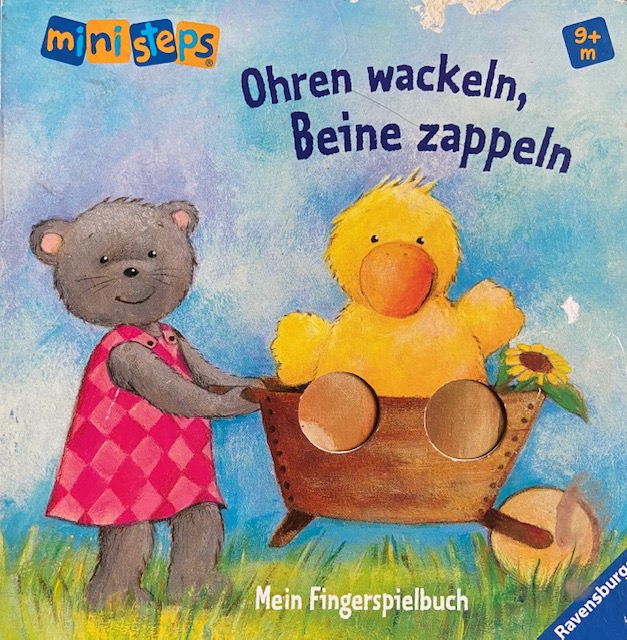
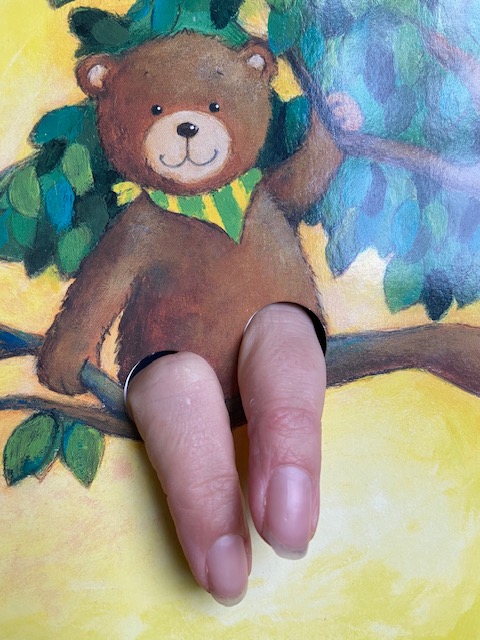
Ohren wackeln
Beine zappeln

ISBN 978-3-473-31566-6
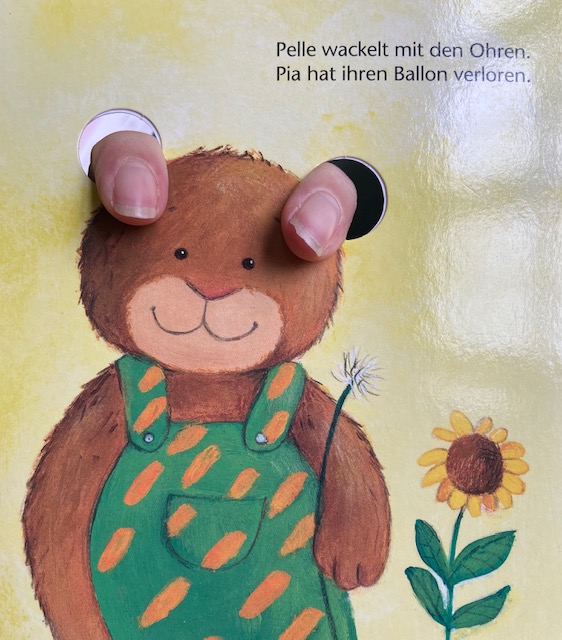
Ohren wackeln, Beine zappeln is another cute board book featuring animals. This time it has holes in each page in which you insert your fingers to make the ears (Ohren) or legs (Beine) of the animals. Each page has two lines of text and is written in rhyme – great to read aloud and practice your pronunciation as well as spotting the verbs. And of course, good for finger wiggling!
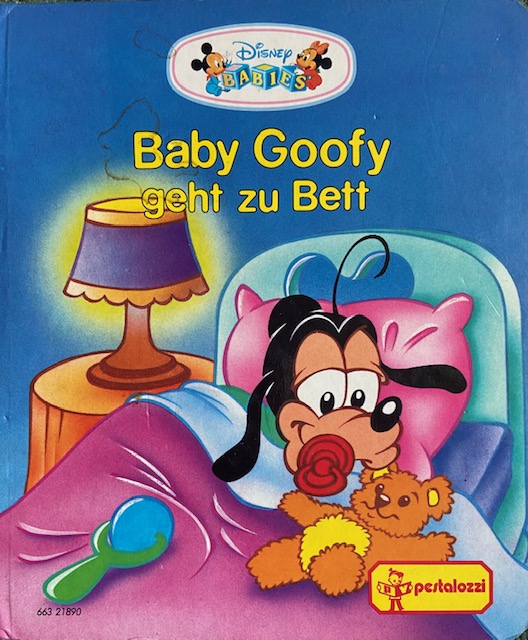
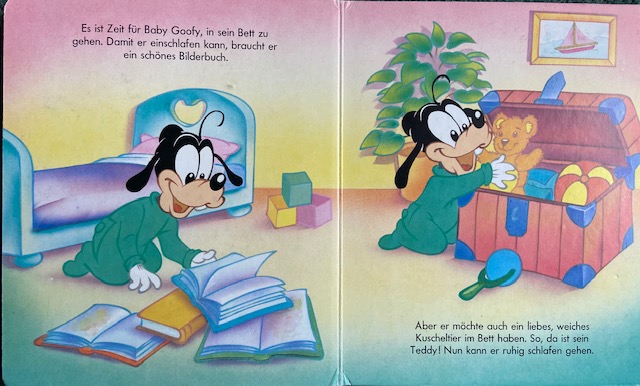
Baby Goofy geht zu Bett
ISBN 3-614-21890-2

This a short board book is from the Disney Babies series and is all about baby Goofy going to bed. It’s written in prose and features Pluto as well as Goofy. Very cute!
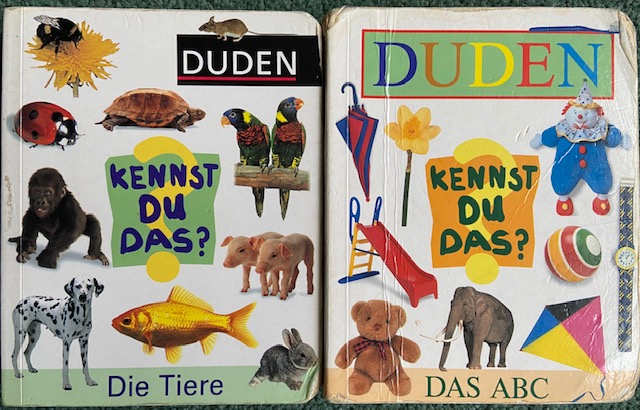
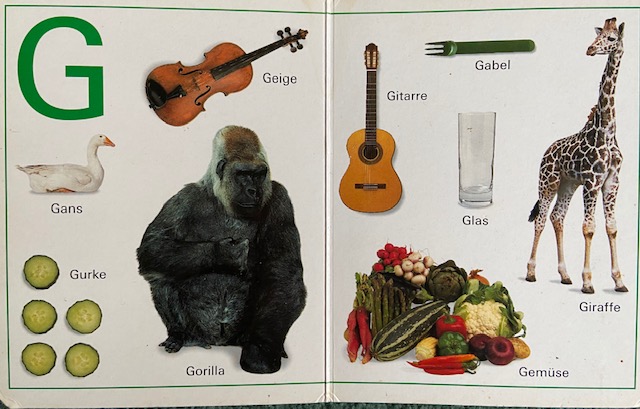
Kennst du das?
Die Tiere ISBN 3-411-70441-1
Das ABC ISBN 3-411-70631-7
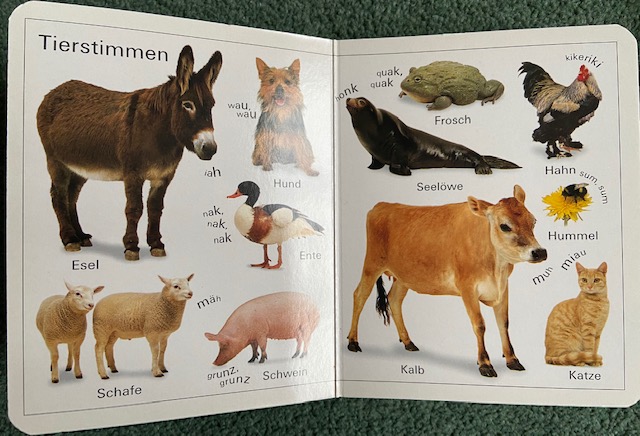
Two books from the same series here! Kennst du das? – Do you know that?
Each is a word book with bright photographs to illustrate the meanings. They include ‘usual’ words such as Pferd, Hase, Katze, Tiger and Elephant, but also more unusual animals – Streifenhörnchen, Rotfeuerfisch and Wandelnde Blätter and vocabulary – Zange (pliers) Reißverschluss (zip) and Qualle (jellyfish) It also indulges my love of looking at German words, ‘literally translating’ and seeing language links:
Dreirad = three wheels = tricycle
Nacktschnecke = naked snail = slug
Stinktier = smelly animal = skunk
Fledermaus = flying mouse = bat
Nashorn = nose horn = rhino
Flusspferd = river horse = hippo
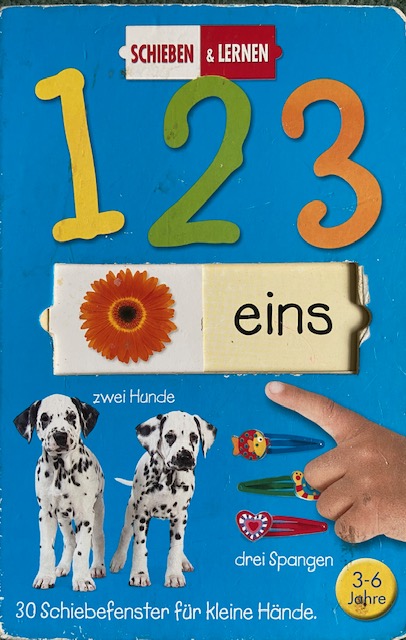
Schieben & Lernen 1 2 3
ISBN 978-3-940984-01-2

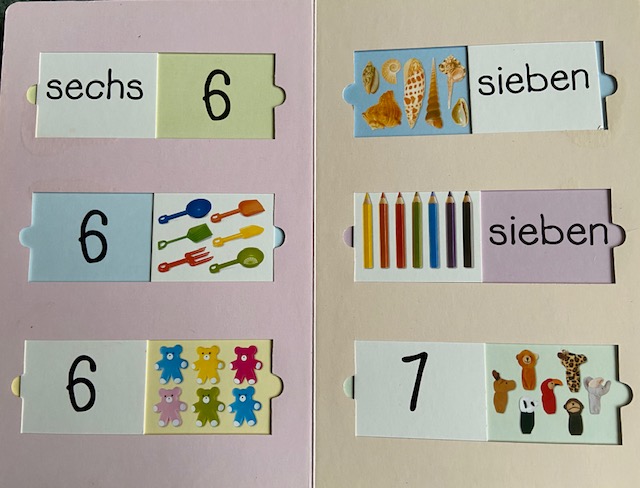
Finally a board book with sliding windows (Schiebefenster) to learn numbers 1-10. The windows slide to show either the numeral or a number of objects so could be used for numbers and then extended to use the vocabulary pictured, in singular and plural forms. Perhaps older learners could have a look in a dictionary for the words whilst others will begin to recognise the correct item from three after several readings.
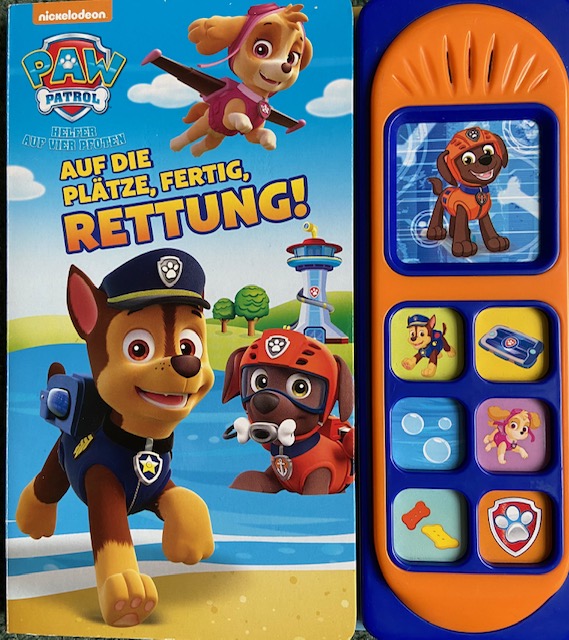
PawPatrol
Auf die Plätze, Fertig, Rettung!

ISBN 978-1-5037-3215-5
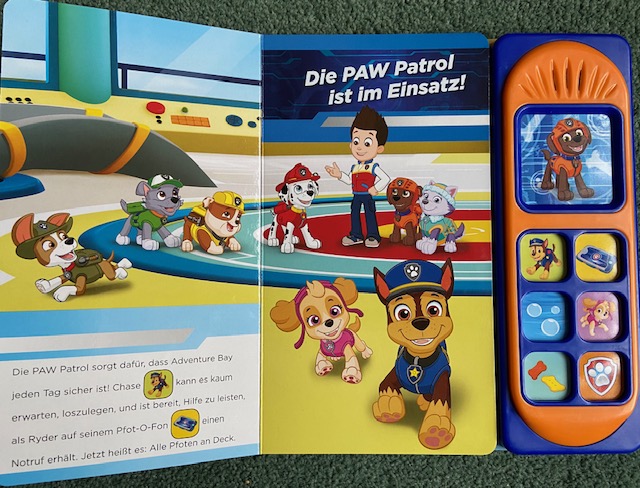
I was really surprised to find this book in an Oxfam shop in Bath, and even more surprised when I realised that the buttons still worked! I like reading books based on series that we watch in English as it’s possible to compare names and ket features in the other language. For example, Ryder and Chase have the same names in both languages and the PupPad in German is called the Pfot-o-fon (Paws ‘phone) I’m looking forward to sharing this book with the little ones at school. And I don’t think the enchantment of this book is limited to little ones..
So these are my new German books. What do you think? It’s a bit of a shame that I don’t teach German on a day to day basis but reading them aloud is great fun!
A reminder that there is a catalogue of my (ever growing!) collection of German children’s books here, and there is also a French list and several for Spanish – fiction, nonfiction, rhymes poems and songs, plus an ‘other languages‘ list too!

Making RiPL-s

| Leave a comment

Yesterday I spent an interesting day in London at the Institute of Education, University College London attending the Festival of Social Science 2019 – Primary Languages Policy in England – Making it happen!

The blurb at the top of the agenda explains the purpose of the day:

Learning a modern or ancient language became a part of the statutory curriculum for England from September 2014. Five years into the new policy, there are still significant challenges in meeting national curriculum requirements, leading to inequity from school to school and region to region.
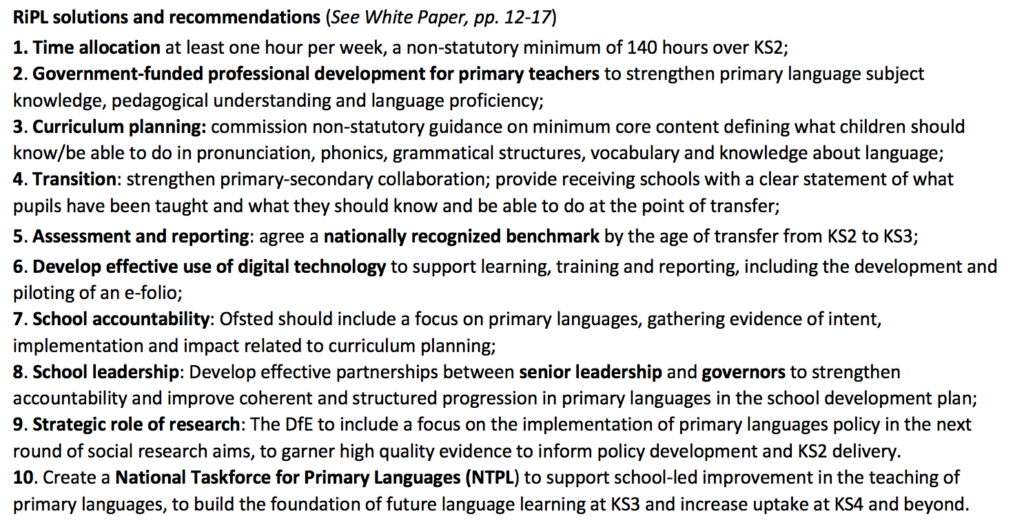
This event will address key issues affecting the success of primary languages and put 10 recommendations from the recently published RIPL White Paper to the test. Come and join leading practitioners and policy makers in an interactive day where your views will directly feed into a draft implementation strategy to inform the way forward for primary languages in England.
The session will take inspiration from the World Café process, combining short inputs, followed by small round table discussion of key questions, captured by graphic recording/posters, leading to plenary feedback at the end of the session, connecting main findings and agreeing points for action.

Blurb on RIPL programme
The ten recommendations of the White Paper

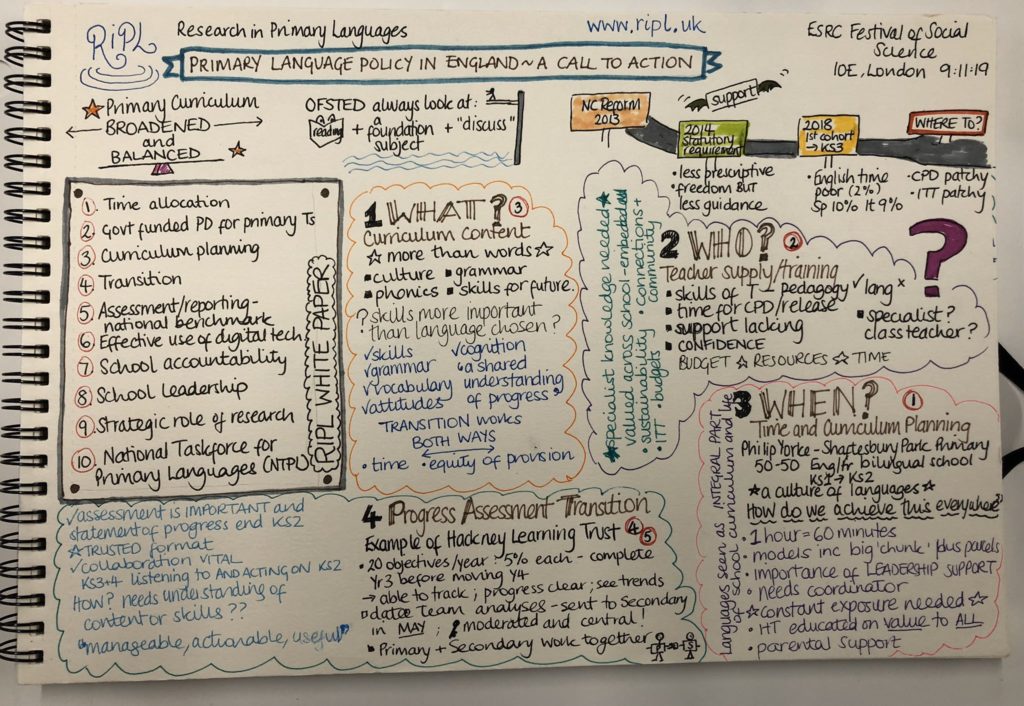
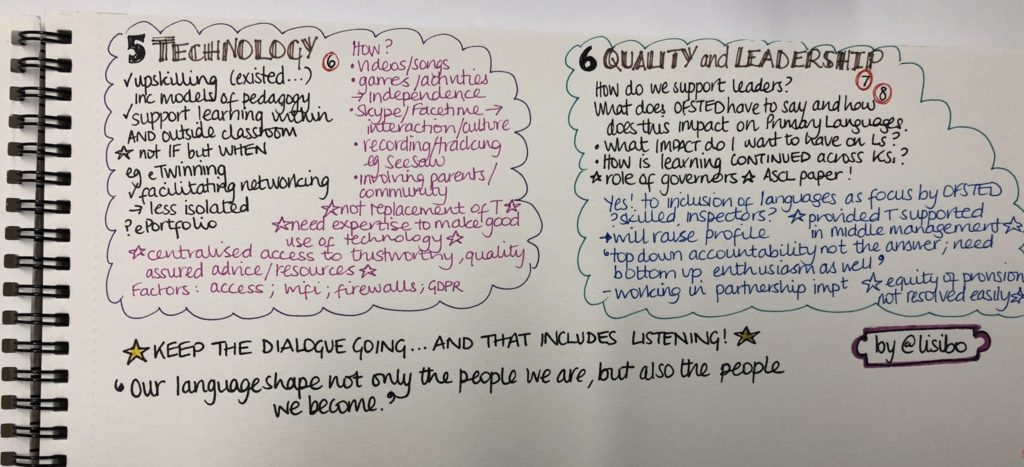
Throughout the day we considered six questions that covered the 10 recommendations of the RiPL White Paper. An ‘expert witness’ spoke for five minutes and then we discussed the questions at our tables with someone scribing onto large posters. I was designated scribe for my group that was chaired by Dr Rowena Kasprowicz and included Jenny Carpenter (President of NALA), Yvonne Kennedy (Herts for Learning) and Marnie Seymour (University of Winchester.) After each question, each group’s poster was collected and displayed. Half way through the day, responses to the first three questions were summarised by the ‘question chair’, a member of RiPL.

As well as scribing I tried to sketchnote the day. The five minute ‘opening comments’ are in black for each question, and the summary is presented in the coloured pen.

It was a very interesting day, discussing how primary languages can move forward and what needs to be done for that to happen.
You can read the White Paper in detail below – or read the one page summary!

Also. do check out the RiPL website – it’s full of information and research about Primary language teaching and learning.
I particularly like the One page summaries of longer research papers; a time saver and also gives a taster so you can decide if you want to delve deeper.

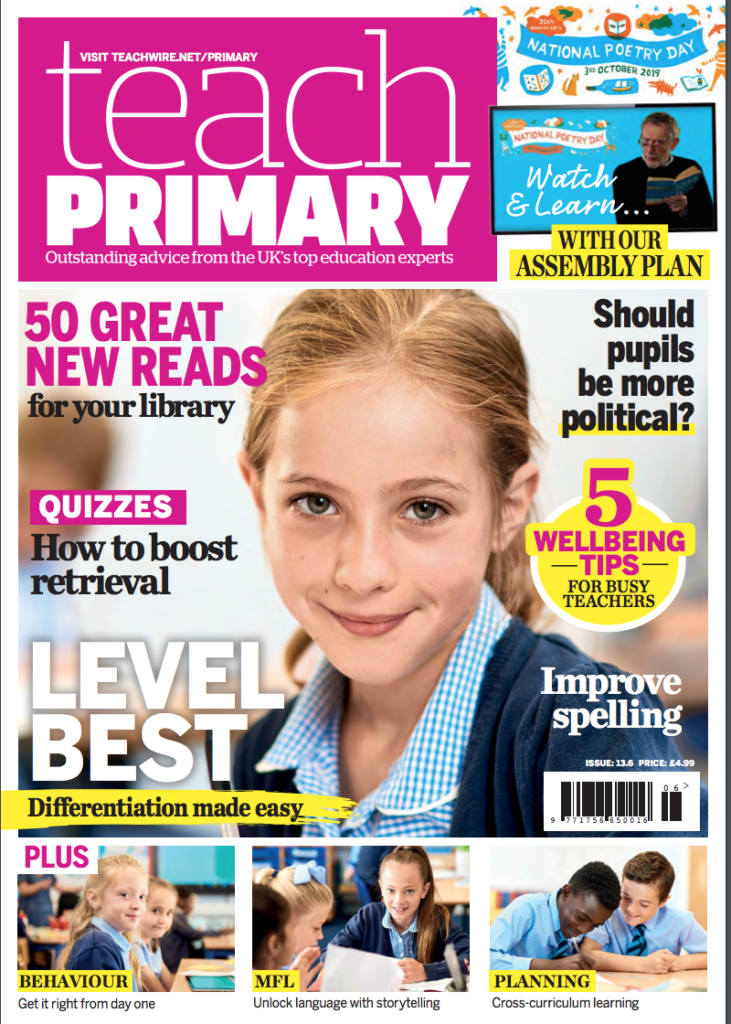
The latest edition of Teach Primary magazine.

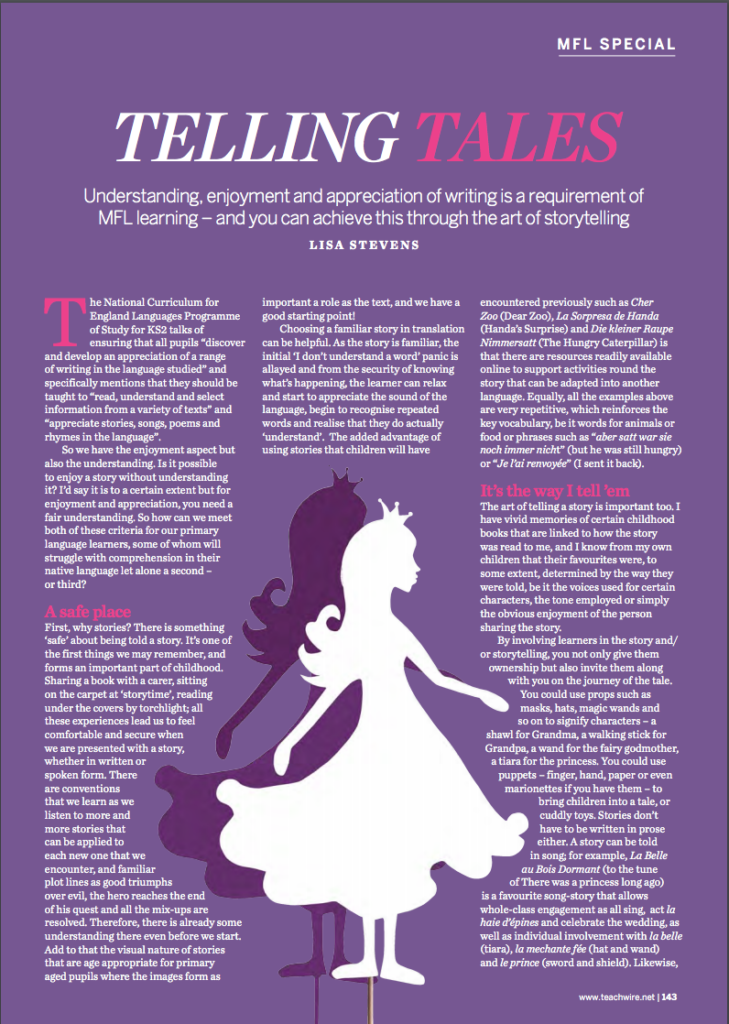
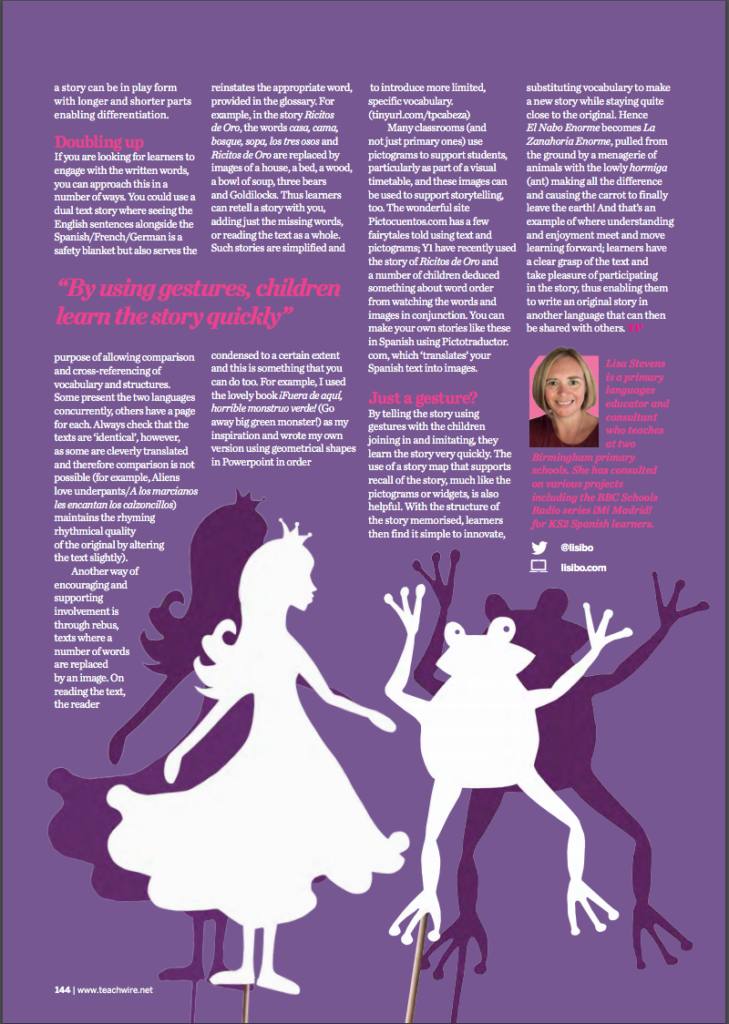
The latest edition of Teach Primary magazine has been out for a couple of weeks and features a MFL focus section between pages 140 – 153. There’s an article about the relevance of language learning in Brexit-era Britain, another on a language awareness model of Primary language learning and one from Clare Seccombe on Putting Pen to Paper (writing) in the primary languages classroom as well as a couple of pages of ‘Partner Content’ from Primary Languages Network and Language Angels about why you should use their schemes. Oh, and as you can see above, there’s also an article by me about storytelling! It’s on purple paper (my favourite colour) and I even got a ‘trail’ on the front page!) You can read it above.

I’m going to have to take out a subscription as I have to keep begging copies from friends, and don’t know I’ve been published until someone congratulates me.

My previous content in TeachPrimary:

Just before we broke up for the summer, I asked the 2019 Language Leaders* team at my school for their thoughts on language learning. To help them, I posed some questions. I’ve already shared this on the school website but thought others might be interested in their responses.

Why did you volunteer to be a Language Leader?

I volunteered to be a Language Leader because I love learning languages; when I go on holiday I like showing off how I know how to speak the language. (RM)

I wanted to find out more about languages as they’re fun. (PS)

I volunteered as a Language Leader because I like learning how other people communicate. (AT)

I wanted to represent the school. (IH)

I thought it would be fun! (JS/SLG)

I volunteered because languages make me happy. (RS)

I wanted to explore the different languages and how to speak them (JJ)

I volunteered because I like to learn languages (AK)

I volunteered because I wanted to try something new (LD)

What do you like about languages?

I like speaking languages – it makes me feel proud! (GG)

It makes countries different (LD)

I like how other people talk and I don’t understand them. (AT)

I like that if you learn a language, you can communicate and understand people that speak other languages. (LE)

I like the sounds you make and how you spell words in other languages (JJ)

I like that different countries have different ways of communicating. (RM)

When I speak languages it makes me feel….. (RS)

It’s fun to learn! (IH/NH)

I like that everyone’s language is unique (PS)

I find them interesting, (JS/SLG)

When you go on holiday you can speak that language. (AK)

What do you find hard? What do you do when it’s hard?

When it’s hard, I practice what to say and find someone who already speaks that language to help. (JJ)

When it’s hard I just practice! (IH)

I find remembering the language hard. (LE)

Phonics and pronunciation can be tricky! (LD)

I sometimes find pronouncing words hard but I don’t give up as I have an open mindset. (GG)

When I find it hard I do some chants to help me remember (PS)

Sometimes I find writing hard so I ask for help. (SLG)

As a Language Leader I find it hard to choose the award winners! (AK)

I found writing my application letter for Language Leader hard! (NH)

Do you know any languages other than English? How did you learn them?

I know Arabic, Urdu Spanish and a bit of French! (IH)

I know Punjabi and Spanish – Punjabi from home and Spanish from school. (GG)

I know Hindi as my family speak it at home but I sometimes feel embarrassed speaking it in front of my friends. (RM)

I know how to introduce myself in French. (AT)

I know some Italian as we go on holiday there (LD)

My parents speak Tamil and I listen to them (JJ)

I know Urdu because I speak it at home (RS)

I know some Italian as my grandma was born in Italy (AK)

Do you enjoy learning Spanish?

A resounding yes!

I love Spanish – especially with Señora Stevens! I like that it has masculine and feminine! (RM)

I enjoy Spanish because my family go on holiday to Spain some years. (AT)

I like Spanish; I like how you have masculine and feminine and can explore how to decide which gender nouns have. (JJ)

I find learning Spanish with the great Señora Stevens really fun and interesting. (PS)

What would make language learning even better for you?

I could practice harder! (IH)

I’d like to learn some useful questions for the future; for example, how to ask for a cupcake in Italian. (AT)

I’d like to learn another language! (JS)

To do more mindmaps and diagrams to help me remember words (SLG)

I’d like to learn more languages and the differences between them. (LE)

Comparing more languages – for example hello is Vanakam in Tamil and Hola in Spanish (JJ)

I’d like to learn some gymnastics words as I love gymnastics (AK)

I think visiting the country would be a great idea! (LD)

If once a week we could read a story in a different language in assembly (PS)

I love the honesty of the answers they gave (I did tell them that I would be sharing their responses!) Having read their ideas, I’ve bought some new books and asked for more assemblies (I already do more than my share!), and will be experimenting with new ways of learning and recording vocabulary.

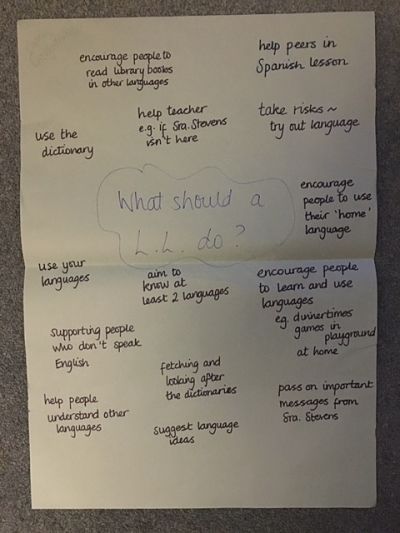
*Language Leaders at my school support and promote language learning of all sorts. Children write a letter of application and then the previous year’s team help me to choose. It’s normally a child per class but this year we went for a team across LKS2 and UKS2, predominantly formed of Y4 and 5s. The original team (four years ago) wrote their own “job description” which I’ve added for some context.

Books from Italy

| Leave a comment

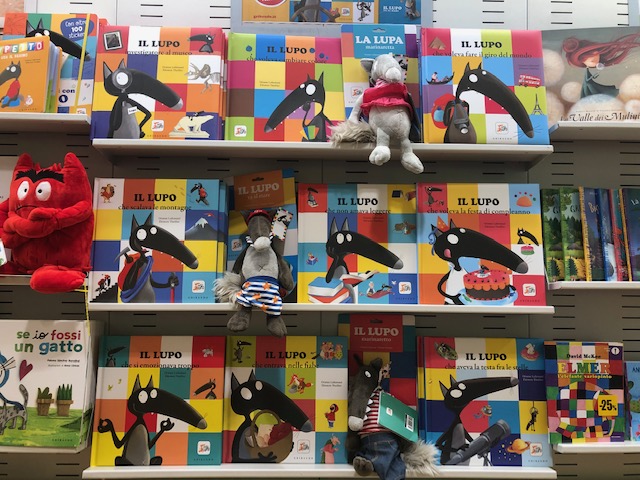
I didn’t buy any of these but I was sorely tempted!

Just back from a family holiday in Italy where I once more had to struggle with not being able to communicate as I wished. I understood quite a bit thanks to Spanish and, to a lesser extent, French, but couldn’t formulate sufficiently coherent sentences to say what I wanted to communicate most of the time, thus resorting to a few words and a gesture with a pleading smile. In fact, I found that German was more helpful at times for the first part of the holidays as we were in Trentino-Alto Adige/Südtirol and often people didn’t speak English but understood German. Added to my ‘angst’ was the fact that all my attempts at Italian were met with replies in English, particularly in Bologna – I guess they thought they were being helpful but I was trying hard and it was a little disheartening!

However, I was in my element when I found the bookshops! My poor family tolerated me dragging them into at least four on our wanderings without moaning although I actually think they were glad of the air conditioning and a rest! I had my eye on a children’s book shop in the Piazza Maggiore but it was sadly shut when we returned to Bologna for holidays! Chiuso per Ferie was a phrase we learned very quickly! Nonetheless I still found others and treated myself to three books – I could have bought far more but as I don’t teach Italian, I was restrained and really thought hard about my choices.

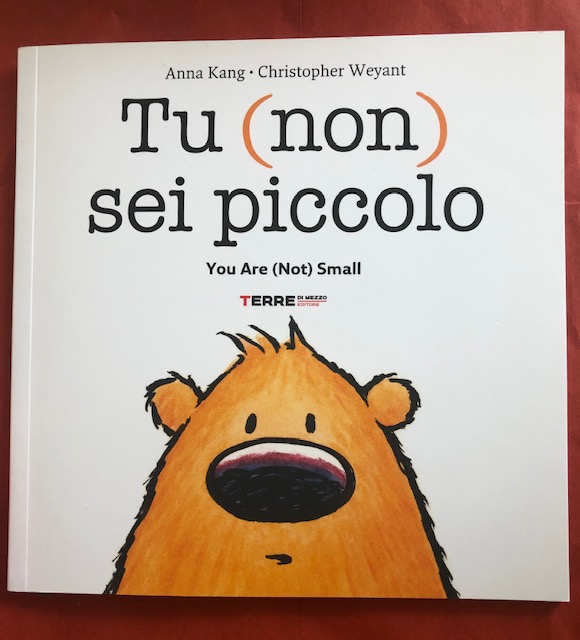
ISBN 978-88-6189-548-5

Tu (non) sei piccolo is a bilingual book with the Italian in large type and the English a little smaller below. It’s a really simple book about some bears who are arguing about being big or small. What I particularly liked, apart from the bilingualism, was the repetition for the verb to be in 1st and 2nd person singular (I and you) and 2nd and 3rd person plural (you and they) as this gave me a good idea about how the verb ‘works.’ Additionally, the same two adjectives are used which meant that I could draw some conclusions about the behaviour of adjectives – much like panino/panini and cappuccino/cappuccini! It’s amusing too and I liked the illustrations of the different bears. It would be easy to adapt by changing the adjective and/or animal.

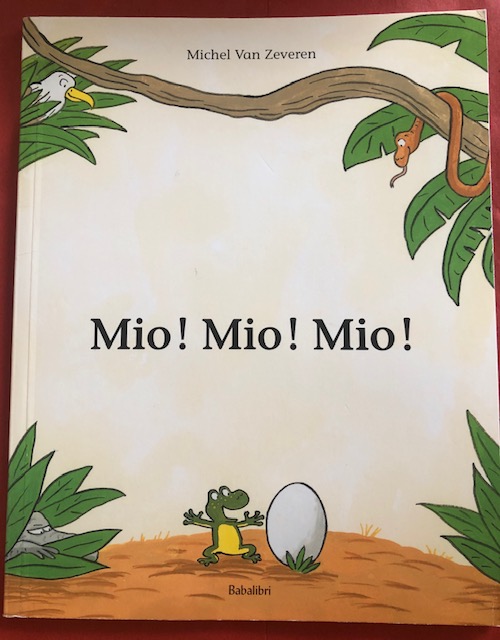
ISBN 978-88-8362-353-0

I chose Mio! Mio! Mio! as it’s also very repetitive and easy to understand. The little frog finds an egg and claims it as his own – Mio! But all the other animals say it’s theirs until it ends up hitting the elephant on the head – then nobody wants it and frog at last can have it. Then it hatches…
I enjoyed comparing animal names with the Spanish – l’elefante, l’aquila, il serpente – and discover a new one that none of my translating apps could work out – il varano which is a monitor lizard! The grammar was also similar – è mio! / ¡es mío! for it’s mine ; è suo! / ¡es suyo! meaning it’s his; I saw a similarity between chi for who and qui in French, and Allora te lo restituisco was easy to decode as I’ve give it back to you with the link to restitution. Finally, it also tickled me that it featured ‘un uovo’ as the boys were asked every morning if they’d like one in our wonderful B&B (if you’re ever going to the Dolomites, I can thoroughly recommend Agriturismo Florandonole )

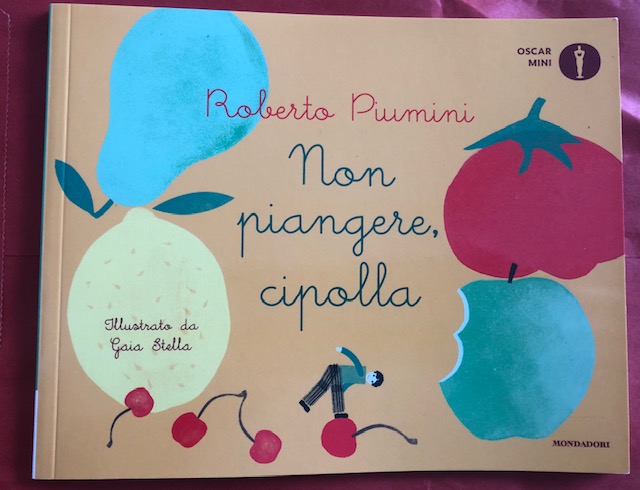
ISBN 978-88-04-70392-1
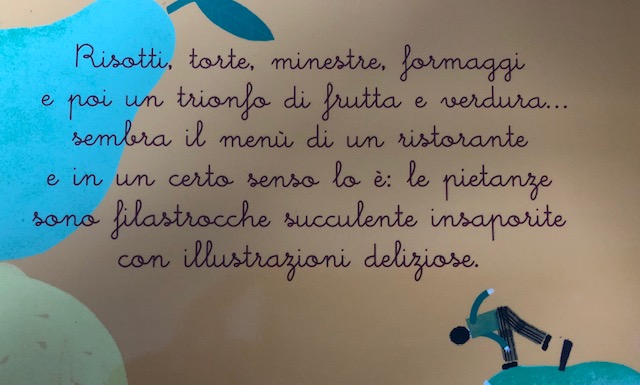
The blurb on the back

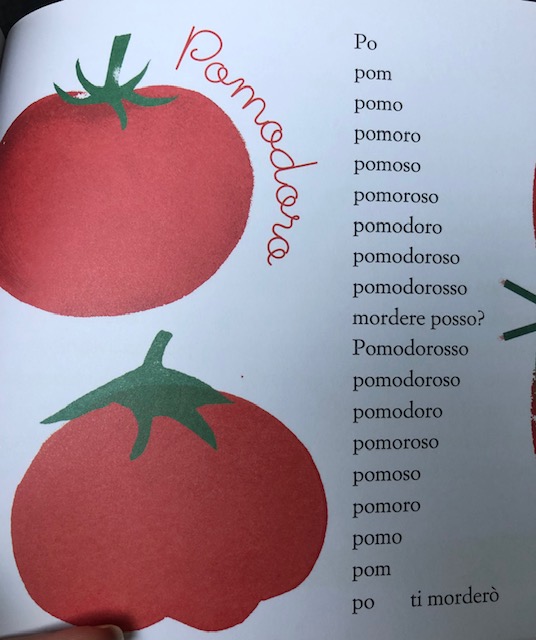
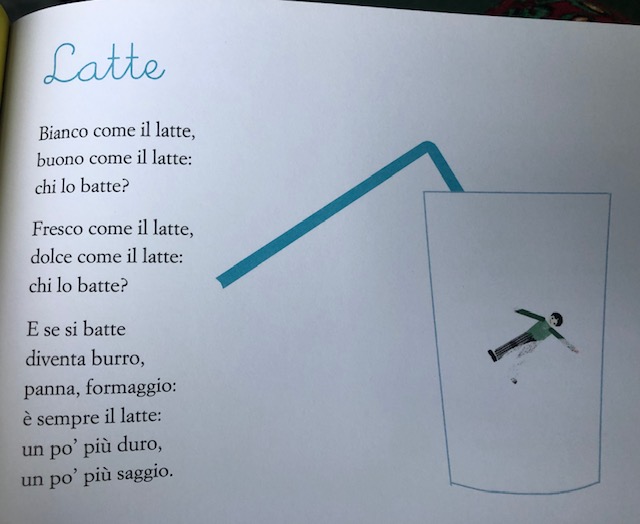
My final choice recognises the wonders of Italian food and drink. Non piangere, cipolla (Don’t cry onion) is a book of poems and verse organised in alphabetical order starting with Acqua and ending with Uva. These poems will need more concentration (and a dictionary!) to translate but I can get the gist of many of them. A couple of my favourites are below.

I like the ‘playing with words’ style of this poem about tomatoes. Seemingly simple but very clever!
And this one about milk. I like the opening verses using similes and the last verse talking about making butter, cream and cheese, but it still being milk.

I’ve enjoyed reading all these books aloud, trying out my Italian pronunciation (which still needs work) and listening to how they sound. I’m looking forward to reading them ever more accurately, and also to understanding a little more as I reread them.

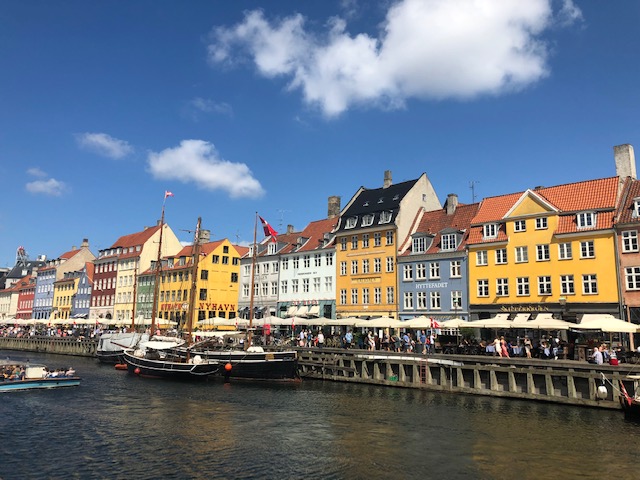
At the end of July, my husband and I popped off for a short break in Copenhagen in celebration of our silver wedding anniversary. We had a lovely time exploring and sightseeing, and as usual at various points my ‘teacher brain’ or as I prefer to call it ‘lifelong learner thinking’ engaged and I was struck with thoughts and ideas for the classroom.

Firstly I really struggled with not being able to communicate in Danish. I really didn’t need to as everyone spoke English but it made me feel bad not being able to speak. I found that I could understand to a certain extent if things were written thanks to having done some Swedish on Duolingo, plus managing find some similarities at times with German and/or English, but understanding speech was very problematic and speaking more so! My son (who’s studied Swedish for the last two years at Uni) and my husband (who works with Swedes and Danes) tell me that part of the problem is that people ‘swallow’ consonants in spoken Danish making it harder to understand than Swedish. However, I did persevere with my trying to understand and had some success.

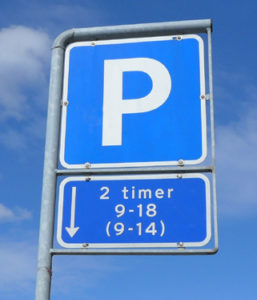
For example, I discovered that the word in Danish for an hour is timer. I liked that!

And, as usual, I couldn’t leave without a book for my collection. I had a good look and decided that whilst I’d love a storybook, my level of understanding wasn’t high enough yet, so I settled on a simple word book.

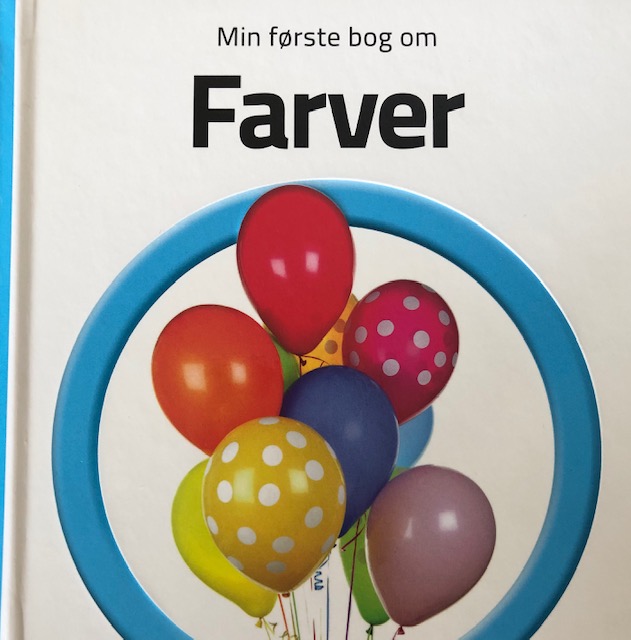
My new book!

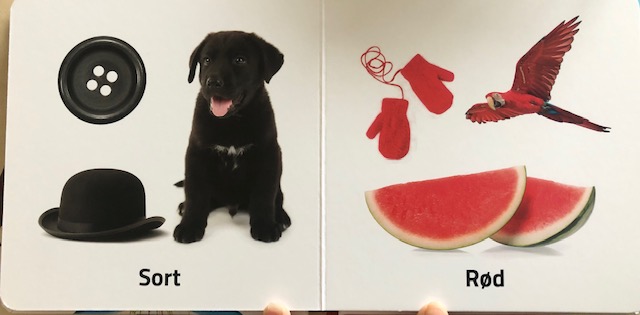
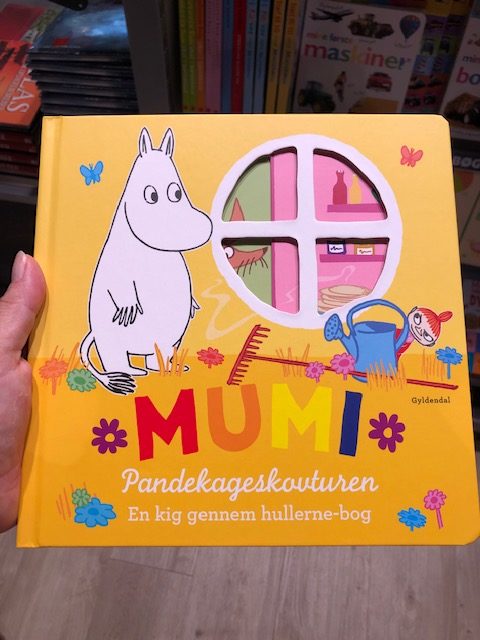
Min første bog om Farver is a board book all about colours. Each page has a different colour until the last page which has a rainbow colours. I can see the likeness of farver and Farbe in German. Some colours look – but don’t sound! – like English (pink, orange), some are like French (brun) and others wouldn’t be recognisable to me without the images – sort is black and hvid is white. The last page is about rainbow colours which again reminds me of German Regnbuens farver although I wouldn’t have guessed that er flotte meant ‘are great.’

I’m looking forward to using this when I next look at colours in Spanish as children this year have enjoyed all the comparative exercises we’ve done with multiple languages, finding similarities and differences.

Wishing I’d bought this one now though – I do love the Moomins – but books are so expensive!
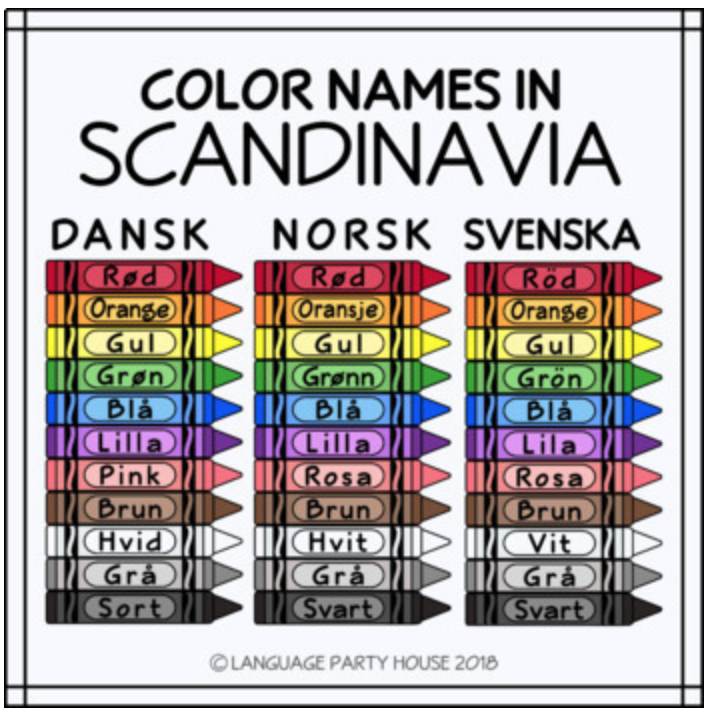
PS I found a resource on TPT that is advertised with this screenshot – very interesting to compare the three languages.

Have you seen the latest issue of Teach Primary? If you have you might have noticed that I’ve been writing again.
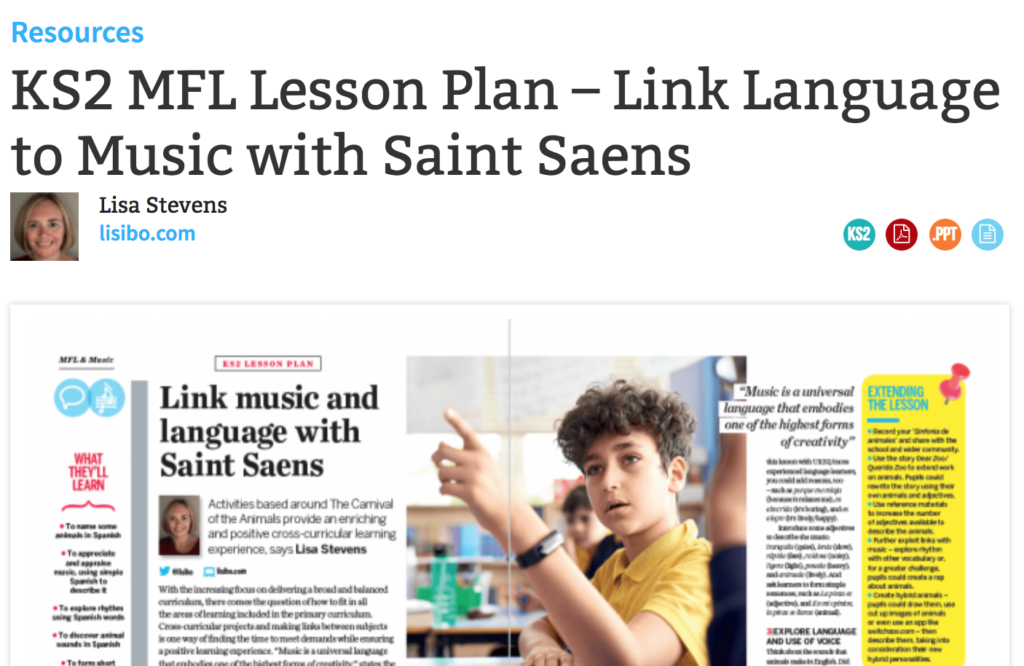
This month I’ve provided a lesson plan and resources that link languages (in my case Spanish) with the music of Saint Saëns and specifically the Carnival of the Animals.

For those that have been in primary language teaching for a fair few years might recognise that this lesson is inspired by the QCA Scheme of Work which I used as my starting point before adding my own ideas and twists.

If you don’t have a subscription to the magazine, you can download the lesson and resources for free from Teachwire here
I’ve added the lesson plan below.

“Strange animals”

| 1 Comment

I teach Spanish at two primary schools and we predominantly follow the Light Bulb Languages scheme of work. Year 4 are about to start the latter part of Unit 8 Descubrimos los animales. In it, they learn the names of parts of the body, comparing the words in a variety of languages, and then talk about animals, culminating in making and describing ‘strange animals.’ As a bridge between the two, we look at El Bicho de la Fruta, but I was on the look out for another story that might accompany this as Y4 love a story. And I’ve found two!

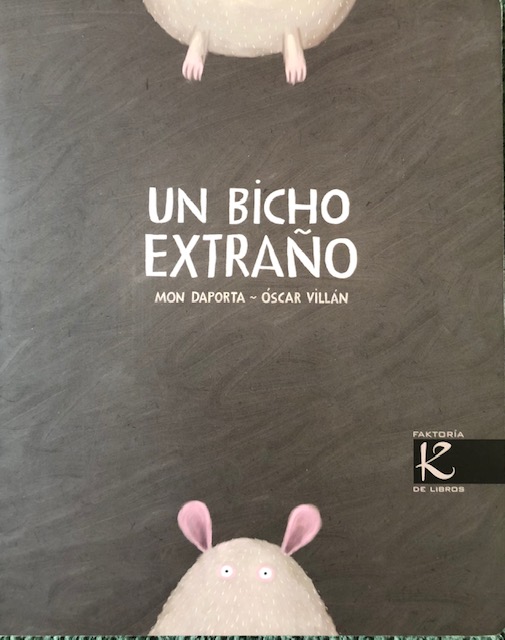
1. Un Bicho Extraño

ISBN – 978-84-96957-67-1
You can buy a copy here.

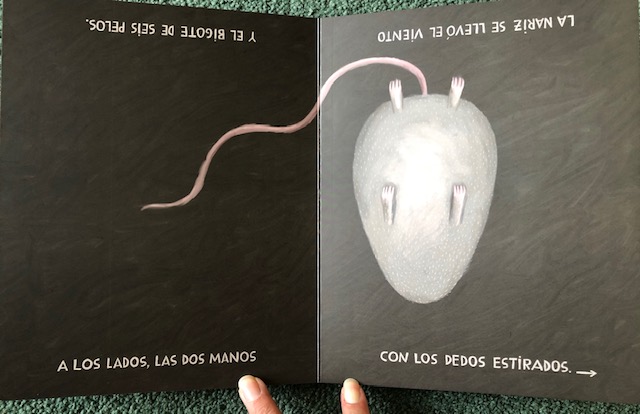
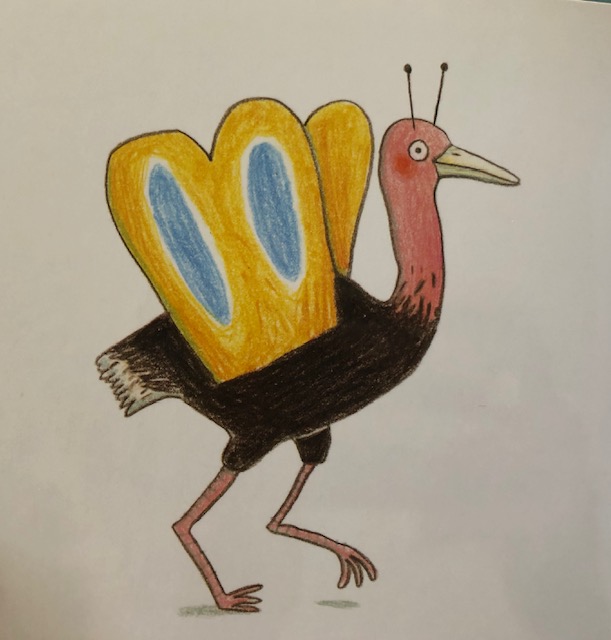
I was first made aware of this book via Jesús from the Consejería de Educación in London who spoke about it at a session I attended. It is the story of Un Bicho Extraño (A Strange Creature) who we discover bit by bit. The ‘story’ is written in a single phrase per page. Well, two phrases as you can see from below as the ‘bicho’ is revealed and then disappears as you turn the book around.

Jesús shared materials that have been prepared by a working party to enable teachers to use this text as the basis for a series of lessons. Lots of ideas and resources that are ready to be used. I intend to choose some of the activities, particularly the Pictionary activity and the materials that support descriptions of the Un zoológico de bichos raros as they go well with the scheme. It would make a good analogue alternative to using the website Switchzoo.com to create hybrid animals. (Gutted that BuiLD YouR WiLD SelF is no longer available!)

To present the story I could read the book as it is (There is also a video of the book being read here) or I could try to do as the teacher in this clip has done, building the ‘bicho’ live as I tell the story. This would be a good introduction to pupils creating their own bicho and presenting it.

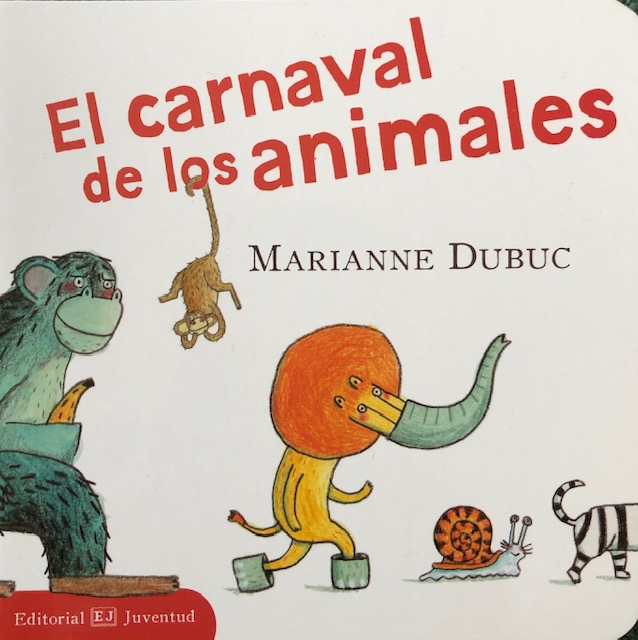
2. El Carnaval de los Animales

ISBN 978-84-261-3824-8
You can buy this book from Little Linguist here

The second book was a recent purchase as I was writing an article for Teach Primary on integrating languages and music into a series of lessons (harking back to the QCA scheme of work!) I saw the title and it took me back to lessons I used to do based around Saint Saens music. Except the book isn’t just a carnival of animals as we know it.

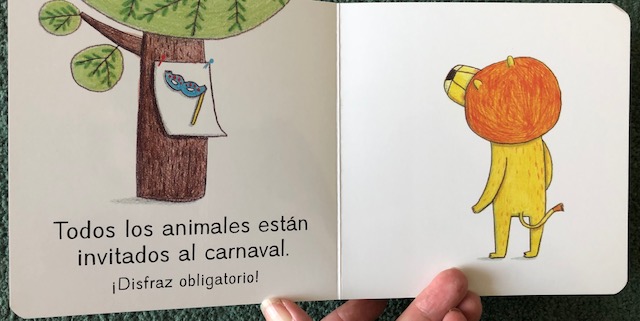
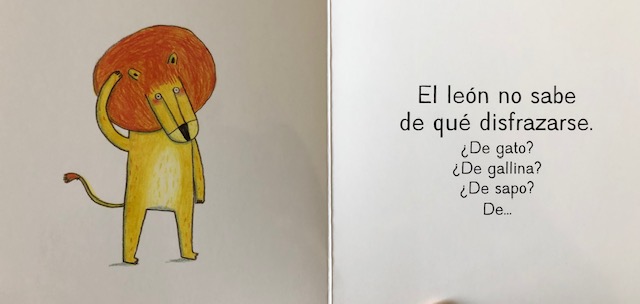
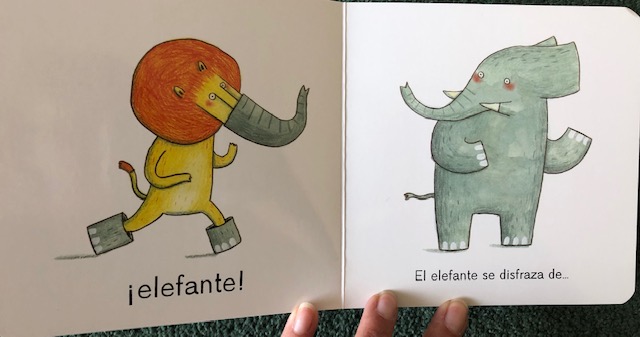
All the animals have been invited to the carnival – but fancy dress is obligatory. How will the animals disguise themselves? The book is very amusing as animals decide how to disguise themselves, mostly as other animals but not always, and present themselves in their new forms. It’s a fun book to read as it is, and you could play games with it.

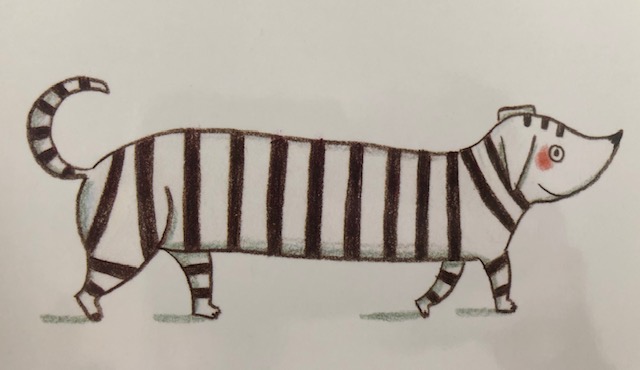
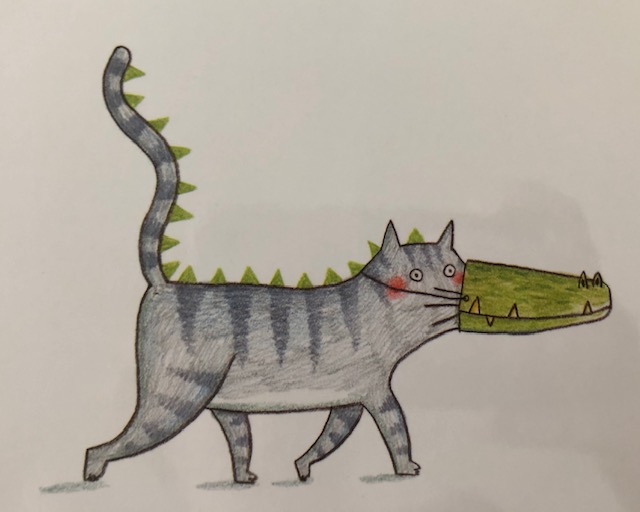
For example, can you identify the animal and the disguise?
¿Qué animal es?
¿Y el disfraz?

Es un perro salchicha disfrazado de cebra.

And this would be a simple way to make more ‘strange animals’ as pupils attempt to disguise their animal as something else. A fun activity that could be extended beyond animals for the adventurous. I like the range of interesting animals that are introduced in the story – it’s not often that you get to teach mapache or ornitorrinco, and I’ve never heard the word bogavente* before but I know it’d be a hit with Y4.

I’ll let you know how we get on with these books and how much or little we get to do with them. If you have any ideas of similar texts, do leave a message in the comments, or contact me via Twitter @lisibo.

*Un bogavente is a lobster with large claws. Una langosta (the word I knew for lobster) is a spiny lobster.
Amazing what you learn from children’s story books!


Available from Little Linguist

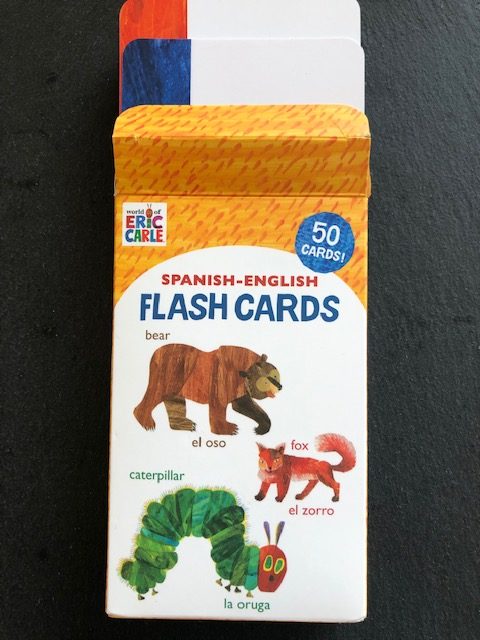
As a great fan of Eric Carle books, I was very excited to find some bilingual Spanish-English flashcards when I was browsing online. I ordered them in November, and they finally arrived last week! Well worth the wait however, and I thought I’d share some ideas I’ve had for using them. I’m sure you’ll have your own thoughts; please share them via the comments below!

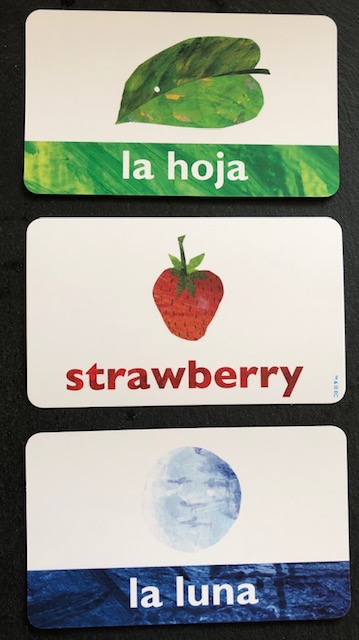
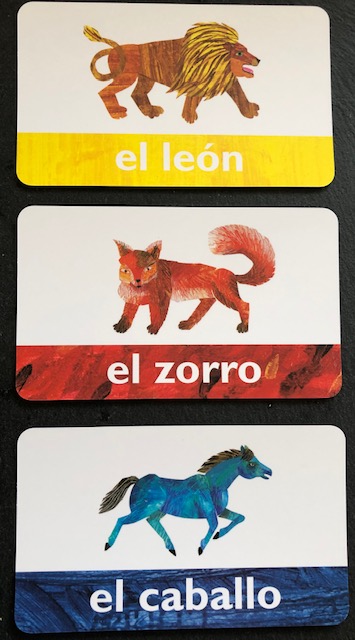
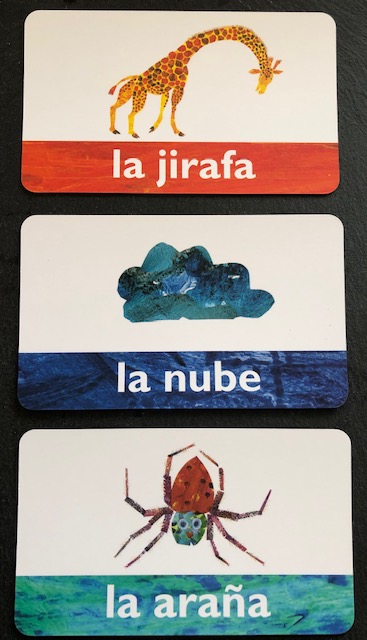
There are 50 cards in the pack featuring words from some of Eric Carle’s books including The Very Hungry Caterpillar / La Oruga Muy Hambrienta and Brown bear, What do you see? /Oso Pardo ¿qué ves? Each card is double sided with the word in English and an image on one side, and the word in Spanish (complete with definite article) and the same image on the other. It’s easy to distinguish the Spanish side from the English as the word is white in a coloured strip on the Spanish side, but in colour on the English side.

Learning vocabulary
*Learn new words by studying the cards and then testing yourself on the Spanish.
*Pupils could work in pairs and take it in turns to say the word in Spanish.
*Show the image and say the word.

Name the book
*Show a card – which story does it come from? You could start with one card and add another if necessary. perhaps you could award 3 points if the book is guessed after 1 card, decreasing the points the more cards are seen.
*True or false – when looking at a particular story, show a card; is it in the story? Hay un una abeja en Oso Pardo ¿qué ves? ¿Verdad o mentira?

Which book features all these animals?
(Answer – El artista que pintó un caballo azul)

Sort the cards
*By gender – this is fairly easy as the Spanish word is accompanied by the definite article, but ‘los globos’ may throw a spanner in the works for some.
*Animate and inanimate / ¿animado o inanimado? – could lead to an interesting discussion about whether a leaf is alive or not! Is it dead the second it leaves the tree?
*Manmade or natural / ¿artificial o natural?– not quite the same as the above!
*By story – I can find images from The Very Hungry Caterpillar, The Artist who Painted a Blue Horse, Brown Bear, The Busy Ladybird, From Head to Toes, and there are others that I can’t identify (I think they’re from an ABC or colour book that I don’t have!)
*by colour – of the image, or of the ‘word strip’
*words with an accent – reviewing why Spanish words have accents is always useful.
*by phoneme – jirafa, oveja, pájaro, abeja, naranja, hoja would make a group for example.

Make up a sentence/story
*choose two or three cards and try to make a sentence in Spanish
La jirafa pone la araña en la nube would be an example using the cards above.
*alternatively choose more cards, six perhaps, and try to make up a sequence of sentences or even a short story. This would be a fun activity for Y6 who’ve learned how to manipulate verbs and are ready for a challenge preKS3!

So these are just a few ideas I’ve noted down quickly that come to mind. Some can be done with a whole class, but most I envisage being done by pairs or small groups of children. I’ll let you know if I think of any more ideas, and I’m sure the children will soon devise their own games to play!

Thanks for the photo Nathalie!

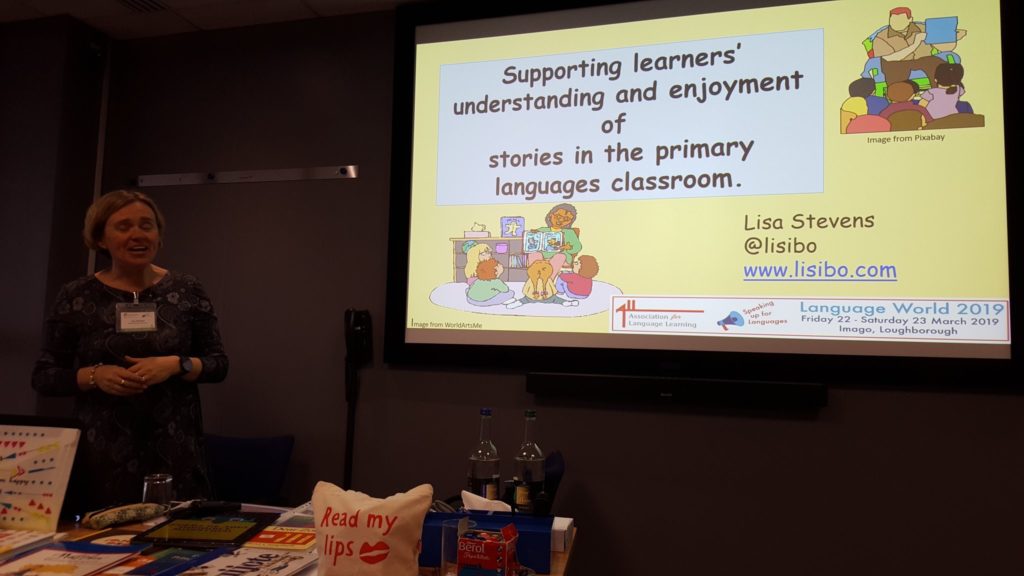
It seems a long time since Language World 2019 (it is three weeks I guess) so I apologise for the delay in uploading my presentation here; I’ve had a few website issues.

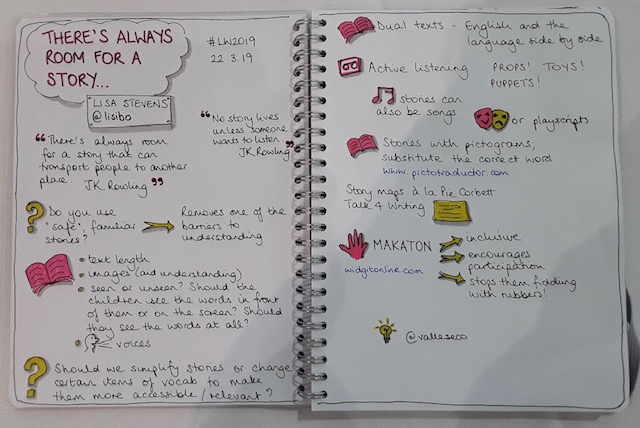
However, here it is, and below are some notes that you may find helpful in recalling what I said, or trying to decipher the slides! You’ll also find below Clare Seccombe’s lovely sketchnote of the session which summarises what I said as well!

Thanks Clare!

Links on Pinterest that accompany this presentation : https://www.pinterest.co.uk/lisibo/supporting-storytelling-lw2019/

La Belle au Bois Dormant resources from Bernadette Clinton

A post I wrote related to using Pictogramas – Leyendo con Pictogramas

Examples of stories and poems in pictograms – Coleccíon de Cuentos con Pictogramas and also Super colección de cuentos realizados con pictogramas Y ACTIVIDADES

Pictocuentos
Pictotraductor
Pictoaplicaciones
Unfortunately I haven’t managed to find an equivalent for French or German.
WidgetOnline is a subscription website that allows you to make visual stories similar to the Pictoaplicaciones suite but in English, or other languages with an add on pack.

I wanted to share more about using Makaton and to highlight that there are a number of free as well as reasonably priced resource packs that can be downloaded from Makaton.org
I got the materials to accompany my retelling of Dear Zoo/ Querido Zoo from there and then translated them/applied them to the Spanish story.
And there’s an article on Using Makaton in Storytelling that you might find interesting.

Ten in the Bed songs :
In Spanish – Diez en la cama
In French – Dix au lit
In German – Zehn im Bett
Download the Makaton signs here to accompany the story/song
And watch the story told in English and Makaton by Rob Delaney below:

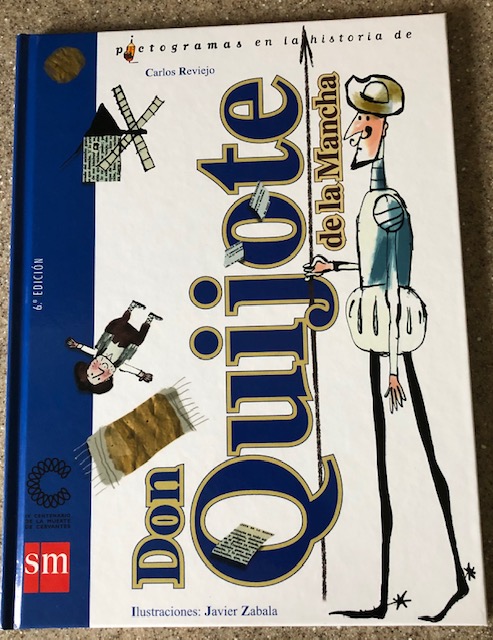
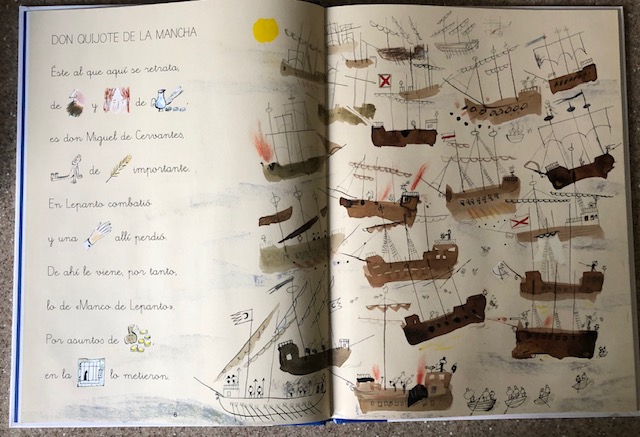
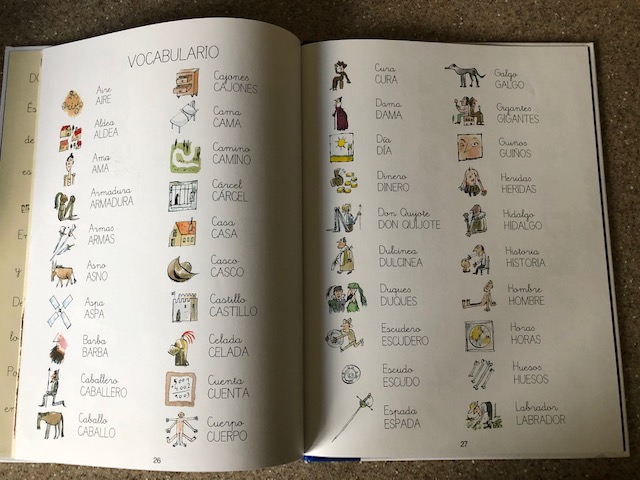
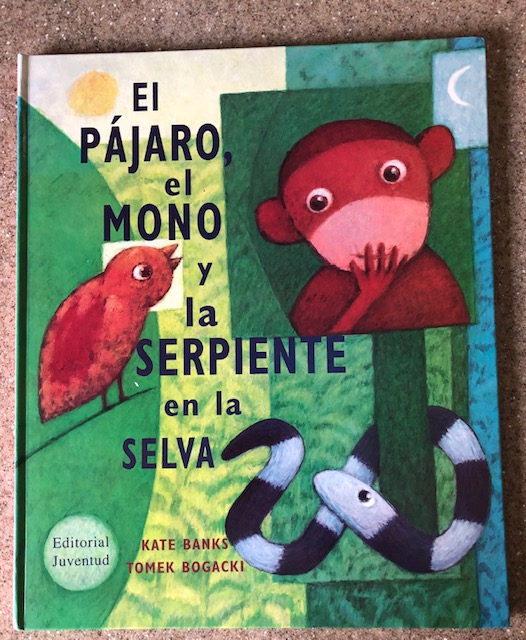
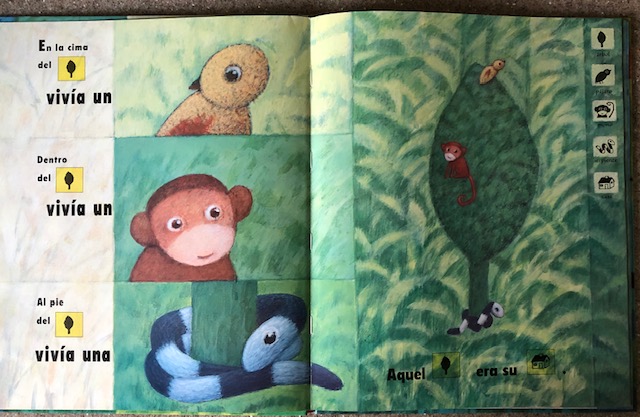
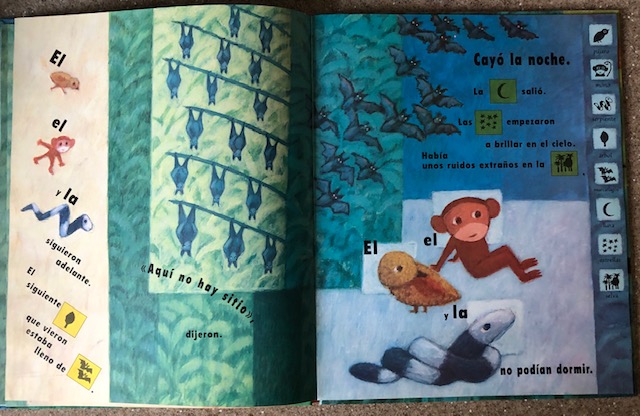
Finally, I had a pile of books to share but completely forgot with the pressure of time so here are screenshots from a couple. Firstly, Don Quijote de la Mancha which has the 2 USPs of being an authentic Spanish text, and also being written in Spanish ‘handwriting’, and El Pájaro, el Monoy la Serpiente en la Selva which is a charming story about living and working together.

If you have any comments or questions, please leave them below, or you can contact me via social media!

¡Vámonos! ©2026. All Rights Reserved.
Powered by WordPress. Theme by Phoenix Web Solutions