languages – Page 16 – ¡Vámonos!
 

Category: languages

Just found this interesting infographic about the relationship between learning languages and your brain.

The bottom section about the optimum age for your brain to be most efficient at language learning is a strong case for Primary Languages (hurrah!) but not such good news for my attempts to learn German (boo!). It doesn’t say you can’t learn a langage when you’re old. Er. Although I will very shortly head off their scale…

via


Los Pimpollos

| 1 Comment

Another nod to Neil Jones today for introducing me to the lovely Pimpollos, Peru’s answer to the Hoobs. Cheery, friendly and with ‘karaoke subtitles’, I think a very useful series.

On his blog, Neil has posted materials for using their song Las verduras. Great stuff!

There are many more videos by Los Pimpollos and here are a couple of my favourites.

1. Arriba abajo.

This song is about things that are either up (arriba) or down (abajo) and I can see Nursery and Reception enjoying dancing along to this. The video supports the language with visual clues and actions can easily be added to show which way -arriba o abajo – each object is found.

httpv://youtu.be/_PVbDErQkGg

2. Cada día se un poquito más

I like this song for the words, meaning every day I know a little more; when I’m older I’ll know millions of things, just you wait and see! Well, I’m ‘older’ and I still want to sing this song as I’ve still got plenty to learn!

Cada día sé un poquito más

Yo voy a aprender tú ya lo verás

Cuando sea grande voy a saber

Un millón de cosas tú vas a ver

Que yo voy a aprender

para poder ser mejor.


Cada día sé un poco más que ayer

Todavía falta lo sé muy bien

Pero poco a poco lo aprenderé

Si tienes paciencia  lo vas a ver

Que yo voy a aprender

Para poder ser mejor.


Cada día sé un poquito más

Yo voy a aprender tú ya lo verás

Cuando sea grande voy a saber

Un millón de cosas tú vas a ver

Que yo voy a aprender

para poder ser mejor.

httpv://youtu.be/7yGE_hGJOaI

Anuncios

| Leave a comment

I really enjoyed Neil Jones’ presentation at ALL NorthEast Spanish day.

You can find all sorts of ideas and resources on his blog – http://mfljones.wordpress.com  – well worth a look whatever phase you teach.

I loved some of the advertisements he showed.  Here are two of them.  Torres has been forgiven and I love funny dogs.

Pesi – Fernando Torres

httpv://youtu.be/nd7fc5iFL4g


Pancho, el perro que ganó el Primitivo

httpv://youtu.be/vwpbAsAzLf4


Following on from Rachel’s Hawkes’ reminder to me of my plan to teach phonics using her grid, another reminder popped up today when i was on Slidecast and found this short presentation courtesy of Clare Seccombe aka @Valleseco aka MFL Sunderland webmistress extraordinaire.

Phonics are key to our ability to read and pronounce unfamiliar words in a language -must ask Rachel if she has a phonics grid for German!


Another of the poems suggested by Joaquín Moreno in his presentation about poetry in Spanish teaching and learning was Nanas de la cebolla by Miguel Hernández.

He played us the poem sung by Joan Manuel Serrat – here it is below, along with a perfomance of it in spoken form and also the words.

Spoken version

httpv://youtu.be/ktZEWJAoai0

Nanas de la cebolla

La cebolla es escarcha
cerrada y pobre:
escarcha de tus días
y de mis noches.
Hambre y cebolla:
hielo negro y escarcha
grande y redonda.

En la cuna del hambre
mi niño estaba.
Con sangre de cebolla
se amamantaba.
Pero tu sangre,
escarchada de azúcar,
cebolla y hambre.

Una mujer morena,
resuelta en luna,
se derrama hilo a hilo
sobre la cuna.
Ríete, niño,
que te tragas la luna
cuando es preciso.

Alondra de mi casa,
ríete mucho.
Es tu risa en los ojos
la luz del mundo.
Ríete tanto
que en el alma al oírte,
bata el espacio.

Tu risa me hace libre,
me pone alas.
Soledades me quita,
cárcel me arranca.
Boca que vuela,
corazón que en tus labios
relampaguea.

Es tu risa la espada
más victoriosa.
Vencedor de las flores
y las alondras.
Rival del sol.
Porvenir de mis huesos
y de mi amor.

La carne aleteante,
súbito el párpado,
el vivir como nunca
coloreado.
¡Cuánto jilguero
se remonta, aletea,
desde tu cuerpo!

Desperté de ser niño.
Nunca despiertes.
Triste llevo la boca.
Ríete siempre.
Siempre en la cuna,
defendiendo la risa
pluma por pluma.

Ser de vuelo tan alto,
tan extendido,
que tu carne parece
cielo cernido.
¡Si yo pudiera
remontarme al origen
de tu carrera!

Al octavo mes ríes
con cinco azahares.
Con cinco diminutas
ferocidades.
Con cinco dientes
como cinco jazmines
adolescentes.

Frontera de los besos
serán mañana,
cuando en la dentadura
sientas un arma.
Sientas un fuego
correr dientes abajo
buscando el centro.

Vuela niño en la doble
luna del pecho.
Él, triste de cebolla.
Tú, satisfecho.
No te derrumbes.
No sepas lo que pasa
ni lo que ocurre.


Doña Pito Piturra

| 3 Comments

Ages ago I bought a book of little plays and poems by Gloria Fuertes, and have to admit that I haven’t looked at it much since I bought it. However, I was reminded of it on Thursday at the ALL NorthEast Spanish day in Gosforth when Joaquín Moreno was talking about using poetry in teaching Spanish.

He mentioned using a particular poem by Gloria Fuertes to read aloud and act out in order to practice getting English mouths around Spanish sounds – in this case, ‘rr’ is particularly practiced.

The suggestion was to chorally repeat the odd numbered, repeated  line “Doña Pito Piturra” and for volunteers to read the even, varied line, with feeling and an action to accompany it.

A very simple idea that I shall be using in my classroom soon!

Below is the poem, and also a video of the poem being recited plus two versions, as a song!

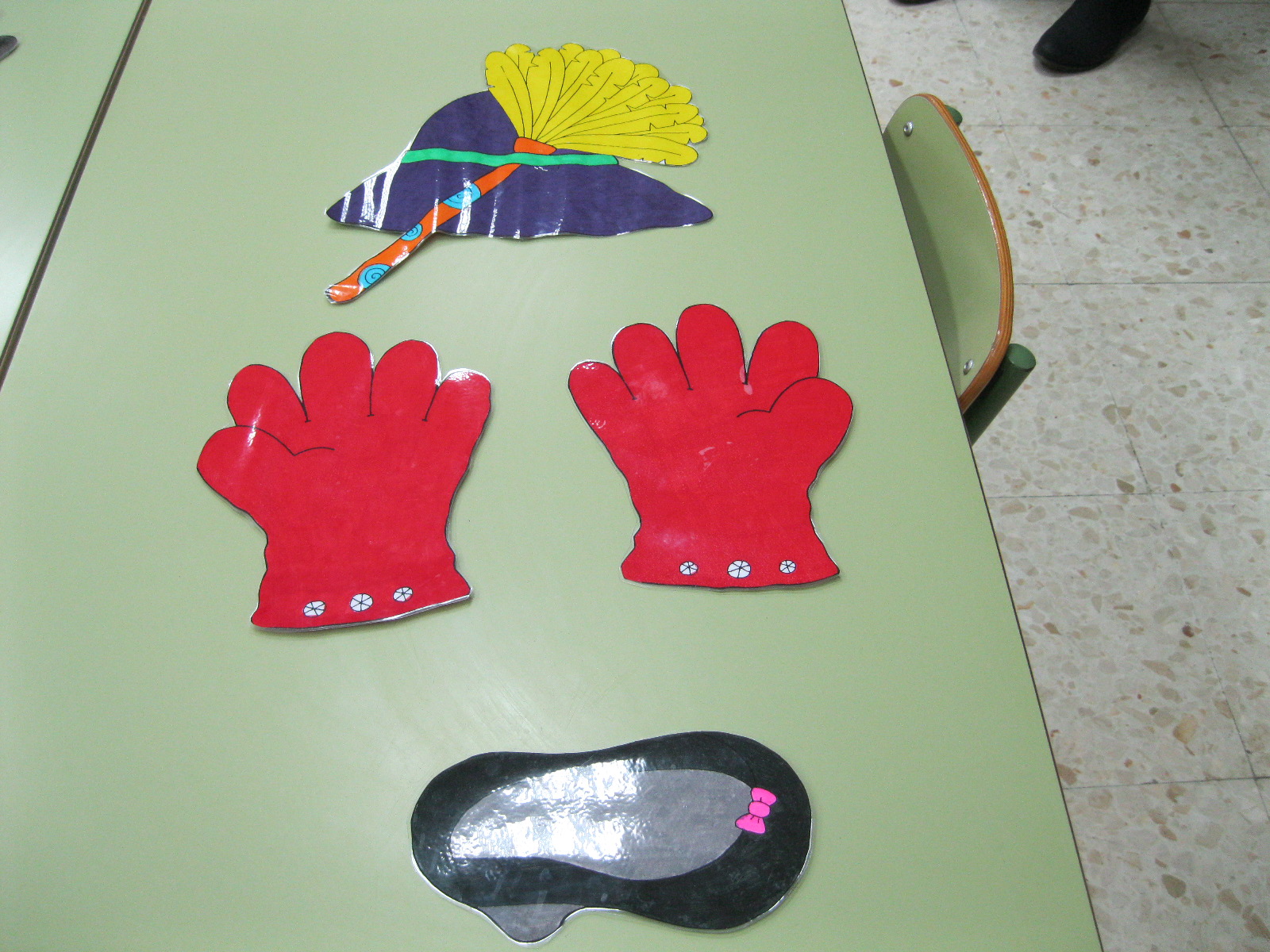
DOÑA PITO PITURRA

Doña Pito Piturra
Tiene unos guantes,
Doña Pito Piturra
Muy elegantes.

Doña Pito Piturra
Tiene un sombrero,
Doña Pito Piturra
Con un plumero.

Doña Pito Piturra
Tiene un zapato,
Doña Pito Piturra
Le viene ancho.

Doña Pito Piturra
Tiene toquillas,
Doña Pito Piturra
Con tres polillas.

Doña Pito Piturra
Tiene unos guantes,
Doña Pito Piturra
Le están muy grandes.

Doña Pito Piturra
Tiene unos guantes,
Doña Pito Piturra
¡lo he dicho antes!

Newsmap.jp

| 1 Comment

Thanks to Liz Fotheringham last week for telling me about this wonderful site!

As it explains here,

Newsmap is an application that visually reflects the constantly changing landscape of the Google News news aggregator.
Google News automatically groups news tories with similar content and places them based on algorithmic results into clusters. In Newsmap, the size of each cell is determined by the amount of related articles that exist inside each news cluster that the Google News Aggregator presents. In that way users can quickly identify which news stories have been given the most coverage, viewing the map by region, topic or time. Through that process it still accentuates the importance of a given article.

What’s really great is that you can choose the country from which you’d like the headlines – the list includes Spain and Mexico as well as Germany and Austria which allow a comparison of headlines in the smae language. Canada is included as well as France but the headlines are in English!


And there’s a tool bar at the bottom as well where you can choose the type of news that you’d like included.

Here I’ve just selected Sport in this screen shot :-

Another thing I like about this site is that if you hover on a headline, you get the beginning of the article plus a photograph. Just enough to give you more information about the headline, and just enough to be a ‘short text’. The ‘hover’ also tells you how many articles have been written on the same topic, and from which paper that headline came.

Liz mentioned it in the context of KS3 and 4 and using authentic materials for reading. I wholeheartedly agree – and would venture that it might be good to use with KS2 for

  • gist
  • looking for cognates
  • ICU about what’s in the news in other countries
  • comparing languages by using an unknown language eg by choosing Brasil or Netherlands
  • match the headlines
And that’s just a quick think!
I’m having a great time exploring. What do you think you could do with this site?

ALL Presidential team

Cynthia Martin – Past president

Karl Pfeiffer – President

Bernadette Holmes – President elect – absent so we had a ‘supply president’ in the form of Steven Fawkes

Looking back to look forward

Whilst KS2 entitlement still stands, it’s uncertain and as yet there are no clear messages from the coalition about whether they will or won’t be statutory. We’re also in the middle of a huge curriculum review of both secondary and primary education. But change can provide us with opportunities to reassess and reflect.

Change often happens simultaneously, sometimes across sectors too.

Many issues that arose with Nuffield are seen replicated now – developing languages vertically down from KS3 but also horizontally across ability range at time when languages were elitist. At the same time, comprehensive education began.

National curriculum – Languages for all September 1992 with all children 11-16 studying languages led to questions about approaches to teaching all abilities. This had an impact on dual linguists as FL2 got squashed out (although people studying language and …business / development etc increased)

National Language Strategy brought some coherence to languages in England – many success stories especially in primary phase, widening of choice post-14 etc.

KS2 Framework has been a key document in bringing coherence to primary provision. In 2009 92% primaries offering language in KS2 and 70%+ offered throughout the school.

MFL KS3 Framework arrived with an emphasis on understanding pattern, structure and grammar, but lessened target language in the classroom.


Building for the future – what do we need?

  • contact time – more needed across the board – not adding at one end and taking away at the other
  • coherent language learning experience – a continuum across KS2 – KS4 and beyond
  • consistency of teaching approach, again across the phases
  • content – creativity – cognitive challenge even in years 5 and 6
  • continuing professional development
  • cultural dimension
  • NSC/CLIL4Ts/LinkedUp
  • collaboration at local regional and national level –  cutbacks but still the need for support


Resetting the foundations

A policy for the future

“Languages are vital for the personal professional and economic growth of all UK citizens”

“Language learning and teaching must take their rightful place in Britain as educational and social priorities”

“All British pupils must have full open and equal access to language learning to ensure a level playing with their peers abroad”

“The professional status of language teachers must be of equal standing compared to teachers of other subjects.”

We believe that language learning and teaching are an essential part of rounded education for all UK citizens.

“languages are not about labels, they’re about people” ECML Graz

We believe that all learners should have the opportunity to learn their first language and at least one other language, including English, if this is not their first language.

Our education system should provide:

  • access to the range of languages existing in the UK including recognition for the languages of new communities
  • coherent learning programmes from primary to secondary

We believe that languages teachers should have access to high quality initial teacher training and continuing professional development.

Policy makers should ensure that

  • languages have a settled curriculum with a favourable time allocation in comparison to other successful jurisdictions
  • decisions relating to how children are taught should remain as close to the point of learning as possible

We advocate statutory status for languages from 7-16.

Opportunities through the Curriculum Review

  • the position of languages at primary needs urgent clarification
  • there should be continued language training for primary class teachers
  • adequate time allocation should be provided  in the curriculum to allow pupils to elarn to a similar standard to their peers in other major jurisdictions.

(At this point my RSA Typing1 couldn’t keep up with the note taking so I took pictures instead)

Why do we need language skills? 


Languages employability and entrepreneurship

Tolerance and challenge

Changing hearts and minds

  • All human beings can enjoy a language learning experience
  • All pupils should learn languages
  • Language learning has significant educational benefits
  • Language learning brings invaluable personal benefits
  • ALL pupils from KS2-4 should have the right to learn languages in the school curriculum
  • All citizens should have access to lifelong language learning

Reframing languages  – presented by Dr Shirley Lawes , subject leader PGCE languages at Institute of Education; Mark Reid, Head of Education, British Film Institute and Muriel Huet, Lampton School

This talk reported on project funded by Esmee Fairburn Foundation carried out with 4 schools in conjunction with Institute of Education and the British Film Foundation

Why use short films?

  • short (5-6 minutes)
  • subject matter often wacky, outside learners experience
  • introduces to film technique

Why do the project?

  • revitalise the KS3 curriculum
  • optionality means we need to attract learners in Y9 onwards
  • what it means to learn another language
  • PGCE MFL experience proved it a great way of learning

Aims

  • to improve motivation/attainment
  • develop interest in film as a cultural form
  • develop cultural knowledge


Learners experienced 3 sequences of 5 lessons over 3 terms.

The project marks a development of work done by the BFI on using film in literacy, moulding it to the needs MFL teachers in mind – Cine-minis a DVD of short French films is the result.

One of the techniques used was “Tell me” grids with boxes for story / mood / character / setting – en français, qu’est-ce qui se passe? / ambience / qui? / où? ou quand? The soundtrack of the start of the film is played and learners fill it in with their ideas.

This encourages learners to build up pictures from sounds in their head, drawing on their  knowledge of the world and of film / narrative / text.

Once the first part of the film is shown, another grid considers surprises – is it as you expected? And what’s going to happen next?

I’m not going to spoil it, but we watched Les crayons and it was very unexpected!

Muriel was one of the four teachers involved and she shared the outcomes for her and her pupils.

It motivated her pupils greatly, leaving them more willing to take risks without necessarily realising it. It took them out of their comfort zone  whilst easily linking to curriculum, using the lack of prescribed content to an advantage.

For teachers, Muriel reported that the project gave an opportunity to

  • develop new pedagogical knowledge / approaches
  • develop their knowledge / confidence in exploring film as a cultural medium
  • change of their expectations in terms of attainment
  • integrate more ICU into teaching

Muriel reported that you need to have confidence to take risks professionally, to try out new ideas, be original and develop yourself professionally -and that this was an opportunity that she was given and took.

Cine-minis is available from http://filmstore.bfi.org.uk


And here are some free downloadable PDFs of information about film and languages.

Can’t wait for them to do some short Spanish films (hint hint!)

The third of a trio of presentations that I should have posted earlier (and I’ve still got a day of Language World to finish blogging too!)

My presentation at Language World this year took it’s theme from the fact that Primary language learning is an entitlement rather than statutory as we had expected a year ago. In it I explored what an entitlement meant and shared some ideas of how it might look and what it should include. Thanks to the people who attended on a hot Friday afternoon in the 6th session of a long and exciting day. I’ll put the audio with the Slideshare once I have time to edit it!


¡Vámonos! ©2026. All Rights Reserved.
Powered by WordPress. Theme by Phoenix Web Solutions