primary languages – ¡Vámonos!
 

Category: primary languages

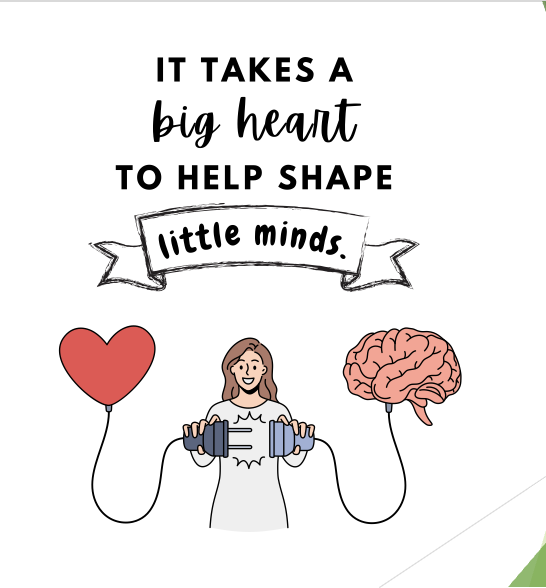
As part of presentation at Language World #LW2026 I intended to share a couple of examples or ‘case studies’ that exemplified what I was saying about the interplay between heart and mind in language learning, and the need to engage both for optimal success.

The first I was able to explain but time was against me and the second was left untold. Below, I share both.
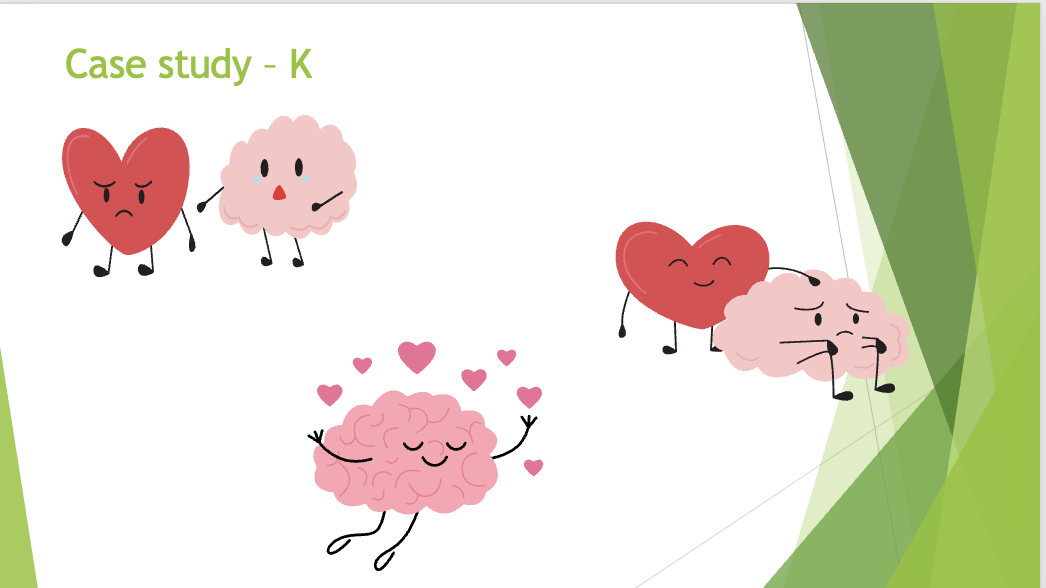
The first concerned a pupil I called K.


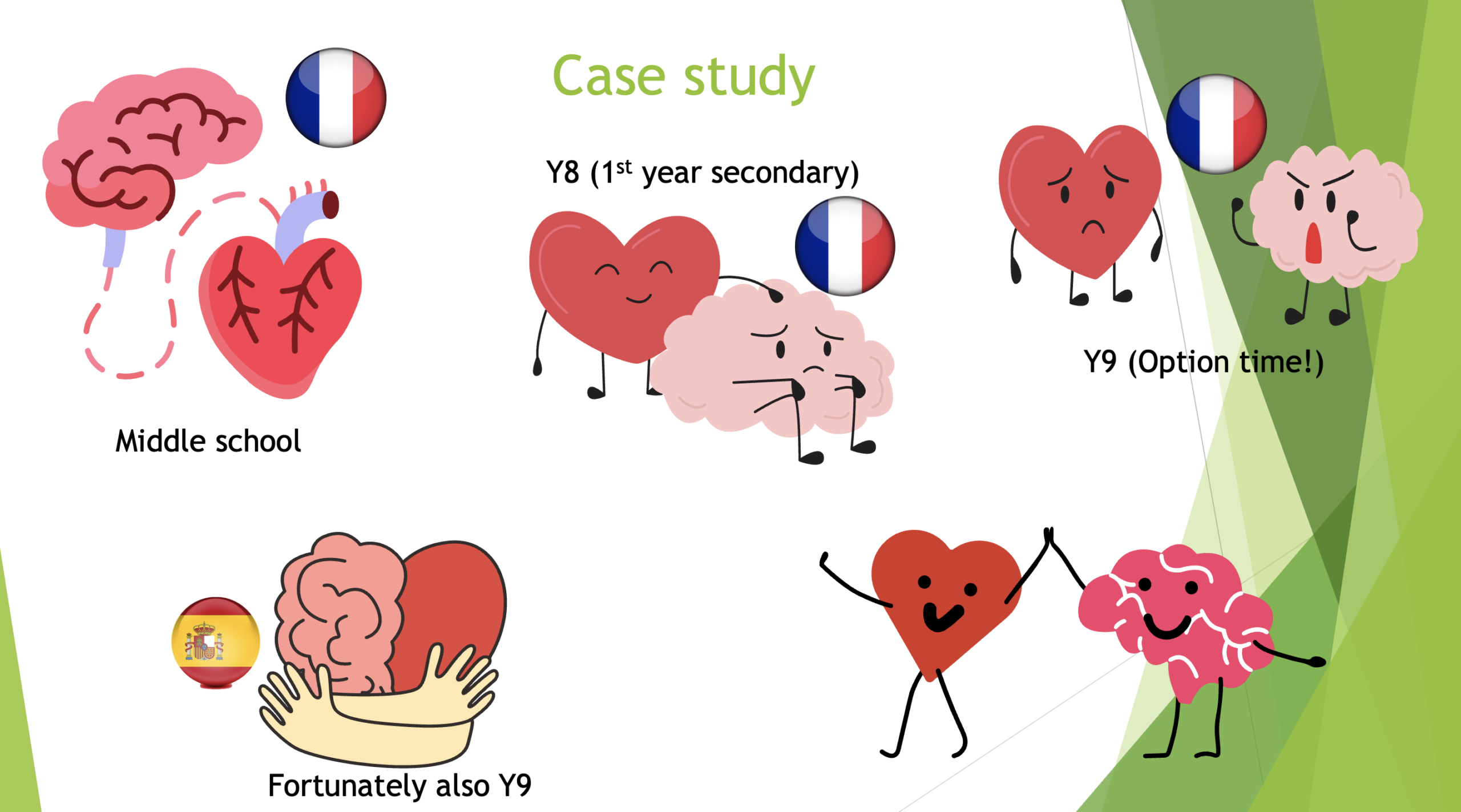
In Y3 he struggled to engage in Spanish lessons. His feelings of self efficacy were very low and his expectancy was low so he had little to no motivation. His response when questioned was “I can’t do this. My brain hurts. It’s too hard.” His heart and mind/brain were upset.
Having discovered this, we had a few low key chats outside lesson time, initially not even about Spanish. When he said it was hard, I acknowledged his feelings and talked about how it was my job to help him and make his brain “hurt less” as he put it; we can do it together. I offered support to build his confidence and praised any effort he made. He began to see that he could do it and experienced small successes – he started to enjoy lessons and his heart was in it.
After the summer holidays, K came into Y4 and began the year slowly but with growing confidence. This term there has been an amazing difference – he sees himself as a language learner, experiences success, and is confident to participate. His work isn’t perfect – sometimes he gets overexcited and goes a bit ‘rogue’ and he’s obsessed with Spanish being spoken outside Spain – but he bounces into lessons, wants to talk and is so excited about everything he achieves.


The second case study was more personal as it is my language learning story.
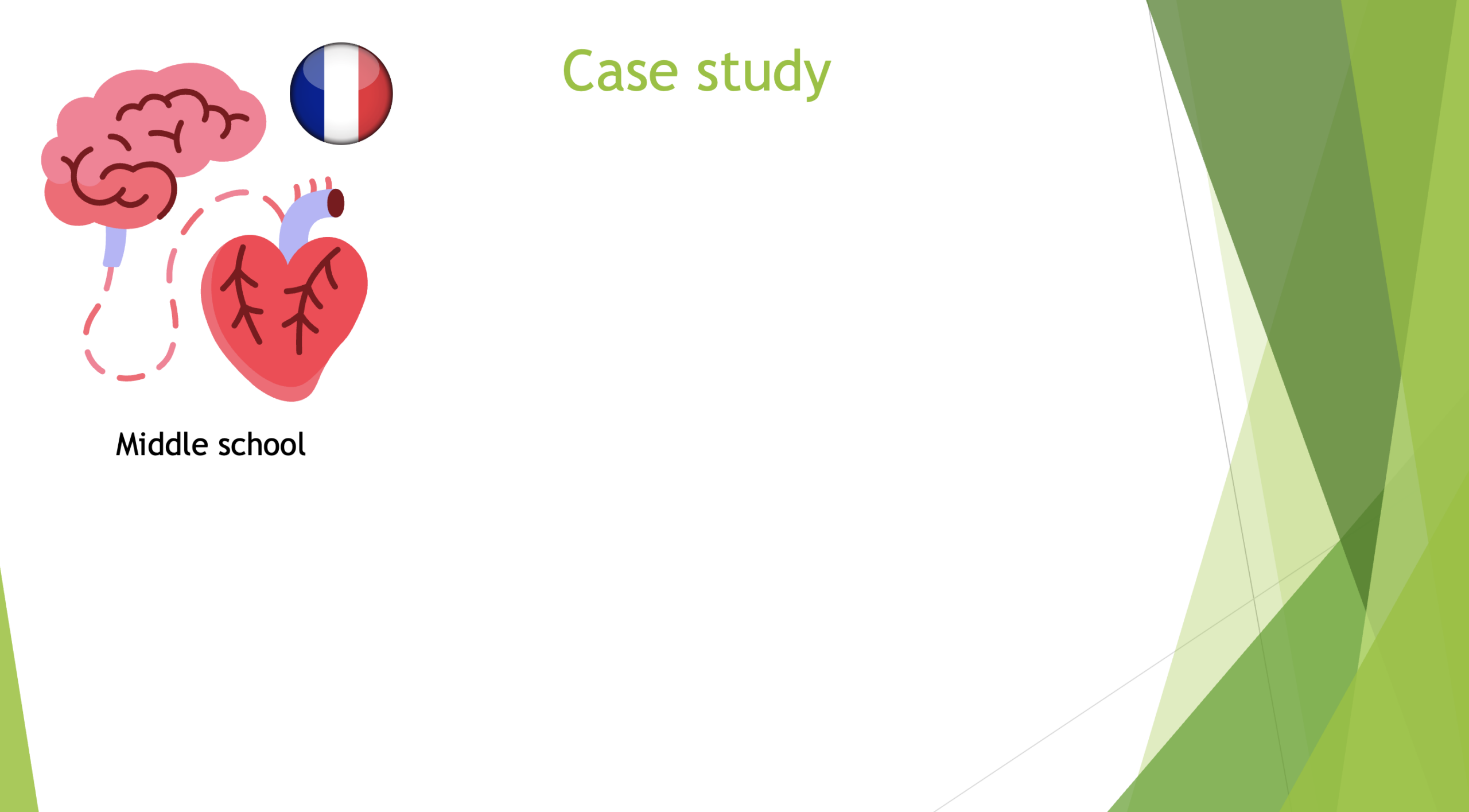
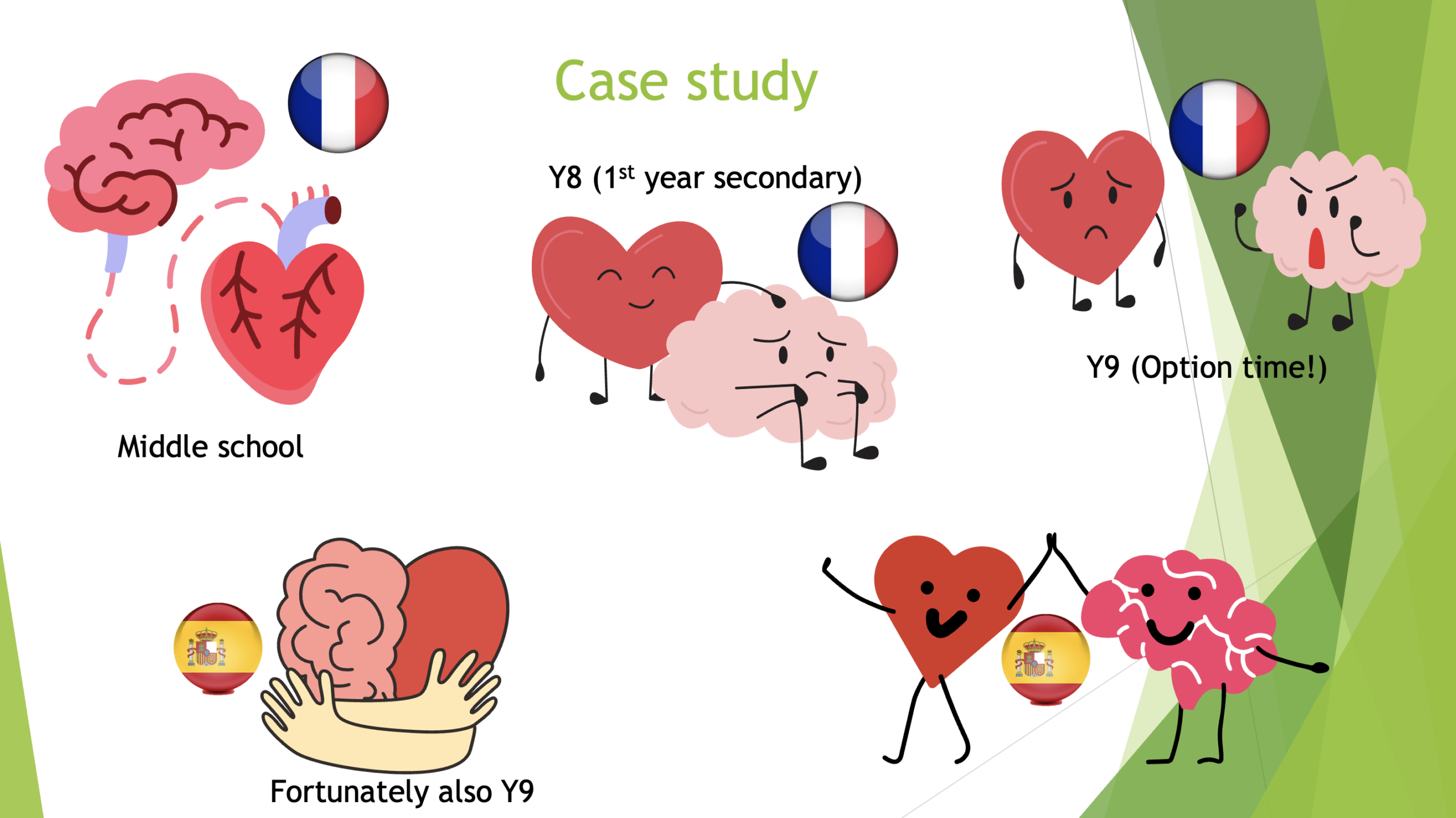
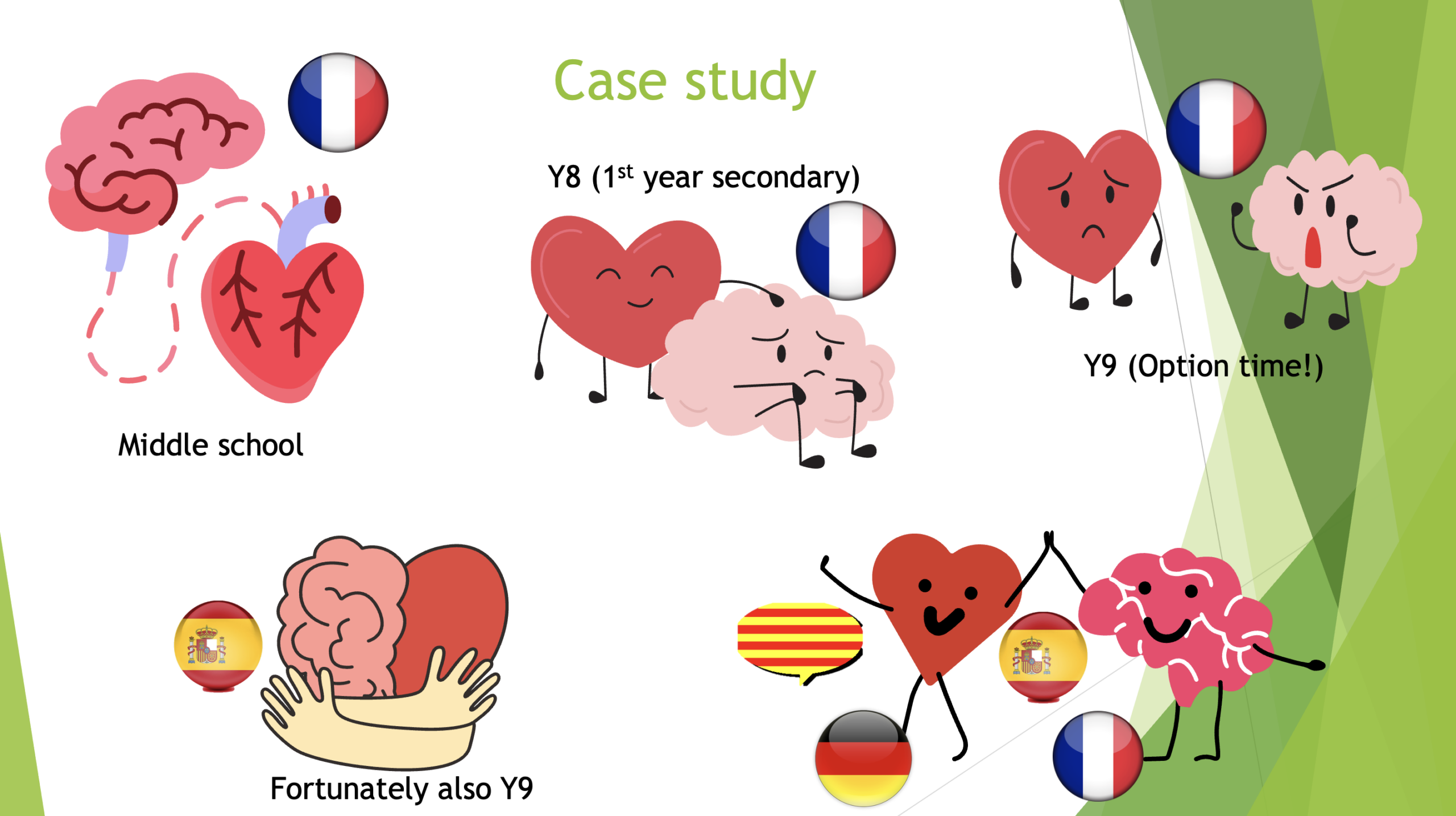
When I started middle school, I began to learn French. I had lovely teachers – Mrs Reeves and Mrs Whiteway – and really enjoyed learning. I’d happily get 100% in vocabulary tests and loved translating booklets about Nicole and Xavier – I remember Xavier falling into a river and shouting “Zut alors! Mon tricot!” My brain enjoyed the challenge of deciphering these unfamiliar words using a dictionary and my heart was set on learning more. In fact my desire to be a teacher, and specifically a primary language teacher was born at this time.
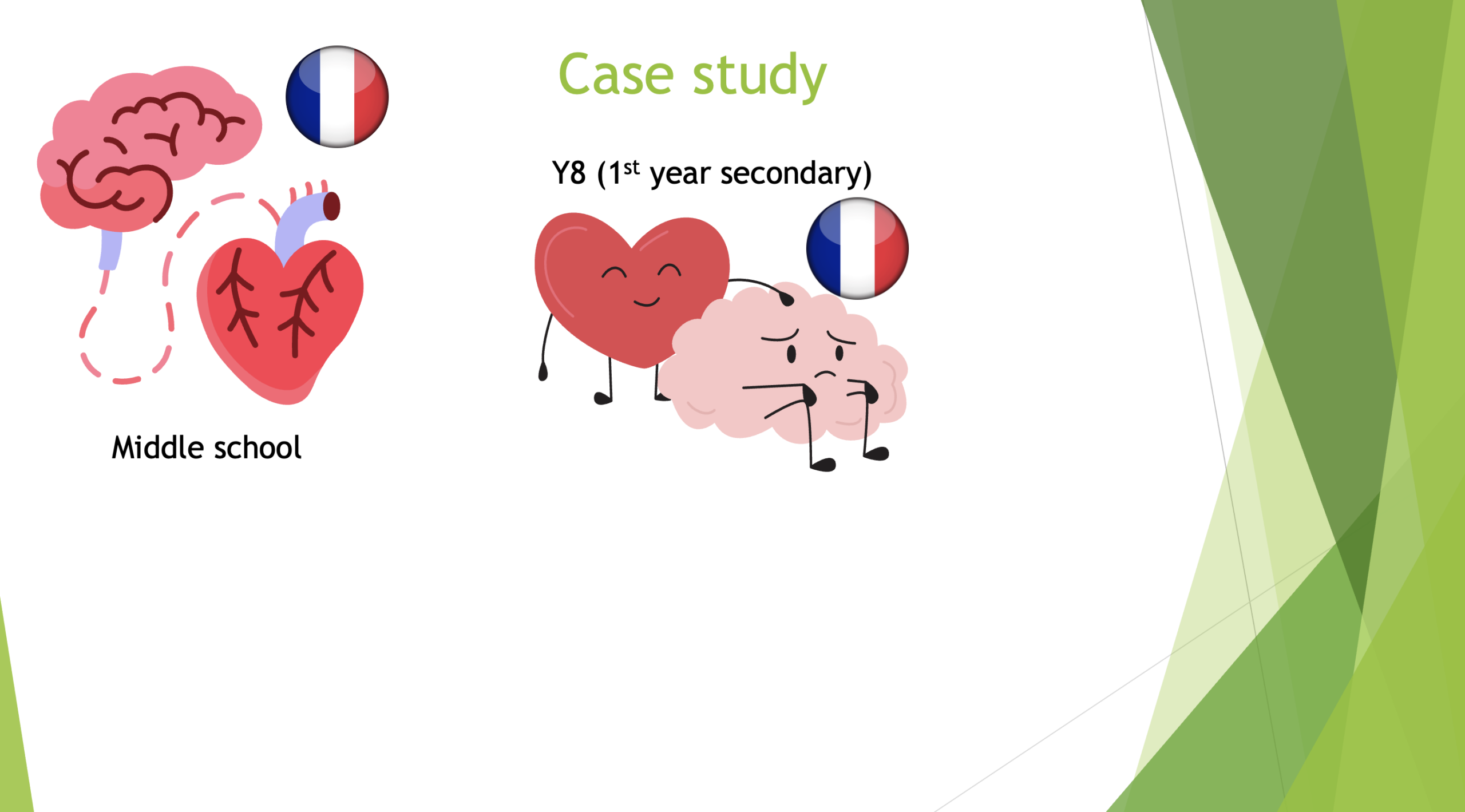
Unless you went to one of the King Edwards Grammar schools (I refused to take the exam much to the annoyance of my teachers) you moved school at the end of Y7.
Y8 dawned and off I went to secondary school and French lessons continued. You’d think I’d be really pleased. Initially I was, as was my teacher who loved my ability to consistently score high marks at Dictée and string sentences together. But my brain was unhappy as there was no challenge; I was repeating everything I’d learned at primary and I was bored. My heart was losing the battle.
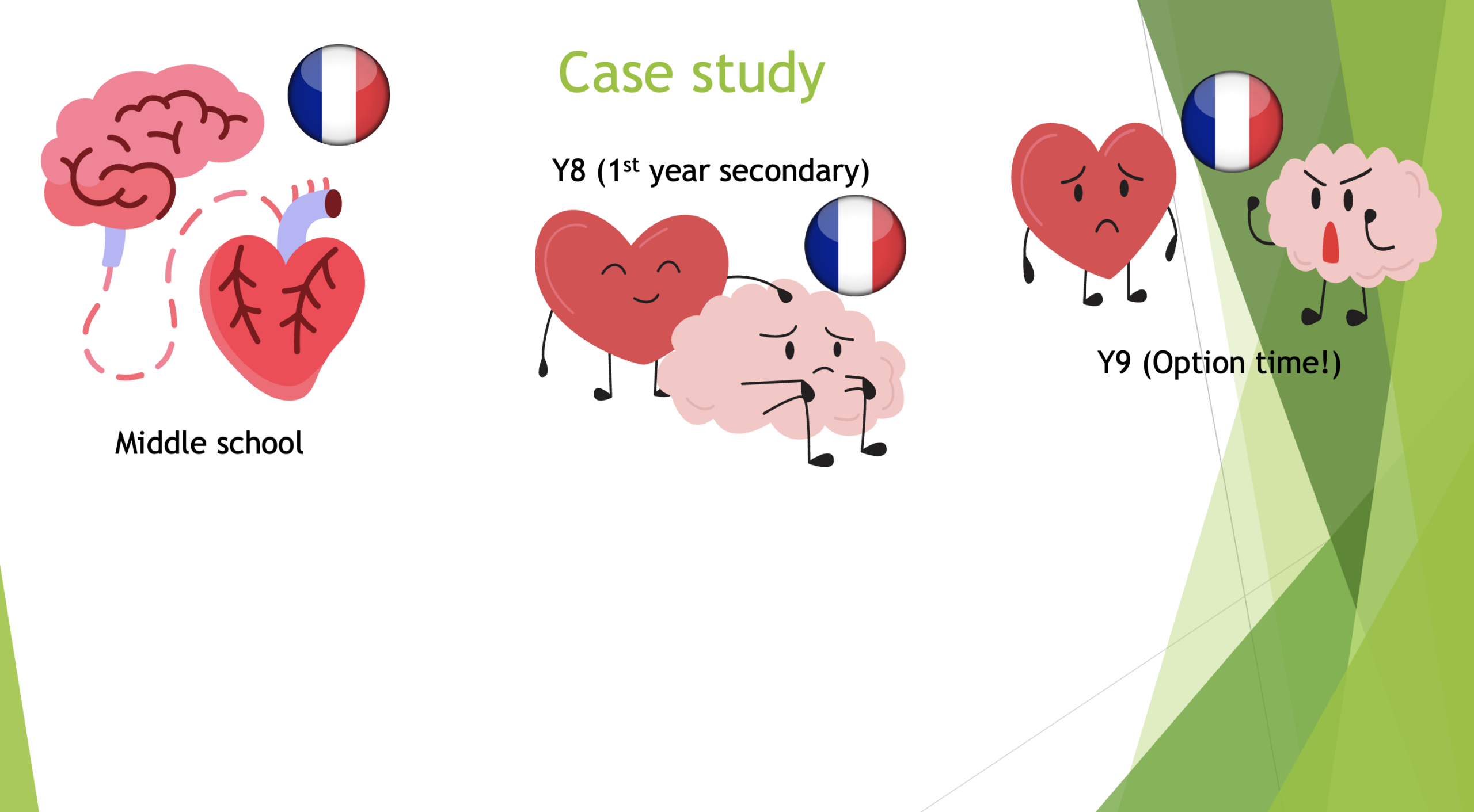
Come the time to choose my options for KS3 and although I was still successful and scored top of my class in our French exam, I was completely fed up with the lack of challenge and there was no way I was choosing French, no matter how much my teacher pleaded with me. I was out of love with French and all that joy and passion I’d had were gone.
This could have been a very sad story but, as you can probably surmise from the fact that I am a language teacher, that’s not the end of the story!
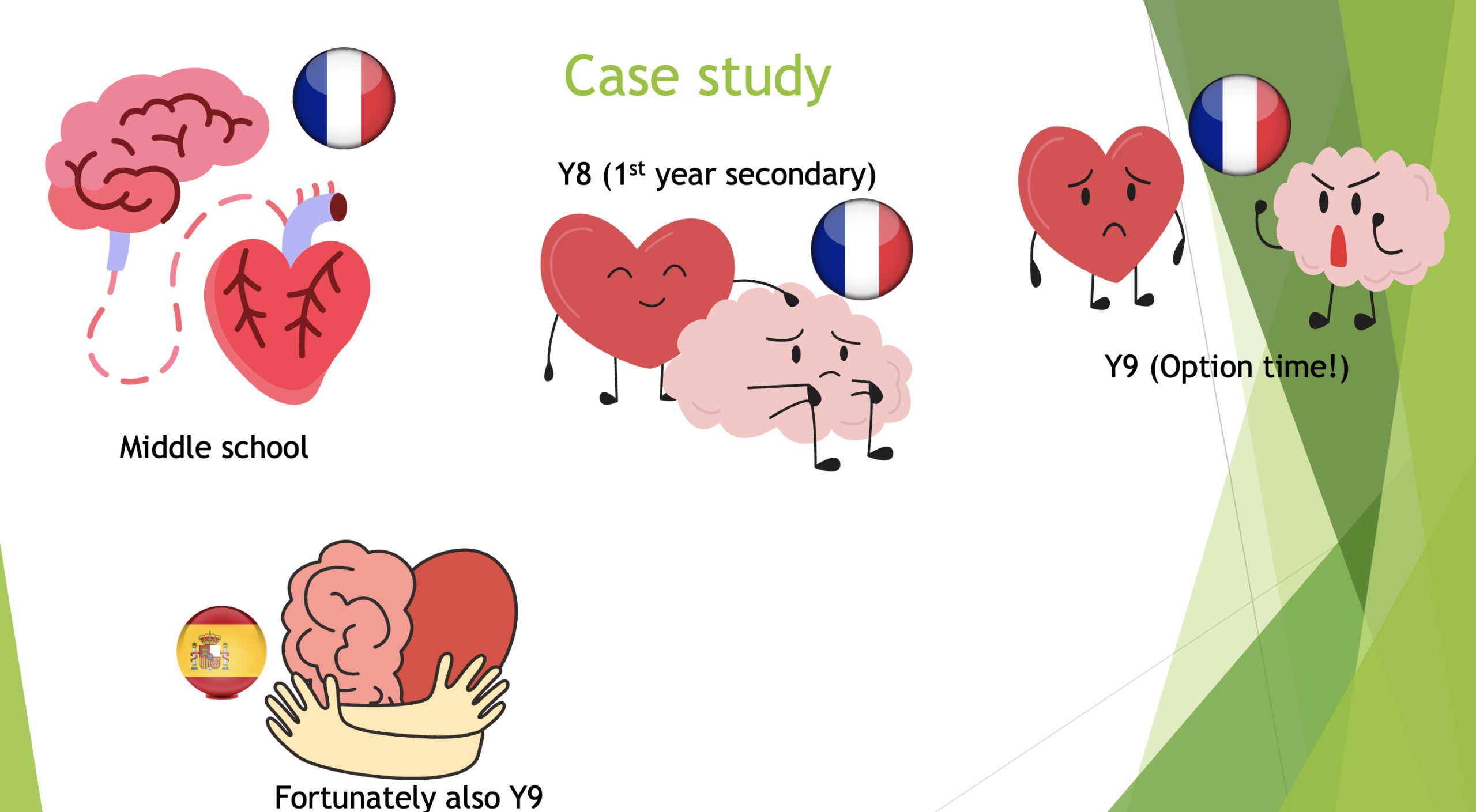
Fortunately, if you were any good at French, in Y9 you had the opportunity to start Spanish or German depending on which half of the year you were in. Having first been to Spain as a baby, travelling in my baby car seat bolted to the floor of my parents’ Morris Minor, and visited several times over my childhood years including being flooded out of our tent in Salou at the age of 5, I was pleased I was in the Spanish half. In class I met Señora Sánchez-Richardson who I can only describe as a crazy Colombian phenomenon who intrigued me and inspired me from day 1. She was strict, demanding, had the highest expectations and the driest sense of humour. Her favourite phrase was ‘Really?’ said with a raised eyebrow and look of incredulity! Every lesson I was challenged to learn not just words and grammar but also little nuggets of culture and ‘real life’ Spain. I talked about my undying love for and gratitude to Señora Sánchez-Richardson at ILLC 5 in 2015 but it’s worth repeating. Continuing the analogy – she engaged my brain with her academic rigour and captured my heart with those snippets of life, nurturing my love of languages back to life. Her name was Luz – quite literally a light in my life!
GCSE Spanish was a no brainer and then A level Spanish – Señora S-R continued to teach me joined by Mrs Gunning from the grammar school as we had half our lessons by ‘consortium’ and I discovered Spanish literature. Heart and mind together, skipping happily!
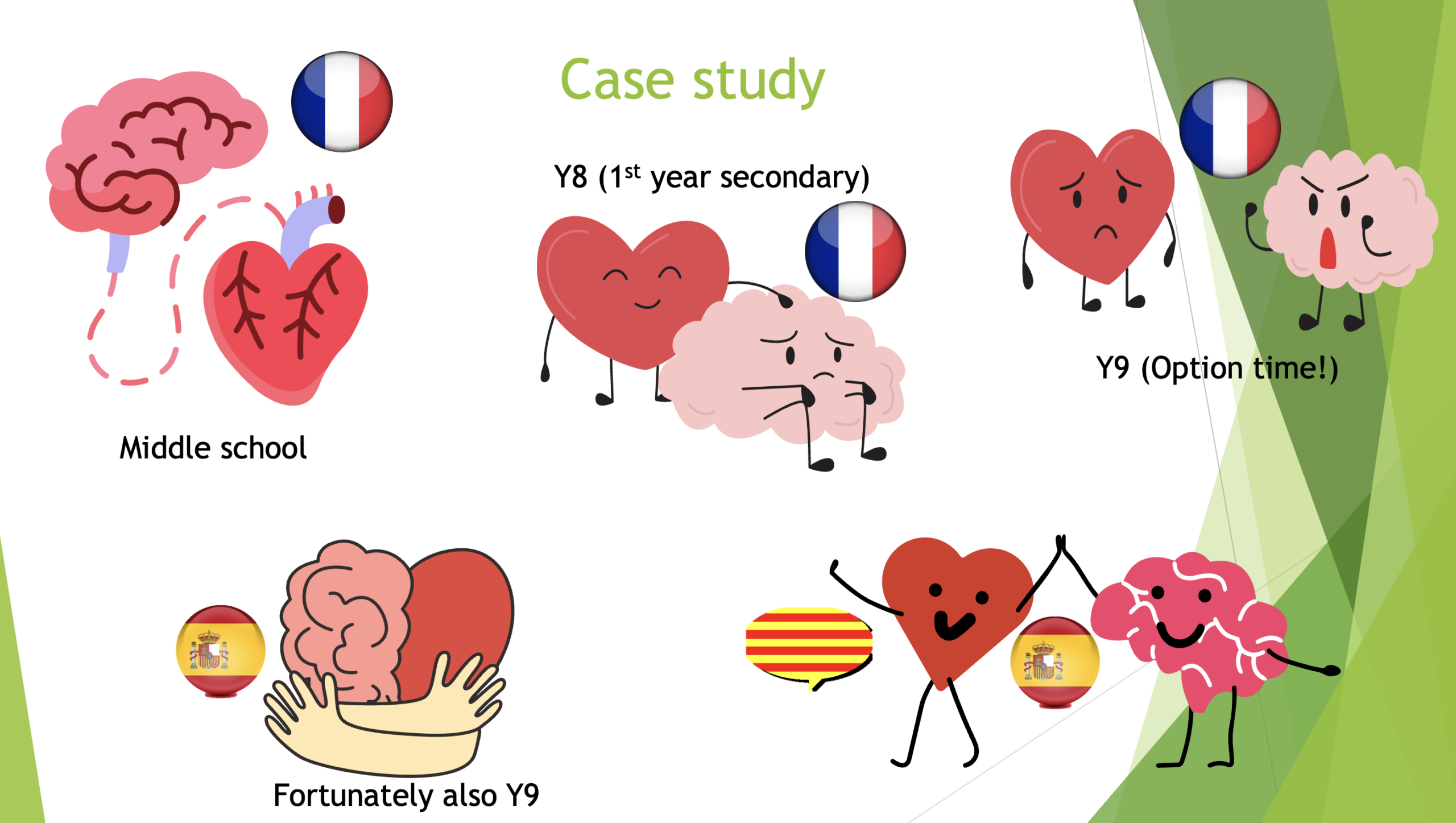
University beckoned and a degree in Spanish. I did look at doing French as one of my 1st year options (you had to do three subjects and I was doing Spanish and English Literature) but without a GCSE it wasn’t possible. Very annoying! In the second year I learned Catalan with the enigmatic Professor Yates and spent a year developing a Mallorquin accent at Universitat des Illes Balears. Years later, this would come in useful when my school was involved in a project with Barcelona, and cause great amusement and then delight to the children who weren’t expecting me to speak their language albeit with an accent that they said made me sound like a peasant!

And my love of language learning continued. Sadly by the time I was old enough to train, it wasn’t possible for me to train as a primary teacher with a language speciality but I did become a teacher – of Spanish and French. In fact, my second job was taking over from my beloved Señora Sánchez-Richardson as Head of Spanish. (She’s also responsible for me joining ALL!) After ten years in secondary I left to follow what I really wanted to do and started to teach primary first at a Prep school and then at my current school. Heart and mind were once more happy and in synch. Twenty plus years later, I still love it.
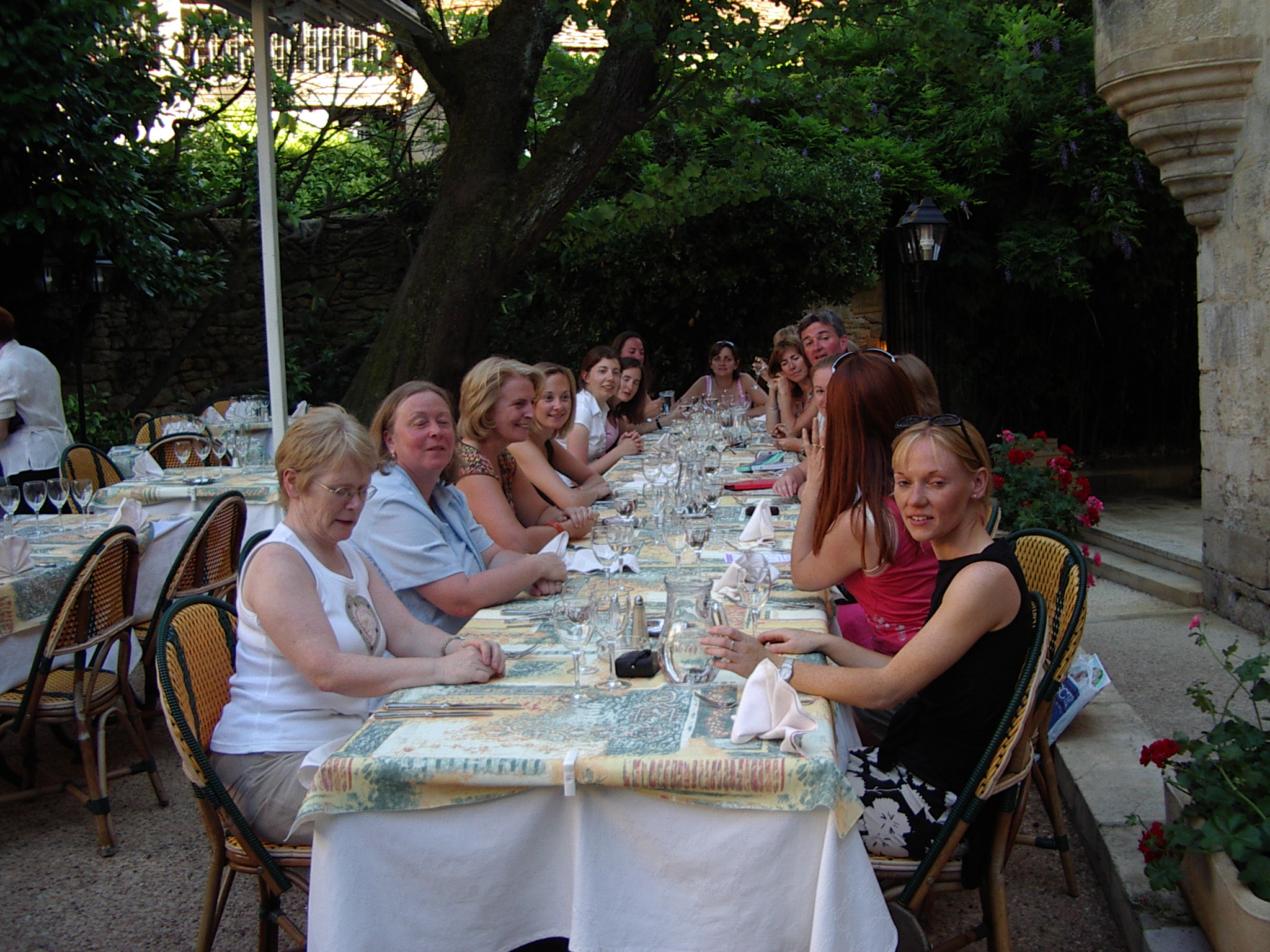
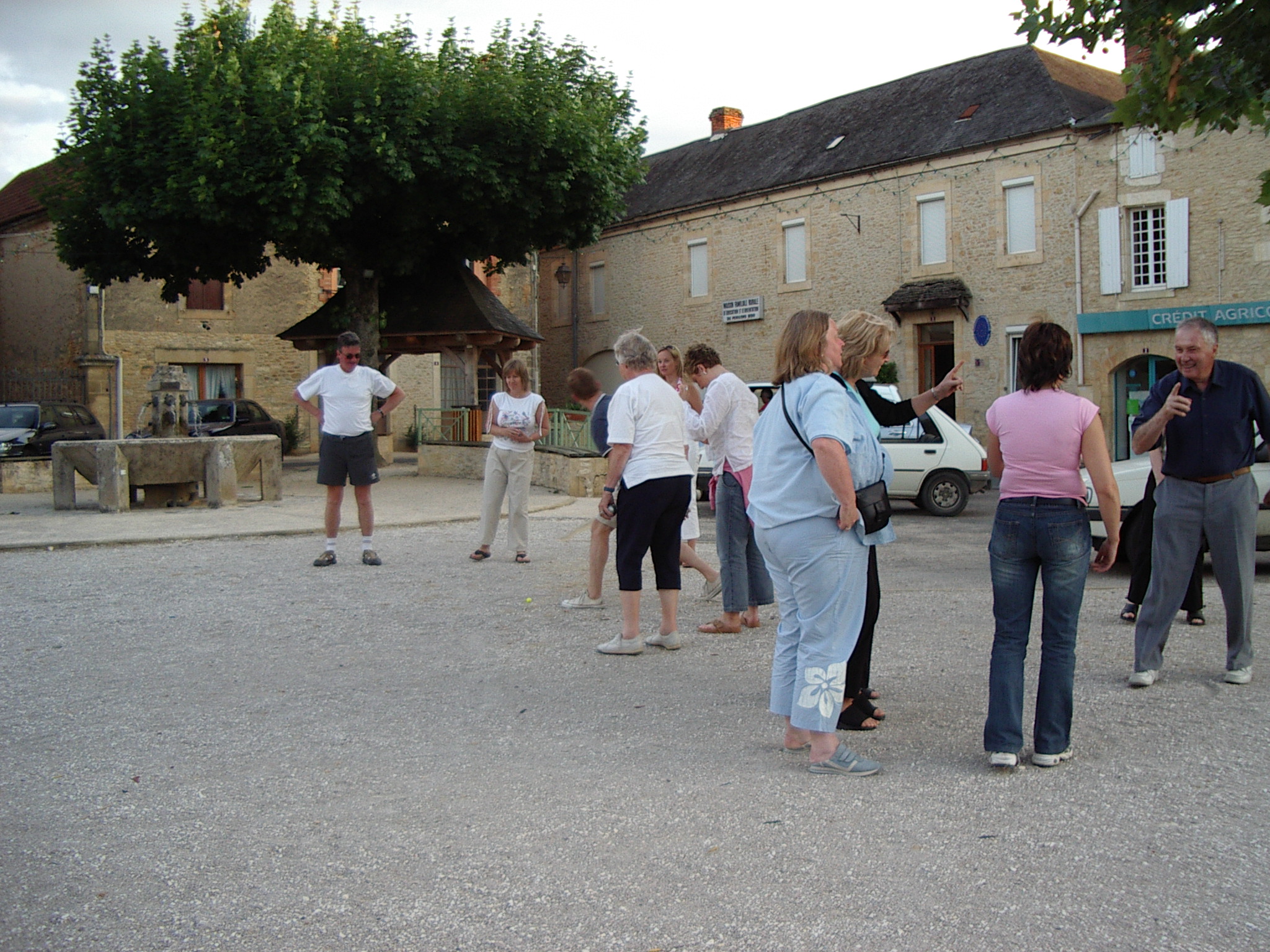
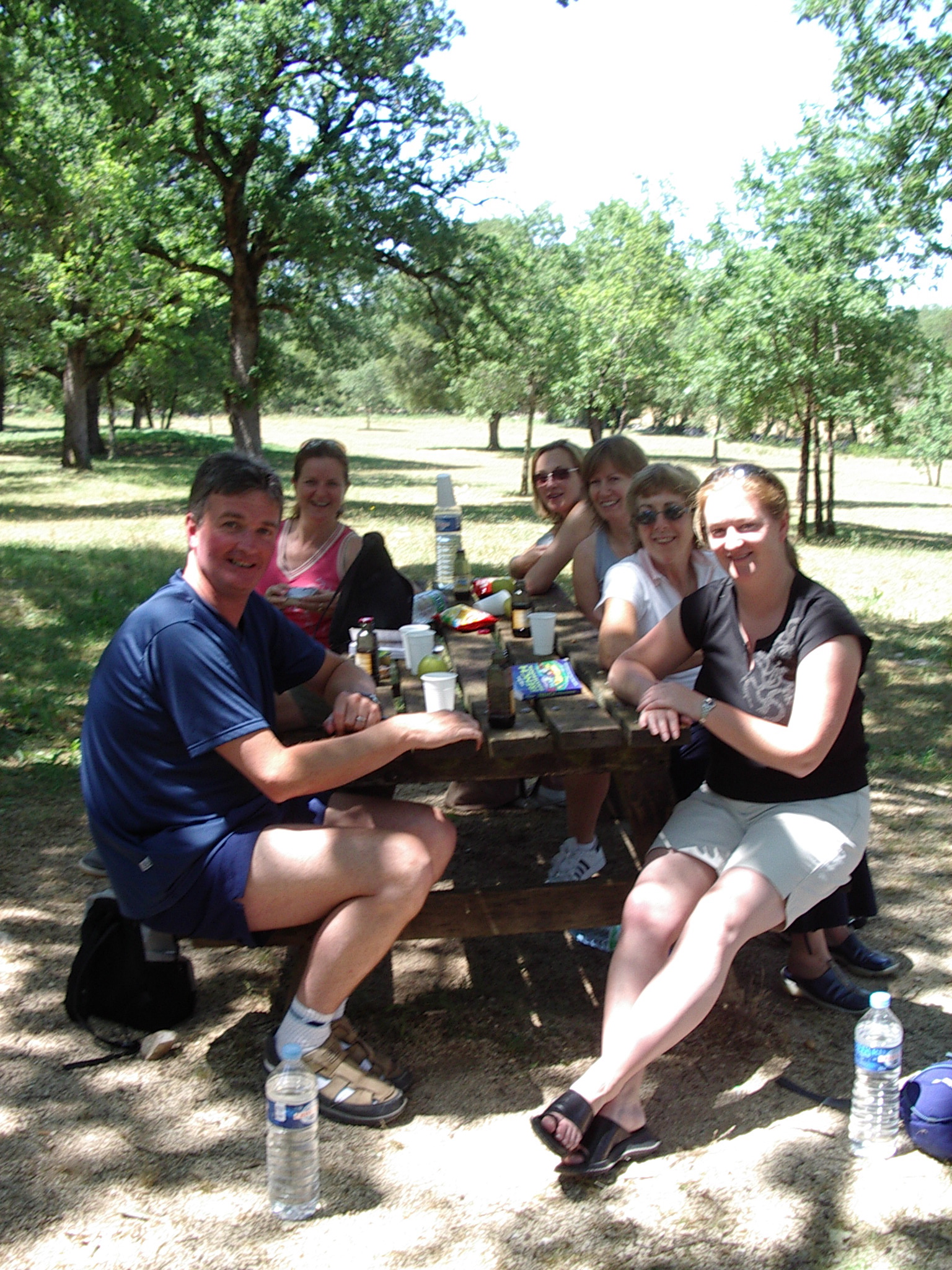
Whilst at the Prep school, I asked to go on a course all about primary pedagogy and French – and the principal said yes. So, leaving my little boys in the care of Mr S, off I went to Salignac in the Dordogne for a week with LFEE and the wonderful . It was really great course with some brilliant people. Not only did I get to connect with my Scottish roots – most of the other participants were Scottish – I also learned lots. However, the most important thing of all to me, and the thing that I will always remember is that I fell back in love with French. As my mind retrieved vocabulary and grammar hidden in the filing cabinet of my brain, my heart began to beat faster and I remembered why I had fallen in love with it in the first place. I remember bursting into tears and blurting out “I love French again!” Thank you Richard (and Elise) 🫶
I went to evening class to carry on my French – until they were stopped! – and then started a German course that led to a certificate, also at evening class. My Dad fell seriously ill and I missed a whole block of lessons but I’d paid for the exam so I turned up and, thanks to my language learning skills and a bit of logic, I passed (and my mark wasn’t too shabby!)
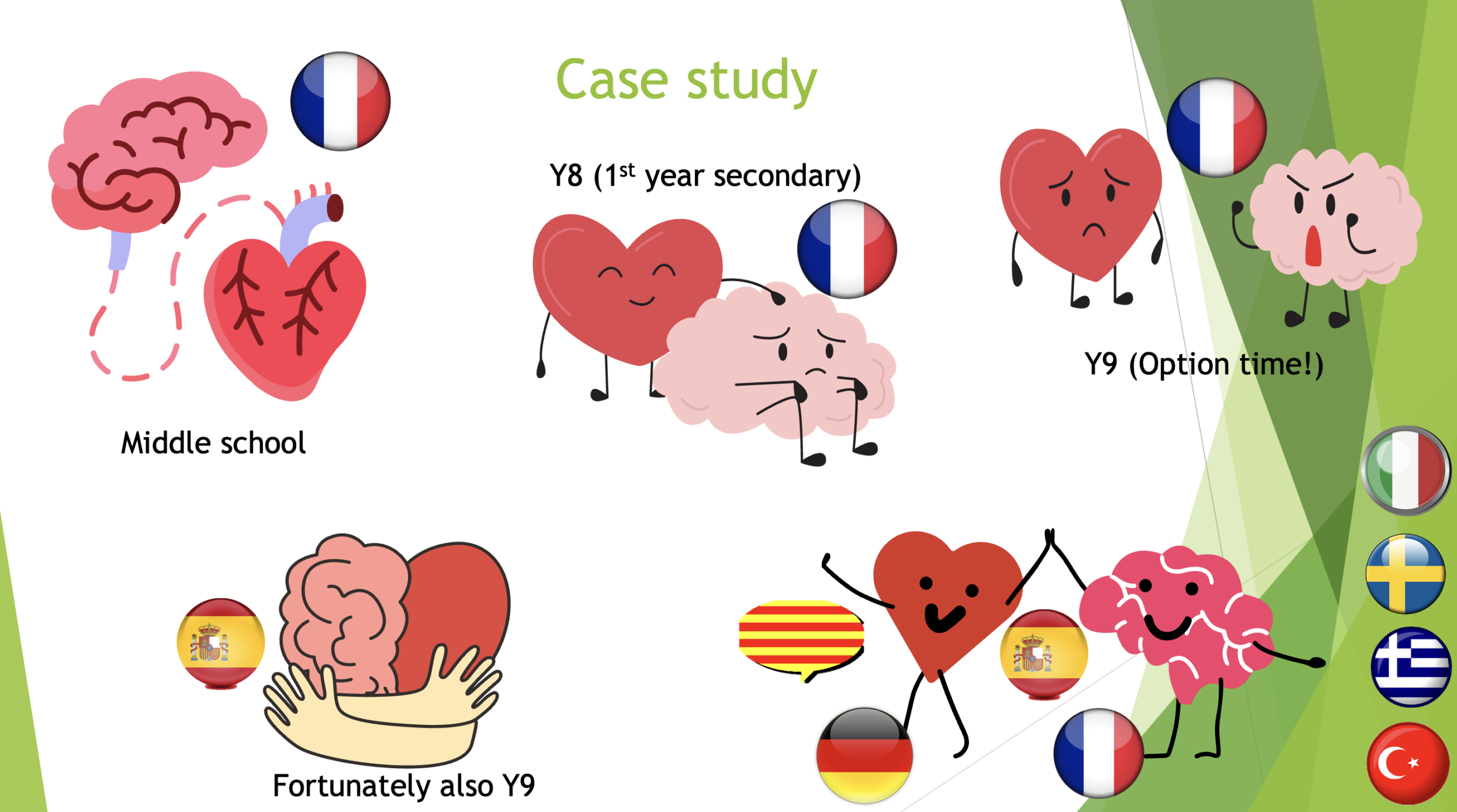
Fast forward a few years and my husband’s job took us to Switzerland for a couple of years and that German was useful – although most of my neighbours preferred to speak to me in English as it wasn’t Schweizerdeutsch. Classes got me to A2 level German. Heart and brain are happy with German because it’s so different from other languages I know and I love the expressions and compound words. I admit that I’ve probably used German more since we came back to England than I did in Winti but I tried really hard! I’m now B1 (according to Duolingo whose course I have completed now!)

I find it really hard when I can’t communicate with people so prior to holidays I try to learn some phrases to help. I’ve tried Italian and Swedish (my husband worked for a Swedish company for a while) – the former was a bit helpful, the latter not so as everyone spoke to me in English but did appreciate my efforts!
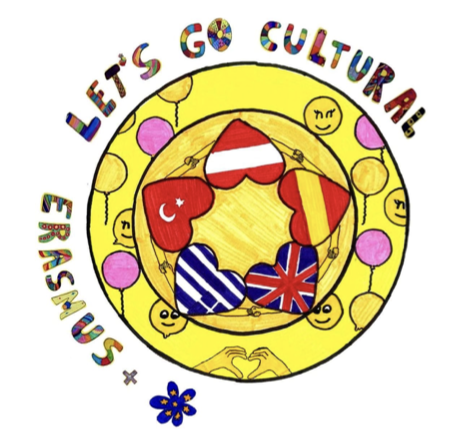
And when I was involved in an Erasmus+ project between my school and schools in Spain, Austria, Greece and Türkiye, languages once more linked hearts and minds. In Spain, I was called upon to translate from English to Spanish, and also Spanish to German at times, and was really frustrated that I couldn’t help the Greek and Turkish delegates that were struggling with English. I even had to translate a speech by a local politician without any warning – and it was on the local news! In Austria, we were expecting to do a lesson on Guy Fawkes in English but quickly realised it was going over their heads so off I went, launching into as much German as I could muster- with a lot of acting and sound effects – apparently pretending to be a feuerwerk was much talked about! Come the mobilities in Türkiye and Greece, I was worried that I wouldn’t have the same experience as I had in Spain and Austria, being able to talk to the pupils in their own language, so I made an effort to learn some very basic Turkish so I could at least say my name and ask how people were plus some courtesies and essential phrases!
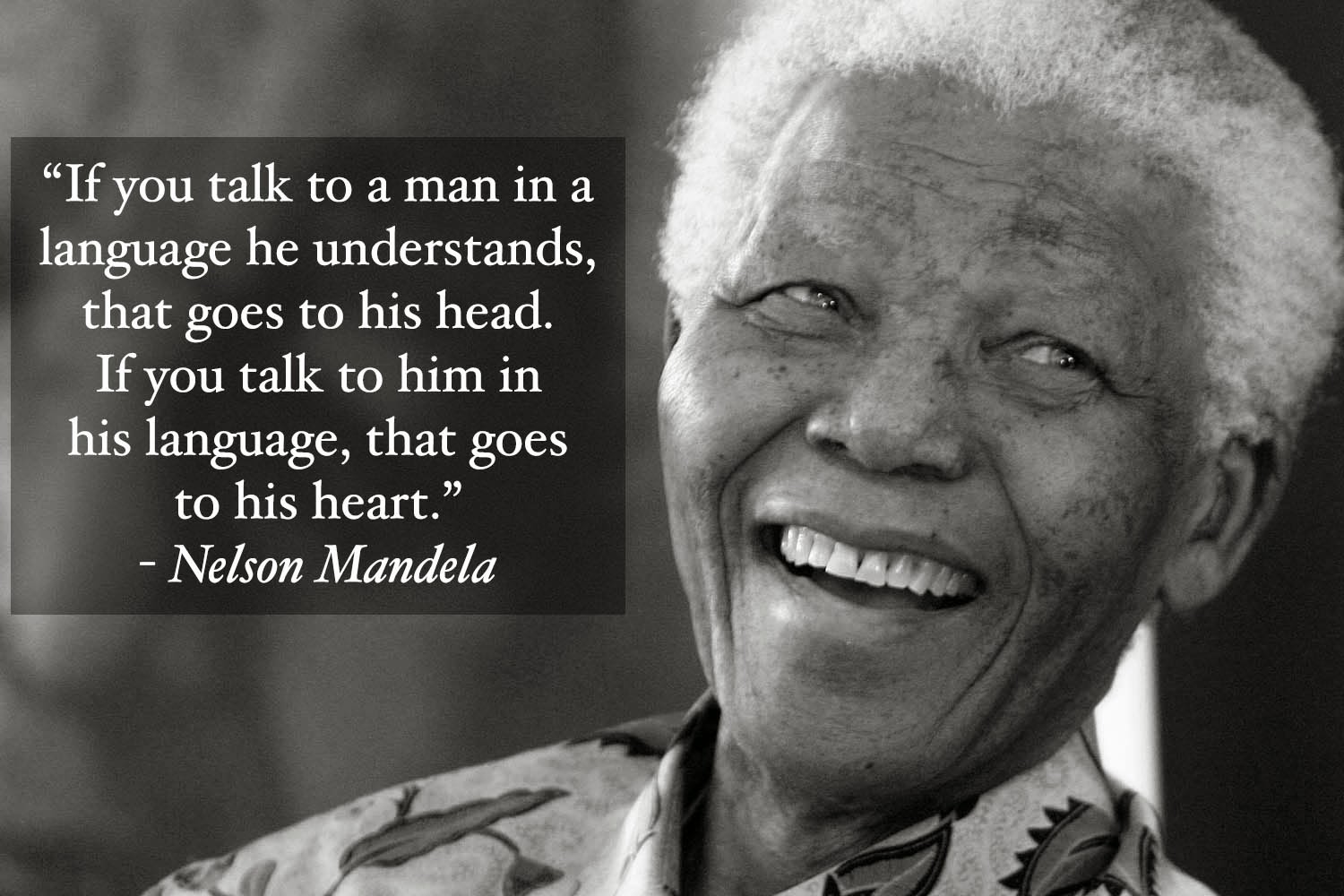
This quotation has always spoken to me and was proved true in Türkiye where as soon as I spoke two phrases of Turkish I was mobbed by children and followed around like a popstar. It didn’t matter that I really didn’t know much more but I’d spoken their language and they wanted to speak to me. I did learn a little more – especially how to say stop! and careful! as at one point I was nearly knocked off my feet by a swirling mass of children wanting a sticker – but a little went a long way, and our hosts were also really appreciative. Prior to the Greek mobilisation, two of the Austrian partners joined in the language learning and we all had a go at learning some Greek – to the point that it became a bit of a thing and we were given a Greek ‘exam’ Once more, using my mind, led by my heart desire to communicate had engaged hearts and minds.

This has ended up being longer than I’d planned but I wanted to tell the story as to me it perfectly explains my point about knowledge (what you know) not being enough to sustain learning – your heart (how you feel) has to be engaged too.

And that goes for teachers too!
Last weekend I was privileged to present once more at ALL Language World, this year held at Hinckley island.

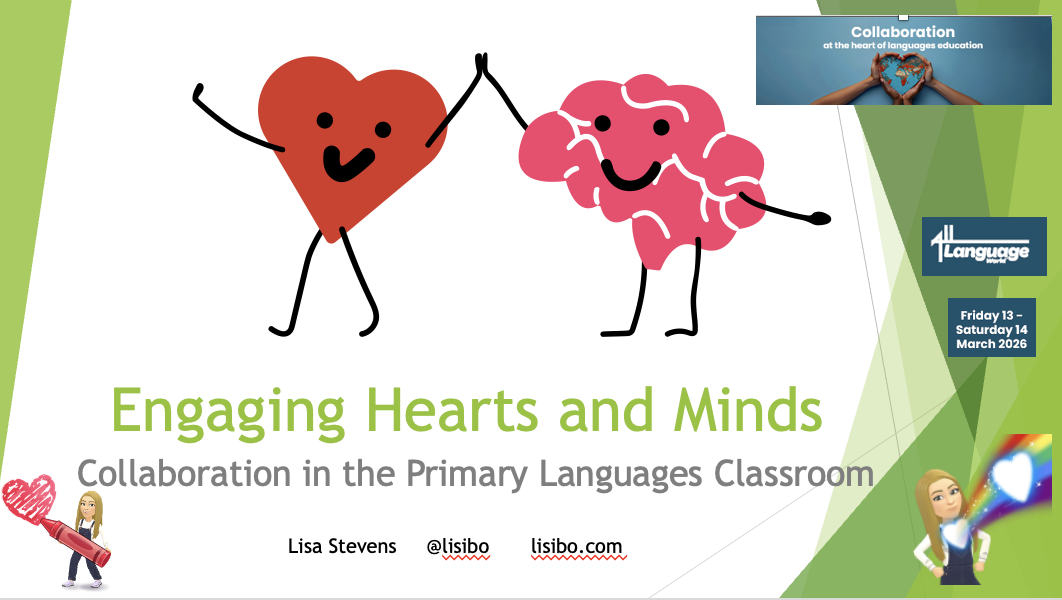
The theme of the conference was COLLABORATION and my session was entitled Engaging Hearts and Minds.
I’ve been playing with Google NotebookLM and asked it to summarise my presentation:

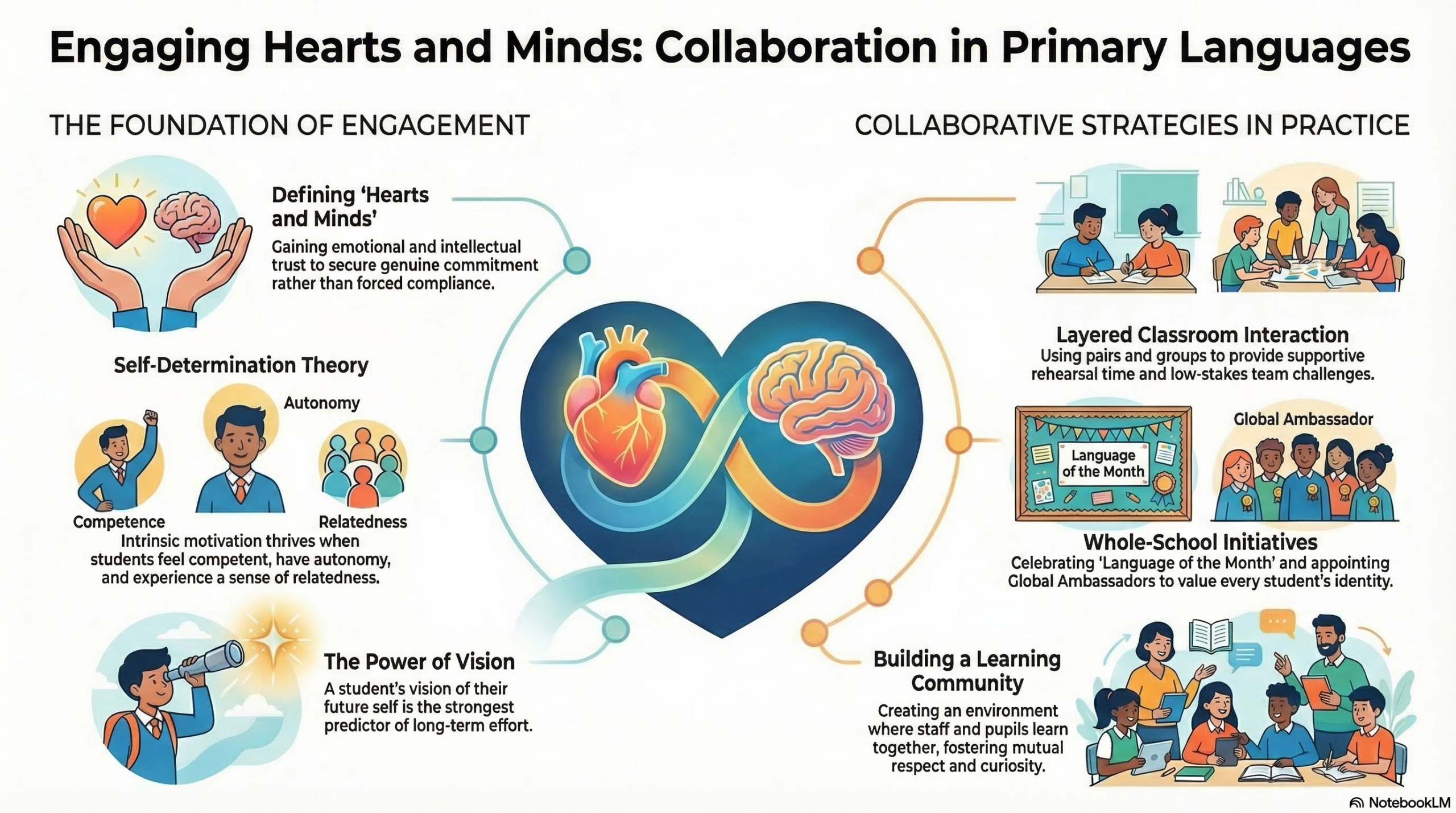
This presentation by Lisa Stevens advocates for a holistic approach to primary language education that focuses on connecting with students’ emotions and intellect. By fostering international partnerships and cultural exchanges, schools can broaden pupils’ worldviews, enhance their communication skills, and dismantle harmful stereotypes. The material highlights how cross-phase collaboration between primary and secondary teachers ensures a smoother academic transition for young linguists. Furthermore, the use of character-based learning, such as the “Language Superhero Squad,” helps students embody virtues like resilience, curiosity, and respect. Ultimately, these initiatives aim to elevate the status of languages within the curriculum while developing empathetic global citizens.

I admit that I was intrigued by the infographics that I’ve seen Jerome Nogues sharing on social media so i had a go, uploading my slides to see what I’d get. What do you think?

I was also intrigued to see if it could write my blog post for me. Didn’t do a bad job I have to say. Some minimal editing (removing American spelling mostly!!) here it is!

More Than Words: 5 Surprising Ways to Win “Hearts and Minds” in the Language Classroom

We’ve all been there: standing at the front of the room, pouring our passion into a lesson, only to be met with a sea of blank faces or, perhaps worse, the “polite compliance” of students who are doing the work simply because they have to. We don’t just want them to memorize verbs; we want them to find their voices. The relatable struggle for every language educator is bridging this engagement gap—moving students from “forced compliance” to a state where they are learning because they truly want to.

The secret lies in a philosophy often discussed by Lisa Stevens, a renowned language teacher [that made me smile] at Whitehouse Common Primary, Member of ALL, and British Council Ambassador. She champions the “Hearts and Minds” approach, a strategy that moves collaboration from the periphery to the very centre of the classroom. It is about fostering a community where emotional and intellectual support creates the trust necessary for deep, long-term learning.

——————————————————————————–

1. “Hearts and Minds” is a Strategy, Not Just a Feeling

Winning “hearts and minds” is often mistaken for a fuzzy, “soft” concept. In reality, it is a sophisticated pedagogical strategy. Dictionary and historical definitions describe it as gaining emotional and intellectual trust, specifically in contrast to “forced compliance,” where students accept a situation only because they have no alternative. In a primary language setting, we aren’t seeking to prevail through the superior force of grades or sanctions; we are making emotional appeals to sway our students toward a genuine love for communication.

“Mrs Thatcher said that economics is the means, and changing hearts and minds is the goal.”

Just as economics was the means for Thatcher, in our classrooms, the target language is the vehicle—but the true destination is a profound transformation in student mindset. We use the language to reach the heart, ensuring students feel safe enough to take the intellectual risks that fluency requires.

——————————————————————————–

2. The “Vision of Self” is Your Strongest Motivational Lever

To sustain effort over years rather than weeks, we must tap into how students perceive their future selves. Research by Dörnyei (2016) suggests that the “Vision of Self” as a second-language (L2) user is the highest-order motivational force. If a student can’t “see” themselves as a person who speaks Spanish or French, their long-term effort will stall.

We can understand this through the “Expectancy-Value Theory” formula: E×V=M.

  • V (Value) represents the “Vision of Self.” If the vision is zero, the entire equation collapses, and motivation (M) disappears.
  • E (Expectancy) is the student’s belief that they can actually succeed.

This expectancy is built through the “Competence” pillar of Self-Determination Theory (Ryan & Deci). When we cultivate a sense of mastery, we fuel the intrinsic motivation necessary for the journey. According to this theory, motivation is powered by three essential needs:

  • Competence: The need to gain mastery and control over one’s learning environment (Essential for building “Expectancy”).
  • Autonomy: The need to feel in control of one’s own life and goals; fundamentally, it is about having a choice.
  • Relatedness: The need to experience a sense of belonging and a deep connection with other people.

“The vision of who students would like to become as L2 users seems to be one of the most reliable predictors of their long-term effort.” — Dörnyei (2016)

——————————————————————————–

3. Creativity Actually Needs Constraints

It sounds counter-intuitive, doesn’t it? We often think creativity requires a “blank canvas,” but the “Constraint Principle” (Boden, 1990) argues that total freedom can actually lead to cognitive paralysis. For language teachers, constraints are our best friends.

Think of the Sentence Builder—like the ¿Qué quieres? frameworks used at Whitehouse Common. By providing a limited “wall” of options (e.g., choosing between comer and beber, then selecting from a small list of foods), we aren’t stifling the child. Instead, we are giving them a safe structure that allows them to “play” with the language. Within these narrow bounds, students find the confidence to be linguistically creative without the fear of falling.

“Far from being the antithesis of creativity, constraints on thinking are what make it possible.” — Boden (1990)

——————————————————————————–

4. Collaboration is a “Team Sport” Within the Classroom

Collaboration should be a multi-levelled experience that turns the classroom into a “community of learning.” It begins with pair work (carpet partners) where rehearsal and “thinking time” provide the low-stakes support students need to build confidence. We then scale up to groups, using frameworks like “Voice21” to practice the “team sport” of turn-taking and building on others’ ideas.

The real magic happens during whole-class “Teacher vs. Class” or “Teacher + Class” dynamics:

  • “Get into my head”: A high-impact game where students must predict linguistic patterns the teacher is thinking of, building a shared sense of community and pattern recognition.
  • “Snowballing”: A primary process for building linguistic complexity where the whole class works together to grow a simple sentence into a masterpiece.

By aligning our lessons with school-wide virtues like Curiosity, Respect, and Resilience, we create a “family” atmosphere where mistakes are celebrated as a natural part of the team’s growth.

——————————————————————————–

5. International Links Break Barriers

Connecting with pen pals or global partners provides the “why” that makes the individual pieces of grammar and vocabulary fit together.

By looking beyond our walls, we achieve several high-impact outcomes:

  • Mirrors and Windows: Children finally “see” themselves and their own culture more clearly while gaining a window into the wider world.
  • A Tangible Purpose for Learning: Language moves from a “subject” to a tool for real communication, often leading to a sudden improvement in everything from speaking confidence to the neatness of their handwriting.
  • Prestige and Ethos: Languages are no longer “forgotten” or curtailed; they gain status within the school, fostering a global outlook where every student feels valued.
  • Challenged Stereotypes: Direct contact replaces preconceived notions with curiosity and awe-inspiring “WOW” moments.

One student at Whitehouse Common captured the human impact of this work perfectly:

“Everyone is different; if everyone was the same it would be boring. It will also prevent wars from happening so the world would be calm and peaceful.”

——————————————————————————–

Conclusion: Beyond the Classroom Walls

The “Hearts and Minds” philosophy is a call to move beyond rote instruction toward a pedagogy of connection. When we collaborate across borders and within our own classrooms, we aren’t just teaching grammar; we are transforming students into empathetic global citizens.

Are we just teaching our students how to speak a new language, or are we giving them a new vision of who they can become in a wider world?

If you are ready to move from compliance to connection and continue this journey of creative pedagogy, join the conversation by leaving a comment below. Let’s build those bridges together.

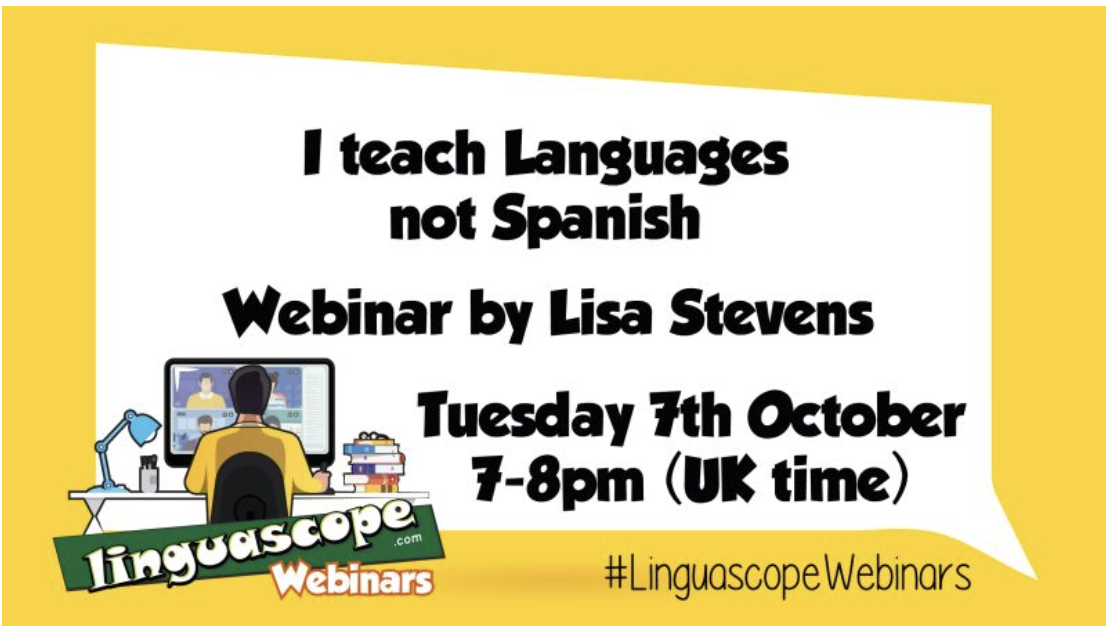
Really pleased to be delivering a Linguascope webinar next Tuesday 7th October. I’ve been asked several times but it’s never been a good time. This time, I was asked during a post conference reception last week and the date was near enough for me to be able to say yes immediately.

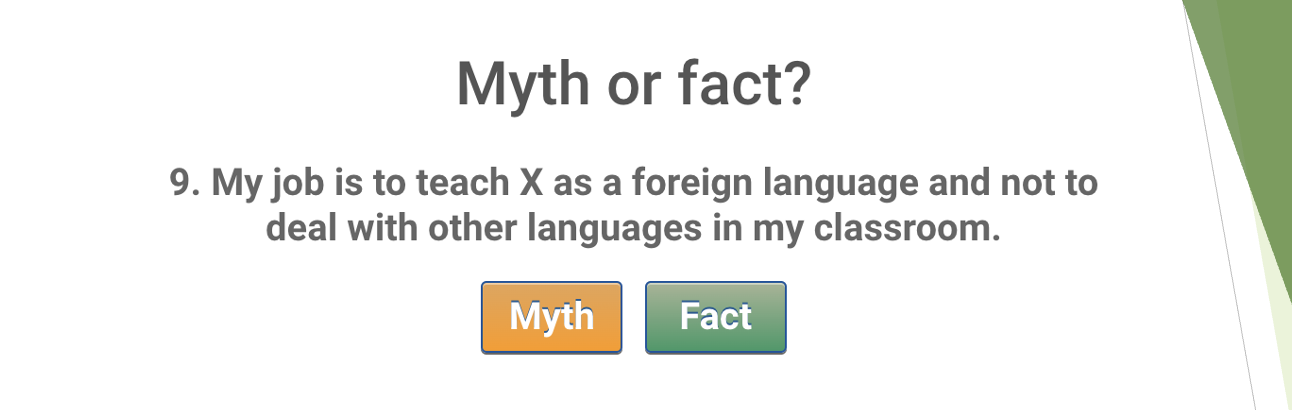
I’ll be talking about the importance to me of teaching languages rather than just Spanish:

Tuesday 7th October – Lisa Stevens will be talking about how her learners call her Señora Stevens, she doesn’t see herself as a Spanish teacher but as a teacher and explorer of languages. In this webinar, Lisa will explore this thinking, explaining why she feels it’s important to consider and value all languages, and giving examples of how it is possible when the Languages Programme of Study stipulates that over KS2 (aged 7-11) pupils must have made ‘substantial progress in one language.’

You can register for the webinar for free using this link

Looking forward to seeing you – at the start and end anyway as I probably won’t be able to see anything other than my slides when I’m presenting!

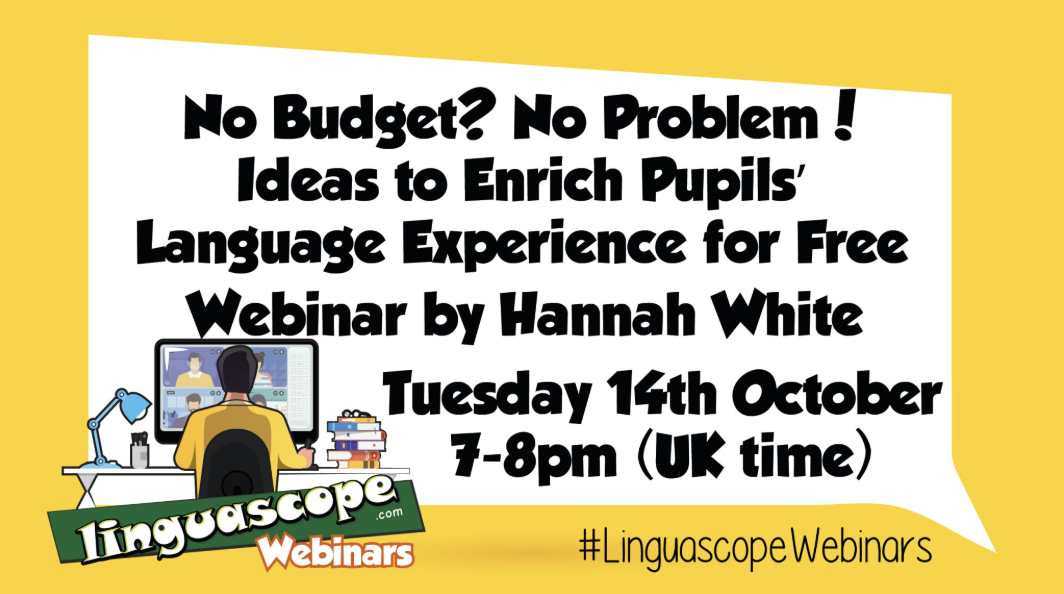
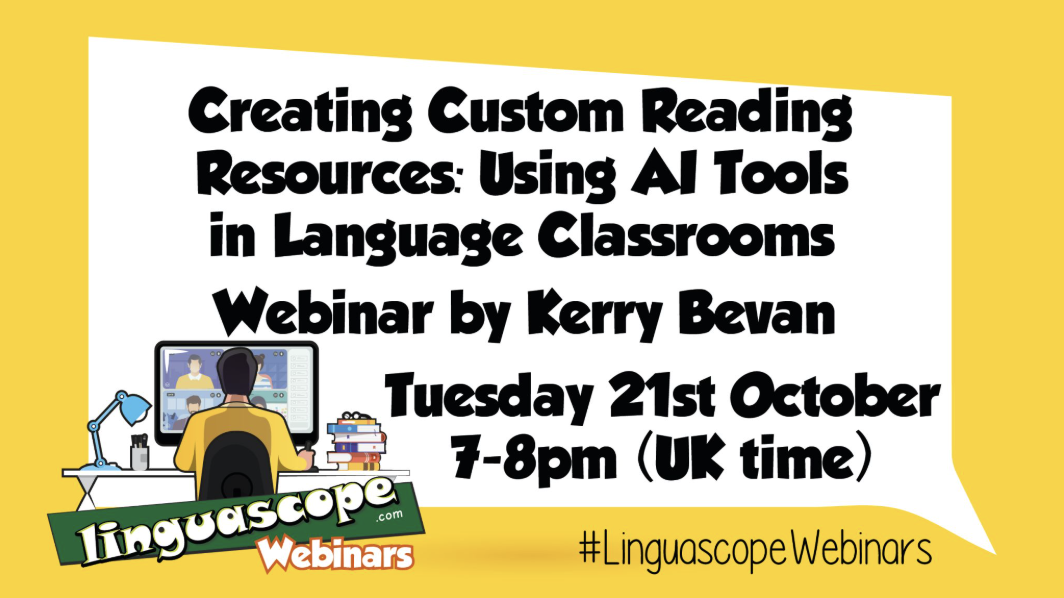
In the two following weeks you can also attend webinars by Hannah White and Kerry Bevan.

Tuesday 14th October – Hannah White will share 6 fully funded ideas for bringing additional language and culture into your classroom this year. Register here

Tuesday 21st October Kerry Bevan will be joining us just before the half term break coming to share her experiences tinkering and playing with AI but to create custom reading resources which have a huge impact on learners and language learning! Register here

All Linguascope webinars are free to register and free to attend live, and are not limited to attendees from the UK – all are welcome!

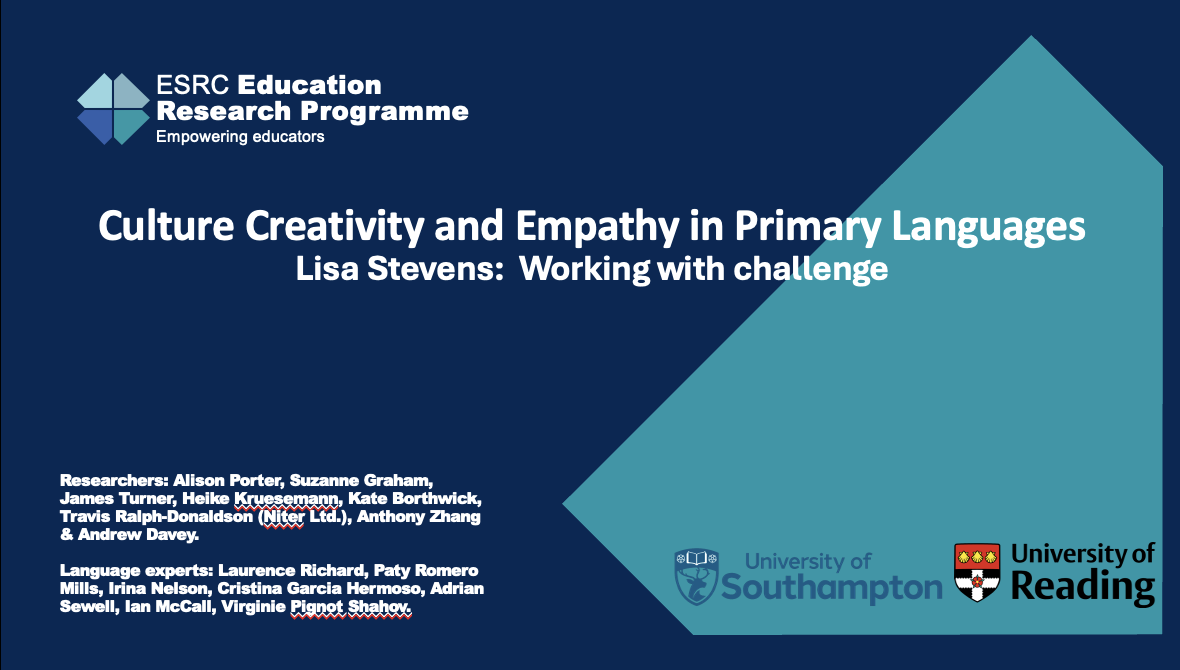
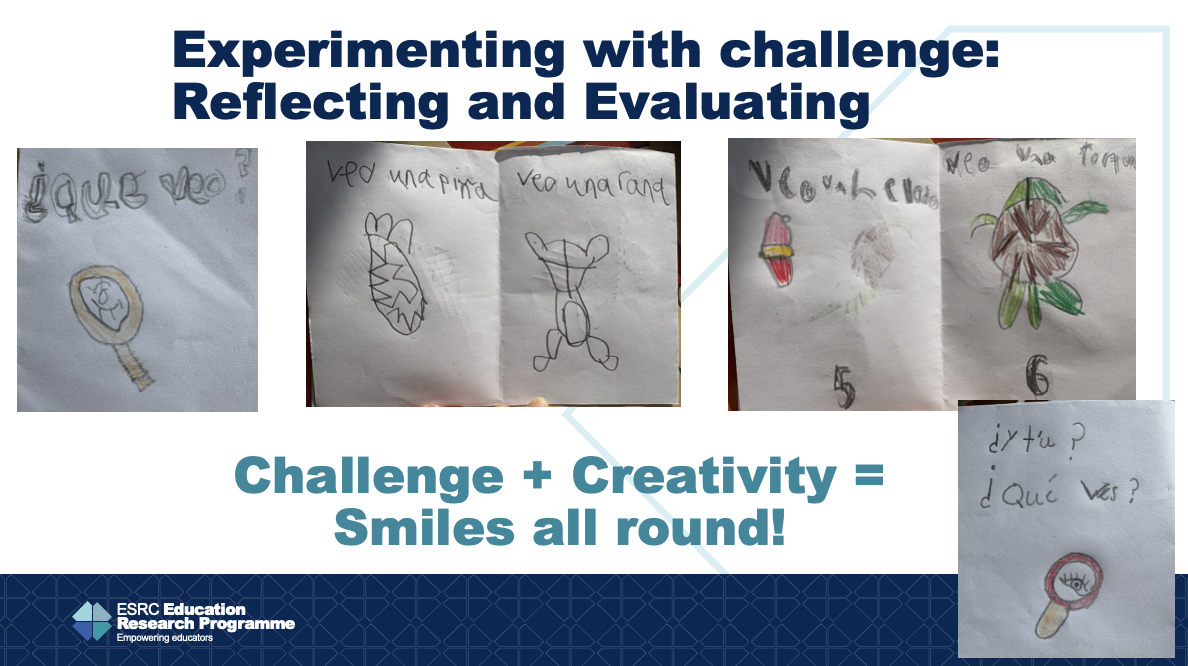
On Friday I had the pleasure of being interviewed by Dr Alison Porter from University of Southampton and Professor Suzanne Graham from University of Reading on the subject of challenge and creatiivty in the Primary Languages classroom.

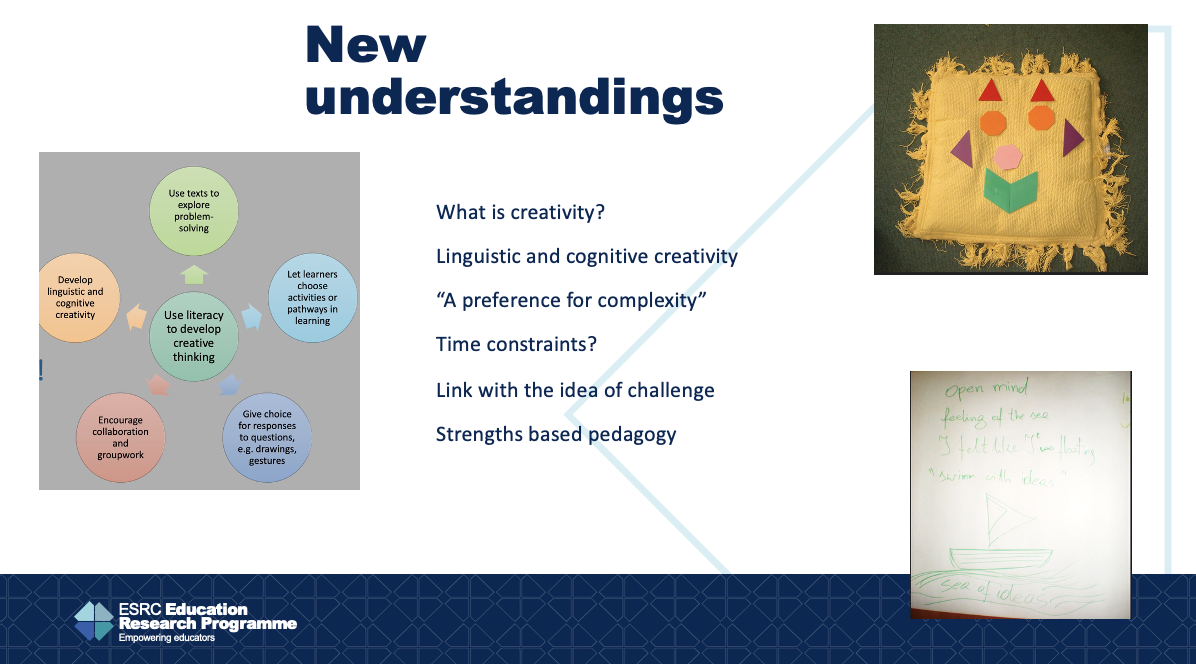
Over the last couple of years I have participated in a MOOC (Massive Open Online Course) led by Alison and Suzanne to explore challenge, creativity and empathy and then along with my Y5 Spanish classes, took part in the DELTEA research project using a phonics app and digital storytelling to put the learning into practice and explore the impact on motivation, empathy and language learning. Thsi interview followed up these experiences and will form part of a new MOOC.

During the interview I talked about my learning during the MOOC about Self Determination Theory, the need for intrinsic motivation and an optimal amount of challenge for learners’ self efficacy and the relationship between challenge and creativity. I also shared how a Strengths Based pedagogy and an asset based (what learners CAN do) rather deficit based mindset have become very important in my thinking and consequently planning for QFT. The conversation then moved on to how this was demonstrated during the DELTEA project in my setting, what was learned from the project, and how we have moved forward following the conclusion of that phase in July 2024. It concluded with me sharing a ‘hot off the press’ example that I felt gathered all those threads together and demonstrated the need for and value of challenge for ALL our learners, and the undeniable effect on their self efficacy / vision of themselves as a language learner.

It was lovely to take time to reflect on the process and realise the impact this has all had on my setting. In the business of school, it’s rare that you have time to do that! I’m really looking forward to the MOOC of which my video will form a small part as I always welcome an opportunity to learn, reflect and hone my skills as a language learner and educator.

Created using AI – I’m learning!

Today was the annual ALL Primary Languages Conference, otherwise known as Acapulco. This year the theme was MAKING A DIFFERENCE. The programme was very varied with sessions on SEND, Transition, Using AI, Supporting non-specialists and much more.

I wasn’t able to join the conference until after 11 so need to catch up on the first two or three sessions but all the ones I attended were packed with practical ideas and thought provoking suggestions, and I was certainly inspired.

I was really pleased to conclude the conference delivering a session entitled Making a Difference – Languages and the International Dimension Anyone who knows me, or has read this website will know that this is an absolute passion of mine and consequently I had a lot to say – too much really for the time! However I did manage to briefly share the international journey of my school, explain WHY I think it’s important to explore and promote the international dimension, give some examples of the activities that you could try and signpost ways to find and make partnerships including a few sources of funding.

I promised that I’d make my slides available (you can access them (slightly reacted) below by clicking on the image) and those who bought a ticket for the event will get access to the recording so you can watch again. If you didn’t, and want to know what I (and others!) said, tickets can stioll be bought until 24th November using this link www.tinyurl.com/confpl24

If you want to find out more, I did a slightly different presentation at Language World last year that you can find here, and of course, you are more than welcome to ask questions in the comments section below or by emailing me. I’m more than happy to help!

The Language Show is taking place over the next three days via Zoom. With over 80 sessions available, there’s something for everyone and for £20 you can access all of them – live and also on demand which means you can attend them all in spite of them overlapping.

What do you think?

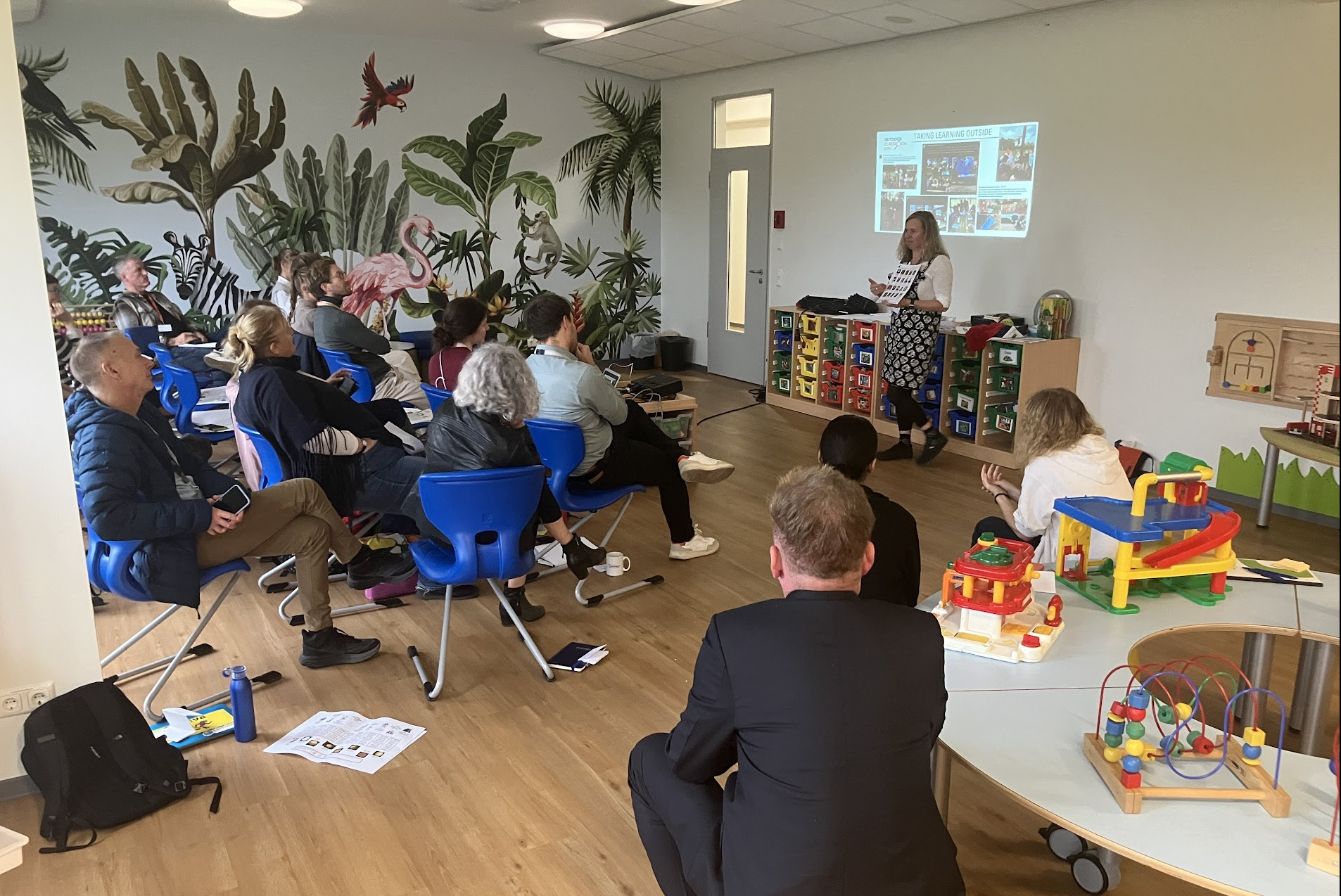
I was invited to speak as part of the For Language Teachers stream (the other streams are labelled For people who love languages and For language professionals). I took as my theme something that I often say when described as “a Spanish teacher”

I teach languages not just Spanish.

In a nutshell, I explained my rationale – the Why? – and then activities that demonstrate the How.

You can have a look at my slides by clicking below.

Thank you to all those who attended – a lovely generous group of people. Your comments made me smile! If you’ve signed up for the Language Show, you can watch the replay of my session and see what I said. It’s not too late – just go to the website and buy a ticket!

Thanks to Russel Tarr for the photograph. What an amazing room!

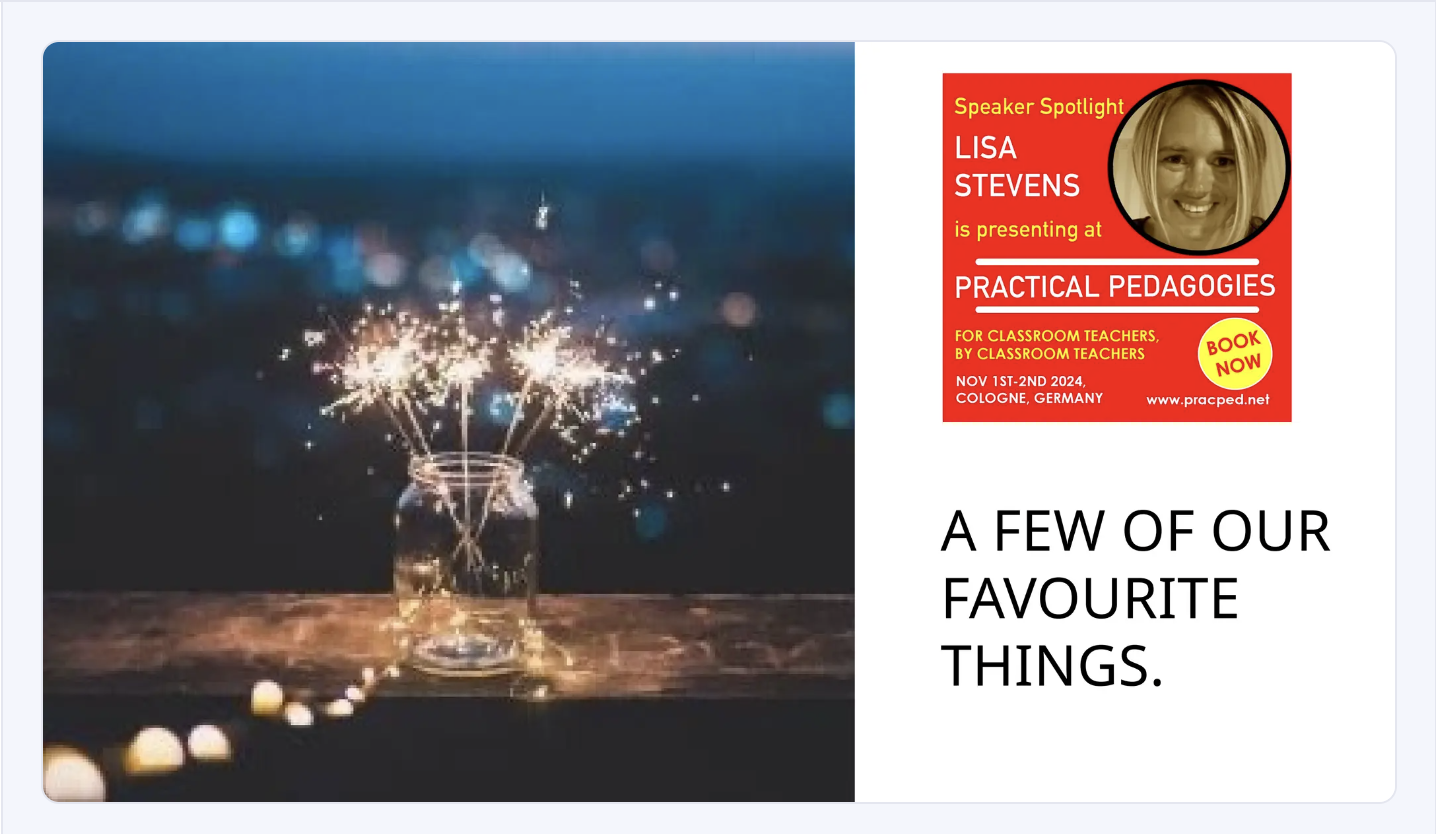
I was really excited to attend the Practical Pedagogies conference in Köln last week. Having attended the previous iterations in Toulouse (2015 and 2016) and Cologne/Köln (2018) I knew it would be an amazing two days of collaboration and learning.

In my previous post I shared my sketchnotes from the sessions I attended. When i counted them I momentarily couldn’t work out why I only had 9 when there were 8 workshops, a keynote and an endnote until I remembered that I presented and couldn’t sketchnote myself!

My session was entitled A Few of Our Favourite Things and in it I shared as many of the activities as I could squeeze in, drawn from pupil feedback on our language lessons. I teach primary Spanish, so most examples that were language/phase specific refelcted this. However, most ideas were transferable to other languages and phase, perhaps with a little adaptation here and there!

As promised, my presentation can be accessed below by clicking on the photo.

https://www.slideshare.net/slideshow/a-few-of-our-favourite-things-pracped24-pptx/273105825

Feel free to ask questions in the comments or via my contact details.

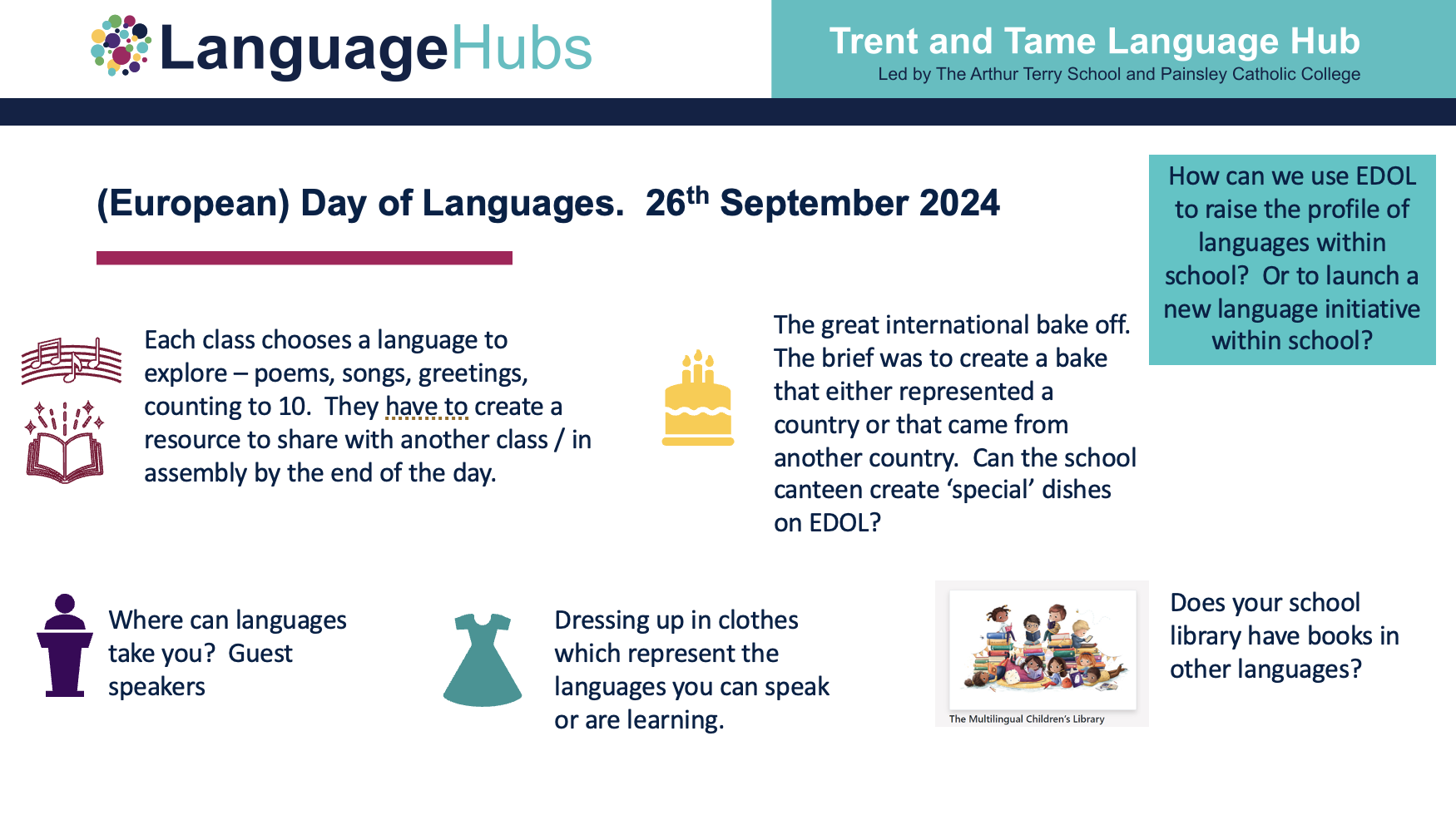
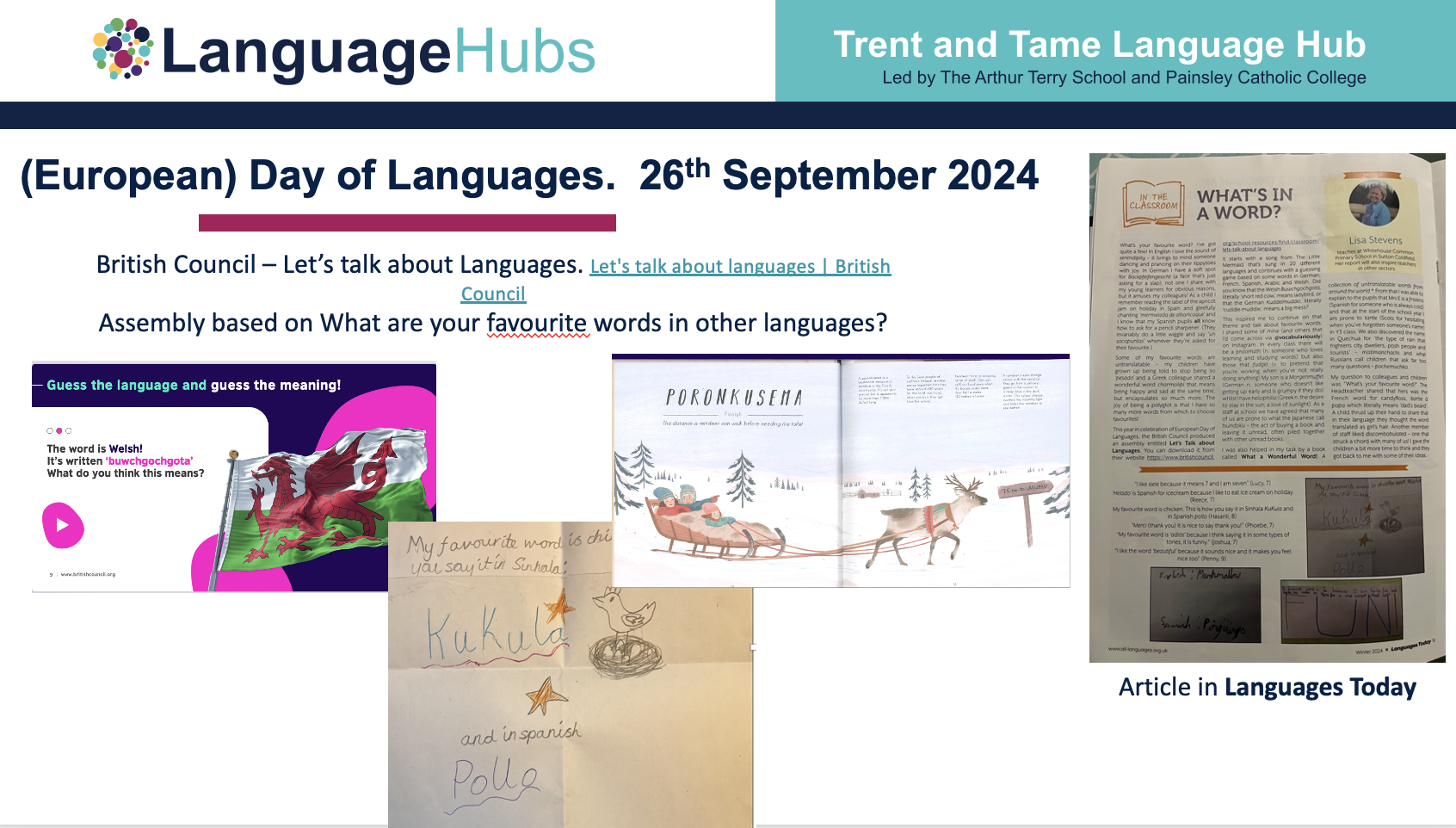
Today I attended the Trent and Tame Language Hub (TTLH) Primary Launch Event and was asked to share some ideas for European Day of Languages.

I’ve posted a few ideas in the past on my website – have a look at using a song or the Omniglot website – but felt it might be useful if I wrote up some of the ideas I shared in one place for those who weren’t there, and for those who were but would like a reminder!

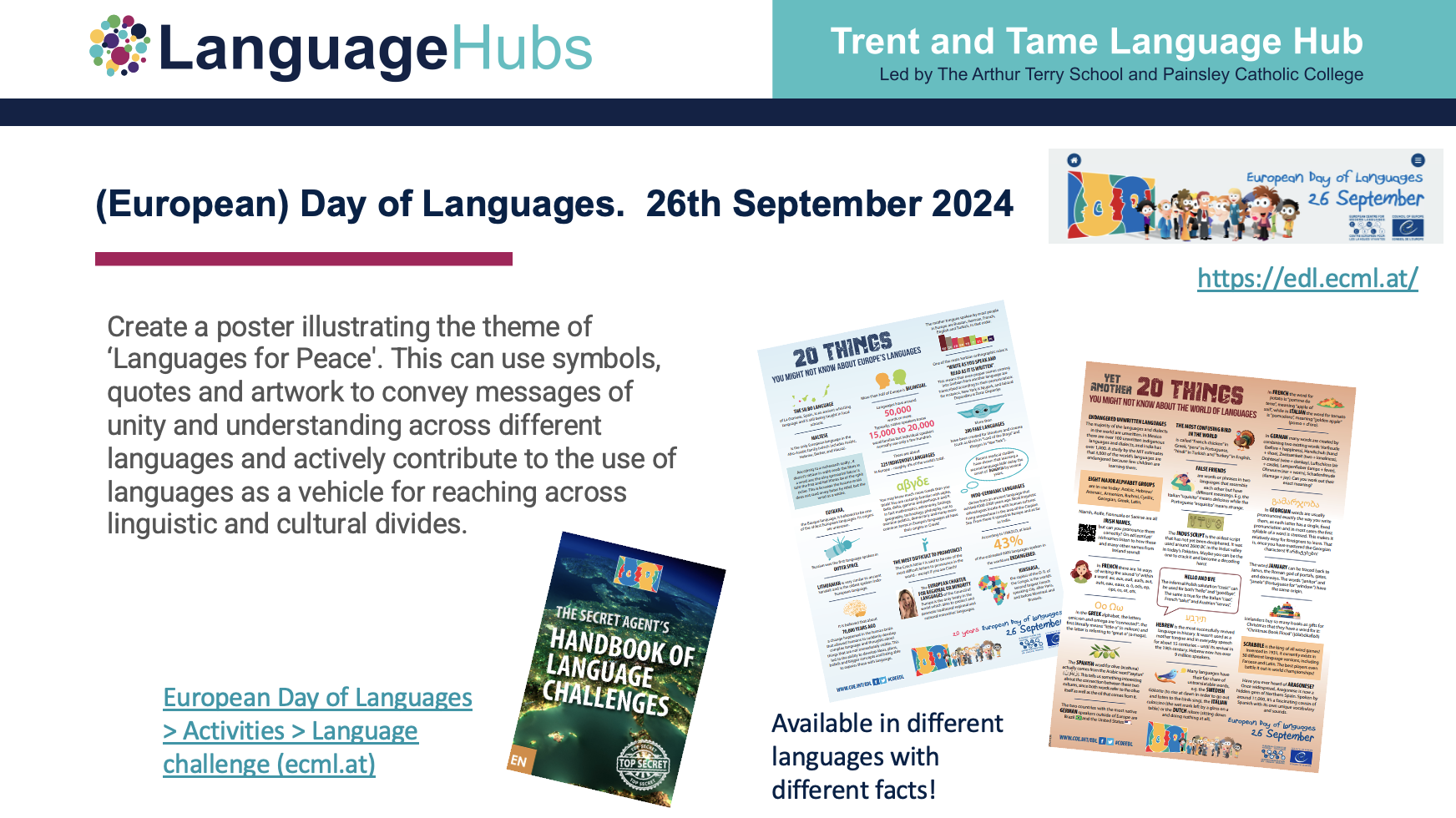
European Day of Languages or EdoL (over recent years the o has been added to avoid misunderstanding!) is celebrated each year on 26th September. It is a Council of Europe initiative and has been running since 2001 and is celebrated across Europe with the aim to promote plurilingualism. Each year there is a focus. This year it is Languages for Peace. You can find out more on the website https://edl.ecml.at/ where there are competitions, resources and opportunities to join with learners across Europe to celebrate our linguistic diversity. This year they include the pronunciation of Irish names and a summary of Words of the Year from various countries. In previous years we’ve used Lara’s Journey and also quests involving the language stickers that are associated with the event.

September 26th isn’t far off the start of the school year so you need to plan ahead, even before you break up for the summer. There are lots of quick ideas that you can use to celebrate that can be the launchpad to bigger/wider initiatives. This is one (the only?) advantage of how soon in the school year it occurs. Below are a few that could create a buzz that can then be built upon.

Expanding on a few of those
– you can read about what happened at my school when we each class chose a language in this post from 2008! If you need some help with different languages, the Digital Dialects website is amazing. Also tap into languages known in your school community and ask children, parents and neighbours if they could support you.
– when dressing up, rather than ending up with a legion of French onion sellers and sevillanas dancers, why not ask learners to dress in the colours of or as the flag of a country, or in the national dress of that country, or as a famous person from that country. Stereotypes are worth discussing but not reinforcing!

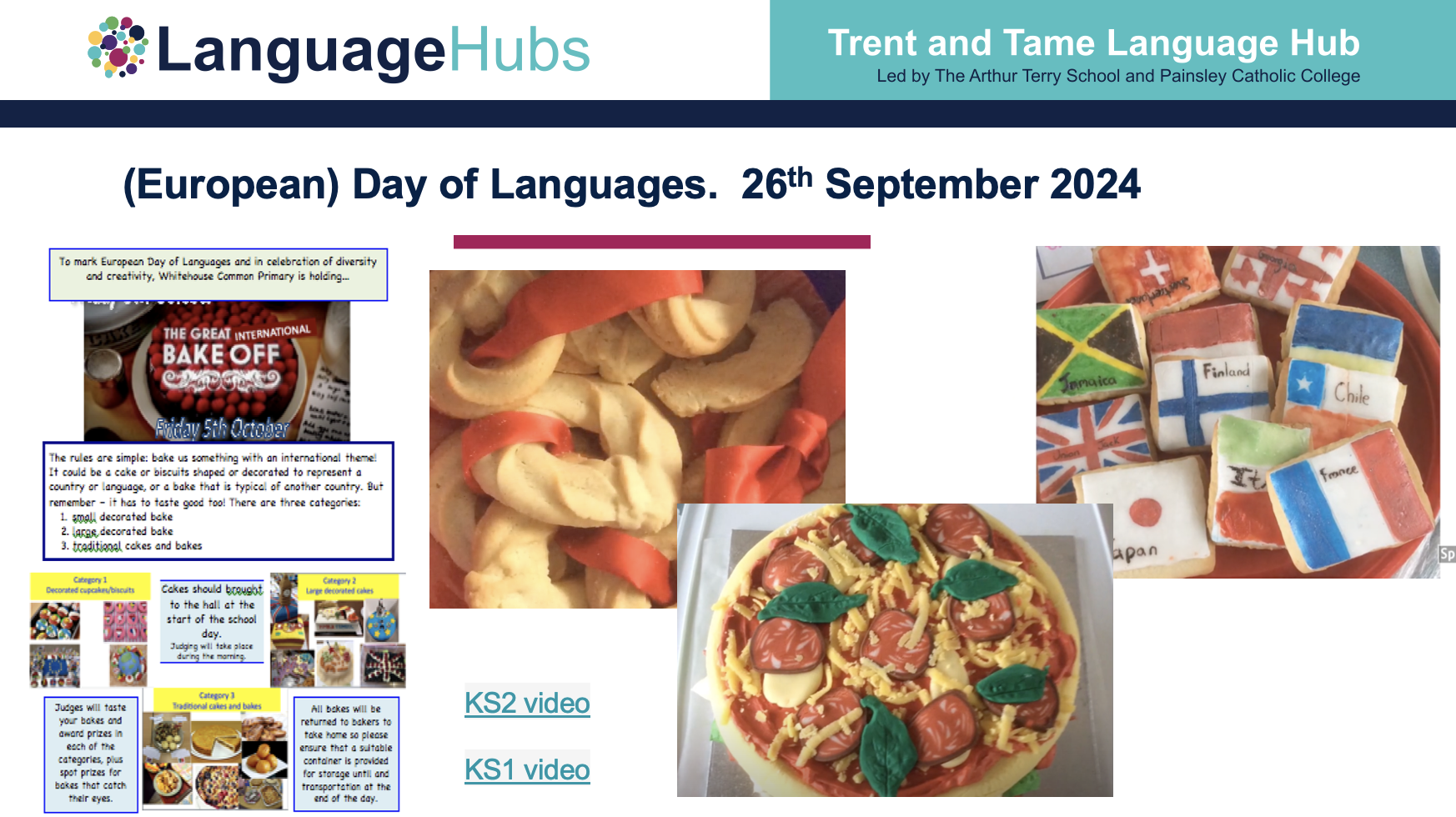
Holding a Bake Off is great fun. We did it a few years ago and I had the pleasure of tasting every one of the more than 50 entries! The brief was to create a bake that either represented a country (flag, colours, in the shape of etc) or that came from another country. As you can see if you watch the compilation videos below, we had some amazing entries and the children really enjoyed it. They do love a competition! It was a shame that we couldn’t let the children eat the cakes due to allergy worries but children took them home (apart from the ones that made it to the staffroom!) It was lovely to see creativity in action but also to celebrate some traditional bakes from Sweden, Germany, Australia, Spain and India.

KS1 entries
KS2 entries

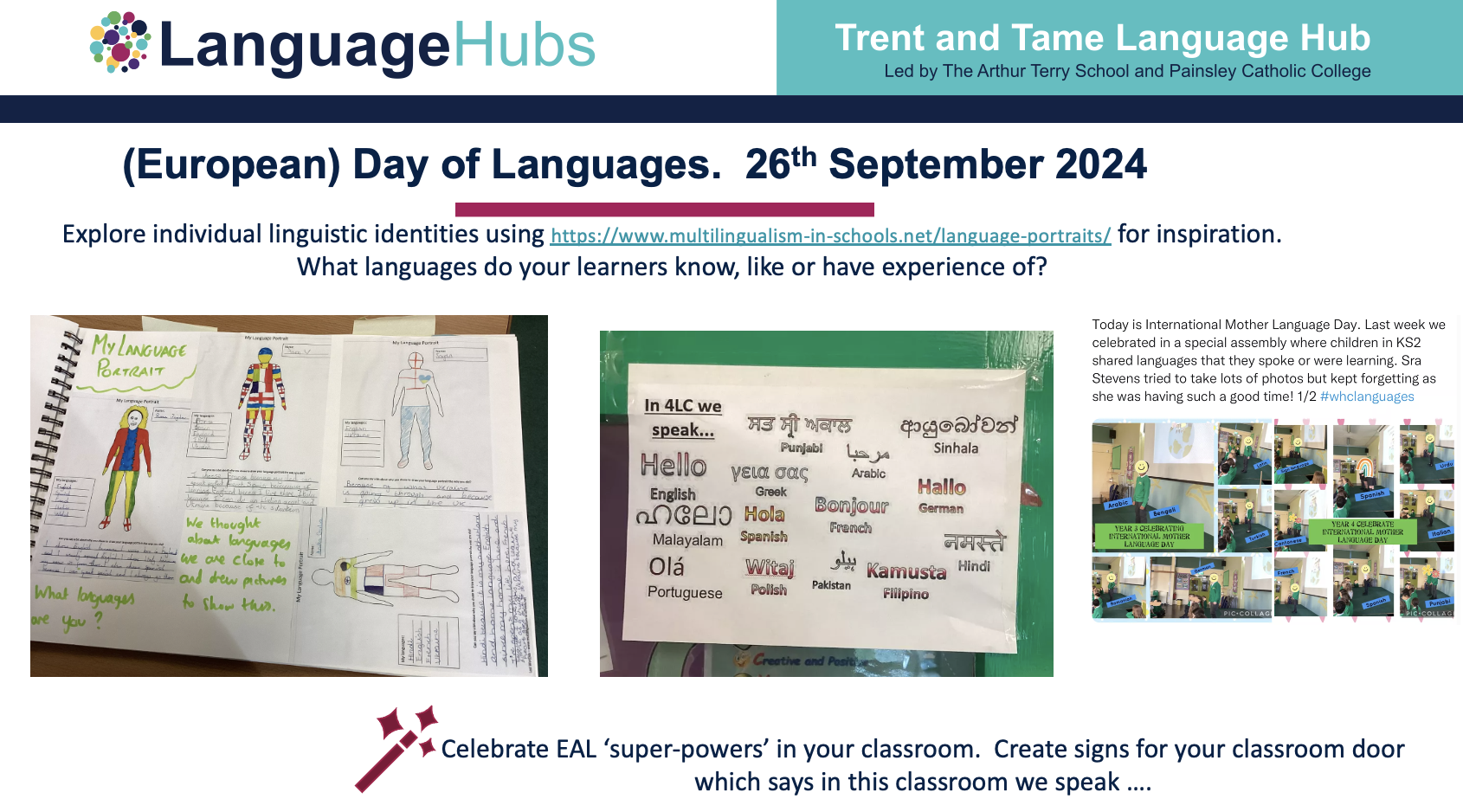
Another idea that worked well and also had a huge impact on the school was around celebrating linguistic identity and the ‘superpowers’ of many of our learners who already know two or more languages before they learn Spanish with us.

We used the Language Profile template on the Multilingualism in schools website and asked chidlren to consider their linguistic identity – whihc languages do they speak, have they experienced, do they feel a connection with or simply like or enjoy learning? Initially it seemed to many that they only wanted to add English but having talked about it with others, all sorts of feelings came to the surface including solidarity with eTwinning project partners, languages related to reading matter, and some interesting thoughts about being bilingual! This was coupled with finding out which languages were spoken by the children and adults in each class, and the creation of a poster for the door. This led to children learning that there weren’t the only speaker of their home language, and also the revelation of some hitherto unknown skills! Both of these activities feed well into Cultural Capital, British values and celebrating our diversity, all very high on the primary curriculum agenda.

Another idea on a similar theme is to hold a Celebration of Languages in which the learners are invited to share. We’ve had several of these, most recently as you can see above on Mother Language Day. Each time we’ve held the event we’ve had a mixture of songs and rhymes, role plays and greetings and even a clapping game this time. Sometimes children share their home language, sometimes a language that they’re learning or that is ‘in the family’ and sometimes learners have learned something specifically for the event. It takes guts to stand in front of your peers and speak, and I am often struck by how often children who are reluctant to speak in class volunteer to share. It’s quite humbling to see how they value these special language opportunities!

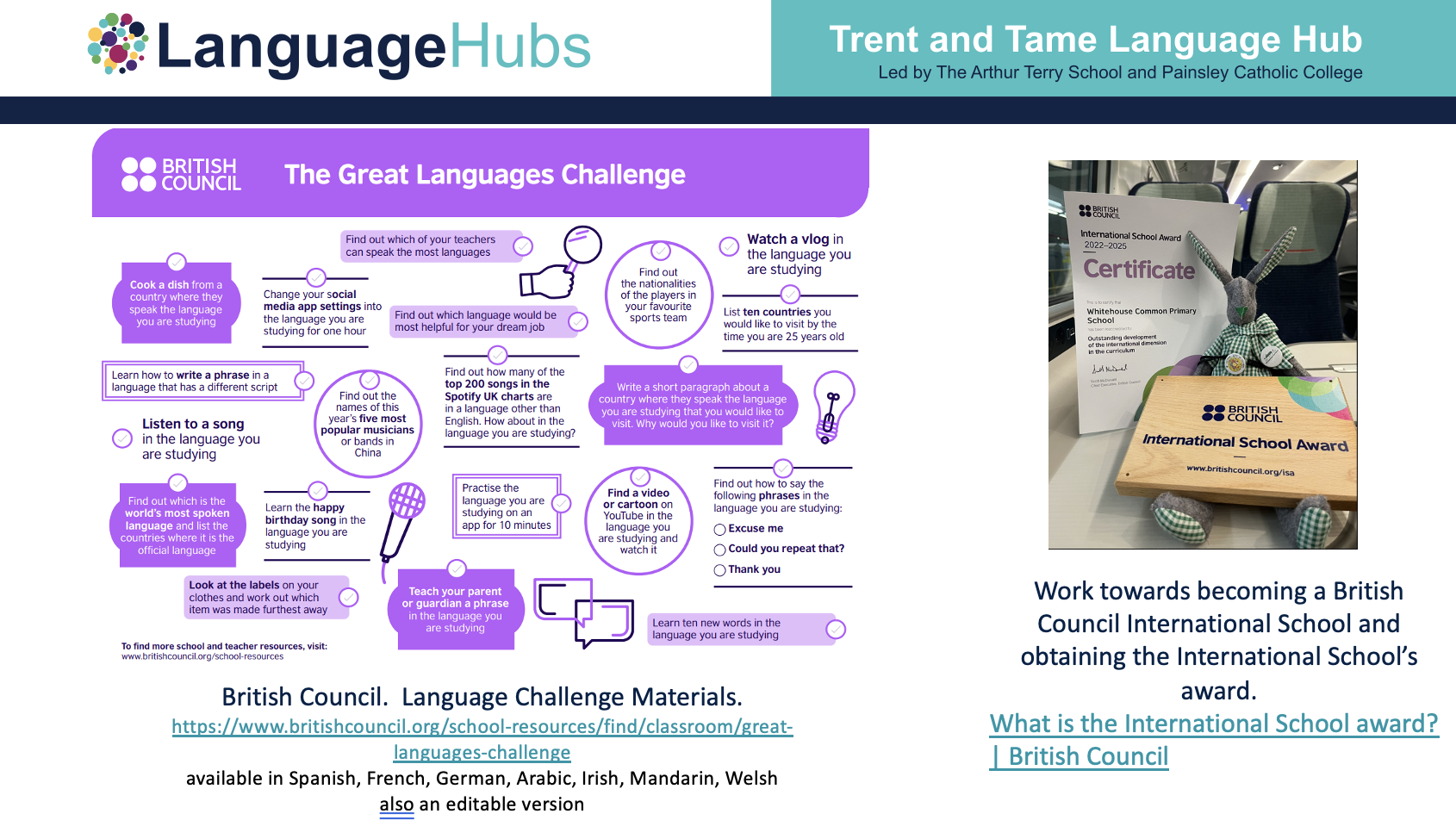
Perhaps you want an activity that can be completed over a week, a little at a time, or that can be set as a homework task, or even a competition. The British Council has a Great Languages Challenge that can be downloaded from the Resource section of their website. As you can see from the image above, it’s available in a language non-specific version as well as one for Spanish, French, German, Arabic, Irish, Mandarin and Welsh. You could ask classes to complete it with learners or groups of learners assigned certain tasks, or set levels for the number of tasks completed eg Bronze might be 8-12, Silver more than 13-17 and Gold for 19 or 20 of the 20 tasks. We awarded certificates for all attempts and small prizes like stickers, pencils, rubbers with books for those who had completed the task independently. We also celebrated and shared in assembly including a memorable rendition of Happy Birthday in Yoruba! Activities like this can count towards a British Council International School Award (ISA). You can find out more about how the requirement and how to apply (it’s free!) on the website but feel free to comment or message me if you need support as I’m a British Council Ambassador and have been trhough the process several times, most recently in 2022.

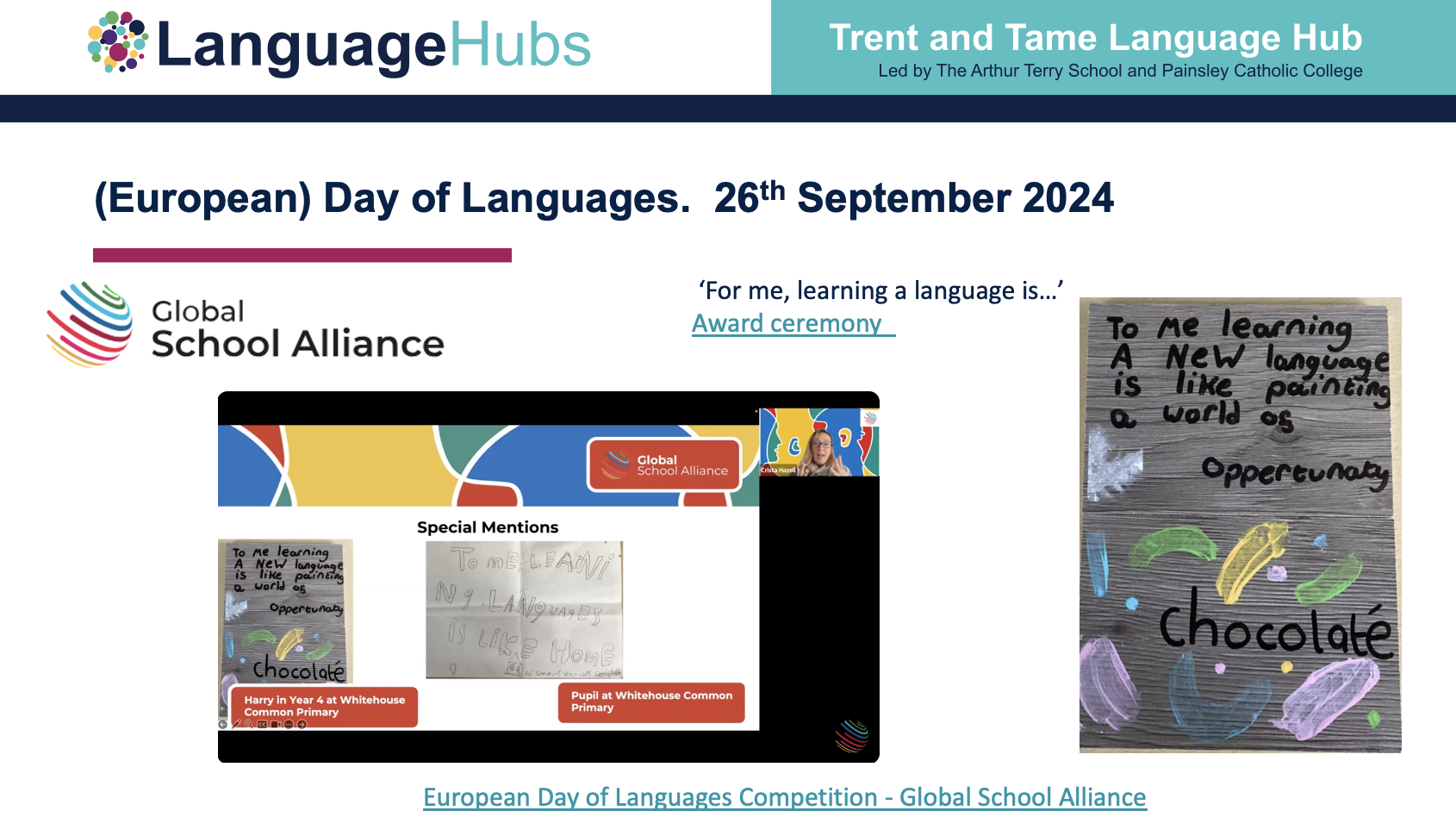
Last year the Global School Alliance held a competition to celebrate EdoL, asking learners to complete the sentence ‘For me, learning a language is…’ in any way that they wanted – using art, video, poem or song, writing an essay or creating a poster. Entries were uploaded to the GSA platform so all participating schools could share the results, and an award ceremony was held online to celebrate and congratulate the participants and winners. Some of the entries were amazing, and I was overjoyed that two of my pupils earned a ‘special mention’ in the Primary category for their entries. You can watch the video below – our bit is at 24 minutes! I’m sure that there will be another event in 2024 so keep your eye on https://www.globalschoolalliance.com/ for news. However, there’s nothing to stop you holding your own competition with the same sentence to be completed!

Awards Ceremony – held online to celebrate entries from the UK but also from around the world.

Perhaps you’d like to use EDoL to dip your toe into cross country links. A good way to do that is to explore the Global School Alliance. Once registered you can browse other registered schools, look at project ideas or post your own. It’s an excellent way to find a partner (or more!) for a short exchange – perhaps you could exchange a culture postcard from your schools, or meet online to teach other greetings, or work on a common theme of peace for example. The initial activity might be so successful that you want to take it further but equally it could be that short!

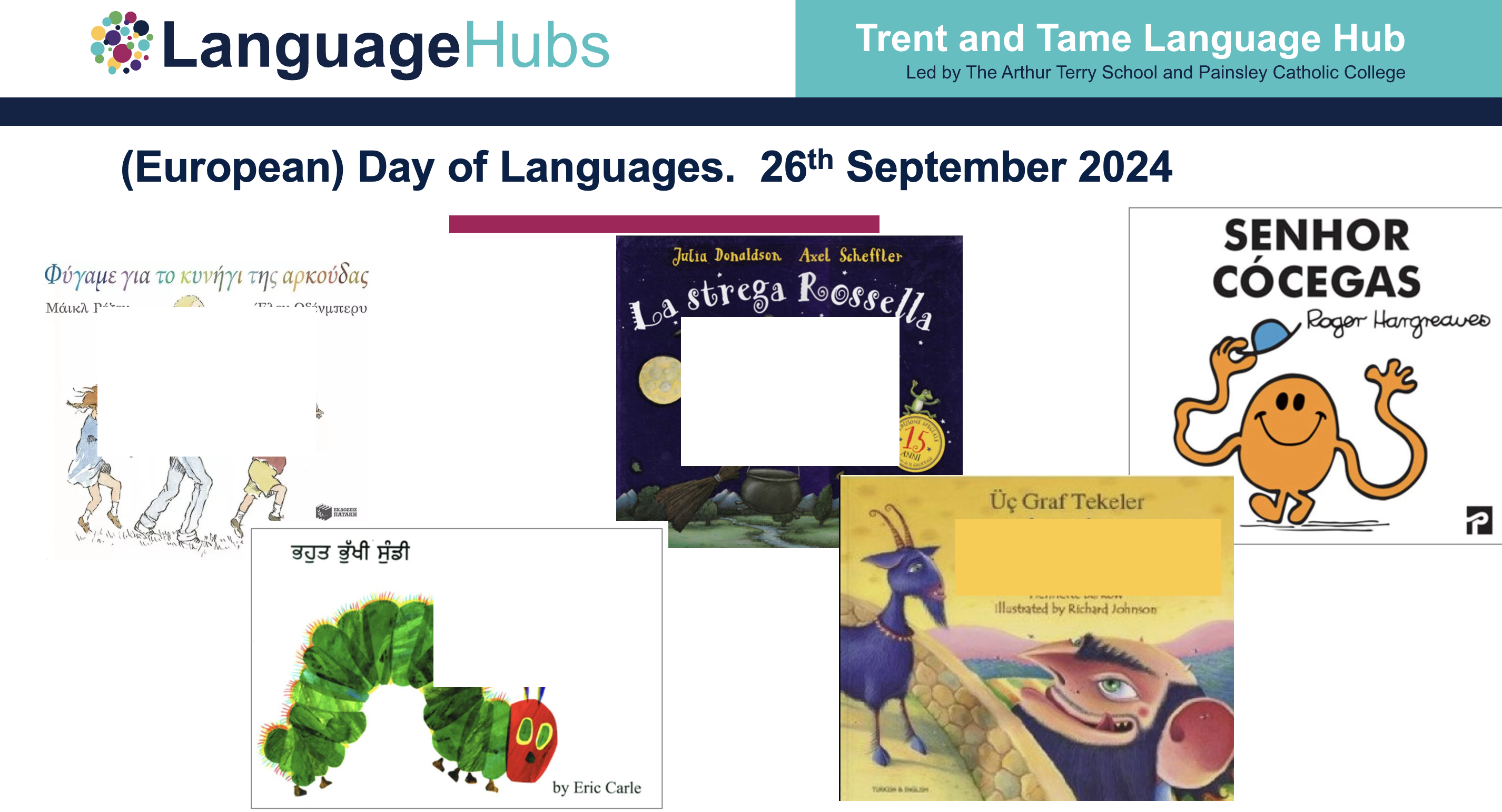
Let’s be honest, school life is busy and it’s not always easy to plan and/or fit in activities that can be done by classes but each year I make sure that we at least hold an assembly that celebrates EDoL. In fact, it’s now on the school calendar so I have little choice! If we’ve held a day or week of activities, we share what we have done and celebrate our learning. I’ve mentioned above our Celebrations of Language but we’ve also had ones that have been done in classes based around books – can you identify the titles of these books and the languages in which they’re written?

Answers are at the bottom!

This year I took inspiration from the British Council resource Let’s Talk about Languages which begins with a song fromThe Little Mermaid in many different languages then has a guessing game based on the (literal) meaning of a variety of words including barbe à papa (Dad’s beard – candyfloss in French) and buwchgochgota (short red cow – ladybird in Welsh) I was inspired to continue on this theme and explore favourite words in English as well as other languages.

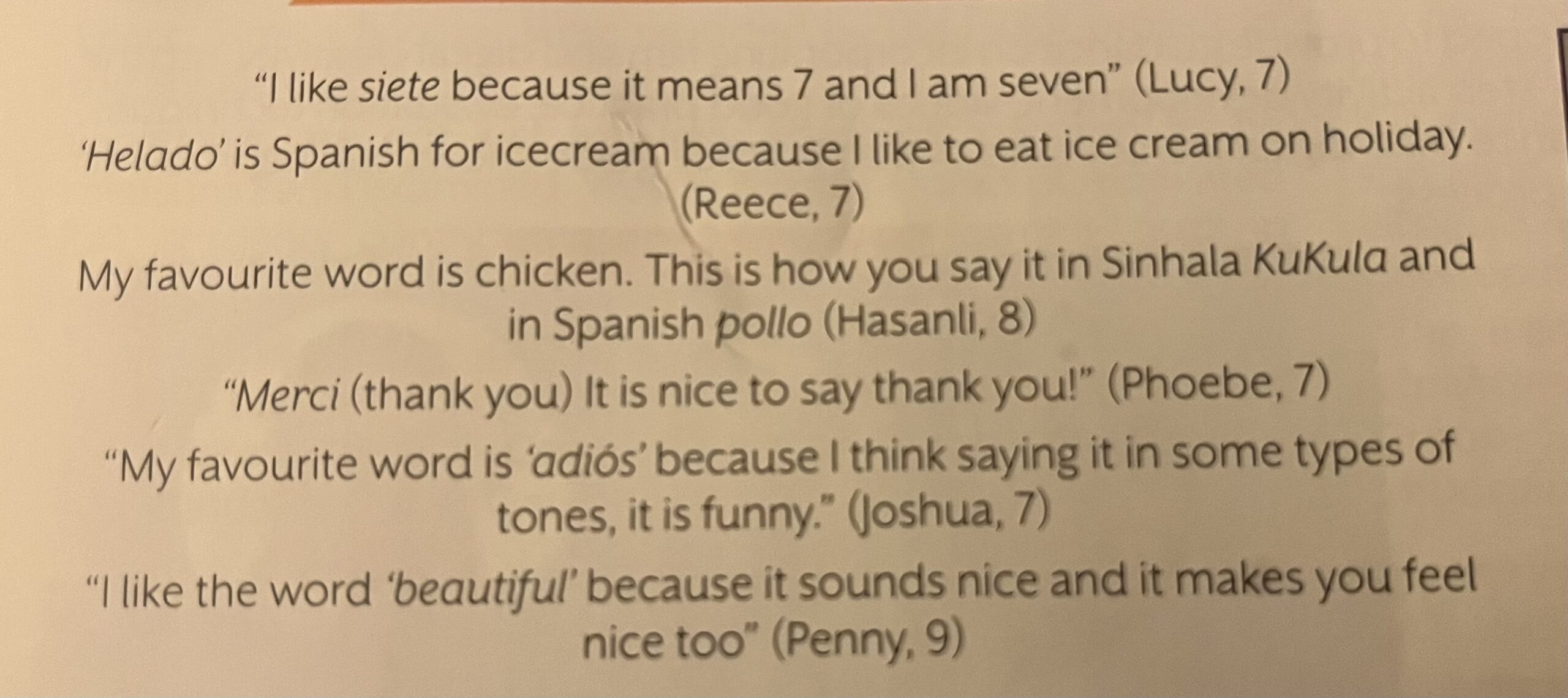
I shared some of mine – serendipity (English) and burbuja (Spanish for bubble) because I love the sound of the words, the untranslatable pesado in Spanish and so on. I was helped by a couple of books I have called What a Wonderful Word! and What a Wonderful Phrase! that revealed words like poronkusema which is the distance that a reindeer can walk without needing a wee (a popular revelation!) I asked staff for their favourite words and several shared, and then asked the children for theirs. Some had an immediate idea but I invited anyone who wanted to share their word to write it down and give it to me during the week. Below are some that I collated for an article I wrote about it for Languages Today, published by ALL.

There are many more things you could do to celebrate. I haven’t decided how we will mark EDoL in September yet but perhaps I’ll go back to past post and explore Silbo Gomero, a whistling language that is used on La Gomera. Whatever we do, I’m glad of the prompt to have a think and start planning.

If you have any ideas, feel free to leave them in the comments below.

I’ll leave you with a couple of links to other people who’ve shared ideas and a video that could be used as an introduction to the day.
Nattalingo
Teaching Ideas (Some lovely ways of making it really cross curricular

And the answers:
We’re going on a bear hunt – Greek
The Hungry Caterpillar – Punjabi
Room on a broom – Italian
The Three Billy Goats Gruff – Turkish
Mr Tickle – Portuguese

The bSmall Young Language Learner Award is returning on 15 April 2024!

The Young Language Learner Award (YLLA) is an exciting story-writing opportunity aimed at 6-11 year olds. Children are encouraged to send in a story or comic written in a language of their choice, other than a mother tongue. bSmall will provide a template, notes for teachers/ parents/ tutors and a downloadable entry form for entrants to submit the finished story. All entrants have the chance of winning up to 10 books of their choice from the bSmall website.

More details of YLLA will follow as it opens on 15th April 2024. You can sign up on the bSmall site to stay informed, and also look at last year’s three winning stories all on the theme of Celebration to tie in with King Charles’ coronation as well as read a two page review of last year’s competition. You can also read about YLLA 2022 here.

This year the theme is…

TEAM SPIRIT

Image created using AI

Start date: Mon 15 April
End date: Mon 10 June 

Winners will be announced: 24th June

I’ve once more been asked to help judge YLLA and am really looking forward to reading all the entries. So encourage your children to start having a think about the theme and get ready to enter!

Last week I had the pleasure of taking part in a workshop entitled Welcome to Germany and the German speaking world being held in Durham as part of the Express Yourself North East Festival of Languages. Held at Durham University, it was organised by the British Council and the university with support from the Goethe Institut.

In the morning primary aged pupils (years 5-6) with little or no experience of German were introduced to the German speaking world via an introductory presentation by Sara Davidson, learning that German is spoken in a number of European countries but also in an African one, and discovering that some familiar things originated in the German speaking world as well as having a go at decoding some German words. Following on from that, they took part in two workshops, a language led by Frau Marshall who taught them some basic German, and a cultural workshop which I led during which they learned about and made a Schultüte.

Flying the LiPS flag!

In the afternoon, secondary school pupils (years 7-9 pre-options) were introduced to the German speaking world by the wonderful Laura Lewis from Durham University who shared some typically German concepts like Spaghettieis and Flachspüler as well as sharing information about where German is spoken and by how many people. The students then moved on to a pair of workshops – a German rap workshop with Sara and a workshop all about pioneers and influencers lead by ALL President Liz Black which ended with chocolate tasting!

In my Schultüte workshop we talked about our memories of our first day at school, in my case a looong time ago so I recalled my sons’. My lovely assistant Jonas told the children about his first day at school in Germany, throwing in the word Schultüte which led nicely into the rest of the workshop. Using information and images gathered by Marian Devons, Liz Black and me, we explored how a German (also Swiss in my experience!) Schulänger spends their first day at school, homing in on their Schultüte or enormous cone of school supplies and sweets that they receive to soften the blow of starting school. After a bit of language work during which children had a go at working out what goes into one from the German words, the children made and decorated a (small) Schultüte which was filled thanks to the Goethe Institut with all sorts of goodies like pens, badges, bracelets, Gummibärchen and stickers. The wide eyed joy of the children as they received something else to put in their Schultüte was wonderful: “I can keep it?” “I can have that as well?” “Wow! This is brilliant!” And the multiple cries of Danke and Dankeschön as they left was lovely too.

The intention is to hold further events in the next couple of terms, and some of the materials will be uploaded to the British Council website – I’ll post the link when it appears! So keep your eyes open if it’s something that you fancy for your learners.

In the meantime, if you want to do some German with your learners, do check out the Goethe Institut website and particularly Gimagine where you can find lots of resources and support. Also it’s worth looking at the UK-German Connection and Voyage Kids where you can find some fun Easter activities .

¡Vámonos! ©2026. All Rights Reserved.
Powered by WordPress. Theme by Phoenix Web Solutions