languages – Page 7 – ¡Vámonos!
 

Category: languages

37c441845e5a7677fe34ceada7fbcedf

Today I’ve been in Devon (where it was raining!!!) speaking at a conference at Newton Abbot College entitled Modern languages, Modern teaching. A great way to start half term!

I gave two presentations today, one on Top Tips for Primary Language Learning and the other on cross curricular language teaching. It was lovely to meet the people in my sessions – thanks for joining in and participating in my songs games and activities.I’m currently trying to upload my presentations to Slideshare as they won’t upload directly here, but until then, here are a few of the video clips I shared today!

Ana y Enrique – Los planetas

This version has pictograms too!

And then there was the soundtrack to our Sumo phonics

And the amusing German tongue twister/ story about Barbara and her rhubarb bar

And if you want to know what it means… http://youtu.be/l3_tRPRt9x8

Hope that’s whetted your appetite. More when I get home as the Internet is straining 😉

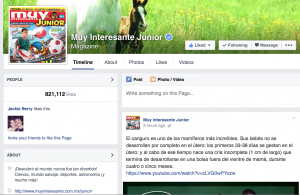
Following on from yesterday’s post, I forgot to say that there is a Facebook page for Muy Interesante Junior that has little snippets from the magazine as well as previews of upcoming editions.

Screen Shot 2014-08-10 at 21.27.20

…and you can follow @MuyInteresante on Twitter for interesting facts in Spanish in 140 characters or less.

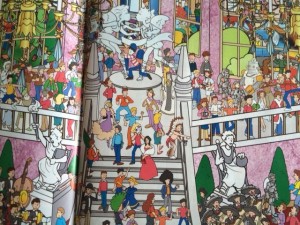
A regular feature of Muy Interesante Junior each month is the El que busca encuentra spread. It’s a bit like Where’s Wally? or ¿Dónde está Wally? (did you know that he’s called Charlie in French, Walter in German and BenJ in Swiss German? Find out more here) in that you have to find people in a very ‘busy’ picture! Here’s a section of the picture.

photo 2

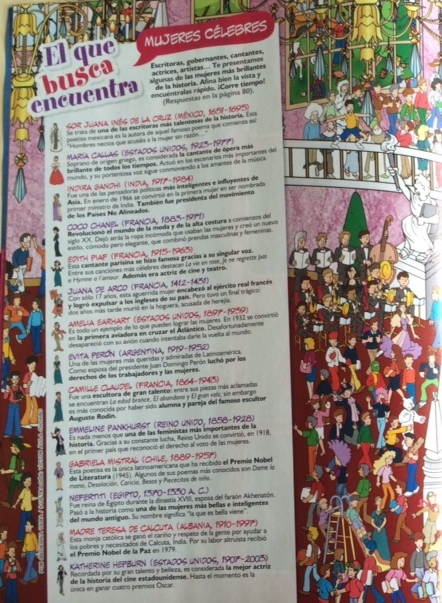
What makes it different is that each edition there is a different theme for the ‘puzzle’; this edition it is “Mujeres célebres.” Alongside the puzzle is a section which gives you the images that you must find along with a couple of sentences about the person. With the new programmes of study in mind, I can see this as a great opportunity to engage learners in short texts as well as increasing their general knowledge, in this case about famous women, and revising and learning structures and vocabulary .

photo 1

For example, the short texts include details about countries of origin, occupations, years of birth and death.

1. You could ask questions about the women based on the facts. For example:

  • ¿Quién es de Francia?  (Coco Chanel, Edith Piaf, Juana de Arco, Camille Claudel)
  • ¿Quién es cantante? (María Callas, Edith Piaf)
  • ¿Quién viene de Europa?  (Coco Chanel, Edith Piaf, Juana de Arco, Camille Claudel, Emmeline Pankhurst, Madre Teresa de Calcuta)
  • ¿Quién es de un país que habla español? (Sor Juana Inés de la Cruz, Evita Perón, Gabriela Mistral)
  • ¿ Quién ha ganado un Premio Nobel? (Madre Teresa de Calcuta, Gabriela Mistral)
  • ¿Quién nació en el siglo veinte? (María Callas, Indira Gandhi, Edith Piaf, Evita Perón, Madre Teresa de Calcuta, Katherine Hepburn)
  • ¿Quién murió antes de cumplir cincuenta años? (Juana de Arco, Evita Perón, Nefertiti, Amelia Earhart, Edith Piaf)


2. You could also use Clare Seccombe’s Tesoro o basura idea and board along with this PDF of the names  (Mujeres célebres) and ask learners to sort words according to given criteria (either with the information, or having found out as much as they can previously):

  • Las actrices son ‘tesoro’; las demás son ‘basura’.   (Edith Piaf, Katherine Hepburn)
  • Las francesas son ‘tesoro’; las demás son ‘basura’.  (Coco Chanel, Edith Piaf, Juana de Arco, Camille Claudel)
  • Las que murieron en el siglo veinte son ‘tesoro’; las demás son ‘basura’  (María Calas, Indira Gandhi, Coco Chanel, Edith Piaf, Amelia Earhart, Evita Perón, Camille Claudel, Emmeline Pankhurst, Gabriela Mistral, Madre Teresa de Calcuta)


3. You could use the information strips to work on large numbers and dates; say a date and identify the person:

  • mil novecientos siete – nació Katherine Hepburn
  • mil seiscientos noventa y conco – murió Sor Juana Inés de la Cruz
  • mil trescientos setenta antes de Cristo  – nació Nefertiti

And what about putting all the women in a timeline and using ordinal numbers to describe their position?


4. You could ask learners to find me the word for

For example:

  • The Nobel Prize (El Premio Nobel)
  • opera singer  (la cantante de ópera)
  • her unique voice (su singular voz)
  • the Pharaoh (el Faraón)


5. You could ask learners to fill in a form based on the information given: here are some I’ve made

Pen and paper form

Blue clipboard Stars

and then make up simple personal identification sentences about the women, using structures with which they are familiar:

Se llama Gabriela Mistral.

Es de Chile.

Es poeta.

Nació en mil ochocientos ochenta y nueve.

Murió en mil novecientos cincuenta y siete.

Es famosa por ganar el Premio Nobel de Literatura en 1945.


6. The information given could be extended with some research;

  • find an image and write a physical description
  • discover specifically where they were born and describe where it is (compass point, size, near to etc)
  • find out a poem written / song sung / film starred in / speech made / dress designed by the person and describe it using adjectives

and not necessarily just in Spanish. What a great way of bringing Spanish into other areas of the curriculum by having the inspiration in Spanish and continue it in English?


Of course, you can do activities without even reading the information!

7. You could describe the images of the women in Spanish and ask learners to identify the person from your description – or ask a learner to describe to the class or their partner.

Lleva un vestido negro. (Coco Chanel)

Lleva pantalones , botas y una chaqueta. También lleva una bufanda, un casco y anteojos de aviador. (Amelia Earhart)

Lleva una túnica /un vestido blanco y un tocado blanco y azul. Lleva un cetro de oro. (Nefertiti)


8. Or you could play ¿Quién es? (Guess Who?)  with yes/ no / don’t know questions being posed until the correct person is identified.

¿Lleva pantalones? Sí

¿Tiene el pelo rubio? No

¿Es Katherine Hepburn? Sí

You could extend the game to include the entire picture rather than just the 14 featured women – that could be a game that goes on forever!


And that brings us back to the ¿Dónde está Wally? element. Each of the women is hidden in the picture and, once they have been found, learners could describe where each is hidden in Spanish too. For example:

  • Madre Teresa de Calcuta está en el primer piso. Está a la izquierda, al lado de la ventana, entre dos chicos que llevan jerseys verdes.
  • Evita Perón está en la planta baja, a la izquierda de la escalera. Está al lado del tobogán.
  • Amelia Earhart está a la derecha en el primer piso. Está al lado de un robot grande.

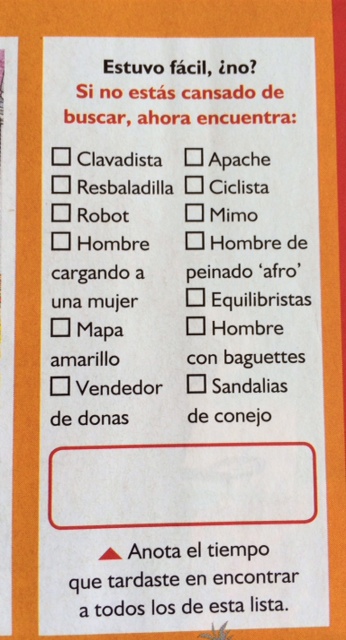
And for those that need an extra challenge, there’s a list of additional people/items to find in the picture – good for dictionary skills!

photo

photo 1

photo 2

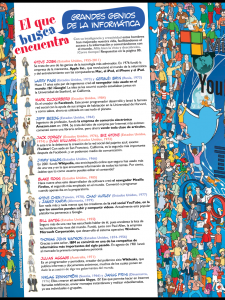
The latest edition of Muy Interesante Junior has ‘Grandes genios de la Informática’ as the theme of El que busca encuentra – time to start thinking where that may lead.

But I’ll leave that for another time 😉

If you have any ideas that I haven’t considered, please share them in the comments!

Muy Interesante Junior

| 6 Comments

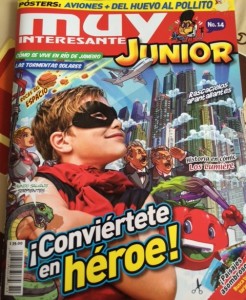
My lovely husband John went to México in April and I promised afterwards that I’d share some of things that he bought back. However, I never got past the first item(s)! Time to put that right! photo 4 I was overjoyed that he returned with a copy of Muy Interesante Junior. Although I’ve never seen the Junior version before, I was aware of Muy Interesante from browsing quioscos over the years. It’s a (Mexican) factual/scientific magazine with the strap line “La revisita para saber más de todo” and the Junior version is along the same lines aimed at younger readers.  And I immediately thought: ‘Excellent! Non-fiction texts of varying lengths and for a variety of purposes – just what the new Curriculum ordered!’ As you can see from the cover and below, the edition has lots of interesting content including fact files, comic strips, activities, puzzles and articles. There are five regular sections (below with the focus for this edition in brackets) and also sections of Preguntas y respuestas, Club Junior and short Noticias.
El que busca encuentra  (Mujeres célebres)

Mundo salvaje (Serpientes)

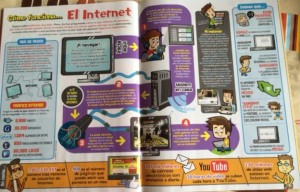
Tecnología (Cómo funciona el Internet)photo 4
Cuerpo humano (El sistema inmunitario)

Tierra en alerta (tormentas solares)

Here are some bits that I particularly liked.

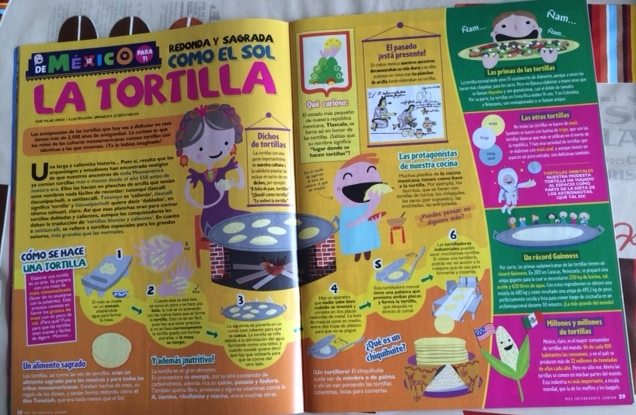
1. La Tortilla
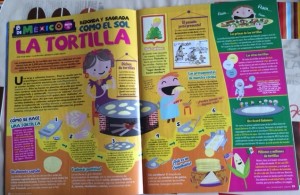
photo 3

Many pupils eat this type of tortilla but how much do they really know about them?

This double page spread is all about MEXICAN tortillas. How to make them, the origins of la tortilla, interesting facts, records, statistics, health information and language related to la tortilla too. There are even  ‘dichos’ or sayings linked to la tortilla.

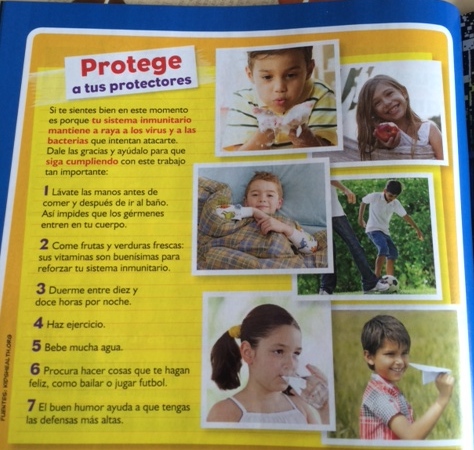
2. Protege a tus protectores
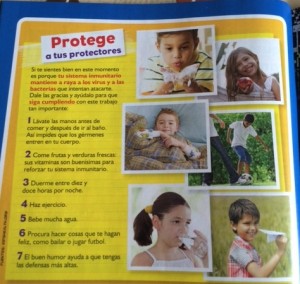
photo 3

In the section on El Sistema Inmunitario, this section is all about how to give your immune system a hand. Good for talking about healthy lifestyles and also for giving instructions in Spanish. Lots of cognates and making connections with things that they already know about staying healthy as well as the (short) length of the bullet points make it accessible to young learners.

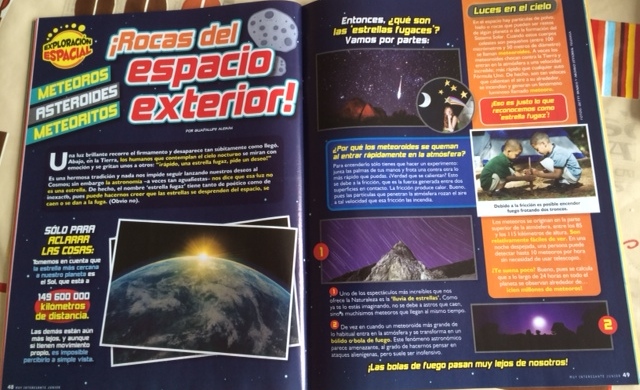
3. Rocas del espacio exterior
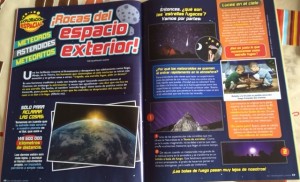
photo 1 Space is one of the topics that I’ve found works really well as a cross curricular one in Spanish, and this series of articles (there are five pages worth!) add plenty of new information to my knowledge! Specifically, lots of information about asteroides, meteoros and meteoritos, and new vocabulary like una estrella fugaz, la lluvia de estrellas and los meteoroides. 

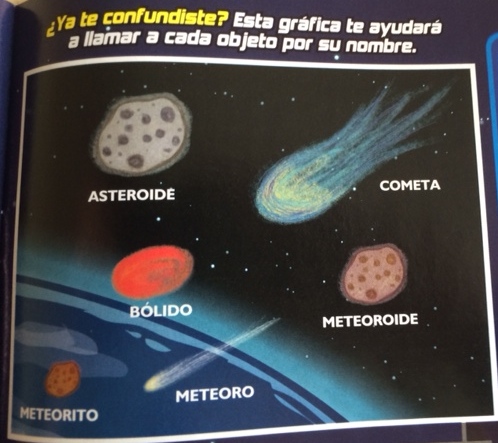
I found the graphic below interesting – good vocabulary list too! And I discovered that the seven gold medals handed out on 15th February at the Winter Olympics in Sochi all contained part of a meteorite that fell on Russia on the date in a previous year (doesn’t say when!)
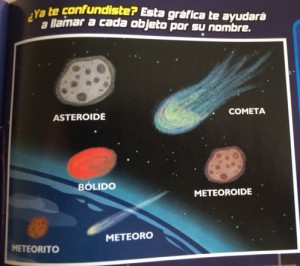
photo 2

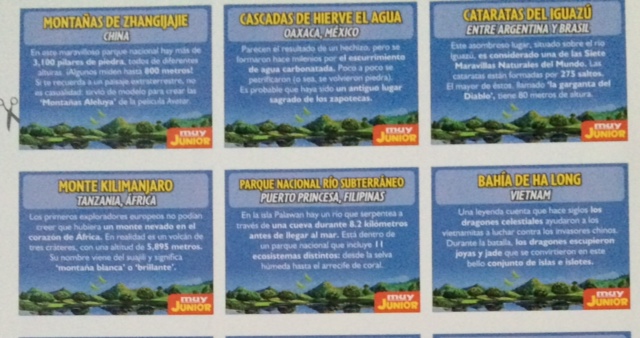
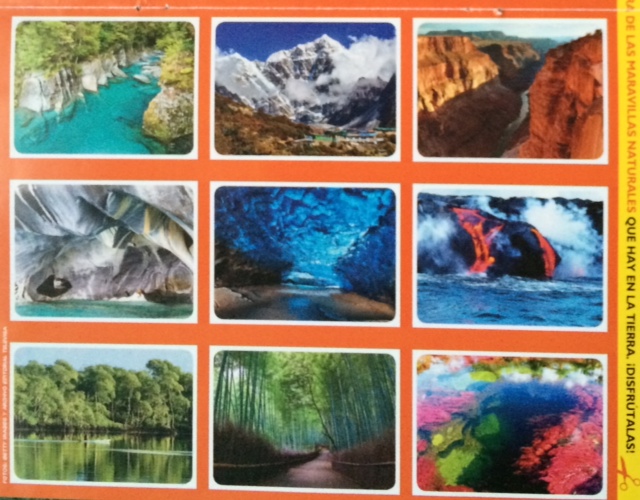
4. Las maravillas naturales

photo 1 photo 3

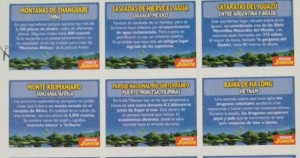
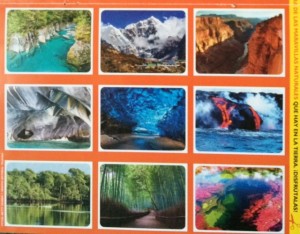
In the middle of the magazine there were two inserts – the first was a set of 18 double sided cards featuring ‘las maravillas naturales de la Tierra’ – one side has an image and the other a short description of the place. Good for countries, recognising landmarks by their Spanish name e.g. Monte Everest, las Cataratas de Iguazú, la Selva Amazónica etc and for map work. I can also see how you could use the short descriptions for simple reading  activities:

You could give learners three cards and ask them to identify a landmark according to given statements. You could mix English and Spanish e.g. which place is one of the Seven wonders of the world? (Cataratas de Iguazú) ¿Dónde están los pilares de piedra? (China) Which place is the model for one of the habitats in Avatar? And what is the ‘habitat’ called?(Montañas de Zhangijajie en China; las ‘Montañas Aleluya’) And so on.   Or you could make two sets and learners work in pairs to read a sentence and identify the card by listening and following.

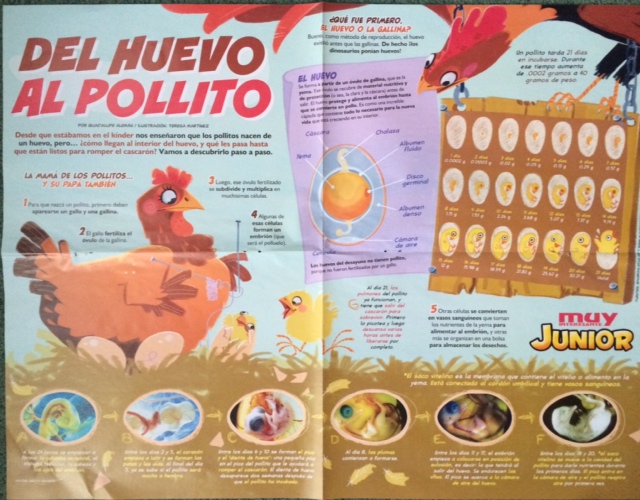
5. Del huevo al pollito
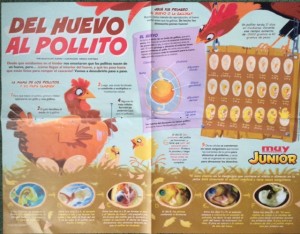
photo 2

The other insert is a double sided poster – one side has information about how an aeroplane flies and the other a really informative spread about the life cycle of a chicken, complete with pictures of chick embryos. You’d have to pick and choose which bits to share with younger learners but lots of good information that would be really useful for CLIL Science lessons.
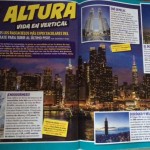
photo 1photo 3There are so many other parts that I could highlight – in fact, too much material to assimilate in one go.

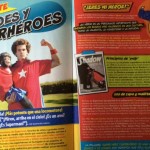
I can see that the articles on skyscrapers and tall buildings will be great for looking at large numbers, and I’ll certainly be coming back to the section on Héroes y Superhéroes as it looks at fantasy superheros as well as what makes a real hero, finishing off looking at some real superheroes like Nelson Mandela, Mother Teresa and Rigoberta Menchú (like the Hispanic touch!)


The bad news is that you can’t subscribe to the magazine from the UK – they’ll only send it to Mexico 🙁

However, all is not lost as there is a website

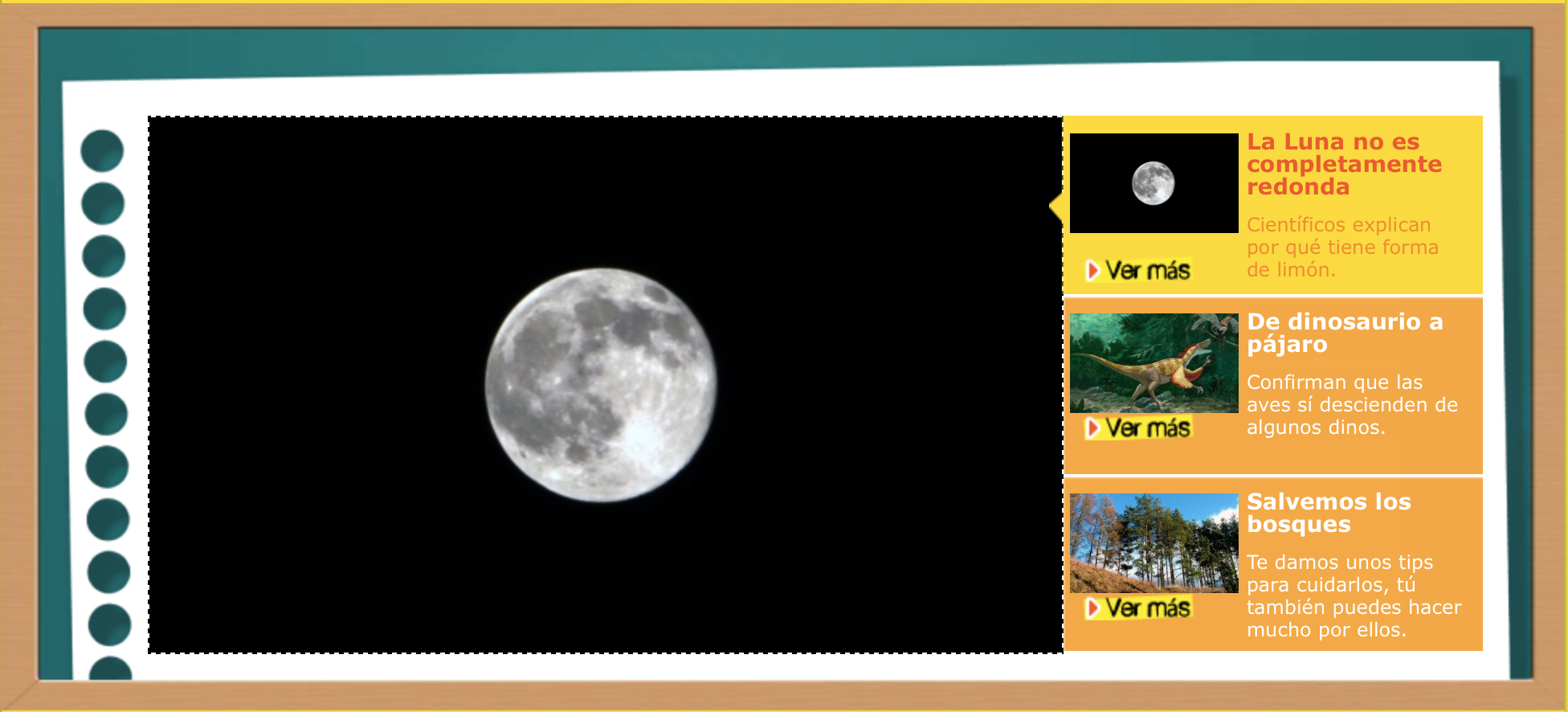
Screen Shot 2014-08-10 at 15.23.16          You can’t access the whole magazine but there are selected parts. The current edition online has three highlighted articles on the shape of the moon, dinosaurs and saving the rain forests, and each concludes with links to another three related articles.
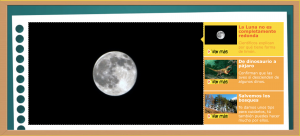
Screen Shot 2014-08-10 at 15.16.50

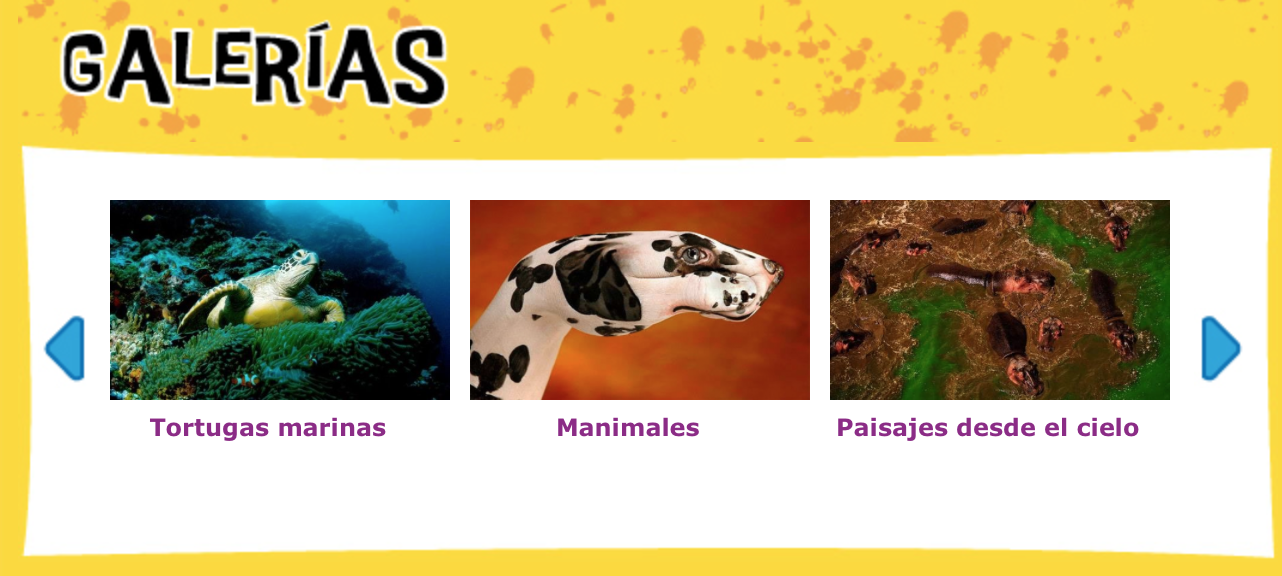
Then there are Temas de interés and Galerías of interesting photographs, again each linked to further articles and albums so there’s lots of content available if you explore!
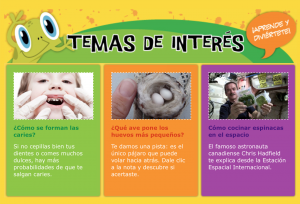
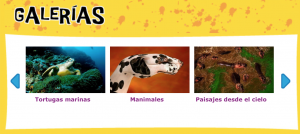
Screen Shot 2014-08-10 at 15.20.32 Screen Shot 2014-08-10 at 15.20.55

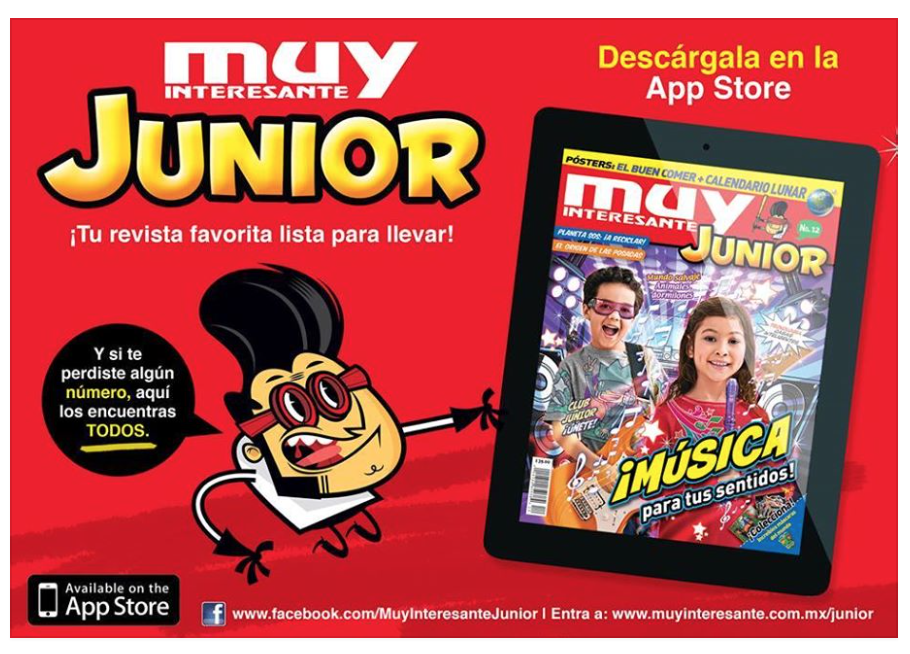
Additionally, you can do a web search and find out what was in previous editions  e.g. la sexta edición, la séptima edición,  la octava edición. This isn’t much help with the website as you can’t back track on there but… you can purchase ‘back copies’ via Muy Interesante Junior app in the App Store. (Sadly no Android version yet although you can get Muy Interesante in the GooglePlay store) Screen Shot 2014-08-10 at 20.50.07
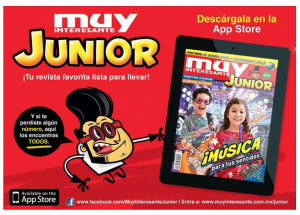
The app is free but you must purchase each ‘magazine’ for £1.99 or, at the moment, you can subscribe for a year (6 editions) for £5.49. I’ve just downloaded one copy so far (wanted to check the quality before committing myself!) and am very impressed. All the pages (80 odd) and the posters and the photo cards. Well worth the money I’d say, even if it’s only for ideas and information for you because (with ADE hat on!) if you want to use it with your class, you need to purchase a copy for each iPad so it might not be something for all the iPads in a class set. You might buy it for a few, or project it from one device using AppleTV or Reflector or Airserver etc for small groups to use as part of guided reading.

That’s all for now – I’m off to read my newly downloaded June/July copy!

I’ve saved my favourite activity/pages for another post – coming soon!
I found this video via Pinterest – a short video that explains Semana Santa in Sevilla using animation and real footage. You can switch on the subtitles to have the English appear across the bottom  although the two finger puppets explain well with key words appearing behind them.

httpv://youtu.be/kYR30iZwJdo

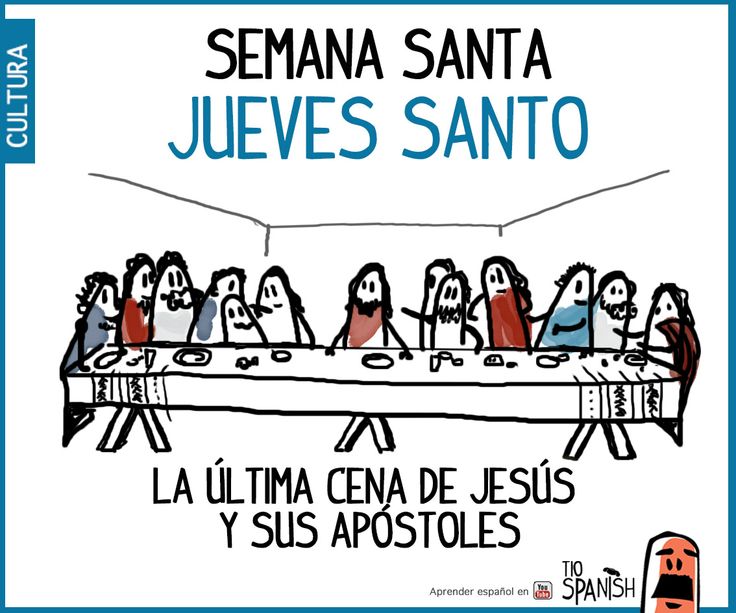
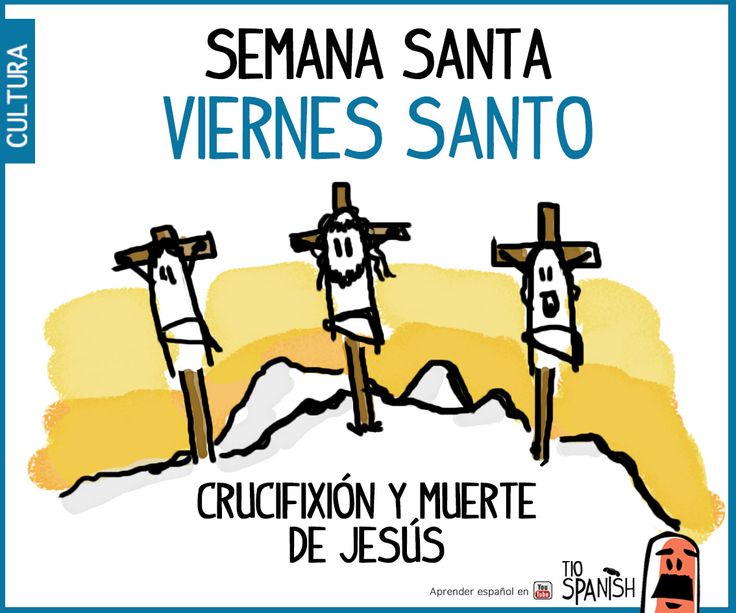
I also like these images (and more) found on their Pinterest page Semana Santa Cultura Española and also Semana Santa Sevilla

jueves santo

viernes santo

el paso

There’s a whole channel of videos like this explaining Spanish festivals as well as other channels from the same source. Something to explore whilst I’m sofa bound with my fractured ankle ;

Just in case anyone has missed the news…

MFL Sunderland is no more, but like a phoenix from the ashes arises…

LIGHT BULB LANGUAGES!

Below are the details – well worth noting, bookmarking and etching on your brain as if you don’t already use it, one day you will. Thank you to Clare for her dedication and persistence in sharing. ¡Eres una estrella!

Screen Shot 2014-04-09 at 06.49.29

IMG_0317

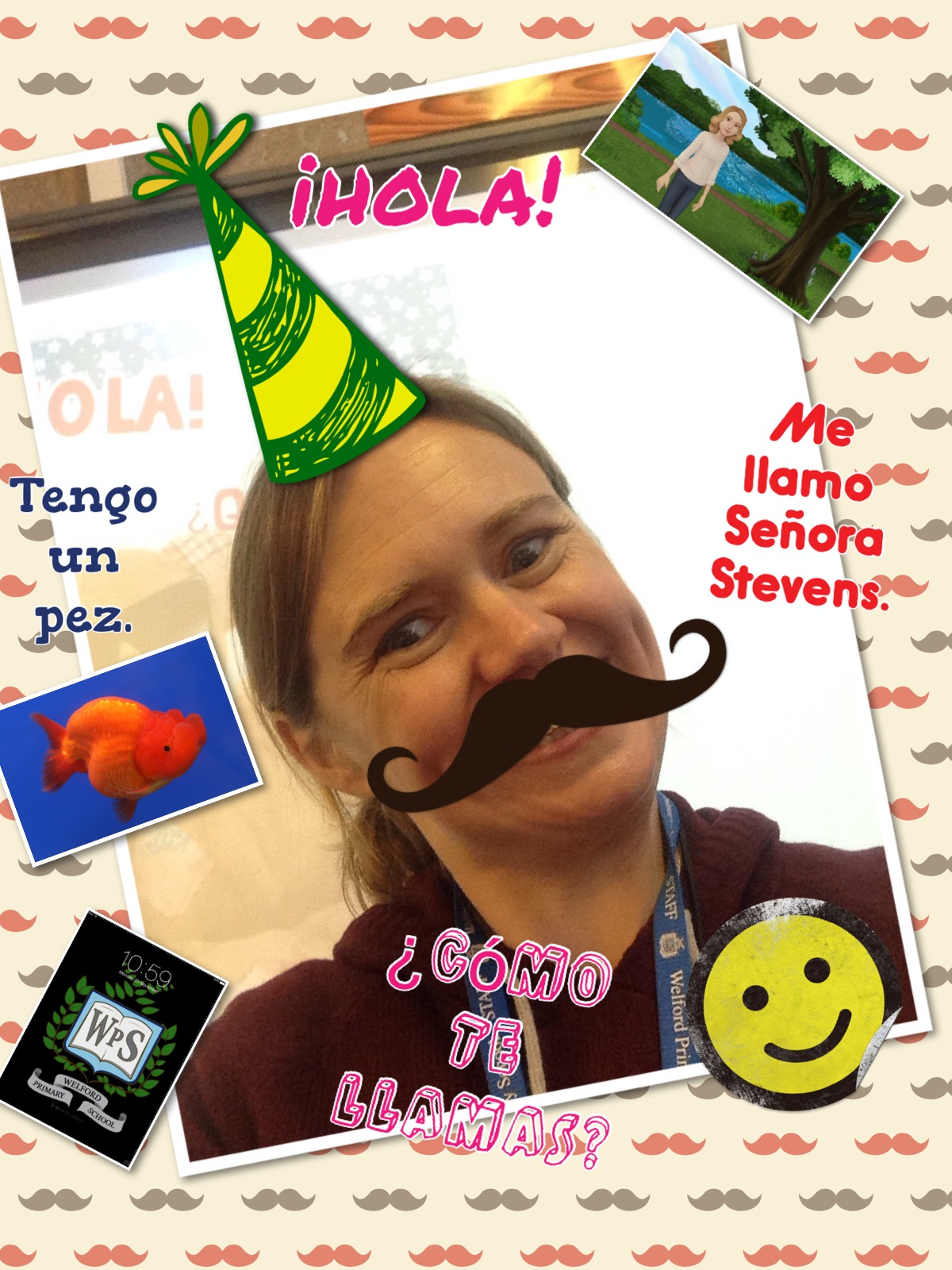
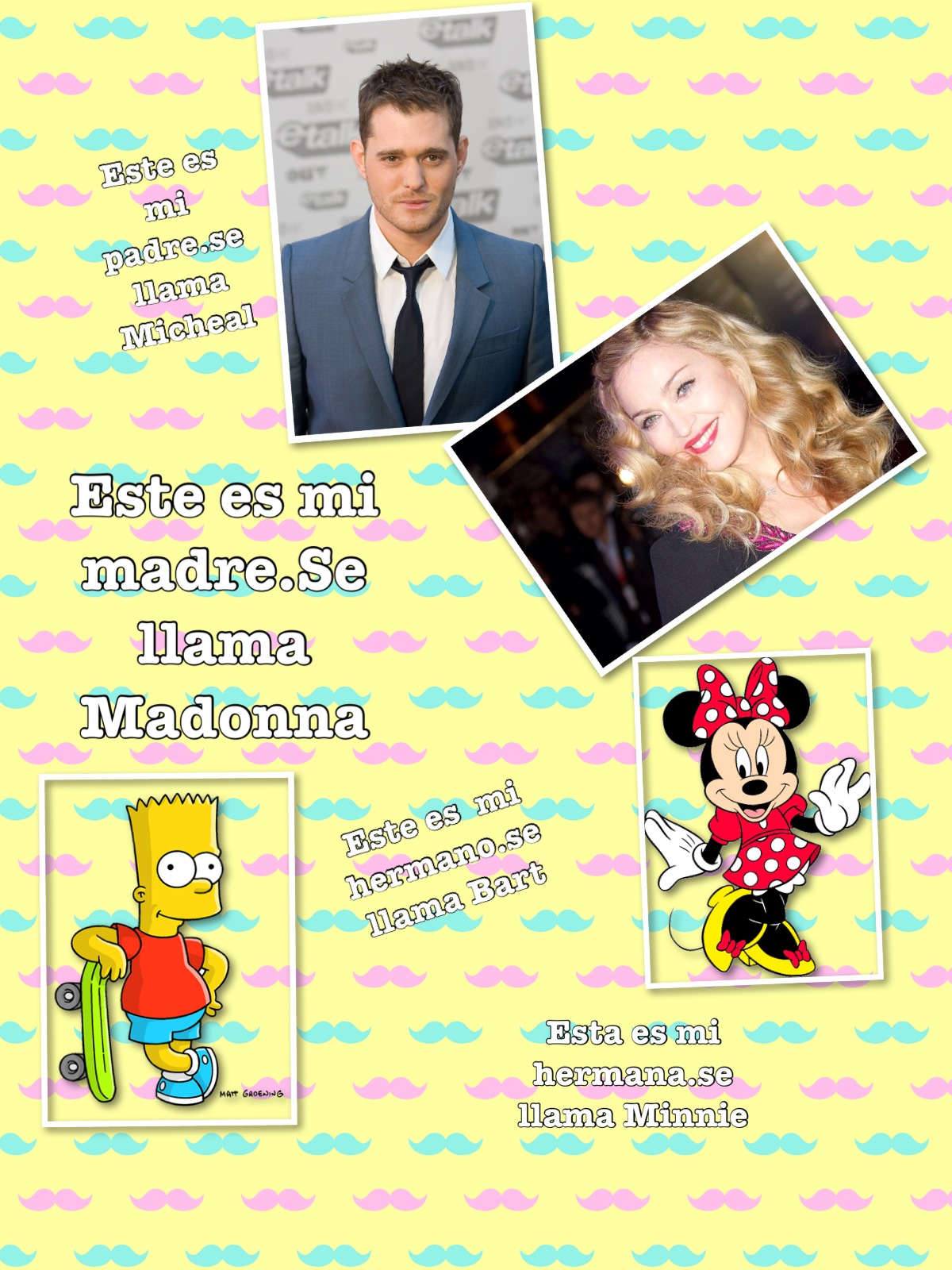
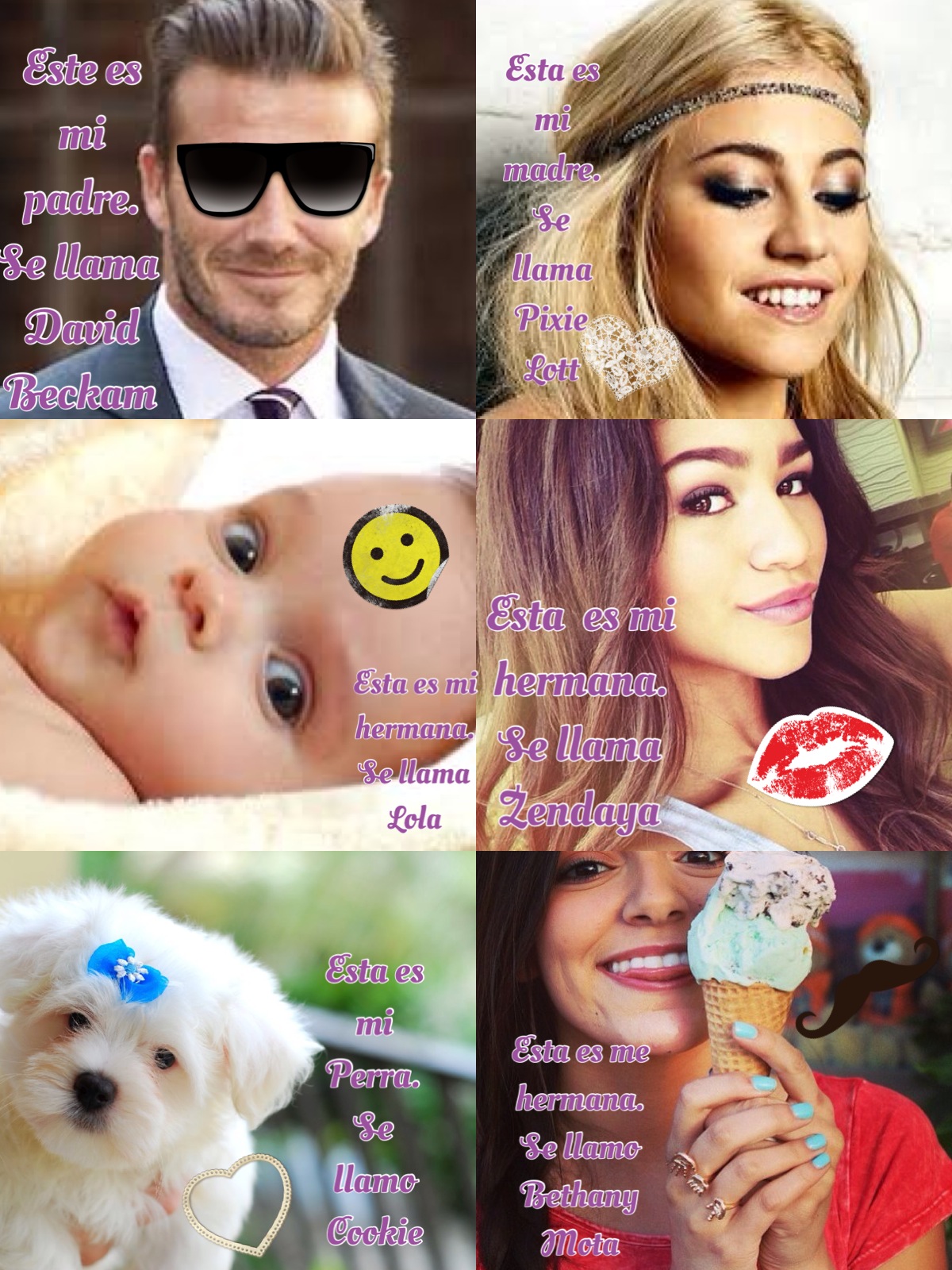
PicCollage done by one of my pupils!

I presented at Language World as part of a triple act on using iPads in language learning. Joe Dale and Helen Bates preceded me talking about QR codes, sound recording, making screencasts and flipped learning before I took over to talk my favourite app – BookCreator.

I shared how to make a book in BookCreator (free/£2.99), how to add images, sound, videos and hyperlinks; how to change the background, how to make sound buttons invisible and how to avoid copyright issues by using QR codes or hyperlinks to videos! I also showed PicCollage (free) as a way of making my front cover, and Tellagami (free) for adding a “talking head”.

I ran out of time to share how you can combine books into one, meaning that you can make a class book with all learners working separately before putting it all together on one iPad (e.g. save to Dropbox and then open and combine) but I did share the news that BookCreator is now on Android – very popular that one!

You can find out more by checking out my post on iPads here which covers things I shared and much more! You can also have a look at this post to see the process of how my Year3s made their eBooks that I shared.

photo 2-1

photo 3-1

And here’s a tutorial I did on using Explain Everything (two years ago)

Explain Everything Explained. from lisibo on Vimeo.

Presentation by Lisa Stevens aka @lisibo about the iPad app Explain Everything (recorded using the app itself) for TeachmeetBrum and TeachMeet iPad. November 8th 2012

Screen Shot 2014-04-13 at 17.18.34

(That’s my red/black shoulder at the front!)

It was touch and go whether I’d make it to Language World this year but having missed it for the last two years, I was determined to make it even if I wasn’t 100%.

And I did, albeit deaf in one ear and in need of frequent sit downs.

Below are my notes from sessions I attended.  You can also download many of the presentations from the two days on the ALL siteFriday and Saturday

Language World is always special to me and this year was no different. Thanks to everyone who ‘looked after’ me, especially Joe who was poised to do my part of the presentation should I keel over; Philip, my chauffeur(!); Julie P who also chauffeured me and with whom I had some excellent chats; Julie D for returning my cap when I left it lying around; and everyone who looked out for me, willed me to be better, and/or remembered to speak into my good ear at any point! Language teachers rock! 😉

Elaine Minnett session

Rachel Hawkes – President’s Plenary

Liz Black

CLIL (Judith Woodfield); Janet Lloyd; Kati Szeless


photo

Thanks to Joe Dale for the photo (and video later)!

I had the privilege on 28th March to speak at the South West London Primary Languages Conference #SWLPLC. My talk was entitled There’s more to PLL than ‘that donkey’ (Tip Top Tips for Primary Language Learning) and took inspiration from my son who when asked what he’d done in French usually replied “oh, we did that donkey again”. I have nothing against Mon âne but there’s more to PLL than singing as I went on to explain, sharing some of my favourite activities and ideas. Below is my presentaion and links to resources I used and sites I referenced.

A lovely day and well worth the early morning; great to see Joe, Rachel, Carmel and finally meet Ceri and Sue, and also to have so many positive comments about Primary Language learning flying around the room.

Habitats matching activity

worksheet LAT SP FR ROM NUMBERS 1-31

el nabo enorme

Oso Pardo pdf

Oso pardo

blank brown bear

Simpsons song

Que colores hay


Links from presentation

Rachel Hawkes’ phonics

httpv://youtu.be/seW6lf_9pSk

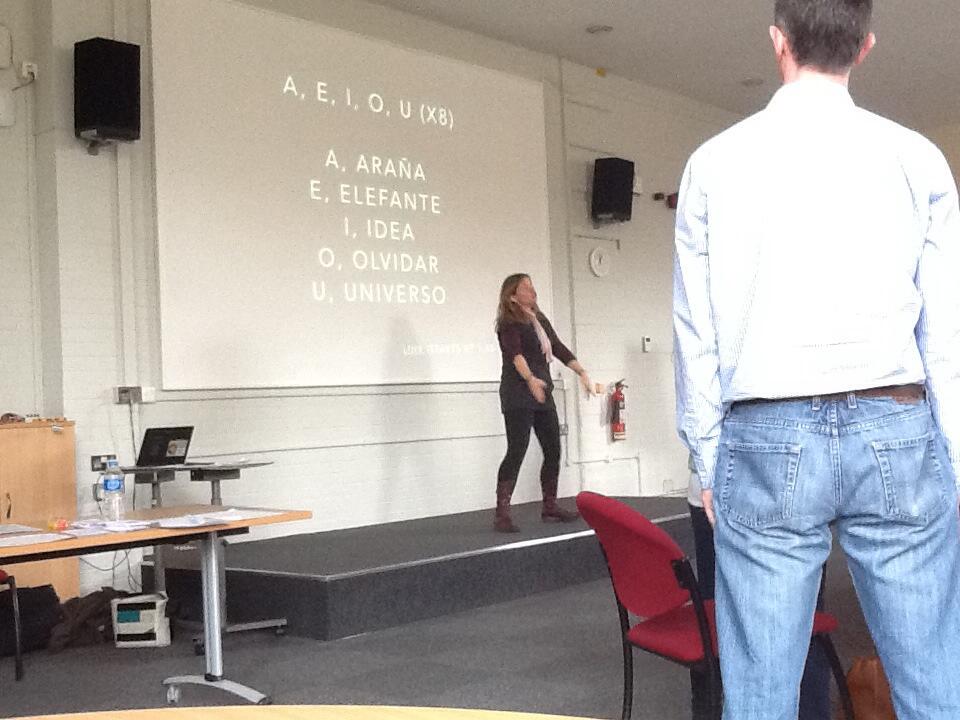
Music for Los vocales D.I.S.C.O.

 Rhabarberbarbara

Jo Rhy Jones phonic activities 

I didn’t get to share my Pinterest pages as they were blocked by the firewall, but here’s the link to my Roman resources for Spanish. And if you flick through, resources for lots of other topics/themes too.

I also recommended looking at The Iris Project and LightBulbLanguages (formerly MFL Sunderland) for other resources that I have found useful for Latin/Greek (former) and Latin, Planets and much more (latter) And check out TES Resources from Joan Miró resources fromHelen Stanistreet and Rachel Hawkes

Boowa et Kwala – Peut tu marchez comme un canard? Fingerpaint song

Padlet.com – for collecting ideas (online post it notes)

Storybird – make up your own stories using illustrators images.

MFL Storybird wikispace

I also mentioned Tellagami, Pic collage and Book Creator app. Check out this post for more details!

Again, if I’ve forgotten to upload something that I promised, please let me know!


(Sorry it’s taken me so long to post – illness, work and OFSTED held me up!)


And here’s my session on Making links across the curriculum.

I didn’t get to share my Pinterest pages as they were blocked by the firewall, but here’s the link to my Roman resources for Spanish. If you click through the presentation, you’ll find links to things like the music for The Carnival of the Animals, a slideshare of Querido Zoo, links to BuildyourWildself and Switchzoo for making hybrid animals and a cheesy song in Spanish about the planets.

Some resources that I said I’d share –

habitats matching copy worksheet

LAT SP FR ROM NUMBERS 1-31

I also recommended looking at The Iris Project and MFL Sunderland for other resources that I have found useful for Latin/Greek (former) and Latin, Planets and much more (latter) And check out TES Resources from Joan Miró resources from Helen Stanistreet and Rachel Hawkes

If I’ve missed anything out that I promised to post, please let me know!

photo 1On Friday I was fortunate to attend the Stafford Primary MFL conference. I spoke twice, the after lunch keynote and then a workshop on cross curricular links, but really enjoyed listening to others and learning from their brilliant ideas.

I like to share what I learn when I go to conferences. Sometimes I tweet madly and fail to make notes, and other times I try to take notes. On this occasion I started out trying to do both but went for the latter in the end.

So here are my notes (without much editing!) I hope that they make sense!

Lorna Harvey – A link with Geography

We looked at the PoS for languages and also for Geography, and looked at areas where they overlap e.g. “inspire in pupils a curiosity and fascination about the world and its people” from the Geography PoS fits well with language aims.

Ideas –

En France …. on trouve? in French

Link to other countries in French – where might you find these features? as a starter activity for Geography

En Afrique je voudrais visiter…. – looking at the rest of the world rather than just UK and USA.

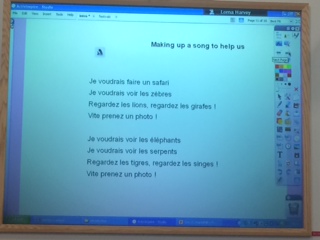
Where might you go on safari? Learn the phrase Je voudrais… and survey table about the most popular place to go

Make up a song! (tune of Pop goes the weasel)

photo 3

Have a little conversation (about where you’d like to go on safari and what you can see) and video it – basic phrases but great acting and lots of repetition

Write a mnemonic for walking around France – BLGSIS

One idea was – Big lions growl scarily in SouthAfrica

Why visit France? Create an advertisement – given rubric of requirements – cross curricular


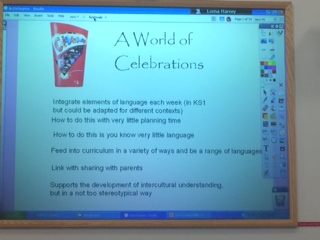
photo6Lorna Harvey – A world of celebrations

This began with the question – How can we integrate languages into KS1 each week with little time and little language?

Can we find a festival every two weeks form Christmas to Easter?

  • created a list of festivals
  • learned songs and performed plays (Christmas),
  • made une fève – figurines for La galette de rois and described it using colours,
  • Chinese names for Chinese New Year – became a panda bear and chose a name; Chinese New Year song
  • Japanese snow festival – looked at images and guessed where they were, used video clips to introduce – linked to hot/cold and played game.
  • Germany for Karneval – learn some phrases for princess eg Prinzessin, Hase, and children asked to bring in one item to become that character/person the next week
  • Spain for Fallas – text and video clip with questions – what can we work out? learned days of the week to the Macarena (lunes, martes x2; miércoles, jueves x2; viernes, sábado x2; eeeeee domingo)

To pull together, look at a map of the places and label them – where would you go if you could choose?


Karine Guillot  – Role play! Role play!

Reasons to use role play –

  • to develop pupils’ spontaneity
  • to develop pupils’ authenticity when speaking French

We looked at

  • phrases to get someone’s attention including yelling Coucou!
  • likes and dislikes – je hais – I hate (stronger than je déteste)
  • suggestions  – Et si on….? How about….. Et si on jouait au ballon? Et si on mangeait un snack?
  • agreeing and disagreeing, using lots of gestures as French are dramatic  e.g. ça ma branche (that plugs me in!) I’m up for it!   Non, pas aujourd’hui – no, not today

Traditional French games –

le jeu d’oie

le jeu de la marelle (like hopscotch) throw une pierre starting at 1 whilst standing on TERRE to arrive at CEL

le jeu des dames (draughts) with les pions (draughts/counters)

le jeu des échecs – roi, reine, fou, cavalier, tour, pion (pawn)

les cartes – pique (spades) trèfle (clubs) couer( hearts) carreau (diamonds) l’as (the ace)  le valet / la dame/ le roi

using boards games like Jeu de l’escargot – same board but new questions each time


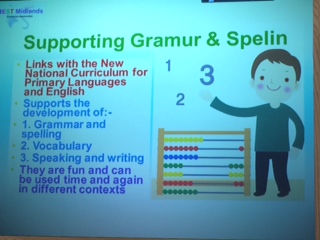
photo 4David Moss (BEST Midlands) – 10 easy to organise classroom games for Gramur and Spelin (sic)

1. Monkey school

  • Like hangman
  • one monkey whoop for each letter
  • if one correct letter, you whoop saying letter in position!
  • best to choose from a list or a theme

2. Scene of the crime – MFL

  • mixed up word – detectives have to solve the word by unscrambling it
  • can up level by  adding a blank or two to challenge
  • Ps can prepare for you by writing their own word and swapping in the room and across school
  • can be any words – cross curricular
  • as above, best to choose from a list/theme

3. Great Wall of China

  • like Chinese whispers but you trace letters on hand and pass it down the line, a letter at a time
  • be clear where the words come from – a list/ theme

4. Order Order!

  • like a human sentence, spelling a word
  • use accented letters to make more challenging
  • can also sellotape to pupils’  backs and the class reorder them by giving instructions

5a. Accents forever

  • using a Powerpoint with rotating words and two flyswats
  • swat the accent according to instruction e.g. I’m looking for a circumflex over the letter e

5b. Apostrophes forever

  • same as accents forever but for English!

6. On the march 

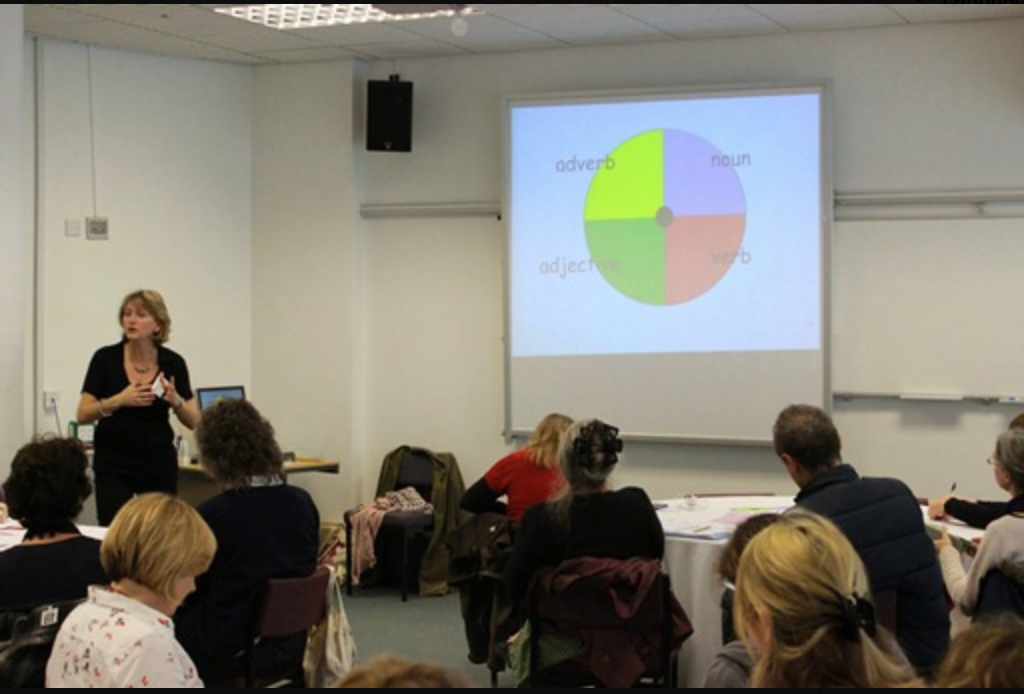
  • assign physical actions to parts of speech e.g. march for a verb, hands on head for a noun
  • call out a word and pupils respond with the action
  • in English, a word like ‘light’ can have three actions!

7. O and X

  • Say the word/phrase in the position you want to win the square

8. Sword drill

  • using a dictionary as a sword
  • march! attention! salute!
  • possible instructions – find the word for…. what page is it on? what gender is it? spell the word and so on
  • perhaps photocopy page, or word list, or put your finger in the page in the early stages

9. I need a better actor

  • act out the phrase – three people all act out
  • eg the girl plays football slowly
  • after first, you call “I need a better actor!”
  • can vote for best with clapping
  • react using different adverbs

 10. Blankety Blank

  • have a panel who write their word to fill a gap (from a list on the board) on a mini whiteboard.
  • teams try to match with as many of the panel as possible


photo 5Lorna Harvey  – Show off your language learning!

How to celebrate language learning with the community

e.g. her school had previously used The Gruffalo in French with y3 and 4 as learners with parents invited to watch like at an Inspire – how can we teach parents and learners at the same time?

Some ideas shared:

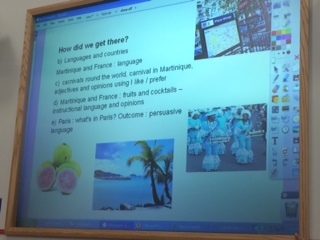
  •  Languages and countries
  • carnivals around the world
  • Martinique and France
  • instructional language – making smoothies
  • Paris

Parent workshop:

  • made and gave opinions about cocktails – like and don’t like
  • fashion show – introduced each other (linked to carnival clothes)
  • tour operators – persuade the parents to go to your venue! Very impressive but two verbs (c’est and visiter)

 Some possible activities-

  • using a phonic focus
  • using words that we want to use rather than the ones in the book!
  • used FLA to talk about Martinque and Carnival there
  • classify fruit into countries
  • like/dislike
  • order instructions
  • made own cocktail!
  • match descriptions of places to France or Martinique – which would it likely be?


A really great day! I’ll share my presentations in my next post!

¡Vámonos! ©2026. All Rights Reserved.
Powered by WordPress. Theme by Phoenix Web Solutions