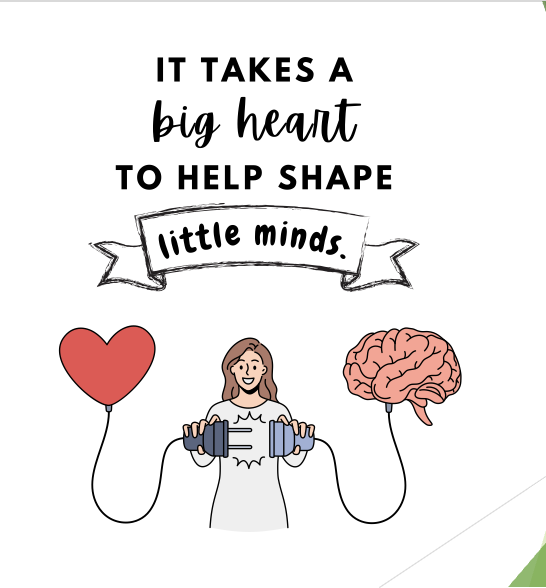
As part of presentation at Language World #LW2026 I intended to share a couple of examples or ‘case studies’ that exemplified what I was saying about the interplay between heart and mind in language learning, and the need to engage both for optimal success.
The first I was able to explain but time was against me and the second was left untold. Below, I share both.
The first concerned a pupil I called K.
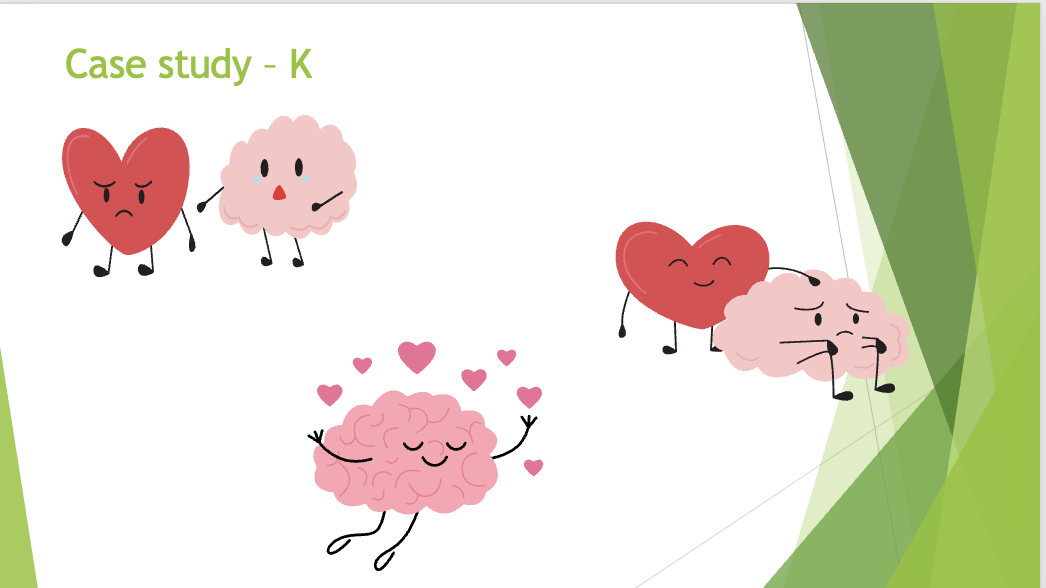
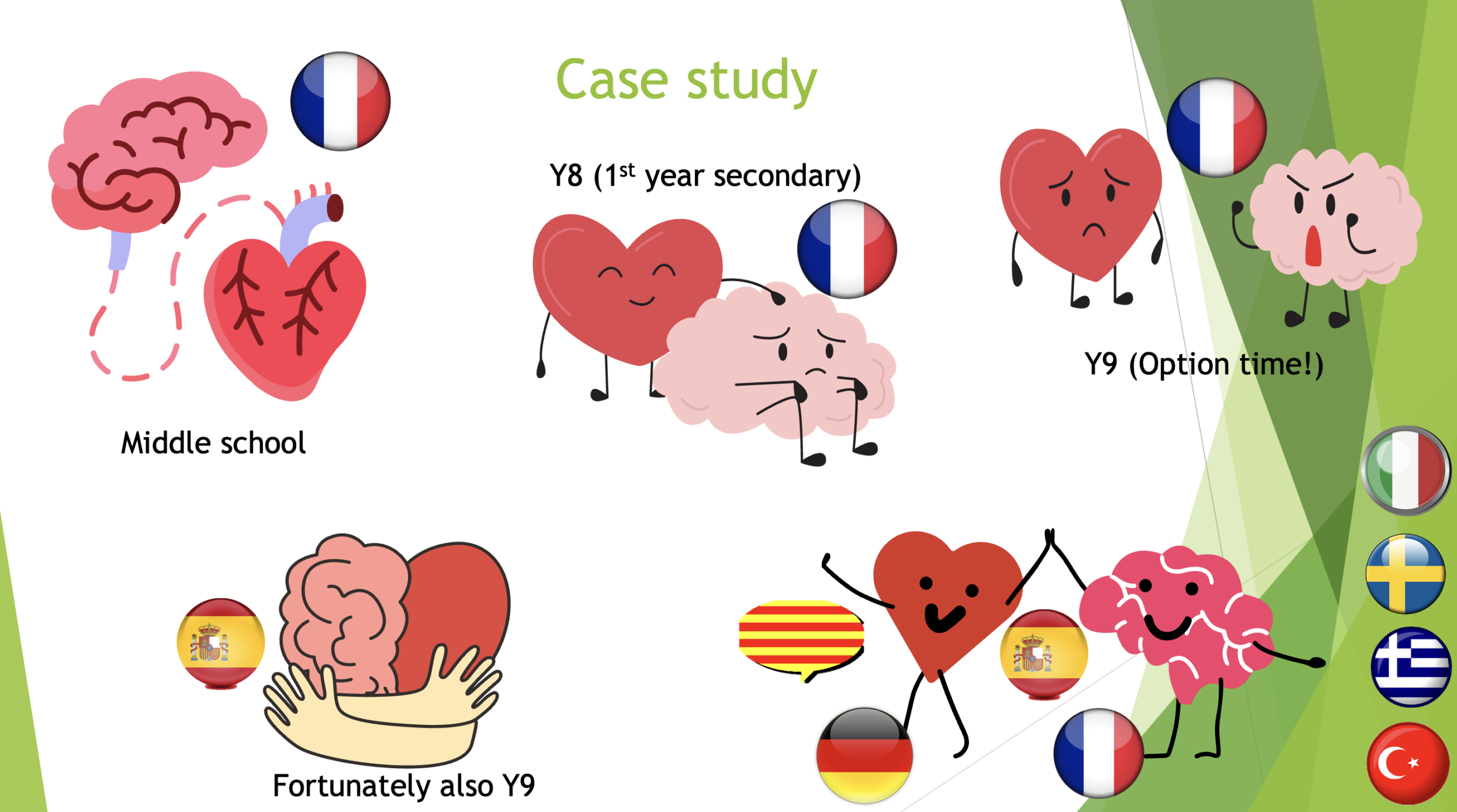
In Y3 he struggled to engage in Spanish lessons. His feelings of self efficacy were very low and his expectancy was low so he had little to no motivation. His response when questioned was “I can’t do this. My brain hurts. It’s too hard.” His heart and mind/brain were upset.
Having discovered this, we had a few low key chats outside lesson time, initially not even about Spanish. When he said it was hard, I acknowledged his feelings and talked about how it was my job to help him and make his brain “hurt less” as he put it; we can do it together. I offered support to build his confidence and praised any effort he made. He began to see that he could do it and experienced small successes – he started to enjoy lessons and his heart was in it.
After the summer holidays, K came into Y4 and began the year slowly but with growing confidence. This term there has been an amazing difference – he sees himself as a language learner, experiences success, and is confident to participate. His work isn’t perfect – sometimes he gets overexcited and goes a bit ‘rogue’ and he’s obsessed with Spanish being spoken outside Spain – but he bounces into lessons, wants to talk and is so excited about everything he achieves.
The second case study was more personal as it is my language learning story.
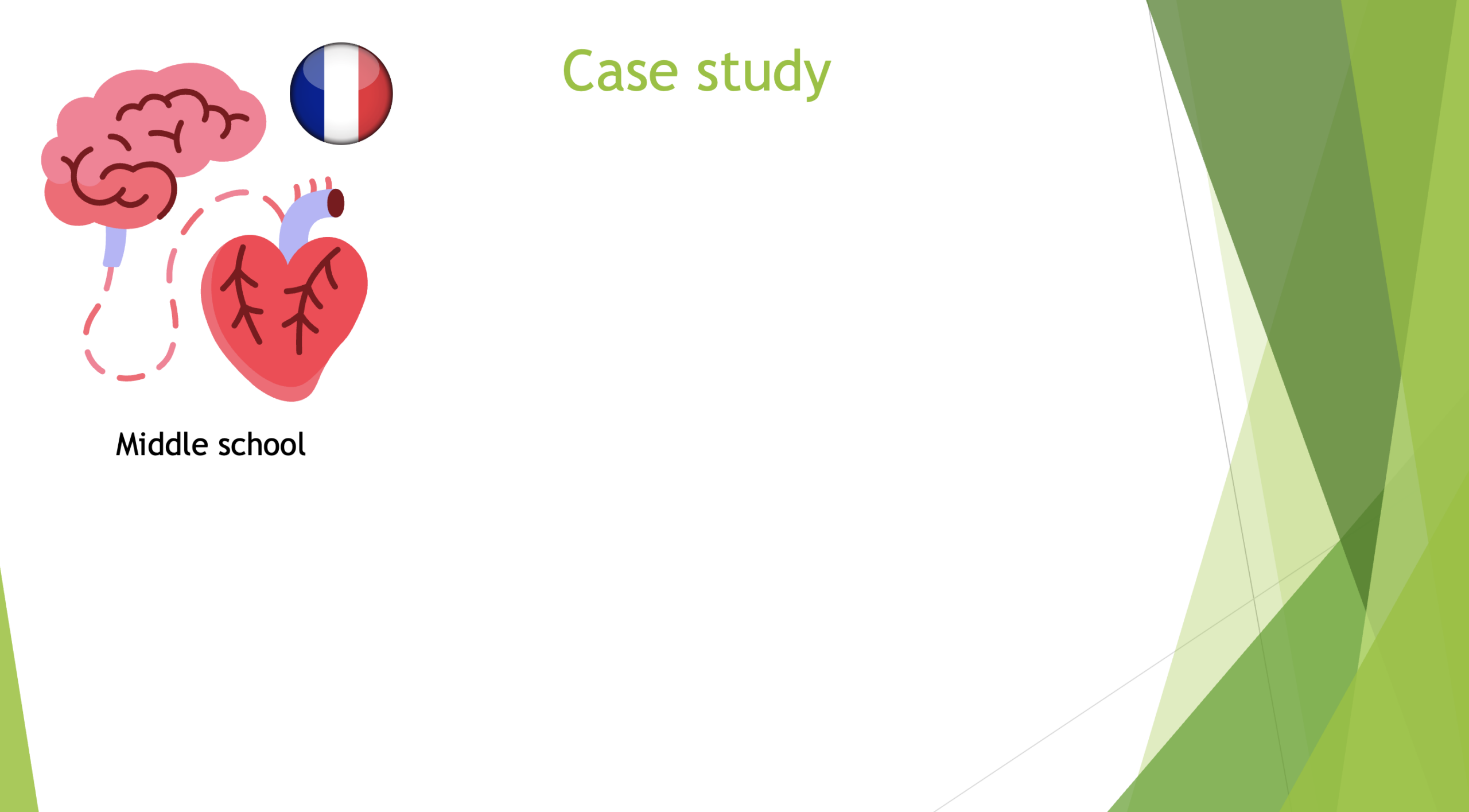
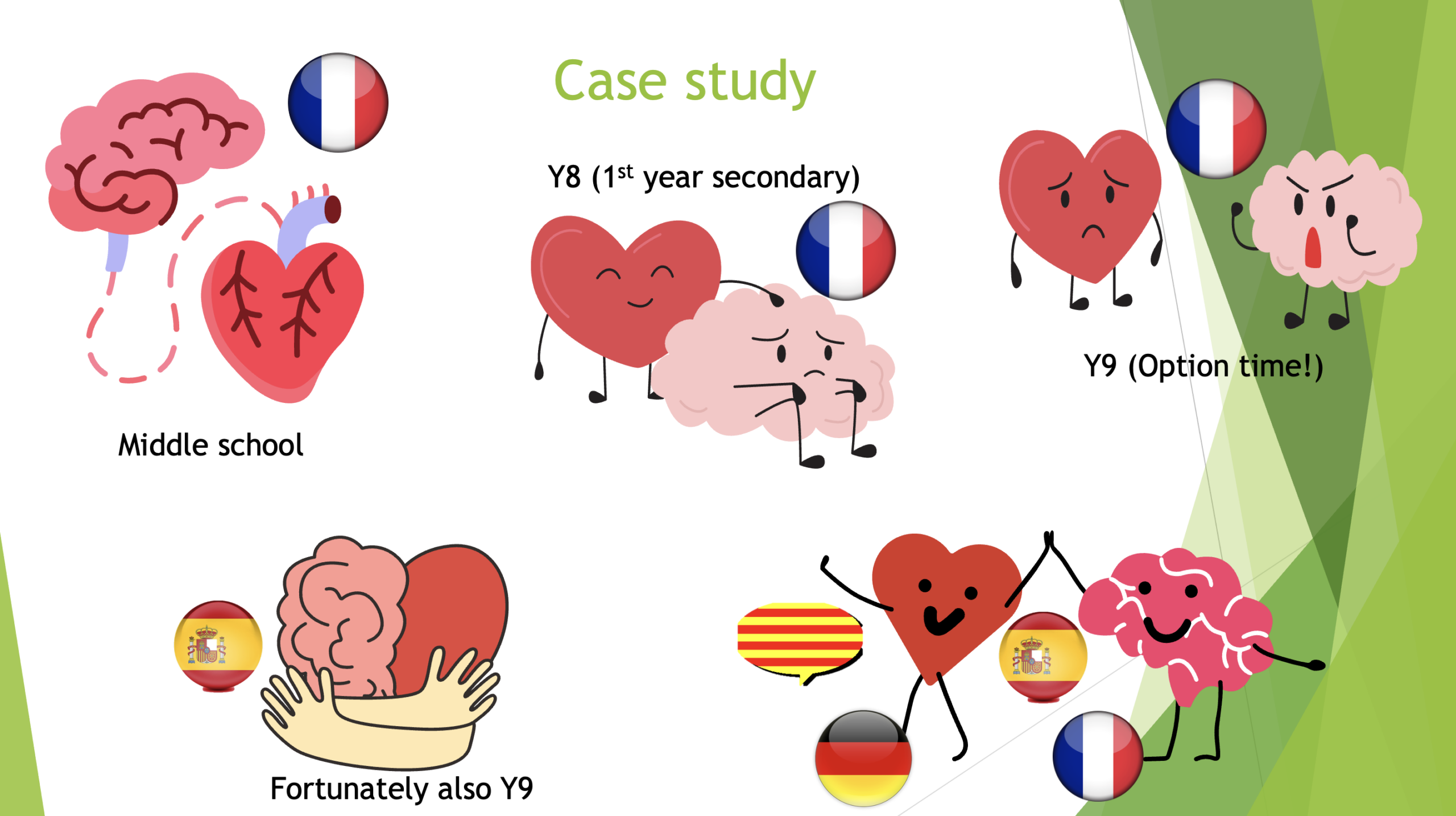
When I started middle school, I began to learn French. I had lovely teachers – Mrs Reeves and Mrs Whiteway – and really enjoyed learning. I’d happily get 100% in vocabulary tests and loved translating booklets about Nicole and Xavier – I remember Xavier falling into a river and shouting “Zut alors! Mon tricot!” My brain enjoyed the challenge of deciphering these unfamiliar words using a dictionary and my heart was set on learning more. In fact my desire to be a teacher, and specifically a primary language teacher was born at this time.
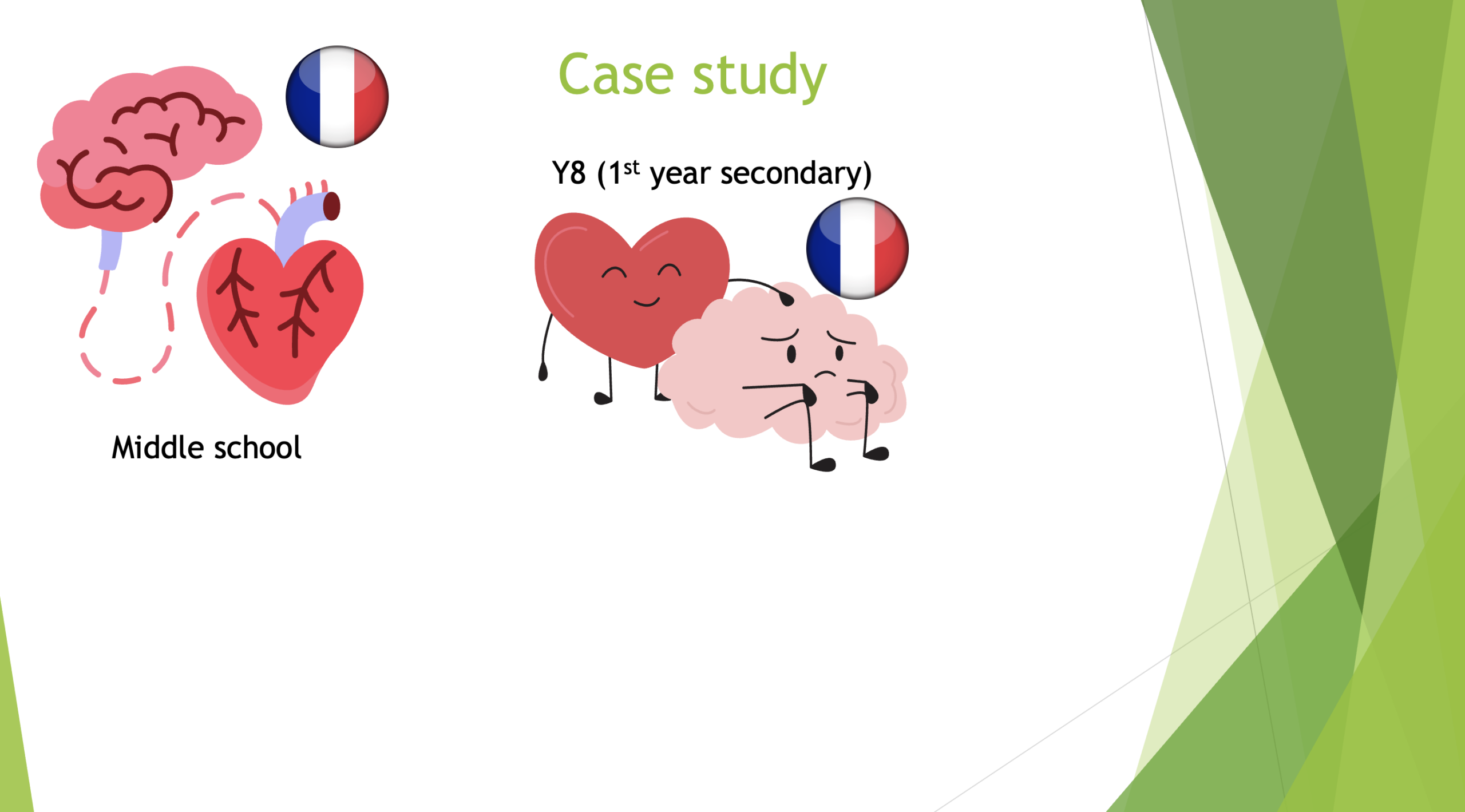
Unless you went to one of the King Edwards Grammar schools (I refused to take the exam much to the annoyance of my teachers) you moved school at the end of Y7.
Y8 dawned and off I went to secondary school and French lessons continued. You’d think I’d be really pleased. Initially I was, as was my teacher who loved my ability to consistently score high marks at Dictée and string sentences together. But my brain was unhappy as there was no challenge; I was repeating everything I’d learned at primary and I was bored. My heart was losing the battle.
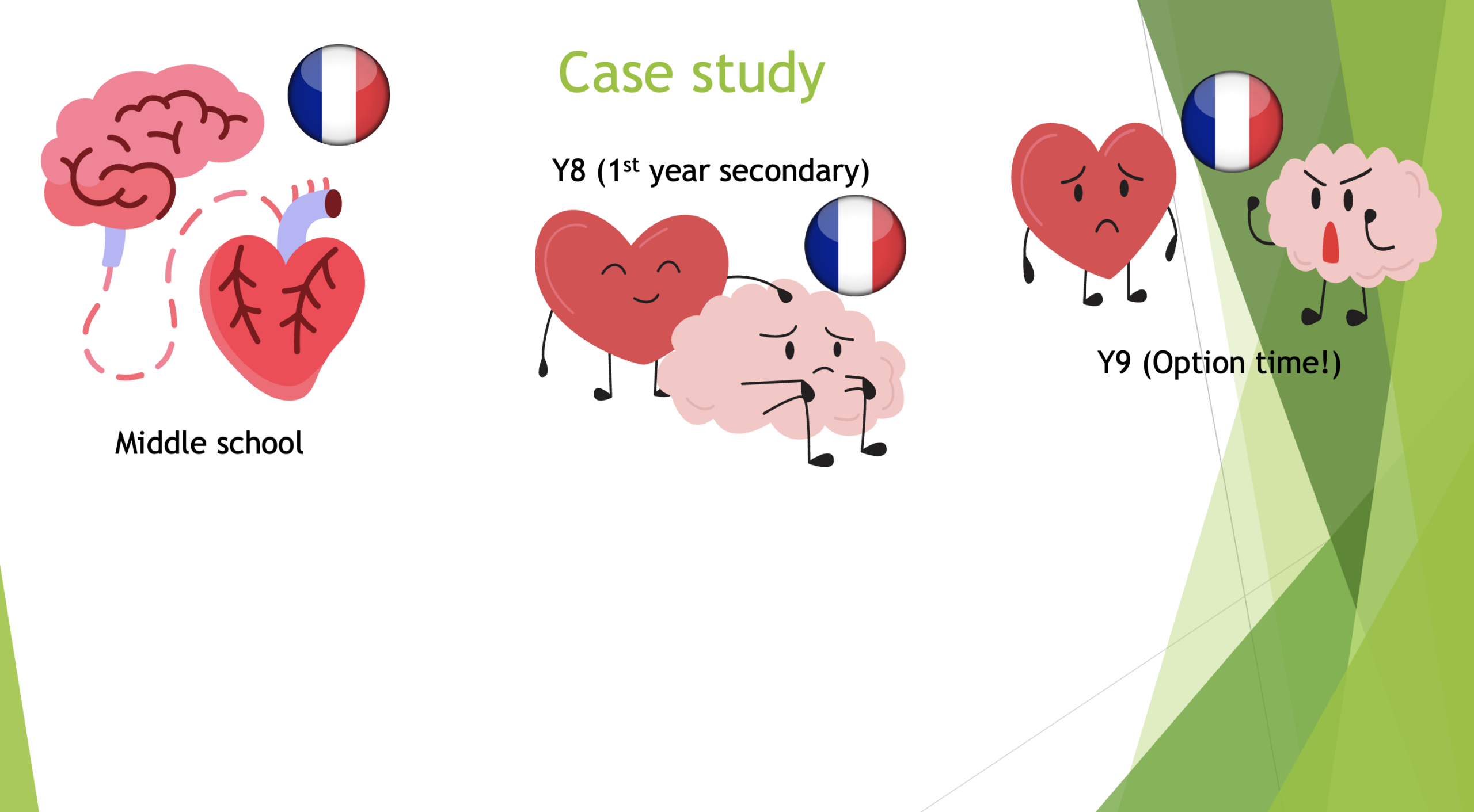
Come the time to choose my options for KS3 and although I was still successful and scored top of my class in our French exam, I was completely fed up with the lack of challenge and there was no way I was choosing French, no matter how much my teacher pleaded with me. I was out of love with French and all that joy and passion I’d had were gone.
This could have been a very sad story but, as you can probably surmise from the fact that I am a language teacher, that’s not the end of the story!
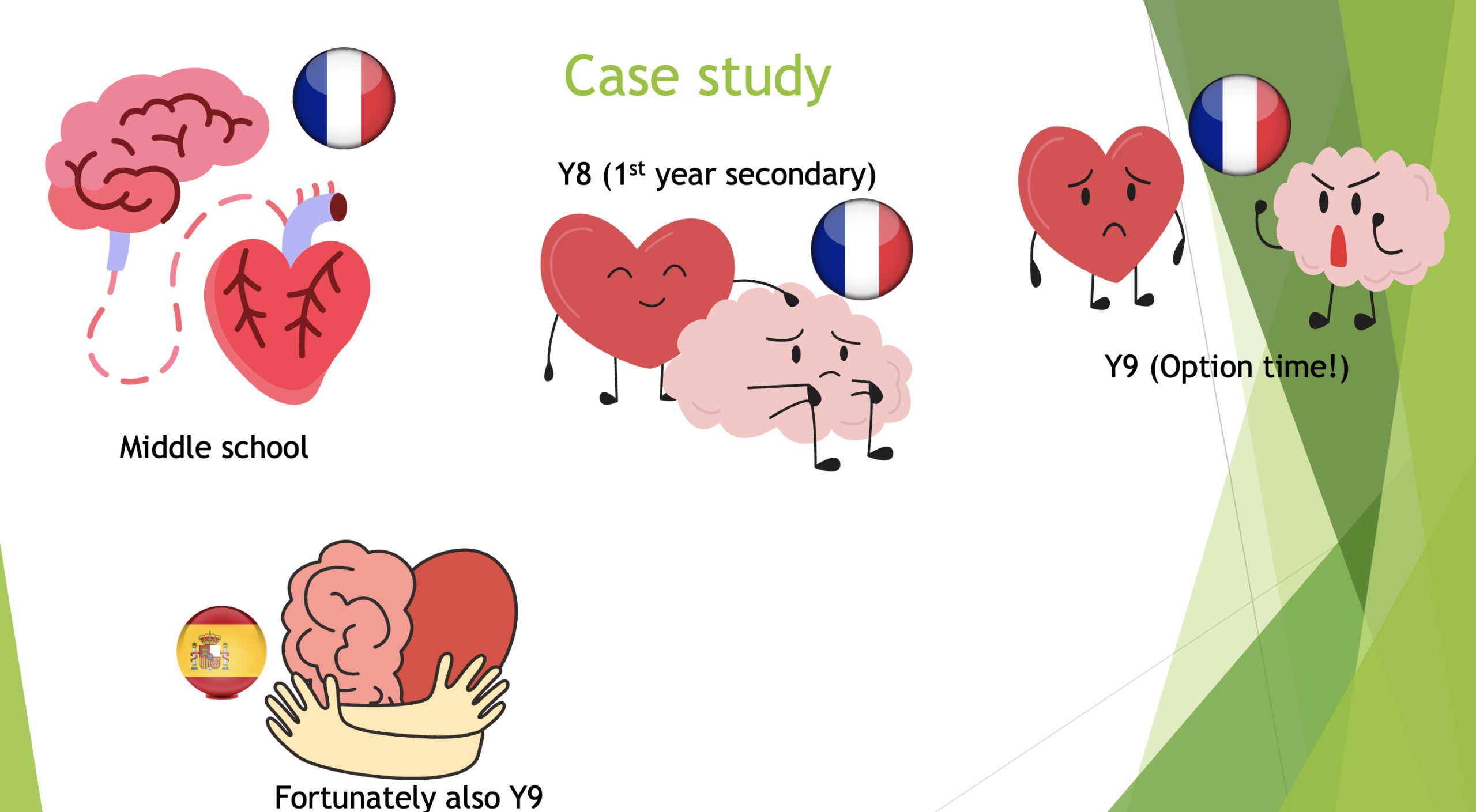
Fortunately, if you were any good at French, in Y9 you had the opportunity to start Spanish or German depending on which half of the year you were in. Having first been to Spain as a baby, travelling in my baby car seat bolted to the floor of my parents’ Morris Minor, and visited several times over my childhood years including being flooded out of our tent in Salou at the age of 5, I was pleased I was in the Spanish half. In class I met Señora Sánchez-Richardson who I can only describe as a crazy Colombian phenomenon who intrigued me and inspired me from day 1. She was strict, demanding, had the highest expectations and the driest sense of humour. Her favourite phrase was ‘Really?’ said with a raised eyebrow and look of incredulity! Every lesson I was challenged to learn not just words and grammar but also little nuggets of culture and ‘real life’ Spain. I talked about my undying love for and gratitude to Señora Sánchez-Richardson at ILLC 5 in 2015 but it’s worth repeating. Continuing the analogy – she engaged my brain with her academic rigour and captured my heart with those snippets of life, nurturing my love of languages back to life. Her name was Luz – quite literally a light in my life!
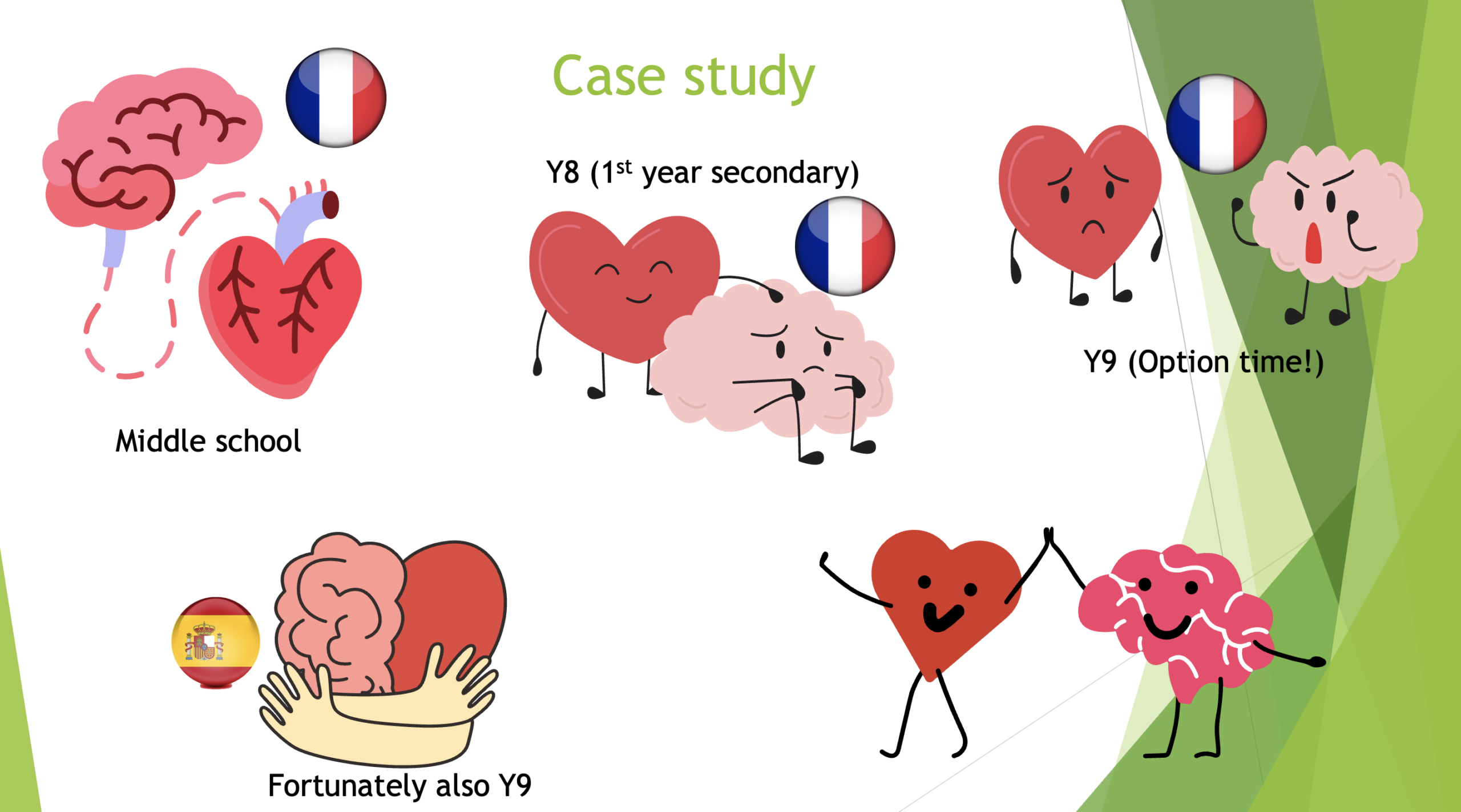
GCSE Spanish was a no brainer and then A level Spanish – Señora S-R continued to teach me joined by Mrs Gunning from the grammar school as we had half our lessons by ‘consortium’ and I discovered Spanish literature. Heart and mind together, skipping happily!
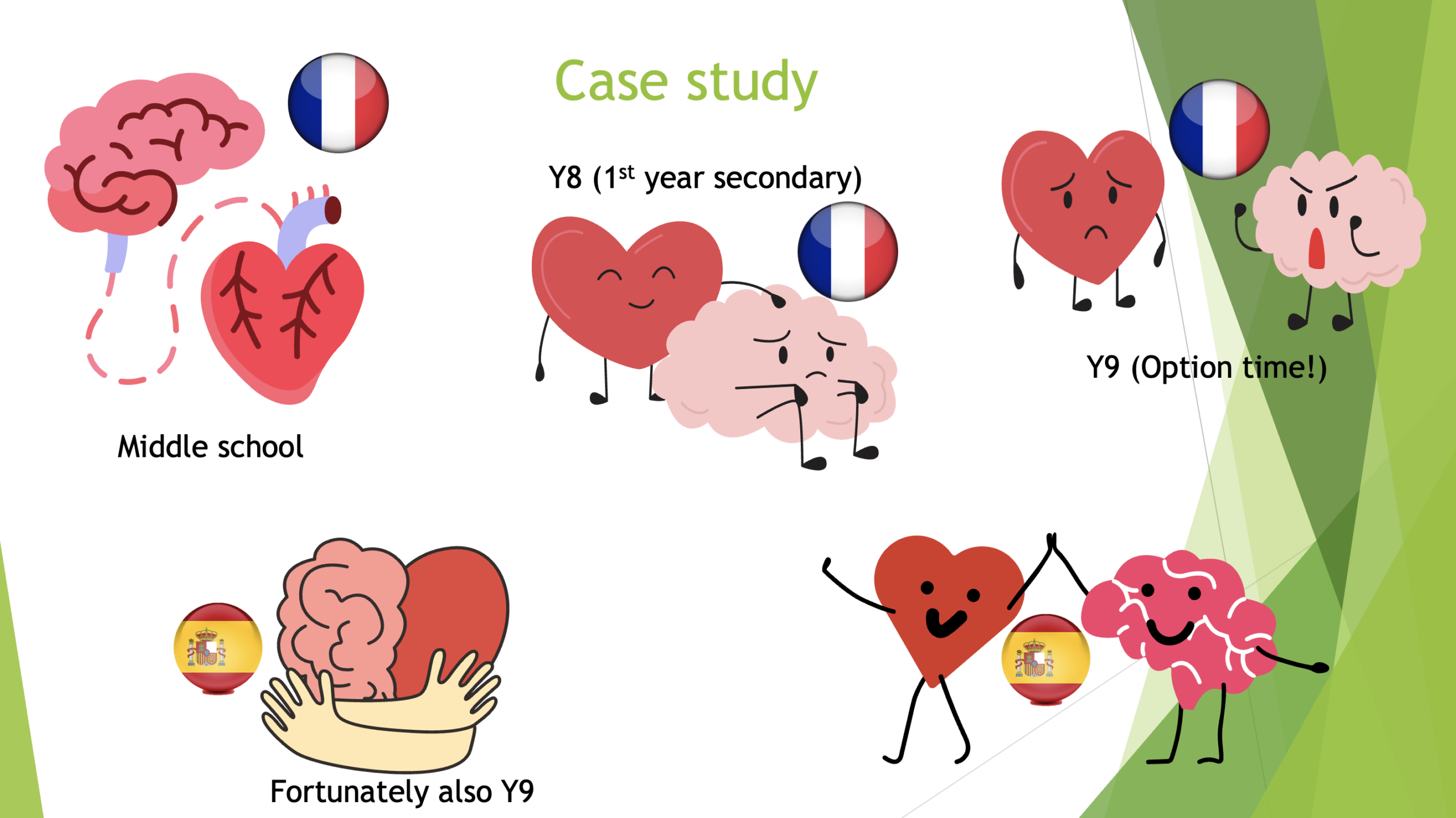
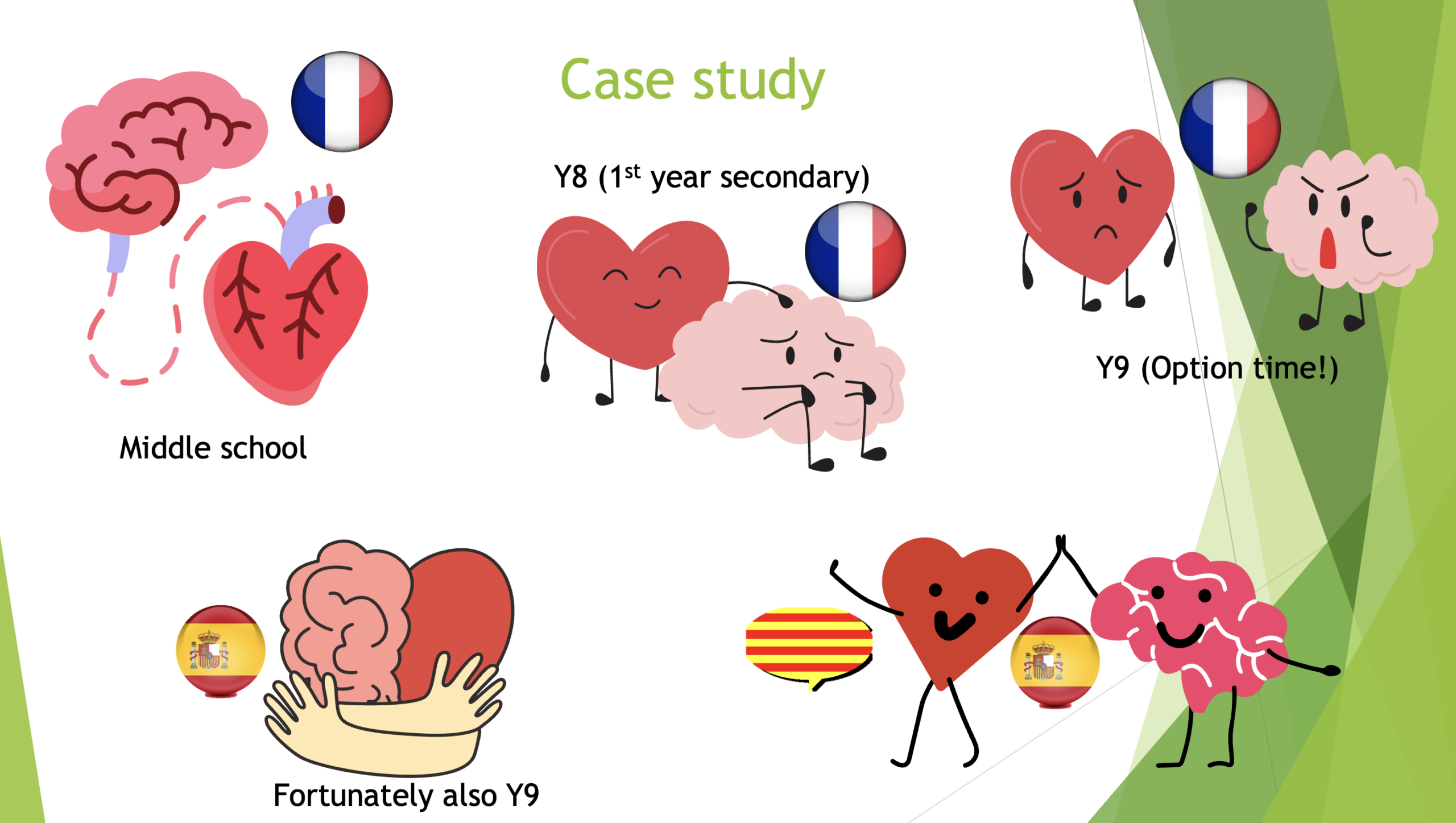
University beckoned and a degree in Spanish. I did look at doing French as one of my 1st year options (you had to do three subjects and I was doing Spanish and English Literature) but without a GCSE it wasn’t possible. Very annoying! In the second year I learned Catalan with the enigmatic Professor Yates and spent a year developing a Mallorquin accent at Universitat des Illes Balears. Years later, this would come in useful when my school was involved in a project with Barcelona, and cause great amusement and then delight to the children who weren’t expecting me to speak their language albeit with an accent that they said made me sound like a peasant!
And my love of language learning continued. Sadly by the time I was old enough to train, it wasn’t possible for me to train as a primary teacher with a language speciality but I did become a teacher – of Spanish and French. In fact, my second job was taking over from my beloved Señora Sánchez-Richardson as Head of Spanish. (She’s also responsible for me joining ALL!) After ten years in secondary I left to follow what I really wanted to do and started to teach primary first at a Prep school and then at my current school. Heart and mind were once more happy and in synch. Twenty plus years later, I still love it.
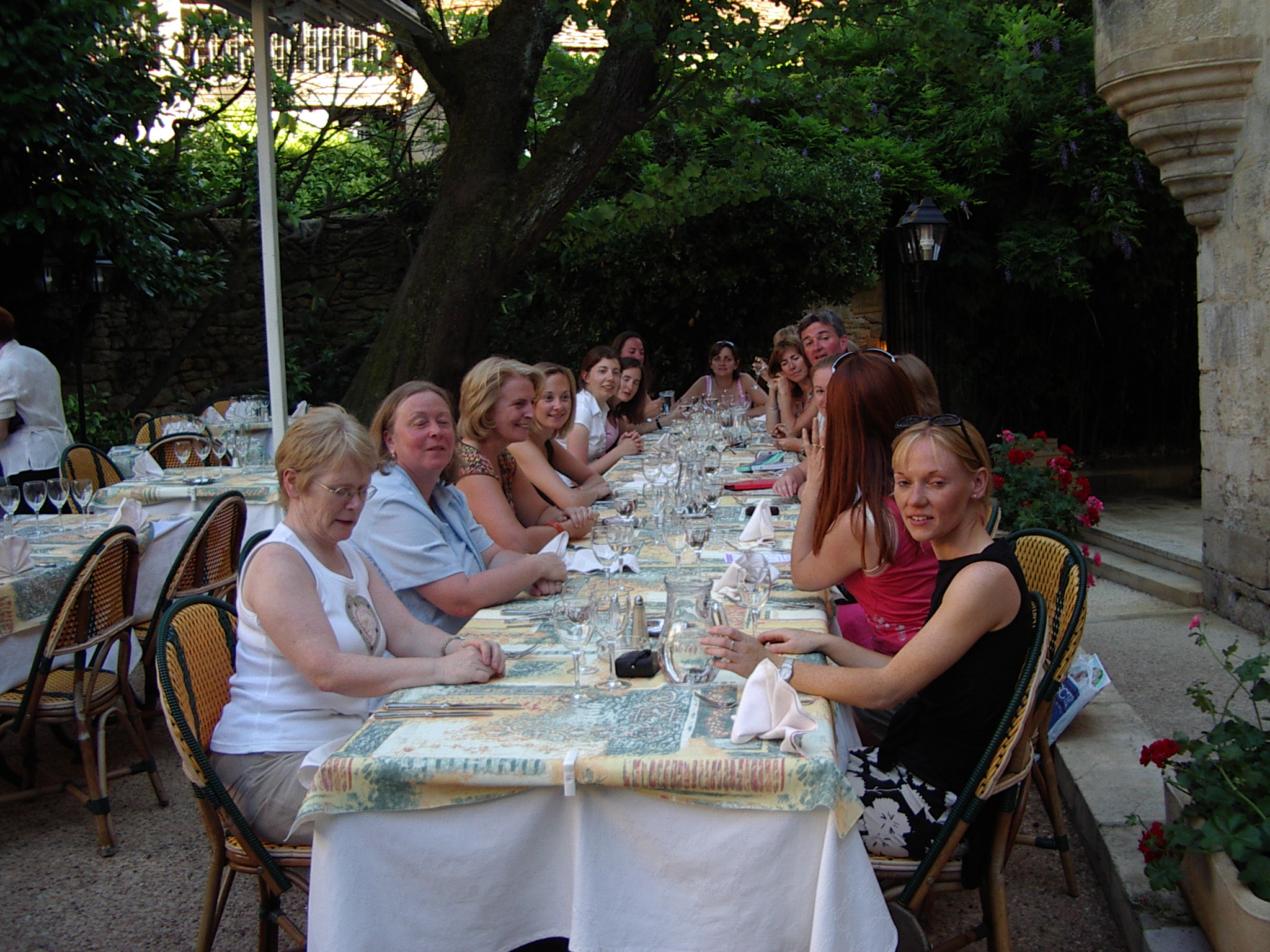
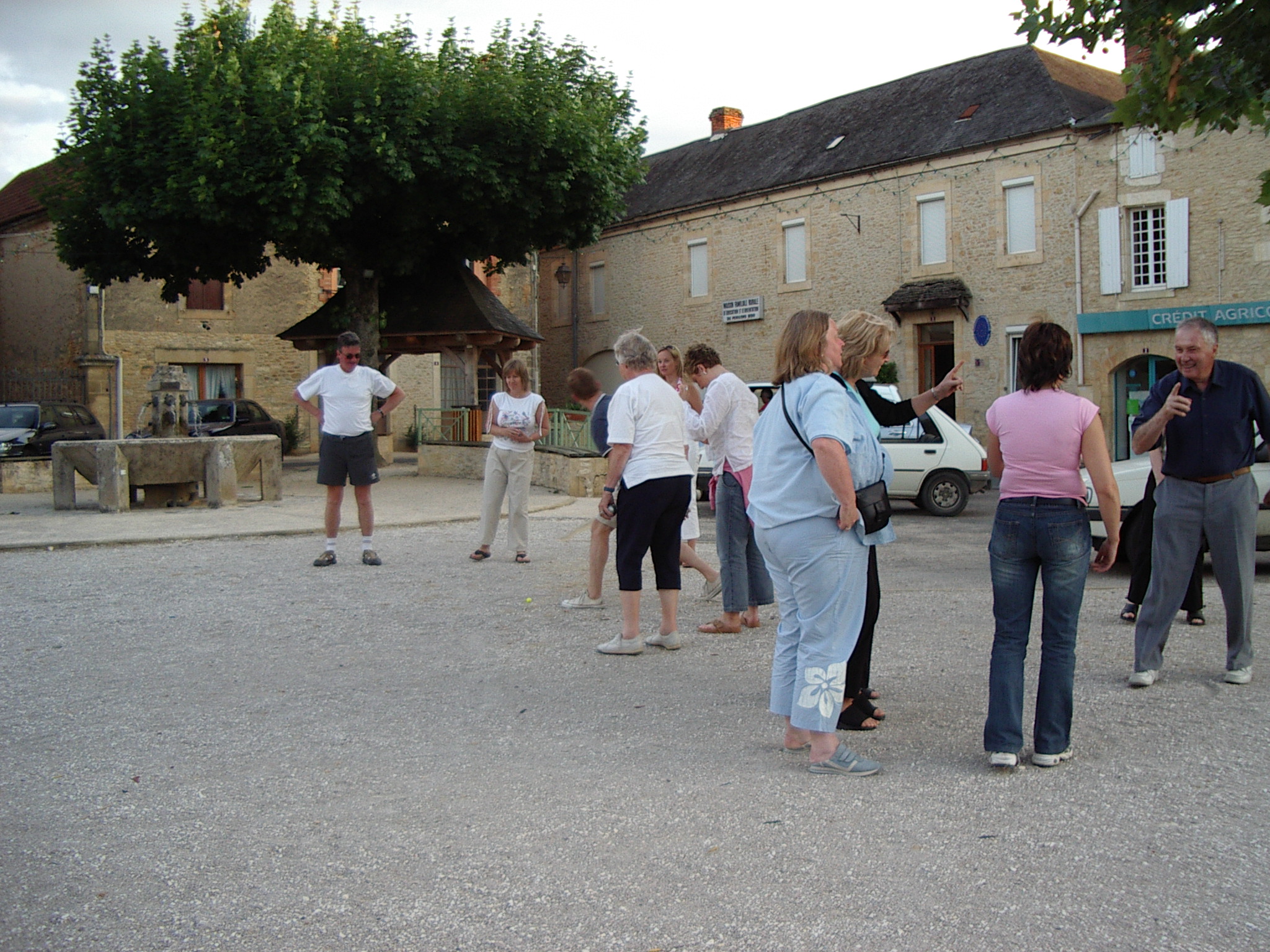
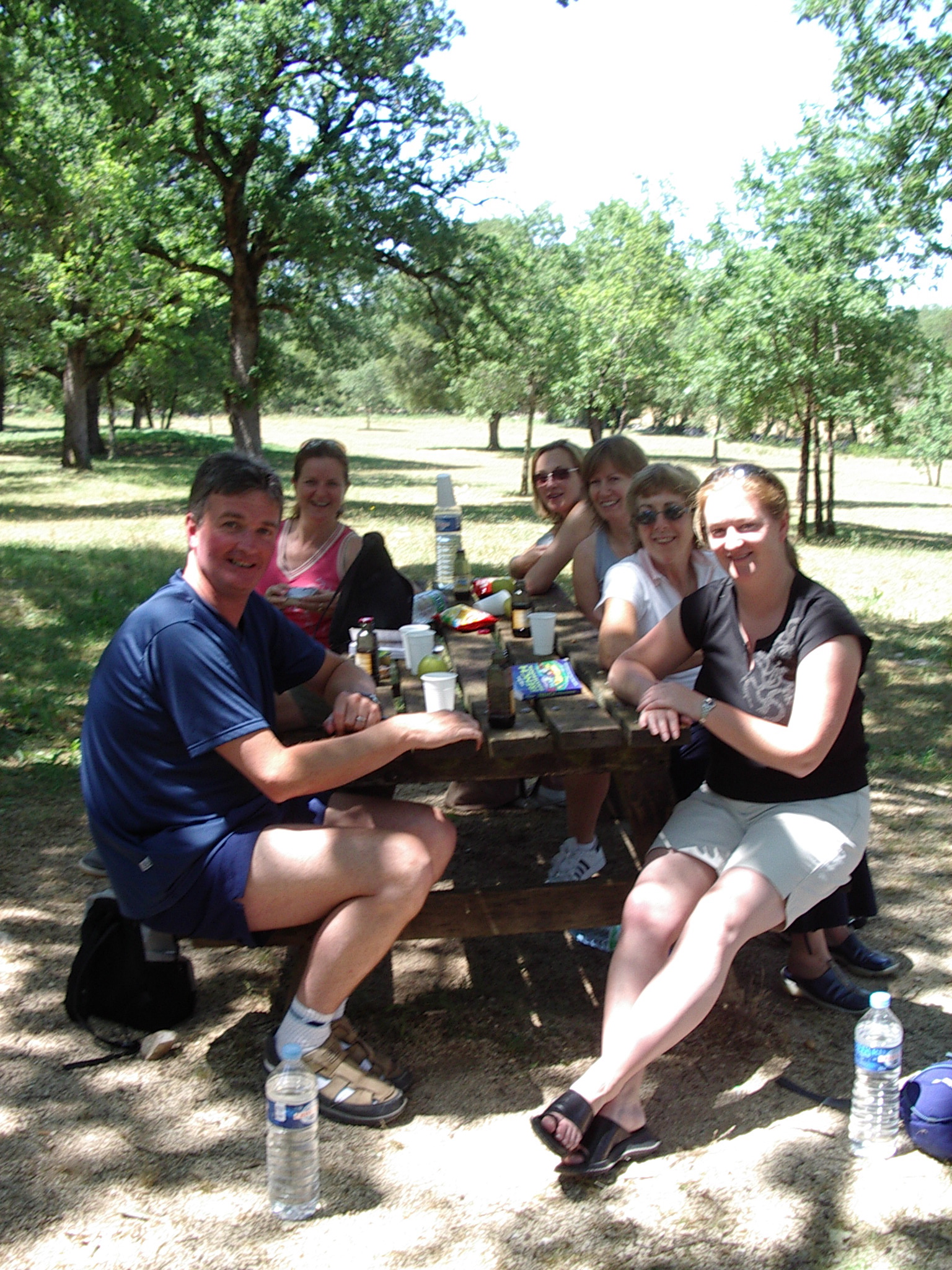
Whilst at the Prep school, I asked to go on a course all about primary pedagogy and French – and the principal said yes. So, leaving my little boys in the care of Mr S, off I went to Salignac in the Dordogne for a week with LFEE and the wonderful . It was really great course with some brilliant people. Not only did I get to connect with my Scottish roots – most of the other participants were Scottish – I also learned lots. However, the most important thing of all to me, and the thing that I will always remember is that I fell back in love with French. As my mind retrieved vocabulary and grammar hidden in the filing cabinet of my brain, my heart began to beat faster and I remembered why I had fallen in love with it in the first place. I remember bursting into tears and blurting out “I love French again!” Thank you Richard (and Elise) 🫶
I went to evening class to carry on my French – until they were stopped! – and then started a German course that led to a certificate, also at evening class. My Dad fell seriously ill and I missed a whole block of lessons but I’d paid for the exam so I turned up and, thanks to my language learning skills and a bit of logic, I passed (and my mark wasn’t too shabby!)
Fast forward a few years and my husband’s job took us to Switzerland for a couple of years and that German was useful – although most of my neighbours preferred to speak to me in English as it wasn’t Schweizerdeutsch. Classes got me to A2 level German. Heart and brain are happy with German because it’s so different from other languages I know and I love the expressions and compound words. I admit that I’ve probably used German more since we came back to England than I did in Winti but I tried really hard! I’m now B1 (according to Duolingo whose course I have completed now!)
I find it really hard when I can’t communicate with people so prior to holidays I try to learn some phrases to help. I’ve tried Italian and Swedish (my husband worked for a Swedish company for a while) – the former was a bit helpful, the latter not so as everyone spoke to me in English but did appreciate my efforts!
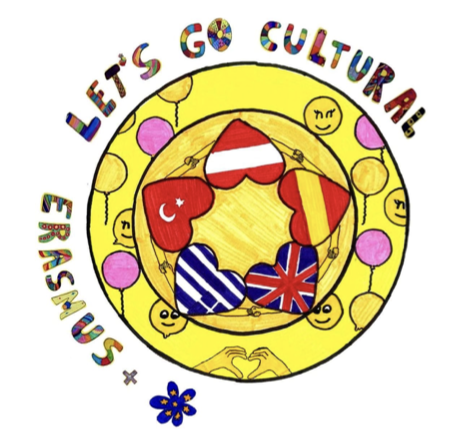
And when I was involved in an Erasmus+ project between my school and schools in Spain, Austria, Greece and Türkiye, languages once more linked hearts and minds. In Spain, I was called upon to translate from English to Spanish, and also Spanish to German at times, and was really frustrated that I couldn’t help the Greek and Turkish delegates that were struggling with English. I even had to translate a speech by a local politician without any warning – and it was on the local news! In Austria, we were expecting to do a lesson on Guy Fawkes in English but quickly realised it was going over their heads so off I went, launching into as much German as I could muster- with a lot of acting and sound effects – apparently pretending to be a feuerwerk was much talked about! Come the mobilities in Türkiye and Greece, I was worried that I wouldn’t have the same experience as I had in Spain and Austria, being able to talk to the pupils in their own language, so I made an effort to learn some very basic Turkish so I could at least say my name and ask how people were plus some courtesies and essential phrases!
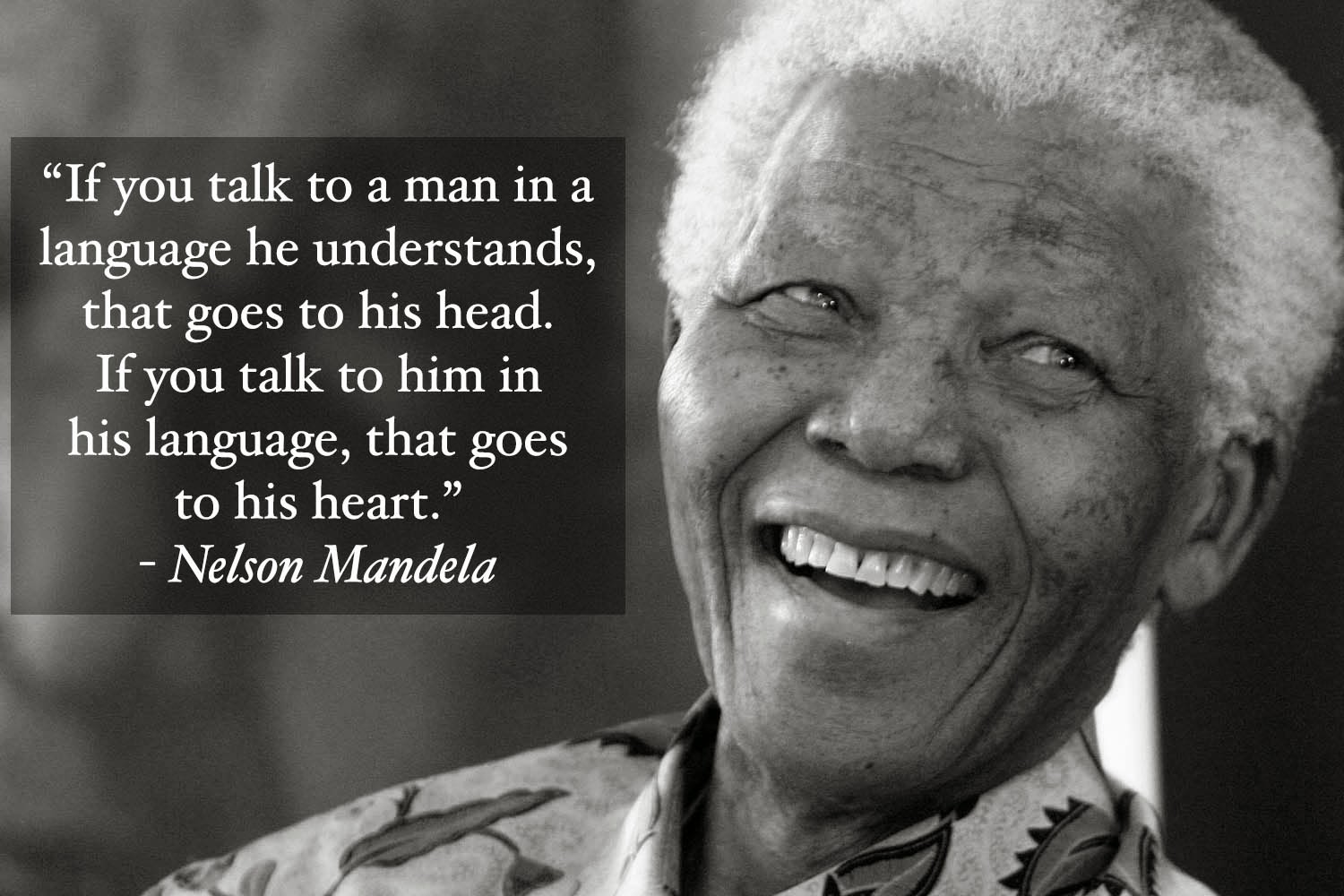
This quotation has always spoken to me and was proved true in Türkiye where as soon as I spoke two phrases of Turkish I was mobbed by children and followed around like a popstar. It didn’t matter that I really didn’t know much more but I’d spoken their language and they wanted to speak to me. I did learn a little more – especially how to say stop! and careful! as at one point I was nearly knocked off my feet by a swirling mass of children wanting a sticker – but a little went a long way, and our hosts were also really appreciative. Prior to the Greek mobilisation, two of the Austrian partners joined in the language learning and we all had a go at learning some Greek – to the point that it became a bit of a thing and we were given a Greek ‘exam’ Once more, using my mind, led by my heart desire to communicate had engaged hearts and minds.
This has ended up being longer than I’d planned but I wanted to tell the story as to me it perfectly explains my point about knowledge (what you know) not being enough to sustain learning – your heart (how you feel) has to be engaged too.
And that goes for teachers too!